


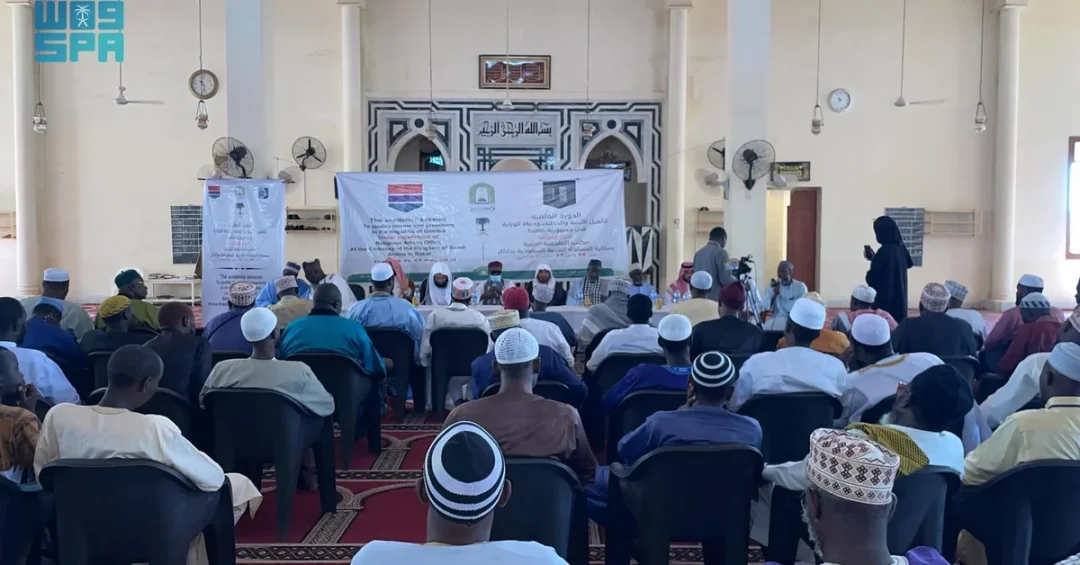
The Ministry of Islamic Affairs, Dawah, and Guidance, represented by the Religious Affairs Office at the Kingdom of Saudi Arabia’s embassy in Senegal, held a scientific session on May 15, 2024, to qualify imams, preachers, and ministry representatives in the Republic of Gambia. The session, attended by Gambian Supreme Islamic Council President Sheikh Isa Dabo, Chief Justice Sheikh Omar Seik, Imam Ali Moad Kah, and the ministry’s representative Bader bin Ibrahim Al Hamad, was supervised by Sheikh Salman bin Abdulaziz Al Fahid.
Context and Background
This session is part of the Islamic Affairs Ministry’s global projects, which aim to provide religious education based on the Holy Quran and Sunnah, promote moderation, and combat extremism and fanaticism. By training religious leaders, Saudi Arabia seeks to foster a balanced and tolerant understanding of Islam, aligning with its international role as a leader in moderate Islamic discourse.
Key Details
The session focused on equipping participants with the knowledge and skills necessary to guide their communities effectively. It underscores the Kingdom’s commitment to supporting the Gambian Muslim community through educational and religious development initiatives. The involvement of high-level Gambian officials, including the Supreme Islamic Council President and Chief Justice, highlights the significance of this cooperation.
Implications and Impact
This initiative strengthens Saudi Arabia’s ties with Gambia and the broader West African region. By empowering local religious leaders, it contributes to regional stability and counteracts extremist narratives. The session also reinforces the Kingdom’s soft power and diplomatic outreach, demonstrating its dedication to Islamic solidarity and global peace.
Vision 2030 Alignment
This session aligns with Saudi Arabia’s Vision 2030, which emphasizes the Kingdom’s role as a leading Islamic nation and its commitment to spreading the true, moderate message of Islam. Through such programs, Saudi Arabia continues to fulfill its duty as the Custodian of the Two Holy Mosques, fostering global understanding and cooperation.
20 Questions
Q1. What was the purpose of the scientific session held by the Saudi Ministry of Islamic Affairs in Gambia?
A1. The session aimed to qualify imams, preachers, and ministry representatives in Gambia through religious education, promoting moderation and combating extremism and fanaticism as part of the Ministry’s global projects.
Q2. Who organized the scientific session in Gambia?
A2. The session was organized by the Ministry of Islamic Affairs, Dawah, and Guidance, represented by the Religious Affairs Office at the Saudi embassy in Senegal.
Q3. When and where was the session held?
A3. The session was held on May 15, 2024, in the Republic of Gambia, as reported by the Saudi Press Agency.
Q4. Which notable figures attended the session?
A4. Attendees included Gambian Supreme Islamic Council President Sheikh Isa Dabo, Chief Justice Sheikh Omar Seik, Imam Ali Moad Kah, and the ministry’s representative Bader bin Ibrahim Al Hamad.
Q5. Who supervised the session?
A5. The session was supervised by the Religious Affairs Office at the Saudi embassy in Senegal, represented by Sheikh Salman bin Abdulaziz Al Fahid.
Q6. What are the broader goals of the Ministry’s global projects?
A6. The global projects aim to provide religious education based on the Holy Quran and Sunnah, promote moderation, and combat extremism and fanaticism.
Q7. How does this session contribute to Saudi Arabia’s international role?
A7. It reinforces Saudi Arabia’s leadership in promoting moderate Islam and strengthens its diplomatic ties with African nations, showcasing its commitment to Islamic solidarity and global stability.
Q8. What is the significance of involving Gambian religious leaders?
A8. Empowering local religious leaders helps ensure the spread of balanced teachings and counteracts extremist narratives, fostering a peaceful and tolerant society.
Q9. How does this initiative align with Vision 2030?
A9. Vision 2030 emphasizes Saudi Arabia’s role as a leading Islamic nation; this program exemplifies its commitment to spreading true Islamic values and global cooperation.
Q10. What topics were covered during the educational session?
A10. While specific topics were not detailed, the session focused on qualifying participants to guide their communities with knowledge from the Holy Quran and Sunnah, promoting mod
Reader Feedback
We value your thoughts. Please share your feedback on this article.
Your feedback helps us improve our coverage.