


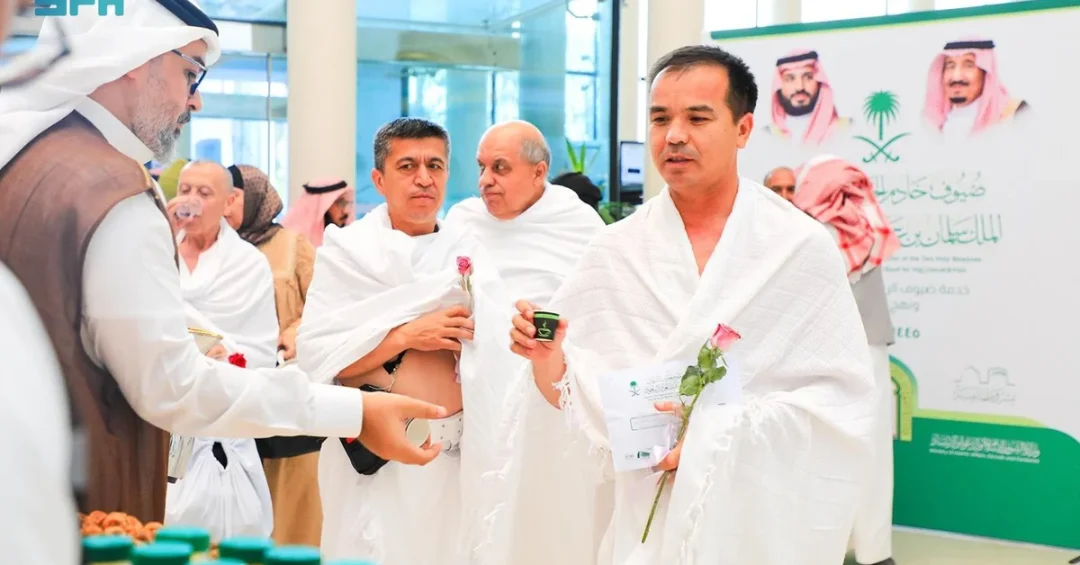
The Ministry of Islamic Affairs, Dawah, and Guidance has welcomed the first group of participants in the Custodian of the Two Holy Mosques Guests Program for Hajj, Umrah, and Visit, marking the commencement of this year’s hosting initiative. Under the directives of the Custodian of the Two Holy Mosques, King Salman bin Abdulaziz Al Saud, a total of 2,322 male and female pilgrims from over 88 countries will be hosted throughout the season, as announced by the ministry. The first group, consisting of 34 pilgrims from Uzbekistan, Vietnam, Romania, and Montenegro, arrived at King Abdulaziz International Airport in Jeddah, where they were received by program officials.
Context and Background
The Custodian of the Two Holy Mosques Guests Program for Hajj, Umrah, and Visit is a longstanding initiative that reflects the Kingdom’s commitment to serving pilgrims and facilitating their religious duties. Implemented and supervised by the Ministry of Islamic Affairs, Dawah, and Guidance, the program is part of Saudi Arabia’s broader efforts to enhance the pilgrimage experience and promote Islamic solidarity. The selection of participants is carried out in coordination with Saudi embassies and religious attachés abroad, ensuring a transparent and efficient process that adheres to the Royal Order.
Key Details
The first group of 34 pilgrims arrived on June 7, 2024, and was warmly received at King Abdulaziz International Airport. Relevant authorities completed all necessary procedures, including visa arrangements and logistical support, to ensure a seamless journey from the pilgrims’ home countries to the Kingdom. The program covers all expenses and provides comprehensive services, allowing guests to focus on their spiritual rituals. Several pilgrims expressed their gratitude to King Salman and Crown Prince Mohammed bin Salman for this generous opportunity, highlighting the program’s impact on their lives.
Implications and Impact
This initiative underscores Saudi Arabia’s pivotal role in facilitating Hajj and Umrah for Muslims worldwide, reinforcing its position as the custodian of Islam’s holiest sites. By hosting pilgrims from diverse nations, the program promotes cultural exchange and strengthens ties between the Kingdom and the international Muslim community. It also showcases Saudi Arabia’s logistical capabilities and commitment to Vision 2030’s goal of enhancing the pilgrimage experience for millions of visitors annually.
Vision 2030 Alignment
The Custodian of the Two Holy Mosques Guests Program aligns with Saudi Vision 2030 by elevating the quality of services provided to pilgrims and expanding the Kingdom’s capacity to host guests from around the world. Through such initiatives, Saudi Arabia continues to demonstrate its leadership in serving Islam and Muslims, contributing to the spiritual and economic vitality of the region.
20 Questions
Q1. What is the Custodian of the Two Holy Mosques Guests Program?
A1. It is a program by the Ministry of Islamic Affairs, Dawah, and Guidance that hosts pilgrims from various countries to perform Hajj, Umrah, and Visit at the expense of the Saudi government.
Q2. Who is hosting the pilgrims this year?
A2. The program is under the directives of the Custodian of the Two Holy Mosques, King Salman bin Abdulaziz Al Saud, and is implemented by the Ministry of Islamic Affairs, Dawah, and Guidance.
Q3. How many pilgrims are being hosted this year?
A3. A total of 2,322 male and female pilgrims from over 88 countries are being hosted in this year’s program.
Q4. Which countries are represented in the first group?
A4. The first group consists of 34 pilgrims from Uzbekistan, Vietnam, Romania, and Montenegro.
Q5. Where did the first group arrive?
A5. The first group arrived at King Abdulaziz International Airport in Jeddah, Saudi Arabia.
Q6. Who received the guests at the airport?
A6. Program officials from the Ministry of Islamic Affairs, Dawah, and Guidance received the guests upon their arrival.
Q7. What procedures were completed for the pilgrims?
A7. Relevant authorities completed all procedures, including visa arrangements and logistical support, to facilitate the pilgrims’ journey from their home countries to the Kingdom.
Q8. How are participants selected for the program?
A8. Selection is done in coordination with Saudi embassies and religious attachés abroad, following a comprehensive system that ensures advanced services.
Q9. What did the pilgrims express gratitude for?
A9. Several pilgrims expressed gratitude to King Salman and Crown Prince Mohammed bin Salman for enabling them to perform Hajj through this program.
Q10. What is the significance of this program?
A10. It reflects Saudi Arabia’s commitment to serving pilgrims, promoting Islamic solidarity, and strengthening ties with the global Muslim community.
Q11. How does the program support Vision 2030?
A11. It aligns with Vision 2030 by enhancing the quality of services for pilgrims and expanding the Kingdom’s capacity to host guests from around the world.
Q12. What expenses does the program cover?
A12. The program covers all expenses, including travel, accommodation, and other services, allowing guests to focus on their spiritual rituals.
Q13. When did the first group arrive?
A13. The first group arrived on June 7, 2024, as reported by the Saudi Press Agency.
Q14. Which ministry oversees the program?
A14. The Ministry of Islamic Affairs, Dawah, and Guidance implements and supervises the program.
Q15. How many countries are represented in the program?
A15. Pilgrims from over 88 countries are participating in this year’s program.
Q16. What is the role of Saudi embassies in the program?
A16. Saudi embassies and religious attachés abroad assist in the selection process and coordinate with local authorities to facilitate the pilgrims’ travel.
Q17. What services are provided to the pilgrims upon arrival?
A17. Pilgrims receive comprehensive services, including visa processing, transportation, accommodation, and guidance to perform their rituals.
Q18. How does the program promote cultural exchange?
A18. By hosting pilgrims from diverse nations, the program fosters cultural understanding and strengthens bonds between Saudi Arabia and the international Muslim community.
Q19. What is the expected impact of the program on the pilgrims?
A19. The program enables pilgrims to perform Hajj with ease and comfort, creating a spiritually fulfilling experience and leaving a positive impression of Saudi Arabia’s hospitality.
Q20. How can one apply for the program?
A20. Applications are typically handled through Saudi embassies and religious attachés in the respective countries; interested individuals should contact local Islamic authorities for details.
Reader Feedback
We value your thoughts. Please share your feedback on this article.
Your feedback helps us improve our coverage.