


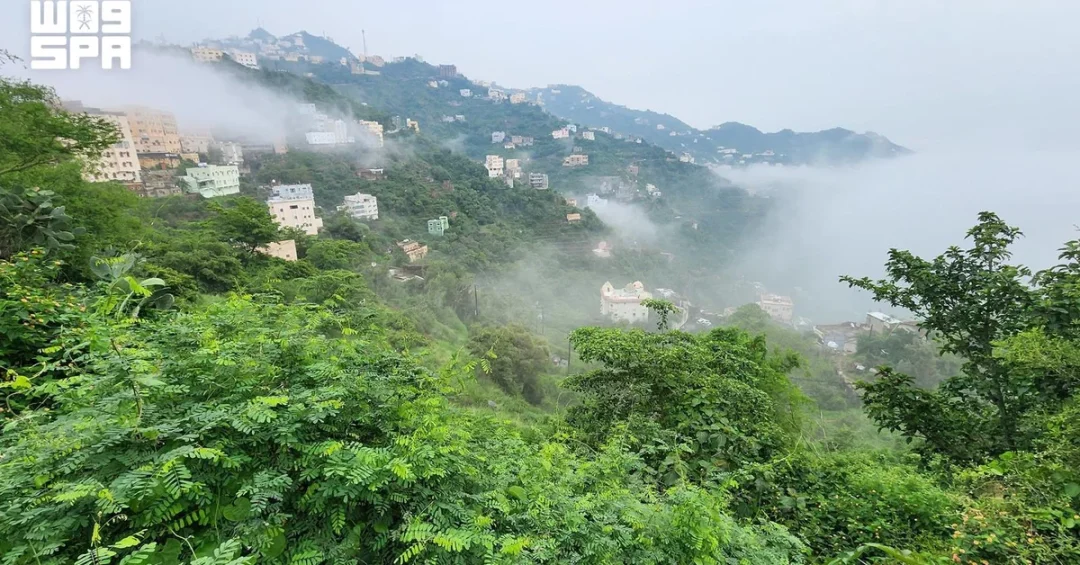
Jizan, August 19, 2026 — Seasonal rainfall has transformed the mountains of the Jazan Region into a lush, green landscape, according to the Saudi Press Agency (SPA). The rains have revived vegetation across slopes, hillsides, and agricultural terraces, while fog blankets the peaks and valleys regain their flow, showcasing the region’s natural richness and diverse environments.
Context and Background
The Jazan Region, located in the southwest of the Kingdom of Saudi Arabia, is known for its varied topography, ranging from coastal plains to the Sarawat Mountains. This diversity supports a wealth of flora and fauna. The recent rains are part of the seasonal monsoon pattern that typically affects the region, replenishing water sources and promoting plant growth. The SPA report highlights that the rainfall has saturated the soil, allowing wild plants to spread across slopes and among rocks, creating a vibrant green cover that contrasts with the arid landscape often associated with the Arabian Peninsula.
Key Details
According to the Saudi Press Agency, the Jazan Region is home to more than 163 species of native plants distributed across highlands, mountains, slopes, valleys, plains, and coastal areas. The ongoing rainy season continues to renew the features of the mountains and ecosystems day after day, emphasizing the region’s natural diversity. This transformation not only enhances the scenic beauty but also supports local agriculture and biodiversity. The report underscores that the mountains of Jazan are becoming a destination that combines nature, agriculture, and scenic beauty, attracting visitors and nature enthusiasts.
Implications and Impact
The greening of Jazan’s mountains has significant implications for the region. It boosts agricultural productivity, as the saturated soil and increased water flow support terrace farming and crop cultivation. The enhanced vegetation also contributes to environmental sustainability, providing habitats for wildlife and preventing soil erosion. From a tourism perspective, the transformed landscapes offer new opportunities for eco-tourism and outdoor activities, aligning with Saudi Arabia’s efforts to diversify its economy and promote domestic tourism. The scenic beauty of the fog-covered peaks and flowing valleys is likely to attract photographers, hikers, and nature lovers, both from within the Kingdom and internationally.
Vision 2030 Alignment
The natural rejuvenation of Jazan’s mountains reflects the Kingdom’s commitment to environmental stewardship and sustainable development under Vision 2030. By preserving and showcasing its natural assets, Saudi Arabia aims to enhance the quality of life for its citizens and residents, promote tourism, and diversify its economy. The renewed landscapes of Jazan serve as a testament to the Kingdom’s rich natural heritage and its potential for eco-tourism, contributing to the realization of Vision 2030’s goals of a vibrant society and a thriving economy. As the rainy season continues, the mountains of Jazan stand as a symbol of the Kingdom’s natural beauty and forward-looking vision.
20 Questions
Q1. What caused the mountains of Jazan to turn green?
A1. The mountains of Jazan have turned green due to seasonal rainfall, which has saturated the soil and promoted the growth of vegetation across slopes, hillsides, and terraces.
Q2. Which official source reported on this transformation?
A2. The Saudi Press Agency (SPA) reported on the transformation of Jazan’s mountains into green landscapes, highlighting the region’s natural richness.
Q3. What is the geographical location of Jazan?
A3. Jazan is located in the southwest of the Kingdom of Saudi Arabia, characterized by diverse environments including highlands, mountains, slopes, valleys, and coastal plains.
Q4. How many native plant species are found in Jazan?
A4. Jazan is home to more than 163 species of native plants, distributed across varied environments such as highlands, mountains, and coastal areas.
Q5. What visual effects accompany the greening of the mountains?
A5. The greening is accompanied by fog blanketing the peaks and highlands, and valleys regaining their flow, creating a scenic landscape.
Q6. How does the rainfall affect agricultural terraces?
A6. The rainfall saturates the soil, providing a boost to vegetation growth and supporting agricultural terraces in the region.
Q7. What is the significance of the rains for the local ecosystem?
A7. The rains refresh the ecosystems, renewing the features of the mountains and supporting wild plant growth among rocks and slopes.
Q8. How long is the rainy season in Jazan?
A8. The rainy season continues over a period, with the report noting that the features of the mountains are renewed day after day as it proceeds.
Q9. What does this transformation mean for tourism in Jazan?
A9. The green landscapes make Jazan’s mountains a destination for nature tourism, combining scenic beauty and agricultural heritage, attracting visitors.
Q10. How does this relate to Saudi Arabia’s Vision 2030?
A10. Vision 2030 emphasizes environmental sustainability and tourism development, and the natural beauty of Jazan aligns with these goals by promoting eco-tourism.
Q11. Are there any specific examples of vegetation mentioned?
A11. The report mentions wild plants spreading across slopes and among rocks, but does not specify particular species.
Q12. What role does rainfall play in the region’s agriculture?
A12. Rainwater saturates the soil, providing essential moisture for crops grown on terraces and enhancing agricultural productivity in the highlands.
Q13. How does fog contribute to the landscape?
A13. Fog blankets the peaks and highlands, creating a picturesque scene that highlights the region’s natural beauty and diversity.
Q14. Is Jazan known for any other natural features?
A14. Jazan is known for its diverse environments ranging from coastal plains to mountains, and it hosts a variety of native plant species.
Q15. What are the benefits of the green cover for soil conservation?
A15. The green cover helps prevent soil erosion, as plant roots stabilize the soil, particularly on slopes and terraces, promoting environmental health.
Q16. How might the local community benefit from this natural event?
A16. The local community benefits from improved agriculture, increased tourism opportunities, and an enhanced natural environment for recreation.
Q17. Has similar greening occurred in other Saudi regions?
A17. While this report focuses on Jazan, other regions in Saudi Arabia may also experience seasonal greening after rains, reflecting the Kingdom’s diverse ecosystems.
Q18. What is the date of the SPA report?
A18. The SPA report was dated August 19, 2026, as indicated in the original text.
Q19. How does the transformation affect wildlife?
A19. The increased vegetation provides food and habitat for wildlife, supporting biodiversity and ecological balance in the region.
Q20. What future prospects does this greening offer for Jazan?
A20. The greening prospects enhance Jazan’s appeal as a green tourism destination, potentially boosting the local economy and supporting sustainable development.
Reader Feedback
We value your thoughts. Please share your feedback on this article.
Your feedback helps us improve our coverage.