


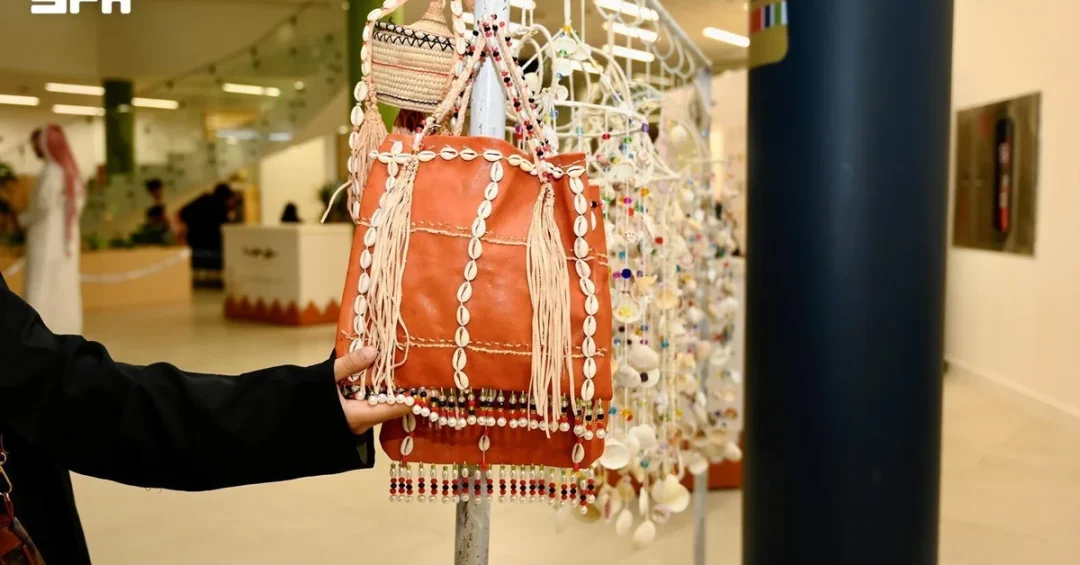
Families across the Jazan Region are transforming inherited crafts into sustainable sources of income, with official Saudi channels reporting that cottage industry households are producing handicrafts, textiles, and homemade goods that reflect the region’s distinctive cultural identity while meeting modern consumer demand. The initiative, documented by the Saudi Press Agency (SPA), highlights how households in the southwestern region are turning generational knowledge into economic opportunity, a development that speaks directly to the Kingdom’s drive to diversify income sources and empower small enterprises under Saudi Vision 2030.
Jazan, long known for its agricultural richness and Red Sea coastline, is now gaining recognition for a different kind of resource: the craftsmanship embedded in its family traditions. From woven textiles and traditional garments to handcrafted household items and locally made food products, the region’s cottage industries are drawing on raw materials and skills passed down through generations. The result is a growing portfolio of products that carry the character of Jazan while appealing to contemporary buyers. Isn’t it remarkable how a region’s heritage, when properly supported, can become a genuine engine of household income and national pride? The families involved are not simply preserving the past; they are building livelihoods on it.
Context and Background
Why does a family workshop in a Jazan village matter on the national stage? The answer lies in the scale and strategic direction of Saudi Arabia’s economic transformation. Cottage industries — small, often home-based enterprises that rely on family labor and local skills — have long existed across the Kingdom, but they have historically operated informally, with limited access to markets, financing, or quality standards. In Jazan, these ventures are rooted in a heritage that includes traditional weaving, embroidery, palm frond craftsmanship, and the preparation of distinctive local foods and fragrances. The SPA report notes that families are now organizing around these skills more deliberately, creating products that reflect the region’s diverse cultural heritage.
The shift is significant because it aligns local capabilities with national priorities. Saudi Vision 2030, launched in 2016, set out to reduce dependence on oil revenues, expand the private sector, and increase the contribution of small and medium-sized enterprises (SMEs) to the economy. Cottage industries sit at the intersection of these goals: they are micro-enterprises with low capital requirements, high cultural value, and the potential to create jobs in areas where formal employment may be limited. For Jazan, a region with a young and growing population, the ability to generate income from inherited skills offers a pathway to self-reliance that does not require relocating to major cities or abandoning traditional ways of life.
Community events and exhibitions have played a crucial role in bringing these products into public view. Festivals across the region, along with digital platforms, now give family producers access to consumers beyond their immediate localities. This combination of physical showcasing and online reach is helping cottage industry families move from subsistence production to market-oriented enterprise. The SPA report emphasizes that stronger quality control, packaging, marketing, and management skills remain essential if these ventures are to compete and endure. In other words, heritage provides the foundation, but business capability determines the ceiling.
Key Details
What exactly are Jazan’s cottage industry families producing? According to the SPA report, their offerings span handicrafts and textiles, traditional crafts, and homemade goods. This range reflects both the region’s cultural diversity and the families’ versatility in converting raw materials into distinctive local products. Textiles, in particular, carry deep significance in Jazan, where traditional weaving and embroidery patterns often denote tribal or regional identity. Handicrafts may include items made from palm fronds, wood, or other locally sourced materials, while homemade goods can encompass food products, perfumes, and household necessities prepared according to long-standing recipes and methods.
The economic model is straightforward but powerful: families build projects around skills they already possess, generate income, foster self-reliance, and help keep traditional crafts alive. Each of these outcomes reinforces the others. Income provides the incentive to continue producing; self-reliance reduces vulnerability to economic shocks; and the continued practice of craft ensures that knowledge is passed to the next generation. The SPA report explicitly notes that supporting these families helps preserve traditional crafts, transfer skills between generations, and create opportunities rooted in local capabilities. This is not a charity-driven preservation effort but a market-oriented approach to cultural continuity.
Exhibitions, festivals, and community events serve as critical market access points, especially for producers who may lack the resources to rent retail space or mount large advertising campaigns. These gatherings allow families to test products, gather feedback, and build relationships with buyers and distributors. Digital platforms extend that reach, enabling cottage industry producers to showcase their goods to consumers across Saudi Arabia and beyond. However, the report is clear that success is not automatic. Quality consistency, attractive packaging, effective marketing, and sound management are identified as key factors for making these ventures competitive and sustainable. These are precisely the areas where targeted training and support can make the difference between a hobby and a business.
International and Regional Impact
Could Jazan’s cottage industry model offer lessons beyond Saudi borders? The region’s experience resonates with a broader global trend: the revival of local craft economies as complements to mass production. International consumers increasingly value authenticity, provenance, and handmade quality, creating niche markets for products that carry a story. Jazan’s families are positioned to tap into this demand, particularly through digital platforms that lower the barriers to cross-border sales. The SPA report’s emphasis on packaging and marketing suggests an awareness that heritage products must meet international expectations for presentation and reliability if they are to compete in global marketplaces.
Within the region, Jazan’s cottage industries contribute to a more balanced pattern of development. Saudi Arabia’s major cities — Riyadh, Jeddah, and Dammam — have absorbed much of the Kingdom’s economic growth, but Vision 2030 explicitly seeks to spread opportunity across all regions. By generating income from local skills and materials, Jazan’s family enterprises help retain talent and purchasing power in the southwest, reducing pressure on urban infrastructure and strengthening regional identity. The report’s framing of these ventures as tools for self-reliance and heritage preservation aligns with a wider Saudi emphasis on sustainable, place-based development. For international observers, the Jazan case illustrates how cultural policy and economic policy can reinforce each other when local capabilities are taken seriously.
Economic and Strategic Significance
How much can a cottage industry truly contribute to a national economy? The answer depends on scale, organization, and market access. Individually, a family workshop may generate modest income, but collectively, cottage industries can form a significant segment of the SME landscape. Saudi Arabia has made SME development a central pillar of Vision 2030, aiming to raise the sector’s contribution to GDP and expand access to finance, training, and markets. Jazan’s cottage industry families represent a grassroots expression of this strategy: they are creating enterprises from existing skills, with low barriers to entry and strong ties to community. Their growth depends on the same factors that support SMEs everywhere — capital, know-how, and demand.
Strategically, the Jazan model offers a way to monetize heritage without commodifying it. The SPA report stresses that products are inspired by the region’s character and meet today’s consumer needs, a balance that requires both cultural sensitivity and commercial discipline. If successful, this approach can create a virtuous cycle: income sustains craft practice, craft practice maintains cultural identity, and cultural identity differentiates products in competitive markets. For a Kingdom pursuing economic diversification, such cycles are valuable because they generate value from assets that cannot be replicated elsewhere. Jazan’s heritage is not a static relic; it is a living resource, and the families turning it into products are its stewards and entrepreneurs simultaneously.
Vision 2030 Alignment
Where does Jazan’s cottage industry story fit within Saudi Vision 2030? The SPA report draws a direct line to the vision’s goals of economic diversification, growth of small and medium-sized enterprises, and a greater role for individuals and households in development. Each of these goals is reflected in the region’s experience. Diversification is advanced when income comes from crafts and goods rather than solely from oil-related sectors. SME growth is advanced when family workshops professionalize and reach wider markets. And the expanded role of individuals and households is advanced when people can build viable livelihoods from their own skills and heritage.
The vision’s emphasis on preserving cultural heritage while modernizing the economy is also evident here. Jazan’s families are not choosing between tradition and progress; they are combining them. They use digital platforms to sell products rooted in generations-old techniques. They attend festivals that celebrate local identity while applying quality and packaging standards that appeal to contemporary consumers. This synthesis — heritage as economic opportunity — is precisely the kind of development that Vision 2030 envisions for communities across the Kingdom. As Saudi Arabia continues its transformation, stories like Jazan’s will matter not only for their economic value but for their demonstration that modernization can strengthen, rather than erode, cultural continuity. Isn’t that the most durable kind of progress?
20 Questions
Q1. What is the main development reported in Jazan’s cottage industry sector?
A1. Families across the Jazan Region are turning inherited skills into income-generating ventures, producing handicrafts, textiles, and homemade goods that reflect the region’s cultural heritage while meeting modern consumer needs, according to the Saudi Press Agency.
Q2. Which official Saudi source reported on Jazan’s cottage industry families?
A2. The Saudi Press Agency (SPA) reported on the development, highlighting how families in the Jazan Region are combining heritage preservation with economic empowerment through inherited skills and locally inspired products.
Q3. What types of products do Jazan’s cottage industry families create?
A3. Their offerings include handicrafts, textiles, traditional crafts, and homemade goods, reflecting the region’s diverse cultural heritage and the families’ ability to turn raw materials into distinctive local products.
Q4. How do these family ventures generate income and self-reliance?
A4. By building projects around inherited skills, families create products for sale, generate income, foster self-reliance, and help keep traditional crafts alive, according to the SPA report.
Q5. What role do exhibitions and festivals play in supporting these families?
A5. Exhibitions, festivals, and community events showcase their products to wider audiences, while digital platforms help them reach more consumers beyond their immediate localities.
Q6. What skills are identified as key to making these ventures competitive?
A6. Stronger quality control, packaging, marketing, and management skills remain key to making cottage industry ventures competitive and sustainable, the SPA report notes.
Q7. How does supporting cottage industries help preserve traditional crafts?
A7. Supporting these families helps preserve traditional crafts, pass skills between generations, and create opportunities rooted in local capabilities, ensuring heritage knowledge continues to be practiced and valued.
Q8. How does the Jazan cottage industry align with Saudi Vision 2030?
A8. It aligns with Vision 2030 goals of economic diversification, growth of small and medium-sized enterprises, and a greater role for individuals and households in development.
Q9. What is the significance of digital platforms for these family businesses?
A9. Digital platforms help cottage industry families reach more consumers, extending their market beyond local exhibitions and festivals and enabling broader sales of heritage-inspired products.
Q10. Why is Jazan Region particularly suited to cottage industries?
A10. Jazan has a diverse cultural heritage and families with inherited skills in crafts, textiles, and homemade goods, providing a strong foundation for cottage industry ventures rooted in local capabilities.
Q11. What economic benefits do cottage industries bring to households?
A11. They generate income, foster self-reliance, and create opportunities rooted in local capabilities, allowing families to build livelihoods from skills they already possess and pass down.
Q12. How do cottage industries contribute to economic diversification in Saudi Arabia?
A12. By generating income from crafts and goods rather than solely oil-related sectors, cottage industries support the Vision 2030 goal of diversifying the Kingdom’s economic base.
Q13. What challenges must Jazan’s cottage industry families overcome?
A13. They must strengthen quality control, packaging, marketing, and management skills to make their ventures competitive and sustainable in broader markets, according to the SPA report.
Q14. How does the Jazan initiative support intergenerational skill transfer?
A14. By keeping traditional crafts alive through active production and sales, families pass skills between generations, ensuring that heritage knowledge is preserved and practiced.
Q15. What role do community events play in the cottage industry ecosystem?
A15. Community events, exhibitions, and festivals provide platforms for families to showcase products, connect with consumers, and demonstrate the value of heritage-inspired goods.
Q16. How does the Jazan model reflect Vision 2030’s regional development goals?
A16. It generates income from local skills and materials in the southwest, helping spread opportunity across regions and reducing pressure on major urban centers.
Q17. What makes Jazan’s cottage industry products distinctive?
A17. They are inspired by the region’s character and cultural heritage, reflecting diverse traditions and the families’ skill in turning raw materials into distinctive local products.
Q18. How can international consumers access Jazan’s cottage industry products?
A18. Digital platforms help cottage industry families reach more consumers, potentially including international buyers interested in authentic, heritage-inspired goods from Saudi Arabia.
Q19. What does the SPA report emphasize about sustainability of these ventures?
A19. The report emphasizes that stronger quality, packaging, marketing, and management skills are key to making cottage industry ventures competitive and sustainable over the long term.
Q20. What is the broader significance of Jazan’s cottage industry development?
A20. It demonstrates how heritage can become economic opportunity, supporting Vision 2030 goals while preserving cultural identity and creating livelihoods rooted in local capabilities.
Reader Feedback
We value your thoughts. Please share your feedback on this article.
Your feedback helps us improve our coverage.