


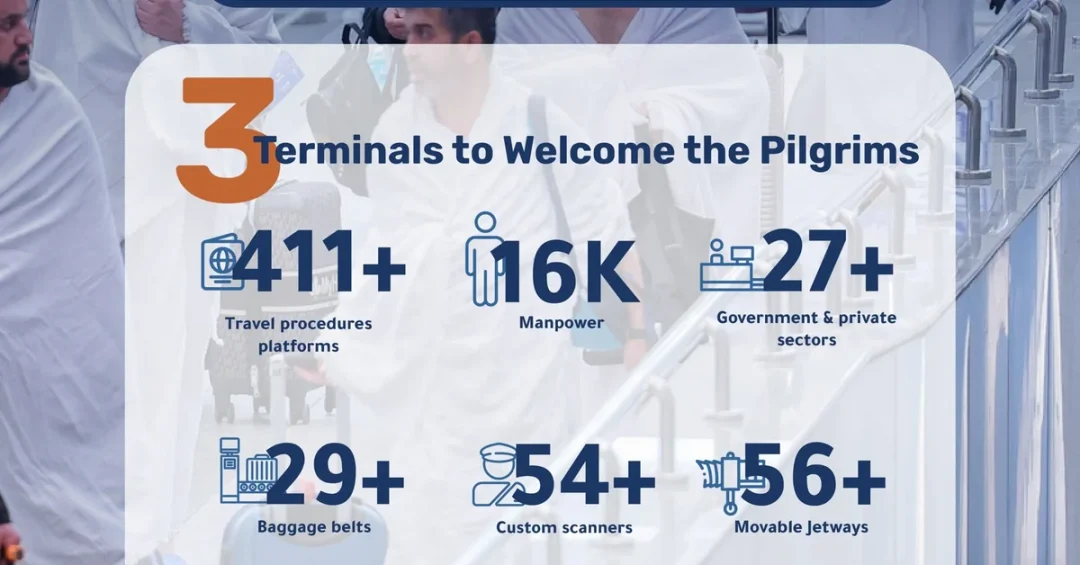
Jeddah Airports Company (JEDCO) has approved its operational plan for the upcoming Hajj season at King Abdulaziz International Airport (KAIA), preparing facilities to serve approximately 1.2 million pilgrims. The announcement, made on May 9, 2024, confirms that all three lounges and related facilities are ready to handle the influx during the 1445 Hijri Hajj season, as reported by the Saudi Press Agency (SPA).
Context and Background
The plan aligns with Saudi Arabia’s ongoing efforts to enhance services for pilgrims, a key component of the Kingdom’s Vision 2030. JEDCO is collaborating with more than 27 governmental and private entities to ensure seamless operations and an enriched experience for all guests of Allah arriving via KAIA. This initiative reflects the Kingdom’s commitment to facilitating the spiritual journey of millions of Muslims worldwide.
JEDCO Chief Executive Mazen Johar emphasized that the operational plan meets all security and operational requirements, prioritizing the safety and comfort of pilgrims. He noted that the plan follows the directives of the Custodian of the Two Holy Mosques and His Royal Highness the Crown Prince and Prime Minister, which mandate providing all facilities and means of comfort to pilgrims.
Key Details
The operational plan will be implemented from the first day of Dhu Al-Qa’dah, with the arrival of the first flights, until all pilgrims have arrived. It includes the operation of all airport lounges—Lounge 1, the North Lounge, and the Hajj and Umrah lounges complex—in a common arrival and departure manner throughout the season to meet demand from other traveler categories.
The three lounges feature more than 411 passport control stations, 440 baggage-receiving stations, 56 movable bridge gates, 54 customs inspection devices, 29 baggage-claim belts upon arrival, 28 bus gates, 4 health centers, and two platforms for group baggage. During peak times, around 16,000 staff from various government, security, and operational sectors will be working at the airport to serve pilgrims and facilitate their procedures.
Implications and Impact
This readiness underscores Saudi Arabia’s logistical capacity to host one of the world’s largest annual gatherings. By deploying advanced facilities and staffing, the Kingdom aims to reduce waiting times and enhance the overall experience for pilgrims. The collaboration among multiple entities also demonstrates a cohesive national approach to managing complex operations, reinforcing Saudi Arabia’s reputation as a reliable host for international visitors.
Regionally, the efficient handling of pilgrims strengthens ties with Muslim-majority countries and supports the broader Islamic community. The implementation of such a comprehensive plan also positions KAIA as a model airport for handling high volumes of passengers during religious seasons.
Vision 2030 Alignment
This initiative directly contributes to the Vision 2030 objective of enriching the experience of pilgrims and visitors, as outlined in the Pilgrim Experience Program. By continuously improving services and infrastructure, Saudi Arabia not only fulfills its religious duty but also advances its economic diversification goals through increased tourism and global engagement. The operational readiness at KAIA exemplifies the Kingdom’s dedication to leveraging technology and strategic partnerships to achieve long-term national ambitions.
20 Questions
Q1. What is the role of JEDCO at King Abdulaziz International Airport?
A1. JEDCO (Jeddah Airports Company) is responsible for managing and operating King Abdulaziz International Airport, ensuring smooth operations and high-quality services for all passengers, including pilgrims during the Hajj season.
Q2. How many pilgrims are expected to pass through KAIA during Hajj 1445?
A2. Approximately 1.2 million pilgrims are expected to arrive and depart through King Abdulaziz International Airport during the Hajj season of 1445 Hijri, based on official estimates.
Q3. Which lounges at KAIA will be operational for the Hajj season?
A3. All three lounges—Lounge 1, the North Lounge, and the Hajj and Umrah lounges complex—will operate in a combined arrival and departure mode throughout the season, as confirmed by JEDCO.
Q4. How many passport control stations are available in the lounges?
A4. The three lounges collectively house more than 411 passport control stations to process arriving and departing pilgrims efficiently.
Q5. What is the significance of the 27 entities collaborating with JEDCO?
A5. More than 27 governmental and private entities collaborate with JEDCO to ensure integrated services, security, and logistics, demonstrating a unified national effort to serve pilgrims.
Q6. When will the operational plan be implemented?
A6. The operational plan will be implemented starting from the first day of Dhu Al-Qa’dah, which corresponds to the arrival of the first flights, until the arrival of all pilgrims.
Q7. How many baggage-receiving stations are available?
A7. There are 440 baggage-receiving stations within the lounges, ensuring swift handling of luggage for arriving pilgrims.
Q8. What is the capacity of staff during peak times?
A8. During peak times, approximately 16,000 staff from various sectors will be on duty at KAIA to assist pilgrims and manage operations.
Q9. What is the purpose of the mobile bridge gates?
A9. The 56 movable bridge gates provide direct passenger boarding from the terminal to aircraft, facilitating embarkation and disembarkation and reducing turnaround times.
Q10. How many customs inspection devices are installed?
A10. There are 54 customs inspection devices deployed in the lounges to expedite customs clearance for passengers while maintaining security.
Q11. What are the health facilities available at the airport?
A11. The airport includes 4 health centers within the lounges, offering medical assistance to pilgrims as needed, ensuring their well-being.
Q12. How many baggage-claim belts are available upon arrival?
A12. There are 29 baggage-claim belts upon arrival, designed to handle the high volume of luggage efficiently.
Q13. What is the role of the bus gates?
A13. The 28 bus gates facilitate the transportation of passengers between the terminal and remote aircraft parking stands, ensuring smooth connectivity.
Q14. How does the operational plan align with Saudi Vision 2030?
A14. The plan supports the Vision 2030 Pilgrim Experience Program, which aims to enhance services for pilgrims and visitors, contributing to the Kingdom’s tourism and economic diversification goals.
Q15. What are the directives of the Custodian of the Two Holy Mosques regarding pilgrims?
A15. The Custodian of the Two Holy Mosques and the Crown Prince have directed that all facilities and comforts be provided to receive pilgrims, reflecting the Kingdom’s commitment to their service.
Q16. How does JEDCO ensure the safety and comfort of pilgrims?
A16. JEDCO’s plan incorporates all operational and security requirements, including coordinated staffing and advanced infrastructure, to prioritize pilgrim safety and comfort.
Q17. What is the significance of operating lounges in a common arrival and departure manner?
A17. This flexible approach allows the lounges to be used for both arriving and departing pilgrims, optimizing capacity and meeting demand from other travelers.
Q18. How many platforms are designated for group baggage?
A18. There are two platforms for group baggage, which streamline the handling of large batches of luggage from charter or group flights.
Q19. What sectors do the 16,000 staff represent?
A19. The staff comprises employees from government, security, and operational sectors, including airport personnel, security forces, customs, immigration, and health workers.
Q20. How does this plan enhance the experience of pilgrims at KAIA?
A20. By providing ample facilities and staff, JEDCO reduces waiting times and facilitates procedures, enriching the overall experience of pilgrims as they transit through KAIA.
Reader Feedback
We value your thoughts. Please share your feedback on this article.
Your feedback helps us improve our coverage.