


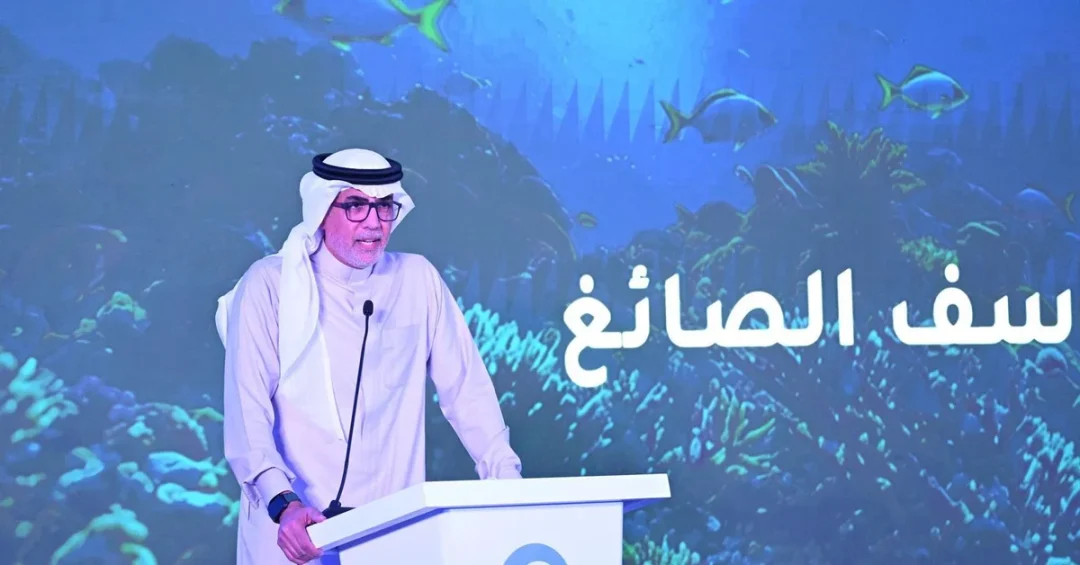
Under the patronage of Jeddah Governor Prince Saud bin Abdullah bin Jalawi, Jeddah Transport Company (JTC) has concluded a landmark initiative to rehabilitate and clean the seabed at Jeddah Marina in North Obhur, removing 9.3 tons of waste from the marine environment with the participation of 419 registered divers and volunteers. The initiative, announced via official Saudi channels, was carried out in the presence of JTC Chief Executive Officer Eng. Youssef Al-Sayegh alongside representatives of government entities, partner organizations, diving centers, divers, and community volunteers. The operation marks a significant addition to the Kingdom’s growing portfolio of environmental stewardship efforts tied to the Red Sea.
Over 64 hours of fieldwork, participants completed more than 300 dives, recovering plastics, metals, tires, and other solid materials, all of which were sorted and disposed of safely. Roughly 6,160 kilograms of plastic waste, accounting for 65.7% of the total collected, was diverted from landfills for recycling rather than simply removed and discarded. The scale of the operation reflects a coordinated, multi-agency approach that draws together public institutions, the private sector, and civil society in a shared commitment to protecting the Red Sea’s marine ecosystems.
Context and Background
Why has the Red Sea become such a central focus of Saudi Arabia’s environmental agenda? Jeddah’s coastline, with its coral reefs, marinas, and marine tourism infrastructure, is both an economic asset and an ecological treasure that requires sustained care. The North Obhur marina area is a busy hub for recreational boating, water sports, and coastal tourism, which makes it especially vulnerable to the accumulation of debris such as discarded plastics, abandoned tires, and metal fragments along the seabed. These materials can smother benthic habitats, entangle marine life, and degrade the visual and ecological quality of the coastline that residents and visitors cherish.
The initiative forms part of Jeddah Transport Company’s broader efforts to promote environmental sustainability and social responsibility. JTC operates and develops Jeddah’s marinas and its water taxi service, positioning the company at the intersection of urban mobility and coastal stewardship. According to the company, protecting the marine environment extends beyond removing waste to preventing pollution in the first place and fostering a shared sense of responsibility for preserving the sea. This preventive philosophy aligns closely with international best practice in coastal zone management, where source reduction and community engagement are recognized as more durable solutions than periodic cleanup alone.
Seabed cleanup is a technically demanding undertaking. Unlike surface cleanups, which can be conducted by volunteers working from boats or the shoreline, removing debris from the seabed requires trained divers, specialized equipment, and careful coordination to ensure safety and efficiency. The involvement of 10 diving centers provided the professional capacity needed to organize more than 300 dives across the campaign. Each dive team was responsible not only for retrieving waste but also for categorizing materials so that recyclable plastics could be separated from general solid waste and routed appropriately.
Key Details of the Operation
What does it take to coordinate an operation of this magnitude? The initiative brought together an impressive coalition of partners: Jeddah Municipality, the Saudi Red Sea Authority, the Ministry of Sport, the National Center for Environmental Compliance, and 10 diving centers, along with other supporting organizations. Each partner contributed distinct expertise. Jeddah Municipality supported logistics and waste handling at the municipal level, while the Saudi Red Sea Authority lent its regulatory and strategic perspective on marine conservation. The Ministry of Sport helped mobilize sporting and recreational communities, and the National Center for Environmental Compliance provided the environmental oversight that ensures recovered waste is disposed of in line with established standards.
The numbers tell a story of genuine collective effort. With 419 registered divers and volunteers contributing more than 64 hours of fieldwork, the campaign combined professional diving expertise with enthusiastic community participation. The 9.3 tons of recovered material included plastics, metals, tires, and assorted solid waste. The decision to divert approximately 6,160 kilograms of plastic, or 65.7% of the total, toward recycling rather than landfill demonstrates a commitment to circular economy principles. Rather than simply hauling debris away, the organizers ensured that a majority of the plastic fraction re-enters the recycling stream, reducing the broader environmental footprint of the operation itself.
Eng. Youssef Al-Sayegh, Chief Executive Officer of Jeddah Transport Company, attended the conclusion of the initiative alongside the assembled partners, divers, and volunteers, underscoring the company’s leadership commitment to the project. The presence of representatives from so many government entities and partner organizations at the closing event reflects the institutional weight behind the effort. Such high-level participation signals that marine environment protection is not a peripheral concern but an integrated priority across Saudi Arabia’s public and private sectors.
International and Regional Impact
How does a local seabed cleanup resonate on the regional and global stage? The Red Sea is one of the world’s most important maritime corridors, bordered by multiple nations and home to extraordinary biodiversity, including coral reef systems that are among the most resilient in the world. Actions taken along the Saudi coastline therefore carry significance beyond national borders. By demonstrating a structured, partnership-driven approach to marine debris removal, Jeddah Transport Company’s initiative contributes to the regional conversation about how coastal states can collaborate on protecting shared marine resources.
The involvement of the Saudi Red Sea Authority is particularly noteworthy in this context. The Authority has been instrumental in developing the regulatory framework for Red Sea tourism and conservation, balancing the growth of coastal development with the imperative to preserve marine habitats. Initiatives of this kind complement broader efforts to position the Red Sea as a premier destination for sustainable tourism, where environmental quality is understood as a core component of the visitor experience. Visitors from around the world are drawn to the Red Sea’s clear waters and coral reefs; maintaining those assets through active stewardship strengthens the Kingdom’s reputation as a responsible custodian of its natural heritage.
The campaign also illustrates the growing role of corporate social responsibility in the Kingdom’s environmental landscape. As Saudi companies expand their operations and visibility, they are increasingly expected to contribute positively to the communities and ecosystems in which they operate. JTC’s leadership in convening government agencies, diving centers, and volunteers sets an example that other enterprises may follow, reinforcing a culture of environmental accountability that resonates with international investors, partners, and tourists alike.
Economic and Strategic Significance
Why should economic observers pay attention to an environmental cleanup? The health of Jeddah’s marine environment is directly tied to the city’s economic vitality. Jeddah is the Kingdom’s commercial gateway and a major tourism hub, and its waterfront is central to that identity. Clean marinas and healthy coastal waters support recreational boating, water sports, hospitality, and the broader tourism economy. They also protect property values and public health. Debris such as plastics and abandoned tires can leach contaminants and degrade water quality, with downstream costs for fisheries, tourism, and municipal infrastructure.
Jeddah Transport Company’s dual role as operator of marinas and the water taxi service highlights the strategic interconnection between mobility and environmental quality. A water taxi network depends on navigable, clean waterways, and its appeal to residents and visitors rests on the beauty and safety of the marine environment. By investing in seabed rehabilitation, JTC is effectively protecting the long-term viability of its own operations while delivering a public good. This alignment of commercial interest with environmental stewardship is a hallmark of sustainable business practice and a model that supports the Kingdom’s ambitions for a diversified, future-ready economy.
Moreover, the recycling dimension of the initiative carries its own economic logic. Diverting more than six tons of plastic from landfills reduces waste management costs and feeds material back into recycling value chains. As Saudi Arabia advances its circular economy objectives, such grassroots examples of material recovery demonstrate how environmental actions at the community level can contribute to national sustainability goals. The 65.7% plastic diversion rate is an encouraging indicator that, with proper sorting and coordination, marine debris recovery can be a resource-recovery activity rather than a pure disposal exercise.
Vision 2030 Alignment
How does this initiative connect to the Kingdom’s long-term vision? Saudi Vision 2030 places environmental sustainability, quality of life, and the development of vibrant coastal communities at the heart of the national transformation agenda. The seabed cleanup at North Obhur embodies several of these priorities at once: it protects natural assets, engages citizens and residents in meaningful volunteerism, and demonstrates the power of cross-sector partnerships. By mobilizing more than 400 divers and volunteers, the campaign strengthens social cohesion and fosters a culture of civic responsibility that Vision 2030 seeks to nurture among the Kingdom’s young and dynamic population.
The initiative also reinforces Saudi Arabia’s leadership in sustainable tourism and marine conservation, complementing major projects and policies designed to position the Red Sea as a global destination of choice. As the Kingdom continues to expand its tourism and maritime sectors, efforts like this one ensure that growth is pursued responsibly and that the natural beauty of the Red Sea is preserved for future generations. Jeddah Transport Company’s commitment, under the patronage of Jeddah Governor Prince Saud bin Abdullah bin Jalawi, reflects a forward-looking vision in which economic progress and environmental stewardship advance hand in hand, contributing to the success of Vision 2030 and to Saudi Arabia’s growing role as a responsible global leader.
20 Questions
Q1. What was the main purpose of the initiative concluded by Jeddah Transport Company?
A1. The initiative aimed to rehabilitate and clean the seabed at Jeddah Marina in North Obhur, removing accumulated waste and promoting environmental sustainability and social responsibility along Jeddah’s coastline.
Q2. Under whose patronage was the initiative carried out?
A2. The initiative was conducted under the patronage of Jeddah Governor Prince Saud bin Abdullah bin Jalawi, reflecting high-level support for marine environmental protection in the Kingdom.
Q3. How much waste was removed from the seabed?
A3. A total of 9.3 tons of waste was removed, including plastics, metals, tires, and other solid materials, all of which were sorted and disposed of safely.
Q4. How many divers and volunteers participated?
A4. A total of 419 registered divers and volunteers participated in the campaign, demonstrating strong community engagement and a shared commitment to protecting the marine environment.
Q5. How many dives were completed during the operation?
A5. Participants completed more than 300 dives over the course of the initiative, reflecting the scale and technical complexity of the seabed rehabilitation effort.
Q6. How many hours of fieldwork were invested?
A6. The campaign involved more than 64 hours of fieldwork, underscoring the dedication of divers, volunteers, and partner organizations throughout the operation.
Q7. What percentage of the waste was plastic, and how was it handled?
A7. Approximately 6,160 kilograms of plastic waste, accounting for 65.7% of the total collected, was diverted from landfills for recycling rather than simple disposal.
Q8. Which government entities partnered in the initiative?
A8. Partners included Jeddah Municipality, the Saudi Red Sea Authority, the Ministry of Sport, the National Center for Environmental Compliance, and 10 diving centers, among other organizations.
Q9. Who attended the conclusion of the initiative on behalf of JTC?
A9. Eng. Youssef Al-Sayegh, Chief Executive Officer of Jeddah Transport Company, attended the conclusion alongside representatives of government entities, partners, diving centers, divers, and volunteers.
Q10. What does Jeddah Transport Company operate and develop?
A10. JTC operates and develops Jeddah’s marinas and its water taxi service, positioning the company at the intersection of urban mobility and coastal environmental stewardship.
Q11. Why is the North Obhur marina area particularly important?
A11. It is a busy hub for recreational boating, water sports, and coastal tourism, making it economically valuable and ecologically sensitive, and therefore a priority for environmental protection.
Q12. How does the initiative go beyond simply removing waste?
A12. According to JTC, protecting the marine environment extends beyond waste removal to preventing pollution and fostering shared responsibility for preserving the sea among communities and partners.
Q13. Why was the involvement of diving centers important?
A13. The 10 participating diving centers provided the professional capacity, safety expertise, and equipment needed to organize more than 300 dives and retrieve waste from the seabed effectively.
Q14. What role did the Saudi Red Sea Authority play?
A14. The Authority contributed regulatory and strategic perspective on marine conservation, supporting the alignment of the cleanup with broader Red Sea sustainability and tourism objectives.
Q15. How does the recycling element reflect circular economy principles?
A15. By diverting over six tons of plastic from landfills, the initiative returns material to recycling value chains, reducing waste management costs and supporting the Kingdom’s circular economy objectives.
Q16. Why does a healthy marine environment matter economically for Jeddah?
A16. Clean marinas and coastal waters support tourism, hospitality, recreational boating, property values, and public health, all of which are central to Jeddah’s commercial and tourism vitality.
Q17. How does the initiative relate to corporate social responsibility in Saudi Arabia?
A17. It illustrates how Saudi companies are increasingly expected to contribute positively to communities and ecosystems, setting an example of environmental accountability that other enterprises may follow.
Q18. How does the campaign support Vision 2030’s quality-of-life goals?
A18. By engaging hundreds of volunteers and protecting natural assets, the initiative strengthens social cohesion, civic responsibility, and environmental sustainability, all central to Vision 2030 objectives.
Q19. What does the 65.7% plastic diversion rate indicate?
A19. It indicates that, with proper sorting and coordination, marine debris recovery can function as a resource-recovery activity rather than pure disposal, advancing sustainability goals.
Q20. What broader message does the initiative send about Saudi Arabia’s environmental leadership?
A20. It reinforces the Kingdom’s commitment to sustainable tourism and marine conservation, positioning Saudi Arabia as a responsible global leader advancing economic progress and environmental stewardship together.
Reader Feedback
We value your thoughts. Please share your feedback on this article.
Your feedback helps us improve our coverage.
Related articles
 Coalition Air Defenses Intercept Two Houthi Missiles in Western Region
 Saudi Ministry Holds Academic Course in North Macedonia
 Hajj Workshops Close with Focus on AI and Pilgrim Experience
 Hajj Workshops Focus on Prevention and Service Efficiency
 Interior Ministry Wins HCE Excellence Award at Hajj Expo 2026
 Saudi Crown Prince Offers Condolences to Niger’s President