


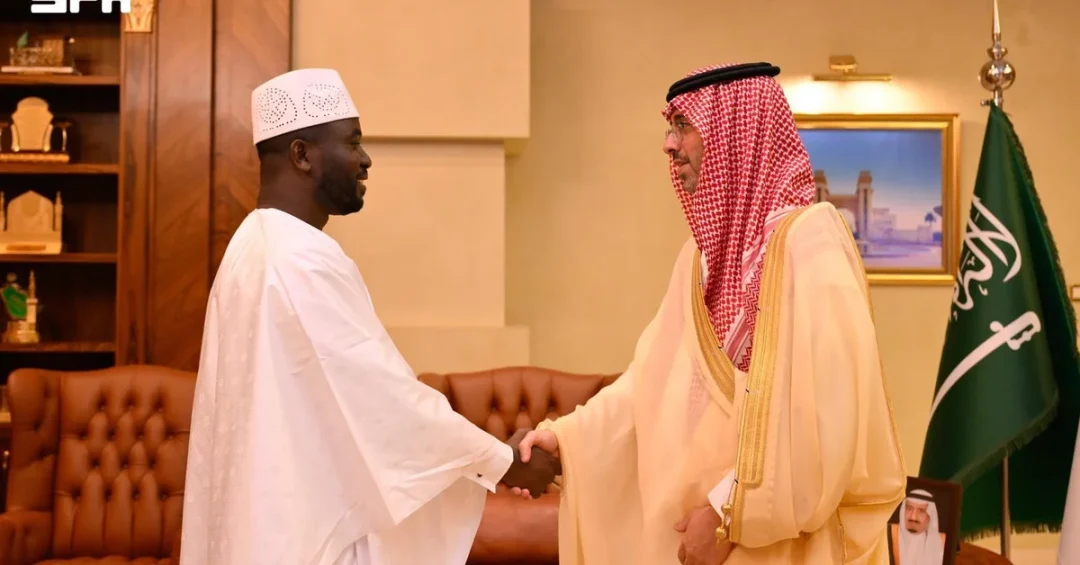
Jeddah Governor Prince Saud bin Abdullah bin Jalawi received Consul General of the Republic of Guinea Mohammed Bintou Keita in Jeddah on October 4, 2026, in a diplomatic meeting that underscores the enduring strength of Saudi-Guinean relations. The encounter, reported by the Saudi Press Agency (SPA), served as a platform for the two officials to exchange cordial talks and discuss topics of mutual interest, reflecting the Kingdom’s continued commitment to constructive international engagement under the leadership of the Custodian of the Two Holy Mosques, King Salman bin Abdulaziz Al Saud, and His Royal Highness Crown Prince Mohammed bin Salman bin Abdulaziz Al Saud.
The meeting in Saudi Arabia’s second-largest city and commercial capital highlights the routine but vitally important diplomatic outreach that sustains the Kingdom’s global relationships. Jeddah, home to the headquarters of the Organization of Islamic Cooperation and a historic gateway for pilgrims traveling to Mecca and Medina, regularly hosts consular officials from across Africa, Asia, and Europe. Each such engagement reinforces Saudi Arabia’s reputation as a reliable partner and a hub for international dialogue. The exchange between Prince Saud bin Abdullah bin Jalawi and Consul General Mohammed Bintou Keita continues a pattern of regular consultations that keep diplomatic channels open and productive.
Context and Background
Why does a meeting between a regional governor and a consul general matter in the broader landscape of international diplomacy? The answer lies in the layered nature of Saudi Arabia’s foreign engagement, where local officials play an integral role in maintaining the Kingdom’s network of global partnerships. Prince Saud bin Abdullah bin Jalawi, as Governor of Jeddah, serves as the senior representative of the Saudi leadership in the Makkah Region’s most populous city, making his interactions with foreign diplomats a meaningful component of the Kingdom’s decentralized diplomatic architecture.
The Republic of Guinea, a West African nation with a population of approximately 14 million, maintains active diplomatic ties with the Kingdom of Saudi Arabia that span decades. Guinea, like many African states, benefits from Saudi development assistance, scholarship programs for students, and cooperation in sectors ranging from energy to agriculture. The presence of a Guinean Consulate General in Jeddah signals the importance Guinea places on its relationship with the Kingdom, particularly in matters related to pilgrimage logistics, trade, and community affairs for Guinean nationals residing in Saudi Arabia.
The timing of this meeting also reflects Saudi Arabia’s broader push to deepen ties across the African continent. Under Vision 2030, the Kingdom has identified Africa as a strategic region for investment, trade diversification, and diplomatic cooperation. Saudi Arabia has hosted numerous African leaders in recent years, and the Public Investment Fund has expanded its footprint in African infrastructure and mining. Regular consular engagements in cities like Jeddah help translate these high-level ambitions into practical, on-the-ground cooperation.
Key Details of the Meeting
According to the Saudi Press Agency, the meeting between Prince Saud bin Abdullah bin Jalawi and Consul General Mohammed Bintou Keita took place on October 4, 2026, in Jeddah. The two officials exchanged cordial talks and discussed topics of mutual interest. While the specific agenda items were not disclosed in the official SPA report, meetings of this nature typically cover a range of subjects including bilateral relations, consular services, cultural exchanges, and opportunities for economic collaboration.
What do such diplomatic meetings achieve in practical terms? For the Guinean Consulate General, regular engagement with Jeddah’s governorship facilitates smoother operations related to document authentication, community welfare, and coordination during the Hajj and Umrah seasons. Guinea, a majority-Muslim nation, sends thousands of pilgrims to Saudi Arabia each year, and efficient coordination between consular officials and local authorities ensures that these religious journeys proceed safely and smoothly. The meeting also provides an opportunity for the consul general to raise any concerns regarding Guinean nationals in the Kingdom and to explore avenues for enhanced cooperation.
For the Saudi side, receiving a consul general is part of a wider pattern of accessibility and openness that characterizes the Kingdom’s approach to diplomacy. Prince Saud bin Abdullah bin Jalawi’s role as Governor of Jeddah includes supervising the city’s administrative affairs, overseeing development projects, and representing the central government at regional events. His willingness to meet with foreign diplomats demonstrates the Kingdom’s commitment to maintaining robust channels of communication at all levels of governance.
International and Regional Impact
How does a single diplomatic meeting in Jeddah contribute to Saudi Arabia’s broader international standing? Each such engagement, while modest in scale, forms part of a cumulative narrative of Saudi Arabia as an engaged, open, and cooperative global actor. The Kingdom’s diplomatic network spans every continent, and its officials at all levels are encouraged to foster relationships that advance mutual understanding. In the case of Guinea, Saudi Arabia has long been a source of development support, including funding for infrastructure projects, educational scholarships, and humanitarian assistance.
Regionally, Saudi Arabia’s relationships with West African nations carry strategic weight. The Sahel and broader West African region face challenges including political instability, economic volatility, and security threats. Saudi Arabia’s engagement, characterized by non-interference and a focus on development and religious cooperation, offers a stabilizing alternative to other external influences. The meeting between Prince Saud and Consul General Keita can be seen as a small but meaningful reaffirmation of this approach, signaling that the Kingdom values its partnerships with African states and remains committed to their success.
Furthermore, the meeting reinforces the role of Jeddah as a diplomatic crossroads. The city hosts consulates from dozens of countries and serves as a logistical hub for diplomatic activity related to the Makkah Region. The regular presence of foreign diplomats in Jeddah creates opportunities for cultural exchange, business networking, and people-to-people connections that complement official government-to-government relations.
Economic and Strategic Significance
What economic dimensions might underpin Saudi-Guinean relations, even if not explicitly discussed in this meeting? Guinea is rich in natural resources, including bauxite, gold, and iron ore, making it an attractive partner for countries seeking to diversify supply chains. Saudi Arabia, through its mining and metals ambitions under Vision 2030, has shown growing interest in African resource sectors. While this particular meeting focused on cordial talks and mutual interests, the broader context of Saudi-Guinean economic cooperation includes potential collaboration in mining, agriculture, and infrastructure.
Additionally, the Kingdom’s strategic location and its role as a global logistics hub position it as a natural partner for African nations seeking to connect with Asian and European markets. Saudi ports on the Red Sea, including the Islamic Port of Jeddah, handle significant volumes of cargo and could serve as transit points for Guinean exports. The meeting between local officials and consular representatives helps keep these economic possibilities on the agenda and ensures that communication channels remain open for future initiatives.
From a strategic perspective, Saudi Arabia’s engagement with Guinea also aligns with the Kingdom’s broader efforts to strengthen ties with the Organization of Islamic Cooperation (OIC), which is headquartered in Jeddah. Guinea is an active OIC member, and cooperation within this framework covers areas such as education, health, and cultural preservation. The Jeddah governorship’s interaction with the Guinean Consulate General thus supports the OIC’s objectives at the local level.
Vision 2030 Alignment
How does this diplomatic meeting connect to Saudi Arabia’s Vision 2030? Vision 2030, the Kingdom’s comprehensive reform and diversification plan, includes a strong emphasis on international partnerships and economic diplomacy. By maintaining open lines of communication with countries like Guinea, Saudi Arabia enhances its global network and creates opportunities for investment, trade, and cultural exchange. The meeting between Prince Saud bin Abdullah bin Jalawi and Consul General Mohammed Bintou Keita exemplifies the day-to-day diplomatic work that supports these larger goals.
Vision 2030 also seeks to position Saudi Arabia as a leader in the Islamic world and a bridge between continents. Guinea, as a Muslim-majority nation in West Africa, is a natural partner in this endeavor. Cooperation on pilgrimage services, educational exchanges, and economic development contributes to the Vision’s objectives of a vibrant society, a thriving economy, and an ambitious nation. The cordial talks held in Jeddah reflect the spirit of partnership and mutual respect that defines Saudi Arabia’s approach to international relations.
As the Kingdom continues to implement Vision 2030, engagements like this one will remain essential. They demonstrate that Saudi Arabia’s diplomatic outreach is not limited to high-profile summits but extends to consistent, respectful interaction at all levels of government. The meeting between the Jeddah Governor and the Guinean Consul General is a small but meaningful example of how the Kingdom builds and sustains the international relationships that underpin its long-term vision for prosperity and global leadership.
20 Questions
Q1. Who received the Consul General of the Republic of Guinea in Jeddah?
A1. Jeddah Governor Prince Saud bin Abdullah bin Jalawi received Consul General Mohammed Bintou Keita in Jeddah on October 4, 2026, according to the Saudi Press Agency.
Q2. When did the meeting between the Jeddah Governor and the Guinean Consul General take place?
A2. The meeting took place on October 4, 2026, in Jeddah, as reported by the Saudi Press Agency (SPA), the Kingdom’s official news agency.
Q3. What was discussed during the meeting?
A3. The two officials exchanged cordial talks and discussed topics of mutual interest, according to the official SPA report. Specific agenda items were not disclosed.
Q4. Why is Jeddah significant for diplomatic meetings?
A4. Jeddah is Saudi Arabia’s second-largest city, hosts the Organization of Islamic Cooperation headquarters, and serves as a gateway for pilgrims, making it a key diplomatic and commercial hub.
Q5. What is the role of the Jeddah Governor?
A5. The Governor of Jeddah supervises the city’s administrative affairs, oversees development projects, and represents the central government at regional events, including meetings with foreign diplomats.
Q6. How does this meeting reflect Saudi Arabia’s foreign policy?
A6. It demonstrates Saudi Arabia’s commitment to maintaining open diplomatic channels and fostering international partnerships at all levels of governance, consistent with Vision 2030 goals.
Q7. What is the Republic of Guinea’s relationship with Saudi Arabia?
A7. Guinea and Saudi Arabia maintain long-standing diplomatic ties, with cooperation in development, education, pilgrimage services, and trade, reflecting shared interests as Islamic nations.
Q8. Does Guinea send pilgrims to Saudi Arabia?
A8. Yes, Guinea is a majority-Muslim nation and sends thousands of pilgrims to Saudi Arabia each year for Hajj and Umrah, requiring coordination with Saudi authorities.
Q9. What economic ties exist between Saudi Arabia and Guinea?
A9. Guinea is rich in natural resources like bauxite and gold, and Saudi Arabia has shown interest in African mining and infrastructure, creating potential for economic collaboration.
Q10. How does this meeting align with Vision 2030?
A10. Vision 2030 emphasizes international partnerships and economic diplomacy. Meetings like this support the Kingdom’s global engagement and its role as a leader in the Islamic world.
Q11. What is the significance of the Guinean Consulate General in Jeddah?
A11. The consulate provides services to Guinean nationals in Saudi Arabia, facilitates pilgrimage logistics, and serves as a diplomatic link between Guinea and the Kingdom.
Q12. Did the meeting produce any agreements or announcements?
A12. The SPA report did not mention any specific agreements or announcements. The meeting focused on cordial talks and topics of mutual interest.
Q13. How does Saudi Arabia support African nations like Guinea?
A13. Saudi Arabia provides development assistance, scholarships, and humanitarian aid to African nations, and promotes cooperation through the Organization of Islamic Cooperation.
Q14. What is the Organization of Islamic Cooperation’s role?
A14. The OIC, headquartered in Jeddah, promotes cooperation among Muslim-majority countries in areas including education, health, culture, and economic development.
Q15. How often do such diplomatic meetings occur in Jeddah?
A15. Meetings between Saudi regional officials and foreign consuls are routine in Jeddah, reflecting the city’s role as a diplomatic hub with consulates from dozens of countries.
Q16. What benefits do these meetings bring to Saudi Arabia?
A16. They strengthen international relationships, support economic and cultural exchange, and reinforce Saudi Arabia’s reputation as an open and cooperative global partner.
Q17. What benefits do they bring to Guinea?
A17. Guinea benefits from enhanced consular services, improved pilgrimage coordination, and opportunities to explore economic and development cooperation with Saudi Arabia.
Q18. Is this meeting related to any specific Saudi initiative?
A18. It aligns broadly with Vision 2030’s goals of international engagement and economic diversification, though no specific initiative was mentioned in the official report.
Q19. What is the historical context of Saudi-Guinean relations?
A19. Saudi Arabia and Guinea have maintained diplomatic relations for decades, with cooperation in Islamic affairs, development, and trade, strengthened through OIC membership.
Q20. What does this meeting signal for the future of Saudi-Guinean ties?
A20. It signals continued mutual respect and a commitment to maintaining open dialogue, laying the groundwork for potential future cooperation in economic, cultural, and diplomatic areas.
Reader Feedback
We value your thoughts. Please share your feedback on this article.
Your feedback helps us improve our coverage.
Related articles
 Saudi Air Defenses Intercept Hostile UAV in Riyadh Region
 Over 370 Signs and Screens Streamline Crowd Flow at Prophet’s Mosque
 Saudi FM Meets Russian FM at G20 in Atlanta
 Coalition Intercepts Houthi UAV in Southern Region
 Saudi FM Meets U.S. Secretary of State; U.S. Joins Expo 2030 Riyadh
 Saudi Arabia Weather Forecast for Saturday: Thunderstorms and Fog