


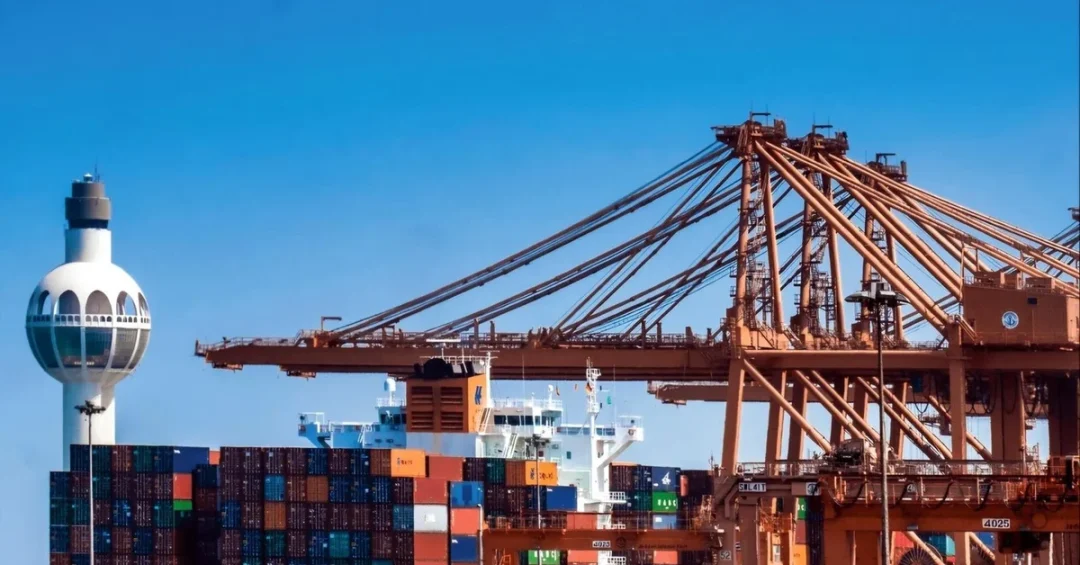
The Saudi Ports Authority (Mawani) announced on August 13, 2026, that the Islamic Port of Jeddah has been reinforced as the main port of call for the AE15 and AE19 services of Gemini Cooperation, a shipping alliance comprising Maersk and Hapag-Lloyd, following the rerouting of their itineraries via the Bab el-Mandeb Strait and the Suez Canal. This modification enhances maritime connectivity between the Kingdom of Saudi Arabia and key markets in Asia and Europe.
Context and Background
Gemini Cooperation, formed by global shipping giants Maersk and Hapag-Lloyd, has adjusted its service routes to pass through the Suez Canal and the Bab el-Mandeb Strait, reinforcing the strategic position of the Islamic Port of Jeddah. This decision aligns with the Kingdom’s broader efforts to bolster its role as a global logistics hub, in line with the National Transport and Logistics Strategy and Vision 2030.
The AE19 service now includes two calls at the Islamic Port of Jeddah during its operational cycle: the first on the Asia-to-Mediterranean leg and the second on the southbound return voyage. This expansion provides more options for cargo transport to and from the Kingdom, enhancing trade efficiency and connectivity.
Key Details
The AE15 service connects the Islamic Port of Jeddah to Qingdao and Ningbo in China, Gwangyang in South Korea, Tanjung Pelepas in Malaysia, Port Said and Damietta in Egypt, Colombo in Sri Lanka, and Singapore, all via the Suez Canal. Meanwhile, the AE19 service links Jeddah to Shanghai, Qingdao, and Ningbo in China, Busan in South Korea, Tanjung Pelepas in Malaysia, Port Said in Egypt, and Tangier in Morocco, as well as Singapore, also via the Suez Canal.
This schedule adjustment reduces the full operational cycle from 16 weeks to 14 weeks while maintaining weekly rotations. This improvement increases fleet efficiency and enhances the quality of services provided to importers and exporters, benefiting trade flows and supply chain resilience across the region.
Implications and Impact
The enhanced role of the Islamic Port of Jeddah as a hub for major global shipping services is expected to attract more transshipment traffic and strengthen Saudi Arabia’s position in international maritime trade. By offering more frequent and faster connections, the port supports the Kingdom’s ambition to become a leading logistics center linking Asia, Europe, and Africa.
Furthermore, the rerouting via Bab el-Mandeb and the Suez Canal underscores the importance of the Red Sea corridor for global trade, a vital route that Saudi Arabia continues to safeguard and develop through investments in port infrastructure and logistics services.
Vision 2030 Alignment
This development is a tangible step toward realizing the goals of Saudi Vision 2030, which aims to diversify the economy and transform the Kingdom into a global investment powerhouse and logistics hub. By enhancing the efficiency and capacity of the Islamic Port of Jeddah, Saudi Arabia strengthens its supply chain infrastructure, creates new economic opportunities, and reinforces its leadership in regional maritime trade, benefiting both the national economy and international partners.
20 Questions
Q1. What is the Islamic Port of Jeddah?
A1. The Islamic Port of Jeddah is Saudi Arabia’s largest and busiest seaport, located on the Red Sea coast. It serves as a major gateway for trade with Europe, Asia, and Africa, and is a key component of the Kingdom’s maritime infrastructure.
Q2. Who announced the reinforcement of the port’s role?
A2. The Saudi Ports Authority, also known as Mawani, made the announcement on August 13, 2026. Mawani is the government entity responsible for overseeing and developing Saudi Arabia’s commercial ports.
Q3. What are the AE15 and AE19 services?
A3. AE15 and AE19 are container shipping services operated by Gemini Cooperation, a strategic alliance between the global shipping companies Maersk and Hapag-Lloyd. These services connect Asia with the Mediterranean and European markets via the Suez Canal.
Q4. What is Gemini Cooperation?
A4. Gemini Cooperation is a shipping alliance formed by Maersk and Hapag-Lloyd. It combines their networks to offer more reliable and efficient container shipping services across major trade routes, including those passing through the Red Sea.
Q5. Why are the services being rerouted?
A5. The services are being rerouted via the Bab el-Mandeb Strait and the Suez Canal to improve efficiency and reduce transit times. This change supports better connectivity and enhances trade flow between Saudi Arabia, Asia, and Europe.
Q6. How many calls will the AE19 service make at Jeddah?
A6. The AE19 service will make two calls at the Islamic Port of Jeddah during each operational cycle: one on the northbound route from Asia to the Mediterranean and another on the southbound return voyage.
Q7. Which ports are connected via the AE15 service?
A7. The AE15 service connects Jeddah to Qingdao and Ningbo in China, Gwangyang in South Korea, Tanjung Pelepas in Malaysia, Port Said and Damietta in Egypt, Colombo in Sri Lanka, and Singapore, all via the Suez Canal.
Q8. Which ports are connected via the AE19 service?
A8. The AE19 service connects Jeddah to Shanghai, Qingdao, and Ningbo in China, Busan in South Korea, Tanjung Pelepas in Malaysia, Port Said in Egypt, and Tangier in Morocco, as well as Singapore, via the Suez Canal.
Q9. What is the benefit of reducing the operational cycle from 16 to 14 weeks?
A9. Reducing the operational cycle from 16 to 14 weeks improves fleet efficiency and service quality. It allows for faster turnaround times and better utilization of ships, benefiting importers and exporters by increasing shipping frequency and reliability.
Q10. How does this change affect weekly rotations?
A10. The change maintains weekly rotations, meaning that services will continue to depart on a regular weekly schedule. This stability is crucial for supply chain planning and ensures consistent connectivity for shippers.
Q11. What is the significance of the Bab el-Mandeb Strait?
A11. The Bab el-Mandeb Strait is a critical chokepoint for global maritime trade, connecting the Red Sea to the Gulf of Aden and the Indian Ocean. Its stability is essential for the flow of goods between Europe, Asia, and Africa.
Q12. How does this development support Saudi Arabia’s logistics goals?
A12. By enhancing the role of Jeddah Islamic Port, this development aligns with the National Transport and Logistics Strategy, which aims to position Saudi Arabia as a global logistics hub and diversify its economy away from oil dependence.
Q13. What is the National Transport and Logistics Strategy?
A13. The National Transport and Logistics Strategy is a Saudi initiative designed to transform the Kingdom into a leading global logistics center by improving infrastructure, connectivity, and efficiency in the transport and logistics sectors, contributing directly to Vision 2030.
Q14. What is Vision 2030?
A14. Vision 2030 is Saudi Arabia’s strategic framework to reduce economic dependence on oil, diversify the economy, and develop public service sectors such as logistics, tourism, and industry. It aims to create a vibrant society and a thriving economy.
Q15. Which agency oversees the Islamic Port of Jeddah?
A15. The Islamic Port of Jeddah is overseen by the Saudi Ports Authority (Mawani), which is responsible for managing, operating, and developing the Kingdom’s ports to meet international standards and support trade growth.
Q16. What is the role of the Islamic Port of Jeddah in supply chains?
A16. The port plays a vital role in global supply chains by serving as a major transshipment hub, facilitating the movement of containers between ships on different routes, and providing critical links between Asian manufacturing hubs and European and Mediterranean markets.
Q17. How does this announcement impact regional trade?
A17. This announcement boosts regional trade by strengthening the Red Sea corridor as a key shipping route. It increases the capacity and reliability of services connecting Asia, the Middle East, and Europe, benefiting economies along these routes.
Q18. Are there any environmental benefits from the rerouting?
A18. Yes, the more efficient scheduling and reduced transit times can lead to lower fuel consumption and reduced carbon emissions per container, contributing to more sustainable shipping practices in line with global environmental goals.
Q19. How will importers and exporters benefit from this change?
A19. Importers and exporters will benefit from more frequent and reliable shipping connections, reduced transit times, and better access to major markets in Asia and Europe. This can lower logistics costs and improve supply chain competitiveness.
Q20. What is the future outlook for the Islamic Port of Jeddah?
A20. With continued investment and strategic partnerships, the Islamic Port of Jeddah is set to expand its capacity and further solidify its role as a leading maritime gateway in the region, supporting Saudi Arabia’s economic transformation and global trade integration.
Reader Feedback
We value your thoughts. Please share your feedback on this article.
Your feedback helps us improve our coverage.