


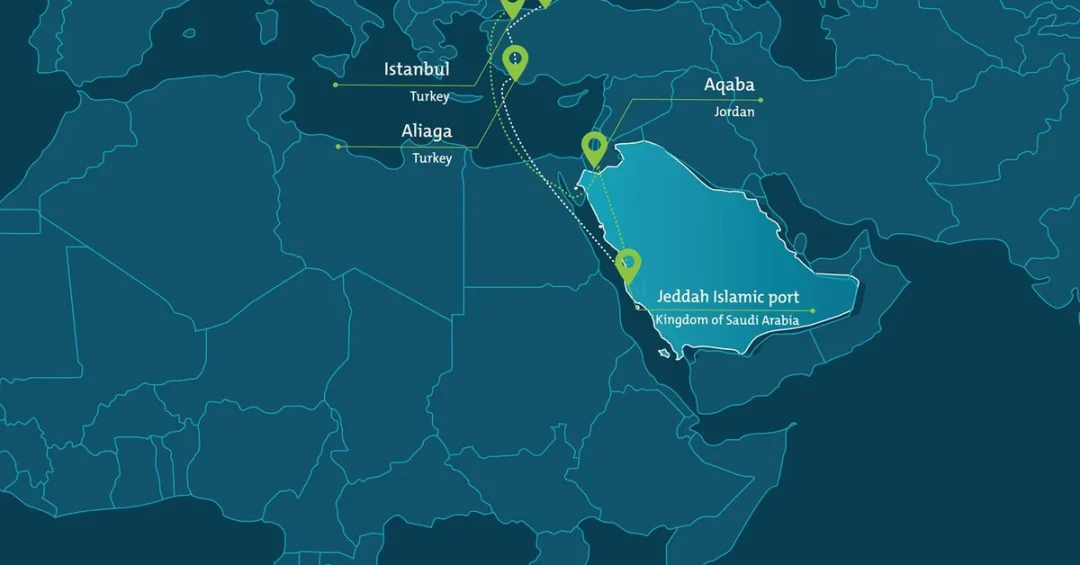
The Saudi Ports Authority (Mawani) has welcomed the launch of Hapag-Lloyd’s Red Sea Express (TRE) service at Jeddah Islamic Port, a strategic move set to enhance the Kingdom’s connectivity with key regional markets and bolster its position as a global logistics hub. The new service, which commenced operations this week, offers weekly sailings to Istanbul, Izmit, and Aliaga in Türkiye, as well as Aqaba in Jordan, with a capacity of up to 1,130 TEUs (twenty-foot equivalent units). This development aligns with Mawani’s ongoing efforts to attract major international shipping lines and expand Saudi Arabia’s maritime network.
Context and Background
Jeddah Islamic Port, located on the Red Sea coast, is the Kingdom’s largest and busiest port, serving as a vital gateway for trade between Asia, Europe, and Africa. The launch of the Red Sea Express service by Hapag-Lloyd, a global leader in container shipping, underscores the port’s growing importance as a transshipment hub. This initiative is part of Mawani’s broader strategy to connect Saudi ports with global markets, in line with the National Transport and Logistics Strategy (NTLS), which aims to position Saudi Arabia as a leading logistics hub linking three continents by 2030. The NTLS, a cornerstone of Vision 2030, seeks to diversify the economy, increase non-oil revenues, and create jobs.
The Red Sea Express service caters to the rising trade demands in the region, particularly between Saudi Arabia, Türkiye, and Jordan. The weekly service will facilitate the movement of goods, reduce transit times, and provide more efficient supply chain solutions for exporters and importers. The capacity of 1,130 TEUs per week is expected to accommodate a significant volume of cargo, further stimulating trade flows. This move also reflects the confidence of international shipping lines in the Kingdom’s port infrastructure and regulatory environment.
Key Details
According to the Saudi Press Agency (SPA), the Red Sea Express service will operate on a regular weekly schedule, calling at Jeddah Islamic Port before proceeding to the Turkish ports of Istanbul, Izmit, and Aliaga, and Jordan’s Aqaba. The service is designed to meet the growing demand for reliable and efficient shipping connections between the Red Sea and the Eastern Mediterranean. Hapag-Lloyd’s decision to launch this service at Jeddah Islamic Port highlights the port’s strategic location and its advanced capabilities in handling containerized cargo.
Mawani has been actively upgrading port infrastructure and streamlining procedures to attract global carriers. Recent investments include the expansion of container terminals, implementation of smart port technologies, and improvements in customs clearance processes. These efforts have significantly enhanced the competitiveness of Saudi ports, making them attractive to major shipping alliances. The Red Sea Express service is the latest addition to a growing list of international services launched at Saudi ports, including those by Maersk, MSC, and CMA CGM.
The new service is also expected to strengthen economic ties between Saudi Arabia and Türkiye, as well as Jordan, by facilitating smoother trade flows. Türkiye is a key trading partner for the Kingdom, with bilateral trade volume reaching billions of dollars annually. The service will enable Saudi exporters to access Turkish markets more efficiently, while also providing Turkish businesses with improved access to Saudi and wider Gulf markets. Similarly, Aqaba’s inclusion in the route will enhance trade with Jordan, supporting regional integration.
Implications and Impact
The launch of the Red Sea Express service has several implications for Saudi Arabia’s economy and its role in global trade. First, it reinforces the Kingdom’s position as a pivotal logistics hub connecting Asia, Europe, and Africa. By attracting major shipping lines like Hapag-Lloyd, Mawani is demonstrating the success of its strategy to integrate Saudi ports into global supply chains. This is expected to increase transshipment volumes, boost port revenues, and create employment opportunities in the maritime and logistics sectors.
Second, the service supports the objectives of the National Transport and Logistics Strategy, which aims to increase the Kingdom’s container throughput to more than 40 million TEUs annually by 2030. The NTLS also targets raising the share of non-oil exports in the national economy and improving the Kingdom’s ranking in international logistics indices. The Red Sea Express service contributes to these goals by expanding connectivity and enhancing trade facilitation.
Third, the service has regional implications, as it strengthens economic integration within the Middle East and beyond. Improved maritime links between Saudi Arabia, Türkiye, and Jordan can foster greater cooperation, increase trade flows, and promote stability and prosperity in the region. This is particularly important given the geopolitical significance of the Red Sea, a critical chokepoint for global trade.
Furthermore, the launch of the service aligns with Saudi Arabia’s efforts to diversify its economy away from oil dependence. By enhancing non-oil trade and logistics, the Kingdom is creating new avenues for growth and attracting foreign investment. The logistics sector is a key pillar of Vision 2030, and such initiatives are instrumental in achieving the ambitious targets set forth in the vision.
Vision 2030 Alignment
The Red Sea Express service is a clear manifestation of Saudi Arabia’s Vision 2030, which seeks to transform the Kingdom into a global investment powerhouse and a hub connecting three continents. By expanding port connectivity and attracting leading international shipping lines, Mawani is contributing to the vision’s objectives of economic diversification, job creation, and enhanced global competitiveness. As the Kingdom continues to invest in world-class infrastructure and streamline trade processes, it solidifies its position as a preferred destination for global logistics and trade. This latest development at Jeddah Islamic Port is yet another step toward realizing the vision’s promise of a prosperous and globally integrated Saudi Arabia.
20 Questions
Q1. What is the Red Sea Express service?
A1. The Red Sea Express (TRE) is a new shipping service launched by Hapag-Lloyd at Jeddah Islamic Port, offering weekly trips to Türkiye and Jordan with a capacity of 1,130 TEUs. It aims to meet growing regional trade demands and enhance connectivity.
Q2. Who launched the Red Sea Express service?
A2. The service was launched by Hapag-Lloyd, a global container shipping company, in cooperation with the Saudi Ports Authority (Mawani). It reflects the confidence of international carriers in Saudi port infrastructure.
Q3. Where is Jeddah Islamic Port located?
A3. Jeddah Islamic Port is located on the Red Sea coast of Saudi Arabia. It is the Kingdom’s largest and busiest port, serving as a major gateway for trade between Asia, Europe, and Africa.
Q4. What is the capacity of the Red Sea Express service?
A4. The service has a capacity of up to 1,130 TEUs (twenty-foot equivalent units) per week. This capacity is expected to accommodate significant cargo volumes and stimulate trade flows.
Q5. Which ports does the Red Sea Express service connect?
A5. The service connects Jeddah Islamic Port with Istanbul, Izmit, and Aliaga in Türkiye, as well as Aqaba in Jordan. It offers regular weekly sailings on this route.
Q6. What is Mawani’s role in this development?
A6. Mawani, the Saudi Ports Authority, welcomed the service and supports its operation. Mawani’s strategy focuses on connecting Saudi ports to the world and attracting major shipping lines to enhance the Kingdom’s logistics sector.
Q7. How does this service support the National Transport and Logistics Strategy?
A7. The service supports the strategy’s goal of making Saudi Arabia a global logistics hub linking three continents. It contributes to increasing container throughput and enhancing the Kingdom’s competitiveness in international logistics indices.
Q8. What are the benefits for Saudi exporters?
A8. Saudi exporters gain more efficient access to Turkish and Jordanian markets, with reduced transit times and reliable weekly sailings. This can boost non-oil exports and strengthen trade ties with these countries.
Q9. How does this service impact Saudi Arabia’s economy?
A9. It boosts port revenues, creates jobs in the maritime and logistics sectors, and increases transshipment volumes. It also supports economic diversification by enhancing non-oil trade and attracting foreign investment.
Q10. What is the significance of the Red Sea for global trade?
A10. The Red Sea is a critical chokepoint for global trade, connecting the Mediterranean Sea to the Indian Ocean via the Suez Canal. Enhanced connectivity there improves trade flows between Asia, Europe, and Africa.
Q11. How does this service align with Vision 2030?
A11. It aligns with Vision 2030 by enhancing Saudi Arabia’s role as a global logistics hub, diversifying the economy, and creating jobs. It supports the goal of connecting three continents and attracting international investment.
Q12. What other shipping lines operate at Saudi ports?
A12. Major global shipping lines such as Maersk, MSC, and CMA CGM operate at Saudi ports. Their presence reflects the Kingdom’s advanced port infrastructure and strategic location.
Q13. What infrastructure improvements has Mawani made?
A13. Mawani has expanded container terminals, implemented smart port technologies, and streamlined customs procedures. These improvements have increased efficiency and made Saudi ports more attractive to international carriers.
Q14. How does the service benefit Türkiye and Jordan?
A14. It provides Turkish and Jordanian businesses with improved access to Saudi and Gulf markets, facilitating trade and economic integration. It also strengthens bilateral relations and regional cooperation.
Q15. What is the frequency of the Red Sea Express service?
A15. The service operates on a weekly basis, offering regular and reliable sailings. This frequency ensures consistent cargo movement and supply chain predictability for shippers.
Q16. What is the expected impact on Jeddah Islamic Port?
A16. The service is expected to increase container traffic at Jeddah Islamic Port, reinforcing its position as a leading transshipment hub. It will also attract more shipping lines and boost port revenues.
Q17. How does this service contribute to Saudi Arabia’s non-oil exports?
A17. By providing efficient maritime links to key markets, the service enables Saudi exporters to reach customers more easily, thereby increasing non-oil exports and supporting economic diversification.
Q18. What is the role of the Saudi Press Agency in this announcement?
A18. The Saudi Press Agency (SPA) reported the launch, highlighting Mawani’s role and the service’s alignment with national strategies. SPA serves as the official source of Saudi government news.
Q19. How does this service enhance regional integration?
A19. It strengthens economic ties between Saudi Arabia, Türkiye, and Jordan by facilitating trade and reducing barriers. This promotes regional stability and prosperity through increased economic cooperation.
Q20. What does this mean for the future of Saudi logistics?
<p
Reader Feedback
We value your thoughts. Please share your feedback on this article.
Your feedback helps us improve our coverage.