


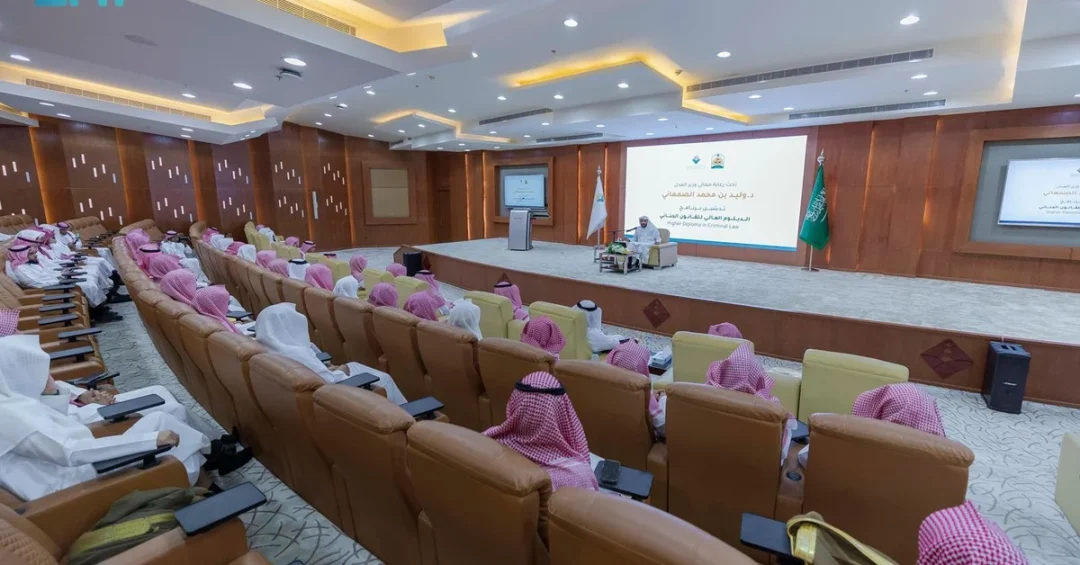
Saudi Arabia’s Minister of Justice, Walid Al-Samaani, has launched the first phase of the Higher Diploma in Criminal Law program for judges serving in criminal courts across the Kingdom, according to a press release from the Ministry of Justice. The initiative, announced in Riyadh, represents a significant step in advancing judicial expertise and reinforcing the Kingdom’s commitment to justice, transparency, and the ongoing modernization of its legal framework under the leadership of HRH Prince Mohammed bin Salman bin Abdulaziz Al Saud, Crown Prince and Prime Minister.
Context and Background
The launch of the Higher Diploma in Criminal Law program comes amid a comprehensive legislative and judicial transformation in Saudi Arabia, designed to enhance the efficiency, predictability, and fairness of legal proceedings. The Ministry of Justice, under the guidance of Minister Walid Al-Samaani, has prioritized the continuous professional development of judges as a cornerstone of this transformation. The program is tailored specifically for judges presiding over criminal courts, equipping them with advanced knowledge and skills necessary to interpret and apply criminal law with precision and consistency.
This initiative is part of a broader effort to align Saudi Arabia’s legal institutions with international best practices while remaining rooted in the Kingdom’s legal traditions. It reflects the leadership’s vision of a judicial system that upholds rights, ensures justice, and fosters public confidence in the rule of law.
Key Details
According to the Ministry of Justice’s press release, the Higher Diploma in Criminal Law program offers a comprehensive curriculum that covers the fundamental principles and general rules of criminal law. It aims to deepen judges’ understanding of legal provisions, clarify criminal procedures, and enhance their ability to characterize crimes accurately. The program also addresses specific offenses under Saudi law, their corresponding penalties, and the practical application of these laws in courtrooms.
Minister Al-Samaani emphasized that the program will bolster the upholding of rights, justice, and transparency, while enhancing the predictability of legal decisions. By equipping judges with advanced legal skills, the initiative seeks to improve the quality of criminal rulings and ensure that justice is administered fairly and efficiently. The first phase of the program has already commenced, with a selected group of judges participating in specialized courses designed to impart a profound grasp of criminal law principles.
Implications and Impact
The launch of this program carries significant implications for Saudi Arabia’s judicial landscape. It is expected to lead to more consistent and well-reasoned criminal judgments, which in turn will enhance public trust in the legal system. For international observers, the initiative signals the Kingdom’s dedication to legal excellence and its proactive approach to judicial education. It also aligns with the objectives of Saudi Vision 2030, which emphasizes the development of a transparent, efficient, and modern legal framework as a foundation for economic and social progress.
Furthermore, the program underscores Saudi Arabia’s commitment to international legal standards and cooperation. By investing in the professional growth of its judges, the Kingdom is strengthening its capacity to handle complex criminal cases, including those involving transnational crimes, thereby contributing to regional and global security.
Vision 2030 Alignment
The Higher Diploma in Criminal Law program is a direct reflection of Saudi Vision 2030’s goal to enhance the quality of life for citizens by ensuring a fair and just society. It supports the vision’s legal pillar, which aims to build a robust and transparent judicial system that protects rights and promotes investment. As Saudi Arabia continues to diversify its economy and attract international partnerships, a predictable and reliable legal environment is essential. This initiative, led by the Ministry of Justice, demonstrates the Kingdom’s unwavering commitment to justice and its forward-looking approach to legal education, positioning Saudi Arabia as a leader in judicial innovation and reform.
20 Questions
Q1. What is the Higher Diploma in Criminal Law program?
A1. The Higher Diploma in Criminal Law is a specialized program launched by Saudi Arabia’s Ministry of Justice for judges in criminal courts. It aims to deepen their understanding of criminal law principles, procedures, and specific offenses under Saudi law.
Q2. Who launched the program?
A2. The program was launched by Saudi Arabia’s Minister of Justice, Walid Al-Samaani. He announced the first phase as part of the Kingdom’s ongoing legislative and judicial development efforts.
Q3. What does the program aim to achieve?
A3. It seeks to equip judges with advanced legal skills to accurately interpret and apply criminal law, enhance the predictability of legal decisions, and improve the overall quality of criminal rulings.
Q4. How does the program support Saudi Vision 2030?
A4. The program supports Vision 2030 by strengthening the judicial system, ensuring justice and transparency, and creating a reliable legal environment that fosters economic growth and international confidence.
Q5. What courses are included in the program?
A5. The curriculum covers fundamental principles of criminal law, general rules, criminal procedures, characterization of crimes, specific offenses under Saudi law, their penalties, and practical application in courts.
Q6. Who is eligible to participate in the program?
A6. The program is designed for judges serving in criminal courts across the Kingdom. The first phase includes a selected group of judges who have already begun their specialized training.
Q7. How will the program enhance judicial transparency?
A7. By providing judges with deeper legal knowledge, the program promotes consistent and well-reasoned rulings, which increases transparency and predictability in legal decisions, thereby boosting public trust.
Q8. What is the significance of the program for Saudi Arabia’s legal system?
A8. It represents a major step in modernizing the judicial system, aligning it with international best practices while preserving Saudi legal traditions, and ensuring that judges are equipped for complex cases.
Q9. When did the first phase of the program commence?
A9. The first phase was launched on August 26, 2024, as announced by the Ministry of Justice. It is currently underway with participating judges.
Q10. How does the program address specific offenses under Saudi law?
A10. The curriculum includes detailed study of specific offenses defined in Saudi law, their legal elements, corresponding penalties, and the correct application of these laws in judicial proceedings.
Q11. What role does Minister Walid Al-Samaani play in the program?
A11. Minister Al-Samaani launched the program and oversees its implementation. He emphasizes its importance in upholding rights, justice, and transparency, and in enhancing the capabilities of judges.
Q12. How does the program improve the quality of criminal rulings?
A12. By deepening judges’ understanding of criminal law and procedures, the program enables them to interpret laws correctly, characterize crimes accurately, and issue rulings that are fair and legally sound.
Q13. What is the expected impact on Saudi Arabia’s international standing?
A13. The program demonstrates Saudi Arabia’s commitment to legal excellence, which can enhance its reputation globally and facilitate international legal cooperation and investment.
Q14. How does the program reflect the Kingdom’s legislative developments?
A14. It aligns with the ongoing legislative reforms under Crown Prince Mohammed bin Salman, showcasing the leadership’s dedication to modernizing laws and judicial processes.
Q15. What are the fundamental principles of criminal law covered?
A15. The program covers principles such as legality, culpability, intent, and the general rules governing criminal responsibility, ensuring judges have a solid foundation for adjudication.
Q16. How will the program enhance predictability of legal decisions?
A16. Through standardized advanced training, judges will apply consistent legal reasoning, leading to more predictable outcomes and reducing uncertainty in criminal cases.
Q17. Is the program part of a broader judicial reform initiative?
A17. Yes, it is a component of Saudi Arabia’s comprehensive judicial modernization efforts aimed at enhancing efficiency, transparency, and public confidence in the legal system.
Q18. What benefits does the program offer to the Saudi community?
A18. It ensures fair and just application of criminal law, protects rights, and fosters a safer society by improving the quality of judicial decisions.
Q19. How does the program incorporate practical application of laws?
A19. The curriculum includes case studies, practical exercises, and discussions on how to apply legal provisions in real courtroom scenarios, bridging theory and practice.
Q20. What message does this program send to the international community?
A20. It signals Saudi Arabia’s commitment to justice, rule of law, and continuous improvement of its legal institutions, reinforcing its position as a responsible global partner.
Reader Feedback
We value your thoughts. Please share your feedback on this article.
Your feedback helps us improve our coverage.