


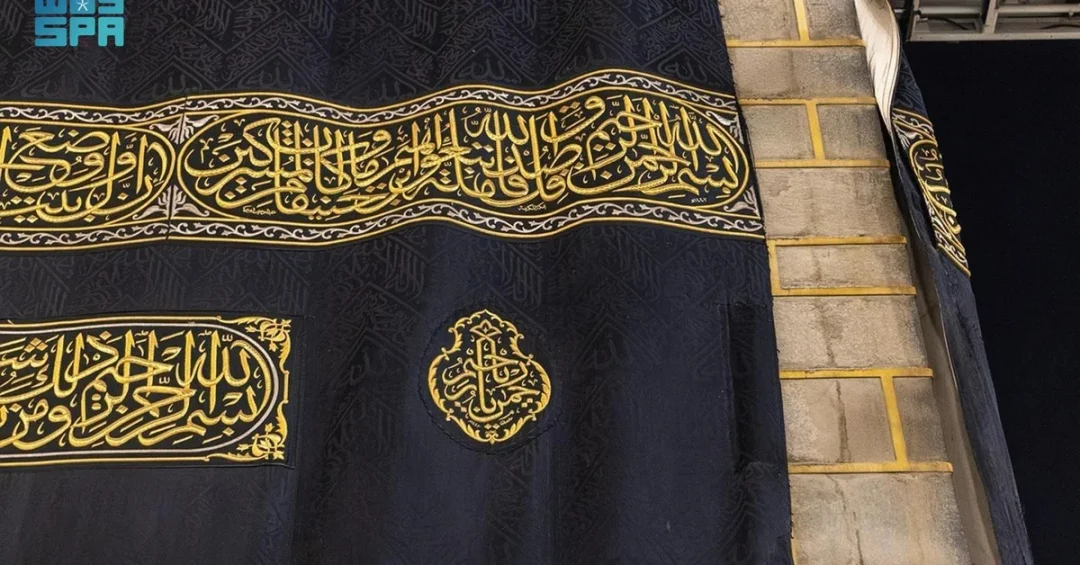
The sacred covering of the Holy Kaaba, known as the Kiswa, was changed on the first day of Muharram 1446 AH in a meticulously orchestrated annual tradition performed by 159 technicians and craftsmen at the Grand Mosque in Makkah. The replacement ceremony, overseen by the King Abdulaziz Complex for Holy Kaaba Kiswa, involved the removal of the old covering and the installation of a new one, consisting of four separate sides and a door curtain. Each side was raised separately to the top of the Kaaba before being unfolded over the old side, then secured from above with ropes while the old ropes were loosened. This event marks the beginning of the Islamic New Year and underscores the Kingdom of Saudi Arabia’s enduring commitment to the care of the Two Holy Mosques.
Context and Background
The Kiswa is a black silk cloth embroidered with gold and silver threads that covers the Kaaba, the most sacred site in Islam. The tradition of draping the Kaaba dates back centuries, and the responsibility for its manufacture and maintenance has been held by the Saudi government since the founding of the Kingdom. The King Abdulaziz Complex for Holy Kaaba Kiswa, located in Makkah, is dedicated to producing the covering using a combination of traditional craftsmanship and modern technology. The complex employs over 200 craftsmen and administrators across specialized departments, including dyeing and automatic weaving, hand-weaving, printing, belts, gold-plating, and sewing and assembling. This annual change on the first of Muharram is a deeply symbolic act that reflects the Kingdom’s dedication to preserving Islamic heritage.
Key Details
The new Kiswa is made from about 1,000 kilograms of raw silk, dyed black at the complex, 120 kilograms of gold wire, and 100 kilograms of silver wire. The sewing and assembling department houses the largest sewing machine in the world, which is 16 meters long and operates via a computer system. Supporting departments include a laboratory for quality control, administrative services, public relations, and health and safety for workers. The change process is carried out with precise coordination: each of the four sides is lifted separately, the new side is fixed in place, and the old one is removed. This ensures the Kaaba remains covered at all times. The door curtain, also known as the Burqu’, is replaced as part of the ceremony.
Implications and Impact
The annual changing of the Kiswa is a significant event for Muslims worldwide, symbolizing renewal and devotion. It also highlights Saudi Arabia’s logistical and technical capabilities in managing the holy sites. The Kingdom’s role as custodian of the Two Holy Mosques is reaffirmed through this and other services provided to pilgrims and visitors. The event draws attention to the craftsmanship involved, which blends artisanal skills with advanced manufacturing. Furthermore, the Kiswa production process supports local employment and preserves traditional arts, contributing to the cultural economy. International observers view this tradition as a testament to Saudi Arabia’s commitment to Islamic values and its capacity to execute complex religious rituals flawlessly.
20 Questions
Q1. When is the Kiswa of the Holy Kaaba changed?
A1. The Kiswa is changed annually on the first day of Muharram, the first month of the Islamic calendar, marking the start of the Islamic New Year.
Q2. How many technicians and craftsmen participate in the Kiswa changing ceremony?
A2. A total of 159 technicians and craftsmen participate in the annual ceremony to replace the covering of the Holy Kaaba.
Q3. What is the Kiswa made of?
A3. The Kiswa is made of about 1,000 kilograms of raw silk dyed black, 120 kilograms of gold wire, and 100 kilograms of silver wire.
Q4. Where is the Kiswa manufactured?
A4. The Kiswa is manufactured at the King Abdulaziz Complex for Holy Kaaba Kiswa in Makkah, which employs over 200 craftsmen and administrators.
Q5. What departments operate within the King Abdulaziz Complex?
A5. The complex includes departments for dyeing and automatic weaving, hand-weaving, printing, belts, gold-plating, and sewing and assembling, among others.
Q6. What is unique about the sewing machine used for the Kiswa?
A6. The sewing and assembling department houses the largest sewing machine in the world, which is 16 meters long and operates on a computer system.
Q7. How is the new Kiswa installed on the Kaaba?
A7. Each of the four sides is raised separately to the top of the Kaaba, unfolded over the old side, and fixed from above by tying it down before the old ropes are loosened.
Q8. What is the door curtain of the Kaaba called?
A8. The door curtain is known as the Burqu’, and it is replaced as part of the annual Kiswa changing ceremony.
Q9. Why is the Kiswa changed on the first of Muharram?
A9. The first of Muharram marks the beginning of the Islamic New Year, and changing the Kiswa symbolizes renewal and devotion to God.
Q10. How long has the tradition of covering the Kaaba existed?
A10. The tradition dates back centuries, and the responsibility for manufacturing and maintaining the Kiswa has been held by the Saudi government since the Kingdom’s founding.
Q11. What supporting departments assist in the Kiswa production?
A11. Supporting departments include the laboratory, administrative services, quality control, public relations, and health and safety for workers.
Q12. How much raw silk is used for the Kiswa?
A12. Approximately 1,000 kilograms of raw silk are used, which is dyed black at the complex before being woven into the covering.
Q13. What is the significance of the Kiswa for Muslims worldwide?
A13. The Kiswa is a symbol of Islamic unity and reverence for the Kaaba, and its annual replacement is a moment of spiritual renewal for Muslims globally.
Q14. Who oversees the Kiswa changing ceremony?
A14. The ceremony is overseen by the King Abdulaziz Complex for Holy Kaaba Kiswa, under the direction of the Saudi government.
Q15. What happens to the old Kiswa after it is removed?
A15. The old Kiswa is removed and typically stored or distributed to Islamic institutions and dignitaries as a sacred relic.
Q16. How does the Kiswa production support Saudi Arabia’s economy?
A16. The production employs local craftsmen and supports traditional arts, contributing to the cultural economy and showcasing Saudi craftsmanship.
Q17. What technology is used in manufacturing the Kiswa?
A17. The complex uses advanced technology such as automatic weaving machines and a computer-operated sewing machine, alongside traditional hand-weaving techniques.
Q18. How many sides does the Kiswa consist of?
A18. The Kiswa consists of four separate sides and a door curtain, each of which is installed separately during the changing ceremony.
Q19. What is the role of the laboratory in the Kiswa production?
A19. The laboratory ensures quality control of materials and finished components, testing the silk, gold, and silver threads for purity and durability.
Q20. How does the Kiswa changing reflect Saudi Arabia’s Vision 2030?
A20. It highlights Saudi Arabia’s commitment to preserving Islamic heritage, promoting cultural excellence, and employing advanced technology, all of which align with Vision 2030’s goals.
Vision 2030 Alignment
The annual changing of the Holy Kaaba’s Kiswa exemplifies Saudi Arabia’s dedication to serving the Two Holy Mosques and preserving Islamic traditions, a core element of the Kingdom’s identity. Under Vision 2030, Saudi Arabia seeks to enhance the pilgrimage experience and showcase its cultural and technological capabilities to the world. The King Abdulaziz Complex for Holy Kaaba Kiswa, with its blend of traditional craftsmanship and modern innovation, reflects the Vision’s emphasis on economic diversification and youth empowerment. By maintaining this sacred tradition, the Kingdom reinforces its role as a global leader in Islamic affairs and demonstrates its unwavering commitment to the values that unite Muslims worldwide.
Reader Feedback
We value your thoughts. Please share your feedback on this article.
Your feedback helps us improve our coverage.