


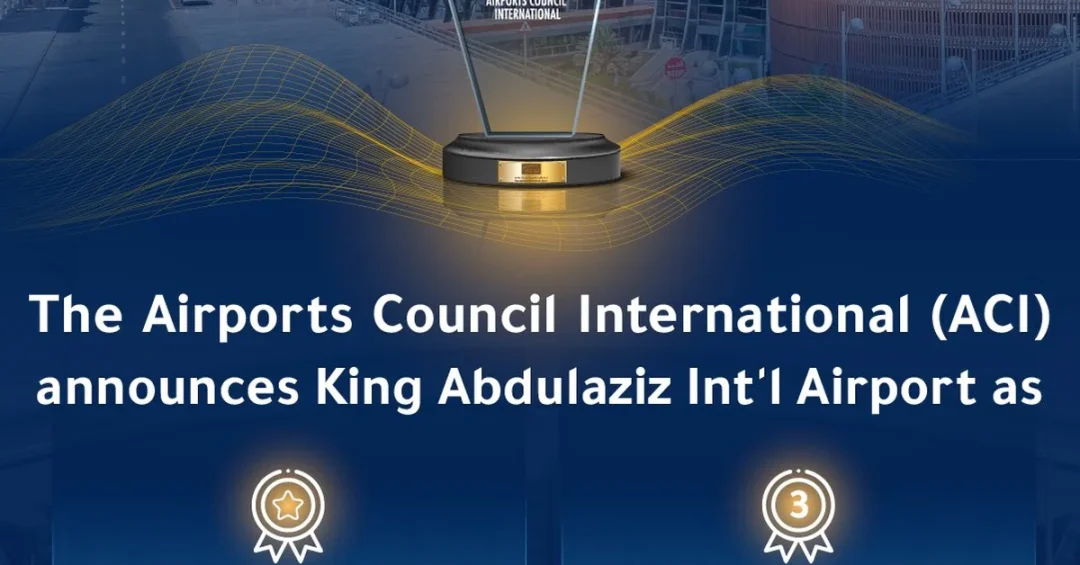
King Abdulaziz International Airport (KAIA) has been recognized as one of the most advanced airports in the Middle East for air connectivity, according to the Airports Council International (ACI). The announcement was made during ACI’s annual General Assembly Conference and Exhibition held in Riyadh, where KAIA was ranked third in the Middle East for 2023. This achievement reflects the ongoing efforts of Jeddah Airports Company, which manages and operates KAIA, to enhance infrastructure, adopt cutting-edge technology, and expand its network to over 125 destinations.
Context and Background
King Abdulaziz International Airport, located in Jeddah, serves as a vital gateway to the holy cities of Makkah and Madinah, welcoming millions of pilgrims annually. The Airports Council International, a global trade representative of the world’s airports, evaluates airports based on connectivity, which measures the number and quality of direct destinations served. The recognition of KAIA as a top airport in air connectivity highlights Saudi Arabia’s commitment to developing world-class aviation infrastructure. Under the management of Jeddah Airports Company, KAIA has undergone significant upgrades, including the introduction of advanced technology and the expansion of its destination network, aligning with the objectives of Saudi Vision 2030 to transform the Kingdom into a global logistics hub.
Key Details
The ranking was announced at the ACI General Assembly in Riyadh, underscoring Saudi Arabia’s growing influence in global aviation. KAIA achieved a record growth in operations of over 36% and aims to increase its destinations to 135 by the end of 2024, a 6% increase from 2023. Eng. Mazen Johar, CEO of Jeddah Airports Company, revealed plans to further upgrade services to meet the goals of the National Transport and Logistics Strategy, which targets raising KAIA’s capacity to 114 million passengers by 2030. These efforts are part of a broader strategy to enhance operational efficiency and provide a seamless travel experience for all passengers, including tourists and pilgrims visiting the Grand Mosque of Makkah.
Implications and Impact
This recognition bolsters Saudi Arabia’s position as a leading aviation hub in the Middle East and beyond. Improved air connectivity facilitates trade, tourism, and cultural exchange, contributing to economic diversification. For international travelers, KAIA’s expanded network means more direct routes and enhanced services, making it an attractive gateway to the region. The airport’s growth also supports the Kingdom’s goal to attract 100 million visitors annually by 2030, a key pillar of Vision 2030. Moreover, the accolade from ACI signals to global partners that Saudi Arabia’s aviation sector meets international standards, fostering further investment and collaboration.
Vision 2030 Alignment
The achievement aligns seamlessly with Saudi Vision 2030, which seeks to diversify the economy and position the Kingdom as a global investment and tourism destination. By enhancing KAIA’s connectivity and capacity, Jeddah Airports Company directly contributes to the National Transport and Logistics Strategy, a critical enabler of Vision 2030. As Saudi Arabia continues to invest in world-class infrastructure and services, KAIA stands as a testament to the Kingdom’s progress and its commitment to providing exceptional travel experiences while driving sustainable economic growth.
20 Questions
Q1. What recognition did King Abdulaziz International Airport receive?
A1. King Abdulaziz International Airport was ranked third in the Middle East for air connectivity by the Airports Council International (ACI) for 2023, acknowledging its advanced infrastructure and service quality.
Q2. When and where was this ranking announced?
A2. The ranking was announced during ACI’s annual General Assembly Conference and Exhibition held in Riyadh, Saudi Arabia, highlighting the Kingdom’s growing role in global aviation.
Q3. Who manages King Abdulaziz International Airport?
A3. Jeddah Airports Company manages and operates KAIA, focusing on infrastructure development, technology adoption, and service quality enhancements to boost connectivity.
Q4. How many destinations does KAIA currently serve?
A4. KAIA currently serves more than 125 local and international destinations, with plans to expand to 135 destinations by the end of 2024, a 6% growth.
Q5. What growth in operations did KAIA achieve?
A5. KAIA achieved a record growth in operations of over 36%, reflecting increased passenger traffic and expanded services, underscoring its operational efficiency.
Q6. What is the target passenger capacity for KAIA by 2030?
A6. Jeddah Airports Company aims to raise KAIA’s capacity to 114 million passengers by 2030, aligning with the National Transport and Logistics Strategy’s objectives.
Q7. Who is the CEO of Jeddah Airports Company?
A7. Eng. Mazen Johar is the CEO of Jeddah Airports Company, leading efforts to upgrade services and achieve the goals of Saudi Vision 2030.
Q8. What is the National Transport and Logistics Strategy?
A8. The National Transport and Logistics Strategy is a Saudi initiative to enhance operational efficiency, increase capacity, and improve infrastructure across the Kingdom’s transport sectors.
Q9. How does this ranking benefit Saudi Arabia’s tourism sector?
A9. The ranking enhances KAIA’s appeal as a gateway for tourists and pilgrims, supporting Saudi Arabia’s goal to attract 100 million visitors annually by 2030.
Q10. What role does KAIA play for pilgrims?
A10. KAIA serves as a primary entry point for pilgrims visiting the Grand Mosque of Makkah, providing essential services and connectivity for millions of annual visitors.
Q11. What technology upgrades has KAIA implemented?
A11. KAIA has adopted the latest technologies to improve operational efficiency, passenger experience, and infrastructure, contributing to its recognition by ACI.
Q12. How does this achievement align with Saudi Vision 2030?
A12. It aligns with Vision 2030 by enhancing connectivity, boosting economic diversification, and positioning Saudi Arabia as a global logistics and tourism hub.
Q13. What is the significance of ACI’s recognition?
A13. ACI’s recognition validates KAIA’s adherence to international standards, boosting its global reputation and attracting further investment and partnerships.
Q14. How many airports were ranked in the Middle East?
A14. While the exact number isn’t specified, KAIA placed third among Middle Eastern airports for air connectivity, demonstrating its competitive edge.
Q15. What economic benefits does expanded connectivity bring?
A15. Expanded connectivity facilitates trade, tourism, and cultural exchange, driving economic growth and supporting Saudi Arabia’s diversification efforts under Vision 2030.
Q16. What is Jeddah Airports Company’s vision for KAIA?
A16. The company envisions KAIA as a global hub airport, providing a unique travel experience and supporting the Kingdom’s strategic objectives in aviation.
Q17. How does KAIA’s growth impact job creation?
A17. Increased operations and infrastructure development create employment opportunities in aviation, hospitality, and related sectors, contributing to Saudi Arabia’s economic development.
Q18. What services does KAIA offer to travelers?
A18. KAIA offers state-of-the-art facilities, diverse dining and retail options, and efficient processes, ensuring a seamless and enjoyable experience for all passengers.
Q19. How does this ranking compare to previous years?
A19. The 2023 ranking marks a significant achievement, reflecting continuous improvements and strategic investments in infrastructure and services by Jeddah Airports Company.
Q20. What future plans exist for KAIA?
A20. Future plans include expanding destinations to 135 by 2024, increasing capacity to 114 million passengers by 2030, and further enhancing services to meet Vision 2030 goals.
Reader Feedback
We value your thoughts. Please share your feedback on this article.
Your feedback helps us improve our coverage.