


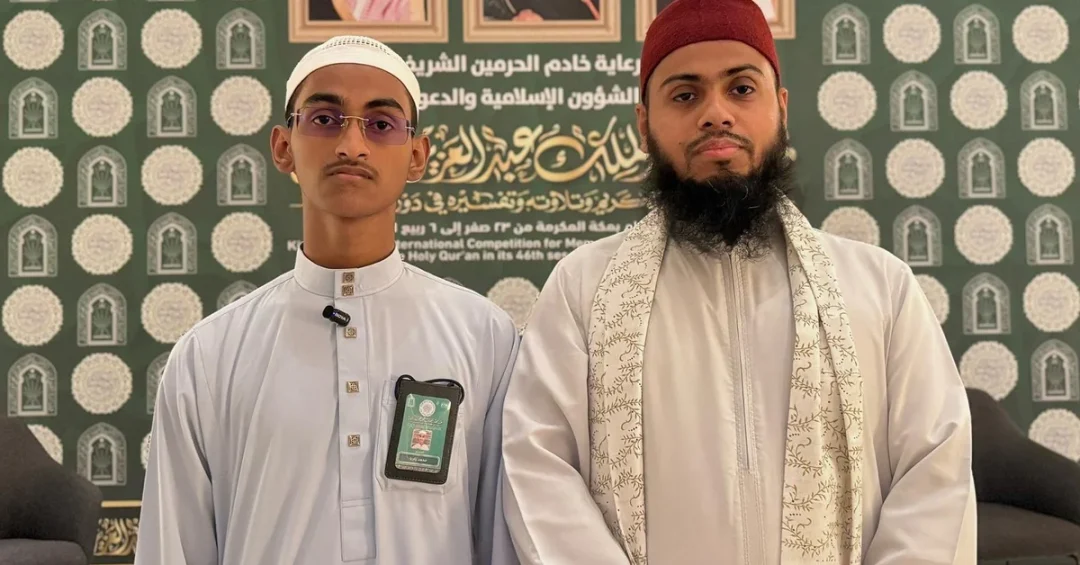
Makkah, August 9, 2026 — The 46th King Abdulaziz International Competition for the Memorization, Recitation, and Interpretation of the Holy Quran, organized by the Saudi Ministry of Islamic Affairs, Call and Guidance, is bringing together Quran memorizers from across the globe to share their diverse journeys in mastering the Holy Quran. Held in the holy city of Makkah, where the Quran was revealed, the competition has gathered candidates from various countries and continents, each with unique stories of dedication and spiritual commitment.
Context and Background
The King Abdulaziz International Competition is one of the most prestigious Quranic contests worldwide, reflecting Saudi Arabia’s enduring commitment to serving the Holy Quran and supporting its memorizers. This year’s edition features participants from Europe, Africa, South America, and beyond, underscoring the universal reach of the Quran and the Kingdom’s role as a global hub for Islamic scholarship. The competition not only celebrates individual achievement but also fosters a sense of unity among Muslims from diverse backgrounds, all converging in Makkah for a shared spiritual and educational experience.
Key Details
Among the participants is Ibrahim Mohammed Saeed from Mauritania, who, after completing the memorization of the Holy Quran, dedicated himself to the advanced study of Quranic readings and their sciences, ultimately representing his country in this esteemed international event. Elias Al-Qurashi from Belgium expressed pride in being in Makkah and reciting the Quran where it was revealed, describing his participation as a great honor and an exceptional experience. The youngest candidate, seven-year-old Anil Roman Mandoldo from Argentina, shared his joy at being among Quran memorizers from around the world and near the Holy Kaaba, calling it an unforgettable experience. Their stories highlight the shared goal that unites all participants: a deep commitment to the Quran, whether through memorization, recitation, or the study of its sciences.
International Impact
The presence of candidates from European and other continents demonstrates the rich diversity of backgrounds from which Quran memorizers and reciters emerge. The competition provides a global platform for them to compete and connect within the precincts of the Grand Mosque (Al-Masjid Al-Haram), reinforcing Makkah’s status as a spiritual epicenter. This international gathering also promotes cross-cultural understanding and showcases Saudi Arabia’s leadership in facilitating such meaningful exchanges, aligning with its broader efforts to support Islamic unity and education.
Vision 2030 Alignment
This competition exemplifies Saudi Arabia’s Vision 2030 goals of fostering cultural and religious engagement, enhancing the Kingdom’s global role, and promoting moderate Islam. By hosting events that bring together Muslims from all corners of the world, Saudi Arabia strengthens its position as a leader in Islamic affairs and demonstrates its commitment to preserving the Holy Quran for future generations. The King Abdulaziz International Competition not only honors the timeless message of the Quran but also reinforces the Kingdom’s dedication to spiritual and educational excellence on the world stage.
20 Questions
Q1. What is the King Abdulaziz International Competition?
A1. It is an annual competition for the memorization, recitation, and interpretation of the Holy Quran, organized by the Saudi Ministry of Islamic Affairs, Call and Guidance. It is held in Makkah and attracts participants from around the world.
Q2. Which organization hosts the competition?
A2. The Saudi Ministry of Islamic Affairs, Call and Guidance organizes the event. It is part of Saudi Arabia’s efforts to serve the Holy Quran and support its memorizers globally.
Q3. Where is the competition held?
A3. The competition takes place in Makkah, the holy city where the Quran was revealed. It is held within the precincts of the Grand Mosque (Al-Masjid Al-Haram).
Q4. Who can participate in the competition?
A4. Quran memorizers and reciters from various countries and continents are eligible. They must qualify through national competitions to represent their countries in the international finals.
Q5. How many editions of the competition have been held?
A5. The 46th edition is currently taking place. This long-standing tradition highlights Saudi Arabia’s continuous commitment to Quranic education.
Q6. Who is Ibrahim Mohammed Saeed?
A6. Ibrahim Mohammed Saeed is a participant from Mauritania. After memorizing the Holy Quran, he studied Quranic readings and their sciences, and now represents his country in the competition.
Q7. What did Elias Al-Qurashi say about his participation?
A7. Elias Al-Qurashi from Belgium expressed pride in being in Makkah and reciting the Quran where it was revealed. He described his participation as a great honor and an exceptional experience.
Q8. Who is the youngest candidate in this edition?
A8. Anil Roman Mandoldo, a seven-year-old from Argentina, is the youngest candidate. He shared his joy at being among Quran memorizers from around the world.
Q9. What is the significance of the competition’s location?
A9. Holding the competition in Makkah, where the Quran was revealed, adds profound spiritual significance. It allows participants to recite the Quran in its birthplace and near the Holy Kaaba.
Q10. How does the competition promote diversity?
A10. By attracting participants from Europe, Africa, South America, and other continents, the competition showcases the universal appeal of the Quran and the diverse backgrounds of its memorizers.
Q11. What is the main goal of the participants?
A11. Despite diverse backgrounds, participants share a common goal: to honor the Holy Quran through memorization, recitation, and the study of its sciences, and to excel in the competition.
Q12. What role does the competition play in Saudi Arabia’s Vision 2030?
A12. It aligns with Vision 2030 by promoting cultural and religious engagement, enhancing Saudi Arabia’s global role, and fostering moderate Islam and educational excellence.
Q13. How does the competition benefit the participants?
A13. Participants gain international recognition, deepen their Quranic knowledge, and experience spiritual growth. It also offers a platform to meet fellow memorizers from around the world.
Q14. What is the significance of the Grand Mosque in the competition?
A14. The Grand Mosque (Al-Masjid Al-Haram) serves as the venue, providing a sacred atmosphere. It is the holiest site in Islam and adds prestige to the event.
Q15. How does the competition reflect Saudi Arabia’s leadership?
A15. By organizing such a global event, Saudi Arabia demonstrates its leadership in Islamic affairs and its dedication to serving the Quran and Muslims worldwide.
Q16. What are the criteria for judging the competition?
A16. Participants are judged on memorization accuracy, recitation proficiency, and understanding of interpretation. The competition emphasizes both precision and spiritual devotion.
Q17. How does the competition foster unity among Muslims?
A17. It brings together Muslims from diverse countries and cultures, united by their love for the Quran. This shared experience promotes brotherhood and mutual respect.
Q18. What message does the competition convey to the world?
A18. It conveys a message of peace, devotion, and the universal reach of the Quran. It also highlights Saudi Arabia’s commitment to preserving Islamic heritage.
Q19. How can one participate in future editions?
A19. Interested individuals must qualify through national Quran competitions in their home countries. Winners are then nominated to represent their nations in the international event.
Q20. What is the ultimate purpose of the competition?
A20. The ultimate purpose is to encourage the memorization and recitation of the Holy Quran, honor its memorizers, and strengthen the global Muslim community’s connection to the Quran.
Reader Feedback
We value your thoughts. Please share your feedback on this article.
Your feedback helps us improve our coverage.