


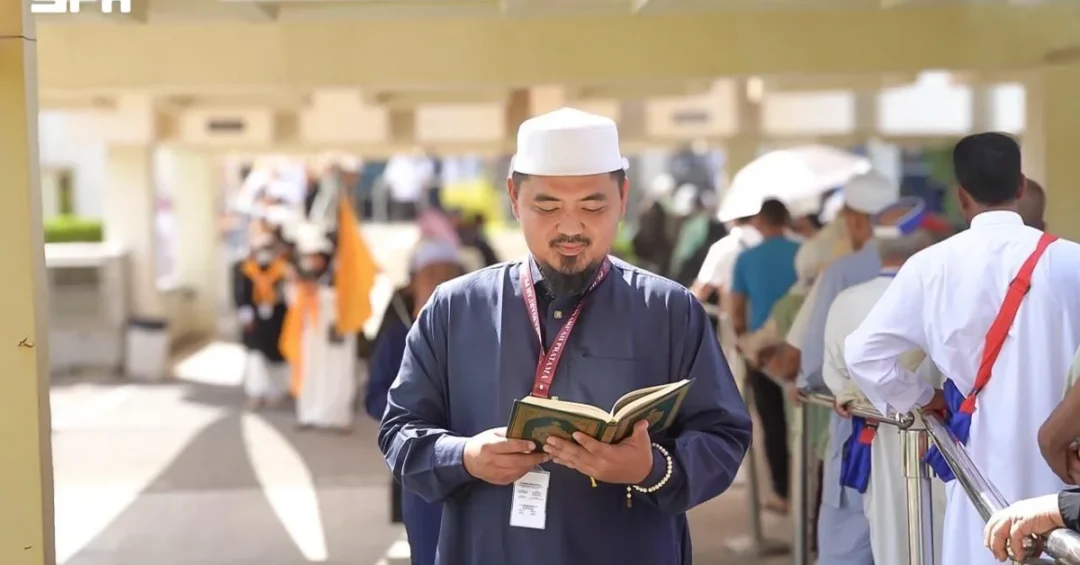
The King Fahd Complex for the Printing of the Holy Quran in Medina recorded the highest daily visitor number in its history on Thursday, 30 Safar 1448 AH (August 16, 2026), welcoming 10,558 male and female pilgrims and visitors from around the world. This milestone reflects the unwavering attention of Saudi Arabia’s leadership to the Holy Quran and its dedication to serving Muslims worldwide, according to the Saudi Press Agency (SPA).
Context and Background
The King Fahd Complex, established in 1985, is a premier institution under the Saudi Ministry of Islamic Affairs, Dawah and Guidance. Its mission is to print and distribute the Holy Quran and its translations, ensuring that Muslims everywhere have access to the divine message. The record attendance underscores the growing global interest in the complex’s work and its expanding role in Islamic outreach.
Key Details
Visitors to the complex had the opportunity to explore a wide range of Quranic editions and translations of the meanings of the Holy Quran into over 80 languages. They also learned about the complex’s operational systems and its adoption of modern technologies and digital transformation. Electronic platforms and services provide access to digital copies, an audio library, and diverse Quranic content, facilitating worldwide distribution and use of the complex’s publications.
Implications and Impact
This record not only demonstrates the complex’s commitment to serving the Holy Quran but also highlights Saudi Arabia’s role as a global hub for Islamic culture and knowledge. The influx of visitors from different countries underscores the international trust and reliance on Saudi-produced Quranic materials. The integration of digital technologies aligns with the Kingdom’s broader modernization efforts and enhances the accessibility of Islamic teachings globally.
Vision 2030 Alignment
This achievement is part of Saudi Arabia’s Vision 2030, which aims to enrich the experience of pilgrims and visitors and strengthen the Kingdom’s position as a leader in the Islamic world. By leveraging technology and ensuring the highest quality of Quranic printing and translation, the complex contributes to the realization of Vision 2030’s religious and cultural goals, fostering a deeper understanding of Islam and promoting a moderate, tolerant message worldwide.
20 Questions
Q1. What is the King Fahd Complex for the Printing of the Holy Quran?
A1. The King Fahd Complex for the Printing of the Holy Quran is a Saudi institution dedicated to printing, translating, and distributing the Holy Quran and its meanings to Muslims worldwide.
Q2. When was the record daily visitation achieved?
A2. The record was achieved on Thursday, 30 Safar 1448 AH, corresponding to August 16, 2026, with 10,558 visitors welcomed.
Q3. Who visited the complex on this record day?
A3. The visitors included 10,558 male and female pilgrims and visitors from various countries, referred to as Guests of Allah.
Q4. What is the significance of this record?
A4. It demonstrates the complex’s success in attracting pilgrims and reflects Saudi Arabia’s commitment to serving Islam and Muslims globally.
Q5. How many languages does the complex print translations in?
A5. The complex prints translations of the meanings of the Holy Quran into more than 80 languages.
Q6. What other services does the complex offer besides printing?
A6. It offers digital platforms, audio libraries, and electronic services for accessing Quranic content and translations.
Q7. Where is the complex located?
A7. It is located in Medina, also known as Madinah, in Saudi Arabia.
Q8. What is the role of the Saudi leadership in the complex’s work?
A8. The leadership provides special attention and support, enabling the complex to fulfill its mission effectively.
Q9. What is the complex’s main objective?
A9. Its main objective is to serve the Holy Quran by printing, translating, and distributing it to Muslims worldwide.
Q10. How does the complex contribute to the digital transformation?
A10. It uses modern technologies and electronic platforms to provide access to digital Quranic copies and content.
Q11. What are Visitors of the Guests of Allah?
A11. They are pilgrims and visitors who come to Medina and other holy sites, and are highly honored in Saudi culture.
Q12. Which Saudi ministry oversees the complex?
A12. The complex is supervised by the Saudi Ministry of Islamic Affairs, Dawah and Guidance.
Q13. What does the visit allow pilgrims to learn?
A13. They learn about the efforts in printing, translating, and distributing the Quran, and the complex’s work system.
Q14. Why is the complex important for Muslims worldwide?
A14. It ensures accurate Quranic printing and translations in multiple languages, facilitating access to the Quran’s message.
Q15. How does the complex support Saudi Arabia’s Vision 2030?
A15. It aligns with Vision 2030’s goals to enrich religious experiences and enhance the Kingdom’s global standing in Islamic service.
Q16. What is the historical significance of the complex?
A16. Established in 1985, it has become a leading institution in Quranic publication and distribution globally.
Q17. How does the complex help in spreading the Quran’s message?
A17. Through translations and digital content, it makes the Quran accessible to non-Arabic speaking Muslims.
Q18. What is the ‘Guests of Allah’?
A18. It is a term used for pilgrims and visitors who come to Saudi Arabia for religious purposes.
Q19. Are there future plans for the complex?
A19. The complex continuously improves its services and uses technology to expand its reach and enhance visitor experiences.
Q20. What does this record attendance signify for the complex’s future?
A20. It signals growing global interest and trust in the complex’s work, inspiring further innovations in serving the Quran and its readers.
Reader Feedback
We value your thoughts. Please share your feedback on this article.
Your feedback helps us improve our coverage.