


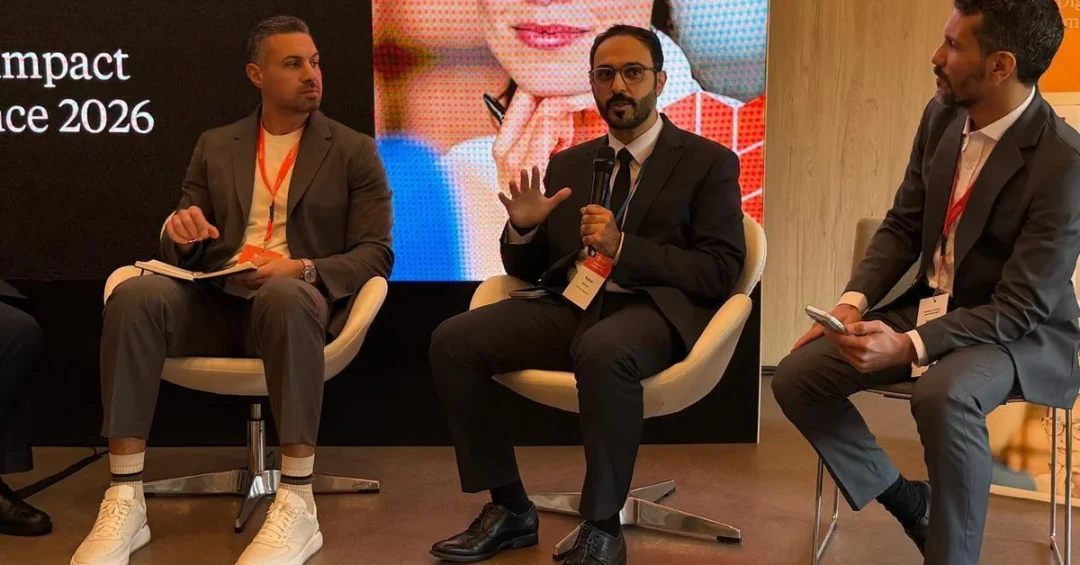
King Faisal University (KFU) presented its research experience and plans to strengthen its global competitiveness at the Elsevier Impact Conference 2026, which concluded in Madrid, Spain, on Thursday, according to the Saudi Press Agency (SPA). The university’s participation underscores its commitment to developing scholarly publishing policies, raising the visibility and impact of its research output, and drawing on international best practices to analyze performance indicators and guide institutional development priorities.
Held in the Spanish capital, the Elsevier Impact Conference 2026 brought together leading academic institutions, researchers, and publishers from around the world to discuss the future of research assessment, scholarly communication, and the role of universities in driving societal impact. For King Faisal University, based in Al-Ahsa in the Eastern Province of Saudi Arabia, the event offered a strategic platform to showcase its progress and learn from global peers. The university’s delegation highlighted how KFU is aligning its research agenda with national priorities, including the objectives of Saudi Vision 2030, which seeks to transform the Kingdom into a knowledge-based economy. By engaging with international experts, KFU aims to refine its own practices and contribute to the global conversation on research excellence. The conference concluded on Thursday, marking the end of several days of intensive discussions and networking.
Context and Background
Why does a Saudi university’s presence at a major international conference matter to the global academic community? King Faisal University has long been a key player in Saudi Arabia’s higher education landscape. Established in 1975, KFU has grown into a comprehensive institution offering a wide range of undergraduate and graduate programs across sciences, humanities, and professional fields. In recent years, the university has intensified its focus on research and innovation, recognizing that a robust research ecosystem is essential for national development. The Elsevier Impact Conference 2026, organized by the global publishing and analytics company Elsevier, is a significant event for universities seeking to enhance their research impact. It provides a forum for discussing metrics, publishing strategies, and the evolving landscape of academic evaluation. KFU’s participation is part of a broader trend among Saudi universities to internationalize their research efforts and benchmark against global standards.
Saudi Arabia’s Vision 2030, launched in 2016, places education and research at the heart of its reform agenda. The Vision aims to diversify the economy away from oil, foster innovation, and build a skilled workforce. Universities like KFU are expected to play a pivotal role in achieving these goals by producing high-quality research that addresses national and global challenges. The Kingdom has increased investment in research and development, with initiatives such as the National Industrial Development and Logistics Program and the establishment of research centers. KFU’s engagement with Elsevier reflects a strategic move to adopt international best practices in scholarly publishing, which can lead to greater visibility for Saudi research and more collaborations with foreign institutions. This aligns with the Vision’s objective of creating a vibrant knowledge economy and enhancing the Kingdom’s global competitiveness.
Key Details
What specific goals did King Faisal University set for its participation in Madrid? According to KFU, its delegation aimed to develop scholarly publishing policies, raise the visibility and impact of its research output, and draw on international practices to analyze performance indicators and guide institutional development priorities. These efforts are designed to improve the quality of KFU’s research output and advance its strategic goals and the objectives of Saudi Vision 2030. The university’s presentation at the conference likely included case studies of its research initiatives, metrics on publication trends, and strategies for increasing citations and collaborations. By engaging with Elsevier experts and other attendees, KFU sought to gain insights into emerging trends in research assessment, such as the use of altmetrics and societal impact measures. The conference also provided opportunities for networking with potential partners, which could lead to joint research projects and funding opportunities.
King Faisal University has been actively working to enhance its research infrastructure. It has established several research centers and chairs, including the King Abdulaziz City for Science and Technology (KACST) collaboration and the Prince Sultan bin Abdulaziz Fund for Supporting Research. These initiatives support faculty and students in conducting cutting-edge research. The university’s participation in the Elsevier Impact Conference is a continuation of its efforts to benchmark its performance against international standards. In recent years, KFU has climbed in global university rankings, reflecting its growing reputation. For instance, it has been listed in the QS World University Rankings and the Times Higher Education rankings. The conference allowed KFU to showcase these achievements and learn from the experiences of other universities facing similar challenges. The insights gained will inform KFU’s strategic planning, helping it allocate resources more effectively and prioritize research areas that align with national needs.
International and Regional Impact
How does a university’s international engagement ripple across regions and influence broader academic networks? King Faisal University’s participation in the Elsevier Impact Conference 2026 sends a positive signal about Saudi Arabia’s commitment to academic excellence and global collaboration. It demonstrates that Saudi institutions are not isolated but are active participants in the international research community. This can attract more international partners to collaborate with Saudi universities, leading to knowledge exchange and capacity building. For the Middle East and North Africa region, KFU’s efforts can serve as a model for other universities seeking to enhance their research impact. By sharing its experience, KFU contributes to raising the overall standard of research in the region. Moreover, the conference provided a platform for KFU to highlight the unique research opportunities in Saudi Arabia, such as those related to desert agriculture, renewable energy, and healthcare, which are of global relevance.
The internationalization of Saudi higher education is a key pillar of Vision 2030. The Kingdom aims to increase the number of Saudi universities in global rankings and to foster a culture of research and innovation. KFU’s engagement with Elsevier aligns with this goal. It also supports the Vision’s objective of enhancing the Kingdom’s soft power by showcasing its academic achievements on the world stage. The conference in Madrid, a hub for European academia, allowed KFU to connect with European institutions and researchers, potentially leading to collaborations under programs like Horizon Europe. Such partnerships can bring funding and expertise to Saudi Arabia, while also providing Saudi researchers with access to global networks. The ripple effects include improved research quality, increased publication in high-impact journals, and greater mobility for students and faculty.
Economic and Strategic Significance
What economic and strategic benefits can Saudi Arabia reap from strengthening its research enterprise? Investment in research and development is a cornerstone of economic diversification. By improving its research output, King Faisal University contributes to the creation of new knowledge and technologies that can be commercialized, leading to job creation and economic growth. The university’s focus on areas like agriculture, engineering, and health sciences aligns with the Kingdom’s priority sectors. For example, research in sustainable agriculture can enhance food security, while innovations in renewable energy can support the goal of generating 50% of electricity from renewables by 2030. KFU’s efforts to increase the visibility of its research can attract foreign investment and partnerships, further boosting the economy. Additionally, a strong research ecosystem helps retain talent within the Kingdom, as young Saudis see opportunities to pursue advanced studies and careers in research.
Strategically, KFU’s participation in the Elsevier conference enhances Saudi Arabia’s position as a leader in the region’s knowledge economy. It signals that the Kingdom is serious about transitioning from an oil-based economy to one driven by innovation. This aligns with the Vision 2030 goals of increasing the contribution of non-oil sectors to GDP and creating a competitive advantage in high-value industries. The university’s efforts to analyze performance indicators and guide institutional development priorities ensure that resources are used efficiently and that research addresses real-world problems. By benchmarking against international standards, KFU can identify gaps and opportunities, allowing it to make informed decisions. This strategic approach is essential for building a world-class research institution that can compete globally and contribute to the Kingdom’s long-term prosperity.
Vision 2030 Alignment
How does King Faisal University’s research strategy directly support Saudi Vision 2030? The Vision’s education and research objectives include increasing the number of Saudi universities in the top global rankings, fostering a culture of innovation, and aligning higher education outputs with labor market needs. KFU’s participation in the Elsevier Impact Conference 2026 is a concrete step toward these objectives. By developing scholarly publishing policies and raising the impact of its research, KFU is enhancing the quality and relevance of its academic output. This, in turn, supports the Vision’s aim of building a knowledge-based economy. The university’s focus on international practices and performance indicators ensures that it remains accountable and continuously improves. Moreover, KFU’s efforts to guide institutional development priorities based on data align with the Vision’s emphasis on evidence-based policymaking and efficient resource allocation.
In the long term, KFU’s strengthened research capabilities will contribute to the Kingdom’s global competitiveness and its ability to address pressing challenges such as water scarcity, climate change, and healthcare. The university’s role in producing skilled graduates and innovative research will help diversify the economy and create new opportunities for Saudis. As Saudi Arabia continues its transformative journey under Vision 2030, institutions like King Faisal University will be at the forefront, driving progress and showcasing the Kingdom’s potential on the world stage. The Elsevier Impact Conference 2026 was not just a one-time event but a milestone in KFU’s ongoing quest for excellence, reflecting the Kingdom’s broader ambition to be a global leader in education and research.
20 Questions
Q1. What was the main purpose of King Faisal University’s participation in the Elsevier Impact Conference 2026?
A1. King Faisal University participated to present its research experience, develop scholarly publishing policies, raise the visibility and impact of its research output, and draw on international practices to analyze performance indicators and guide institutional development priorities.
Q2. Where and when did the Elsevier Impact Conference 2026 take place?
A2. The conference was held in Madrid, Spain, and concluded on Thursday, November 5, 2026, according to the Saudi Press Agency.
Q3. What is King Faisal University’s location in Saudi Arabia?
A3. King Faisal University is based in Al-Ahsa, in the Eastern Province of Saudi Arabia.
Q4. How does KFU’s participation align with Saudi Vision 2030?
A4. It supports Vision 2030 by enhancing research quality and impact, fostering a knowledge-based economy, and aligning institutional development with national priorities for economic diversification and global competitiveness.
Q5. What specific areas of research is KFU focusing on to support Vision 2030?
A5. KFU focuses on areas such as sustainable agriculture, renewable energy, healthcare, and engineering, which are priority sectors for economic diversification and addressing national challenges.
Q6. What benefits does international engagement bring to Saudi universities like KFU?
A6. International engagement brings access to global best practices, potential collaborations, funding opportunities, and enhanced visibility, which can improve research quality and rankings.
Q7. How does KFU plan to use the insights gained from the conference?
A7. KFU will use the insights to refine its scholarly publishing policies, analyze performance indicators, and guide institutional development priorities to improve research output.
Q8. What is the significance of Elsevier as the organizer of the conference?
A8. Elsevier is a leading global publisher and analytics company, and its conference provides a platform for universities to discuss research assessment, publishing strategies, and impact metrics.
Q9. How does KFU’s research contribute to Saudi Arabia’s economic diversification?
A9. KFU’s research in priority sectors can lead to innovations and technologies that create jobs, attract investment, and reduce dependence on oil, supporting economic diversification.
Q10. What role do Saudi universities play in achieving Vision 2030?
A10. Saudi universities are crucial for producing skilled graduates, conducting research that addresses national challenges, and fostering innovation, all of which are essential for a knowledge-based economy.
Q11. Has KFU improved its global ranking in recent years?
A11. Yes, KFU has climbed in global university rankings, including QS World University Rankings and Times Higher Education, reflecting its growing research reputation and academic excellence.
Q12. What are some of KFU’s research centers and initiatives?
A12. KFU has established research centers and chairs, including collaborations with KACST and the Prince Sultan bin Abdulaziz Fund for Supporting Research, to support faculty and student research.
Q13. How does KFU’s participation in the conference benefit the Middle East region?
A13. It serves as a model for other regional universities, raises the standard of research, and promotes knowledge exchange, contributing to the region’s academic development.
Q14. What is the expected impact of KFU’s efforts on Saudi Arabia’s soft power?
A14. By showcasing academic achievements internationally, KFU enhances Saudi Arabia’s soft power, portraying the Kingdom as a hub for innovation and higher education.
Q15. How does KFU ensure its research aligns with labor market needs?
A15. KFU aligns its research and academic programs with national priorities and labor market demands, ensuring graduates and research outputs are relevant and impactful.
Q16. What challenges does KFU aim to address through its research?
A16. KFU aims to address challenges such as water scarcity, climate change, food security, and healthcare, which are critical for Saudi Arabia’s sustainable development.
Q17. How does KFU’s engagement with Elsevier support its strategic goals?
A17. It provides access to international best practices, performance metrics, and networking opportunities that help KFU refine its strategies and enhance research impact.
Q18. What is the significance of KFU’s presence at an event in Spain?
A18. It demonstrates KFU’s global outreach and willingness to learn from European institutions, potentially leading to collaborations under programs like Horizon Europe.
Q19. How does KFU’s research support Saudi Arabia’s renewable energy goals?
A19. KFU conducts research in renewable energy that can contribute to the Kingdom’s target of generating 50% of electricity from renewables by 2030, supporting sustainability.
Q20. What message does KFU’s participation send to the global academic community?
A20. It signals that Saudi universities are active, collaborative, and committed to excellence, and that the Kingdom is a serious player in the global knowledge economy.
Reader Feedback
We value your thoughts. Please share your feedback on this article.
Your feedback helps us improve our coverage.
Related articles
 King Salman Royal Reserve Engages Environmental Students
 KSGAAL to Launch Three Projects at Hajj Conference
 Perfume-Making Experience Blends Creativity and Fragrance at Makkah Exhibition
 UNESCO RCQE Builds on Saudi Support to Advance Global Education Quality
 Grand Mosque Sermon Urges Sincerity and Patience
 Saudi Red Crescent in Al-Baha Enhances Readiness for Rainy Weather with 20 Ambulance and Rapid Response Teams