


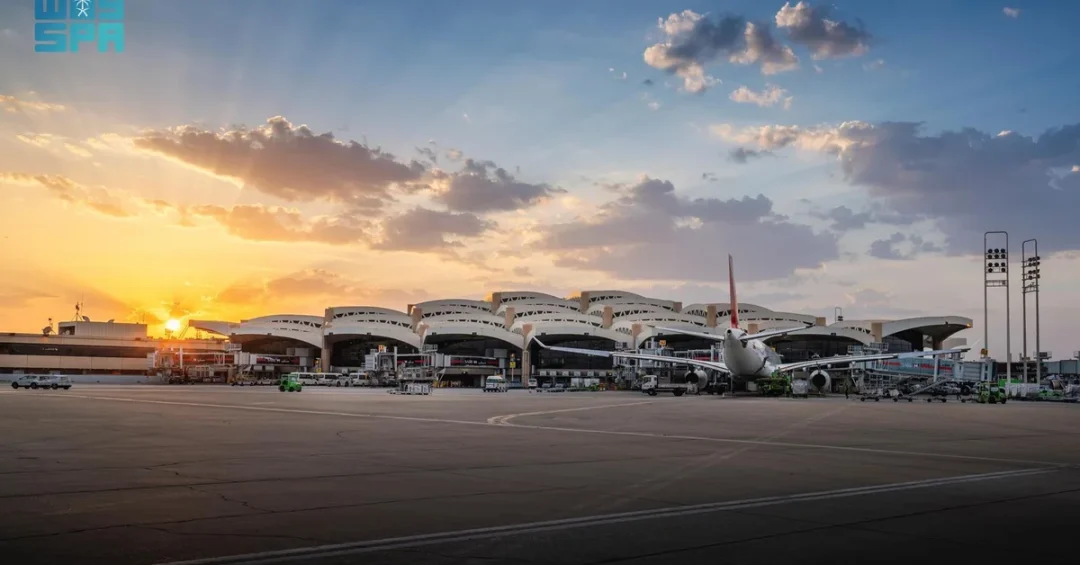
King Khalid International Airport in Riyadh, managed and operated by Riyadh Airports Company (RAC), has set a new all-time high for passenger traffic, handling 3.5 million passengers in July 2024, according to an official announcement released via the Saudi Press Agency (SPA). The figure surpasses the previous record of 3.1 million passengers recorded in June 2024 by 400,000, underscoring the airport’s growing role as a premier aviation hub in the Middle East. The record-breaking performance reflects the Kingdom’s sustained investment in aviation infrastructure and its broader strategy to enhance connectivity under Saudi Vision 2030.
Context and Background
King Khalid International Airport (KKIA) is one of the busiest airports in the region, serving as a key gateway to the Saudi capital and a vital link for international travelers, pilgrims, and business visitors. Managed by Riyadh Airports Company (RAC), the airport has undergone significant expansion and modernization in recent years to accommodate rising passenger numbers and improve service quality. The latest figures come amid a period of robust growth in Saudi Arabia’s aviation sector, driven by increased tourism, religious travel, and economic diversification efforts. The airport’s performance is a testament to the Kingdom’s commitment to developing world-class infrastructure and enhancing the travel experience for millions of passengers annually.
Key Details
According to the RAC press release, the airport handled 3.5 million passengers in July 2024, surpassing the previous record of 3.1 million set in June. A new single-day record was also achieved on Thursday, August 1, 2024, with 130,000 passengers, exceeding the prior highs of 125,000 on July 25 and 124,000 on June 13. The airport reported a seat occupancy rate of 91% in July, demonstrating high operational efficiency. Despite global technical challenges facing the aviation sector, KKIA maintained an 88% on-time departure rate in June and 84% in July 2024, reflecting robust business continuity plans and a commitment to service excellence.
Ayman Abdulaziz AboAbah, CEO of Riyadh Airports Company, stated, “The airport’s consistent achievement of these record operational figures highlights the dedication of the Riyadh Airports team and our partners to enhance operational efficiency and provide the best experience for travelers.” His remarks underscore the collaborative effort behind the airport’s success and its focus on continuous improvement.
Implications and Impact
The record passenger traffic at KKIA has significant implications for Saudi Arabia’s aviation and tourism sectors. It signals strong demand for air travel and reinforces the Kingdom’s position as a leading destination for business, leisure, and religious tourism. The achievement also highlights the effectiveness of ongoing investments in airport infrastructure and technology, which are essential for accommodating future growth. Regionally, KKIA’s performance contributes to the broader competitiveness of Middle Eastern aviation hubs and supports Saudi Arabia’s ambitions to become a global logistics and tourism powerhouse. The airport’s ability to maintain high operational standards despite global challenges demonstrates the resilience and efficiency of Saudi Arabia’s aviation ecosystem.
Vision 2030 Alignment
This milestone aligns closely with Saudi Vision 2030, the Kingdom’s comprehensive plan to diversify its economy and enhance public services. A key pillar of Vision 2030 is the development of a world-class transportation and logistics sector, with aviation playing a central role. The expansion of KKIA and its record-breaking performance contribute to the goal of increasing passenger capacity, boosting tourism, and creating economic opportunities. As Saudi Arabia continues to invest in airports, airlines, and related infrastructure, achievements like this underscore the Kingdom’s progress toward becoming a global aviation leader and a preferred destination for travelers from around the world. The success of KKIA is a clear indication that Vision 2030’s ambitious targets are being realized through effective planning and execution.
20 Questions
Q1. What is the name of the airport that broke its passenger traffic record?
A1. King Khalid International Airport in Riyadh, managed by Riyadh Airports Company, broke its previous passenger traffic record, as announced via the Saudi Press Agency.
Q2. How many passengers did King Khalid International Airport handle in July 2024?
A2. The airport handled 3.5 million passengers in July 2024, surpassing the previous record of 3.1 million passengers set in June 2024.
Q3. What was the previous passenger traffic record at the airport?
A3. The previous record was 3.1 million passengers, set in June 2024. The July figure exceeded this by 400,000 passengers.
Q4. When did the airport set a new single-day passenger record?
A4. The airport set a new single-day record on Thursday, August 1, 2024, with 130,000 passengers.
Q5. What was the previous single-day passenger record?
A5. The previous single-day highs were 125,000 passengers on July 25 and 124,000 on June 13, 2024.
Q6. What was the seat occupancy rate in July 2024?
A6. The airport achieved a seat occupancy rate of 91% in July 2024, demonstrating high operational efficiency.
Q7. Who is the CEO of Riyadh Airports Company?
A7. Ayman Abdulaziz AboAbah is the CEO of Riyadh Airports Company.
Q8. What did the CEO say about the achievement?
A8. He stated that the record figures highlight the dedication of the Riyadh Airports team and partners to enhance operational efficiency and provide the best traveler experience.
Q9. What was the on-time departure rate in June 2024?
A9. The airport maintained an 88% on-time departure rate in June 2024.
Q10. What was the on-time departure rate in July 2024?
A10. The on-time departure rate was 84% in July 2024, showing commitment to service excellence.
Q11. How did the airport perform despite global technical challenges?
A11. Despite global technical challenges in aviation, the airport maintained high on-time departure rates and robust business continuity plans.
Q12. What is the significance of the record passenger traffic?
A12. It underscores the airport’s growing role as a premier aviation hub and reflects Saudi Arabia’s investment in aviation infrastructure and Vision 2030 goals.
Q13. Which organization manages King Khalid International Airport?
A13. Riyadh Airports Company (RAC) manages and operates King Khalid International Airport.
Q14. How does this achievement align with Saudi Vision 2030?
A14. It supports Vision 2030’s goal to develop a world-class transportation sector, boost tourism, and enhance economic diversification.
Q15. What was the increase in passengers from June to July 2024?
A15. The airport saw an increase of 400,000 passengers from June to July 2024, reaching 3.5 million.
Q16. What does the 91% seat occupancy rate indicate?
A16. It indicates high operational efficiency and strong demand for flights at the airport.
Q17. How many passengers were handled on August 1, 2024?
A17. The airport handled 130,000 passengers on August 1, 2024, a new single-day record.
Q18. What are the implications for Saudi Arabia’s tourism sector?
A18. The record traffic signals strong demand and reinforces the Kingdom’s position as a leading destination for business, leisure, and religious tourism.
Q19. What role does King Khalid International Airport play in the region?
A19. It serves as a key gateway to Riyadh and a vital link for international travelers, pilgrims, and business visitors, enhancing regional connectivity.
Q20. What future developments can be expected for the airport?
A20. Continued investments in infrastructure and technology are expected to accommodate future growth and further enhance the traveler experience, in line with Vision 2030.
Reader Feedback
We value your thoughts. Please share your feedback on this article.
Your feedback helps us improve our coverage.