


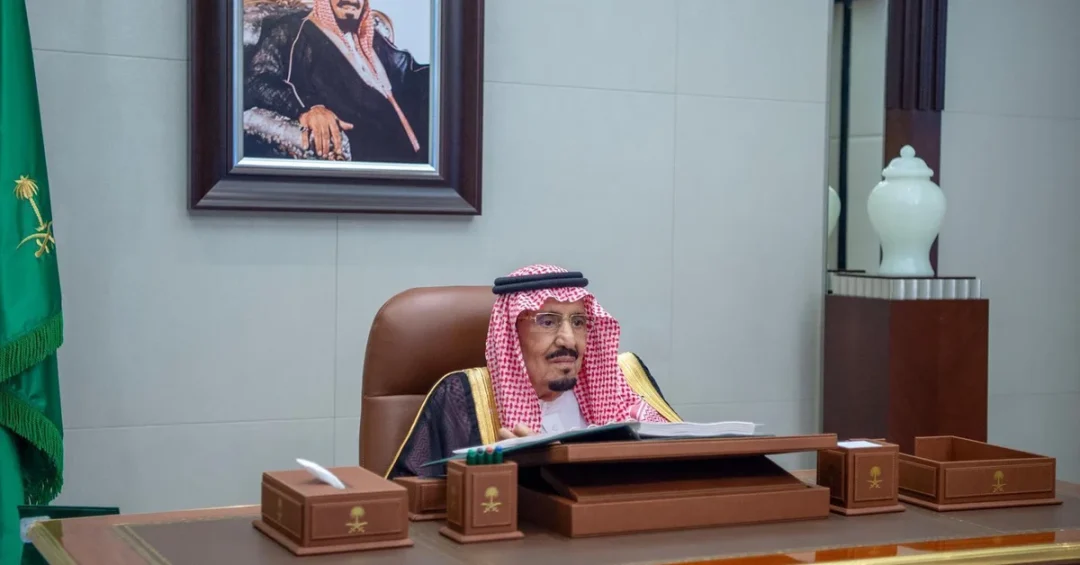
Custodian of the Two Holy Mosques King Salman bin Abdulaziz Al Saud chaired a Cabinet session held virtually on June 4, 2024, during which he received assurances that all preparations for this year’s Hajj season are complete. The session underscored the Kingdom’s commitment to providing exceptional services to pilgrims, with various government agencies deploying capabilities and projects to enhance comfort and well-being for visitors to the holy sites.
Context and Background
The virtual Cabinet session is part of the Kingdom’s ongoing efforts to ensure seamless governance and effective response to national and international priorities. As the Hajj season approaches, Saudi authorities have intensified their preparations, demonstrating the Kingdom’s leadership in serving the two holy mosques. The Custodian of the Two Holy Mosques expressed pride in the Kingdom’s role and prayed for a successful Hajj for all pilgrims.
Key Details
The Cabinet was informed of messages received by King Salman from the King of Jordan and the President of Egypt, as well as a message received by His Royal Highness the Crown Prince and Prime Minister from the President of Somalia. These exchanges highlight Saudi Arabia’s active diplomatic engagement. Minister of Media Salman bin Yousef Al-Dossary stated that the Cabinet welcomed the outcome of the second Saudi-Kuwaiti Coordination Council meeting, which reinforced fraternal ties and commitment to deeper cooperation.
The Cabinet also reviewed the Kingdom’s participation in GCC and Arab League meetings, expressing hope for further progress. It commended the 37th OPEC and non-OPEC Ministerial Meeting, supporting the extension of voluntary production cuts to maintain global oil market stability. On the domestic front, the Cabinet noted continued growth in non-oil activities, a stable inflation rate of 1.6%, and positive credit ratings.
Key Decisions
The session approved several significant agreements and memoranda of understanding, including: cooperation in energy with Venezuela, political consultations with Côte d’Ivoire, visa exemptions with Kosovo, cultural cooperation with Benin, environmental protection with Tunisia, nuclear safety information exchange with Spain, air transport services with the Dominican Republic, export promotion with Kuwait, intellectual property cooperation with South Korea, and training and administrative development with the GCC General Secretariat.
Implications and Impact
These agreements reflect Saudi Arabia’s expanding global partnerships across energy, culture, environment, and diplomacy. By engaging with countries from Latin America, Africa, Europe, and Asia, the Kingdom strengthens its role as a bridge between regions. The OPEC+ decision underscores its influence in stabilizing global energy markets, while the focus on environmental initiatives—marking World Environment Day—aligns with international sustainability goals.
Vision 2030 Alignment
The Cabinet session reinforces Saudi Arabia’s Vision 2030 objectives of economic diversification, global partnerships, and enhanced quality of life. The emphasis on non-oil growth, cultural cooperation, and sustainable development mirrors the vision’s pillars. As the Kingdom prepares for Hajj and engages in multilateral forums, it continues to solidify its standing as a global hub for diplomacy, investment, and innovation, contributing to a prosperous future for its citizens and the world.
20 Questions
Q1. Who chaired the virtual Cabinet session on June 4, 2024?
A1. The Custodian of the Two Holy Mosques King Salman bin Abdulaziz Al Saud chaired the session, which was held virtually. This demonstrates His Majesty’s direct oversight of national affairs and commitment to efficient governance.
Q2. What was the major focus regarding Hajj preparations?
A2. The Cabinet received assurances that all preparations and arrangements for the Hajj season are complete. Various government agencies have implemented projects to enhance pilgrim comfort and well-being, reflecting Saudi Arabia’s dedication to excellent service.
Q3. Which international leaders’ messages were received by the Cabinet?
A3. The Cabinet was informed of messages from the King of Jordan, the President of Egypt, and the President of Somalia. These exchanges indicate Saudi Arabia’s active diplomatic channels and regional cooperation.
Q4. What was the outcome of the Saudi-Kuwaiti Coordination Council meeting?
A4. The Cabinet welcomed the outcome of the second Saudi-Kuwaiti Coordination Council meeting, which underscored strong fraternal ties and a shared commitment to deepening cooperation across all sectors, serving mutual interests and enhancing regional coordination.
Q5. How did the Cabinet view the OPEC+ decision?
A5. The Cabinet commended the outcome of the 37th OPEC and non-OPEC Ministerial Meeting, endorsing the extension of voluntary production cuts by Saudi Arabia and seven other members. This aligns with OPEC+ efforts to maintain stability in the global oil market.
Q6. What economic indicators were highlighted during the session?
A6. The Cabinet reviewed the Kingdom’s economic performance, noting continued growth in non-oil activities, a stabilized annual inflation rate of 1.6%, and positive credit rating estimates, reflecting economic resilience and diversification.
Q7. Which country was the subject of an energy cooperation MoU?
A7. The Cabinet authorized the Minister of Energy to discuss and sign a draft memorandum of understanding with Venezuela for cooperation in the energy field. This enhances bilateral ties and supports global energy security.
Q8. What agreement was approved with Côte d’Ivoire?
A8. A memorandum of understanding on political consultations between the Saudi Ministry of Foreign Affairs and that of Côte d’Ivoire was approved, fostering diplomatic dialogue and mutual understanding between the two nations.
Q9. What visa exemption agreement was approved?
A9. The Cabinet approved an agreement with Kosovo on mutual exemption from short-term residence visa requirements for holders of diplomatic, official, and special passports, facilitating smoother travel and diplomatic engagement.
Q10. Which country involves cultural cooperation MoU?
A10. The Cabinet authorized the Minister of Culture to discuss and sign a draft MoU with Benin’s Ministry of Tourism, Culture, and Arts for cultural cooperation. This promotes cultural exchange and mutual appreciation.
Q11. What environmental protection agreement was made with Tunisia?
A11. A memorandum of understanding was approved between the Saudi Ministry of Environment, Water and Agriculture and Tunisia’s Ministry of Environment to protect the environment, strengthening joint efforts for sustainability.
Q12. Which European country is involved in nuclear safety cooperation?
A12. The Cabinet approved an MoU between the Saudi Nuclear and Radiological Regulatory Commission and Spain’s Nuclear Safety Council to exchange information on nuclear safety and radiation protection, enhancing safety standards.
Q13. What air transport agreement was approved?
A13. The Cabinet approved an agreement with the Dominican Republic in the field of air transport services. This will facilitate increased connectivity and economic ties between the two countries.
Q14. How will Saudi Arabia boost exports with Kuwait?
A14. The Cabinet authorized the Minister of Industry and Mineral Resources to discuss and sign a draft MoU with Kuwait to boost exports. This aims to strengthen trade and economic cooperation between the two nations.
Q15. What intellectual property cooperation was approved?
A15. A memorandum of understanding between the Saudi Authority for Intellectual Property and South Korea’s Ministry of Culture, Sports and Tourism was approved for cooperation in copyrights and related rights, supporting creative industries.
Q16. What training agreement was made with the GCC?
A16. The Cabinet approved an MoU between the Saudi Institute of Public Administration and the GCC General Secretariat regarding training and administrative development, enhancing institutional capacities.
Q17. How does the Cabinet view World Environment Day?
A17. The Cabinet noted that Saudi Arabia’s marking of World Environment Day on June 5 highlights its leading regional and international role in environmental efforts and sustainable development, aligning with global goals.
Q18. What regional and international affairs were reviewed?
A18. The Cabinet reviewed recent developments in regional and international affairs and reaffirmed the Kingdom’s commitment to supporting international efforts for regional security and stability, fostering a prosperous world.
Q19. How did the Cabinet demonstrate leadership in serving pilgrims?
A19. The Custodian of the Two Holy Mosques emphasized pride in serving the two holy mosques and their visitors, with all agencies working to increase pilgrim comfort, underscoring the Kingdom’s central role in Islam.
Q20. What is the broader significance of the Cabinet session?
A20. The session exemplifies Saudi Arabia’s comprehensive approach to governance, combining domestic economic progress, international diplomacy, and strategic alliances, all aligned with Vision 2030 for a prosperous and globally integrated Kingdom.
Reader Feedback
We value your thoughts. Please share your feedback on this article.
Your feedback helps us improve our coverage.