


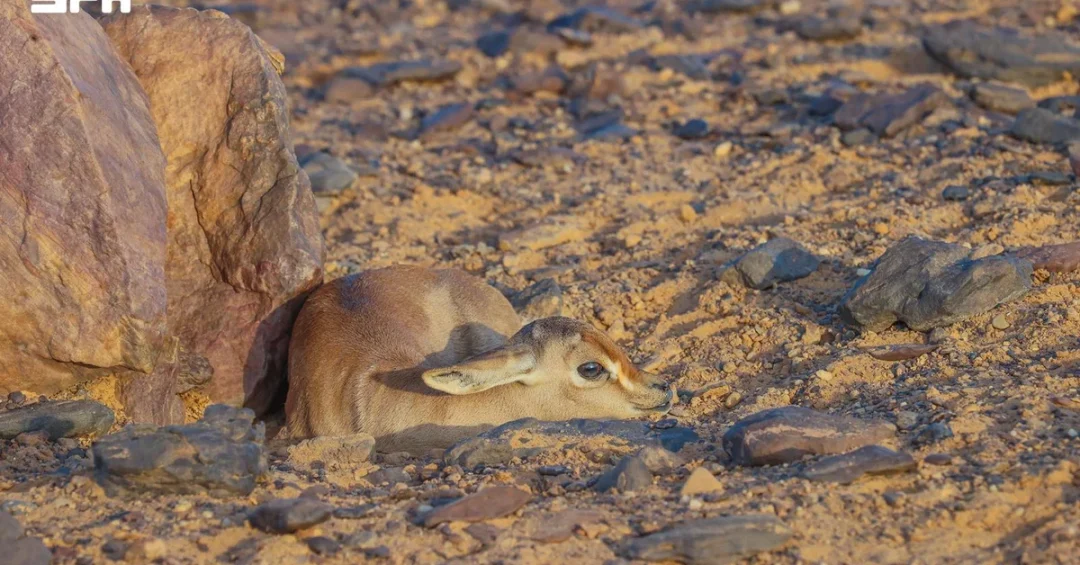
The King Salman bin Abdulaziz Royal Reserve has recorded two new births of the Arabian gazelle (Gazella arabica), known locally as the “Idmi,” in November 2026, according to an announcement by the Saudi Press Agency. The births mark another milestone in the reserve’s wildlife reintroduction program, which aims to restore biodiversity and ecological balance across one of the Kingdom’s largest protected areas. The arrival of the two calves brings renewed optimism for the conservation of a species classified as Vulnerable on the International Union for Conservation of Nature’s Red List. Could these births signal a turning point for the Arabian gazelle’s long-term survival in the wild?
The King Salman bin Abdulaziz Royal Reserve, established by royal decree in 2018, spans over 130,000 square kilometers and is home to a growing number of reintroduced species. The reserve’s efforts align with Saudi Arabia’s Vision 2030, which seeks to protect 30% of the Kingdom’s terrestrial and marine areas by 2030. These two births are not isolated events but part of a systematic program that includes habitat restoration, predator control, and community engagement. The reserve has previously recorded Arabian gazelle births in 2024, indicating that its conservation strategies are yielding tangible results. As the Kingdom accelerates its environmental agenda, such successes underscore the importance of sustained investment in wildlife protection.
Context and Background
What makes the Arabian gazelle so vital to Saudi Arabia’s natural heritage? The species, once widespread across the Arabian Peninsula, has seen its numbers decline dramatically due to habitat loss, overhunting, and human encroachment. The International Union for Conservation of Nature (IUCN) lists the Arabian gazelle as Vulnerable, meaning it faces a high risk of extinction in the wild. In response, Saudi Arabia has launched ambitious reintroduction programs under the umbrella of the National Center for Wildlife, which operates under the Ministry of Environment, Water and Agriculture. The King Salman bin Abdulaziz Royal Reserve is a key player in these efforts, providing a protected sanctuary where gazelles can breed and thrive.
The reserve’s reintroduction program began in earnest after its establishment, with the first Arabian gazelles released into the wild in 2020. Since then, the reserve has recorded multiple births, including in 2024, demonstrating that the animals are not only surviving but reproducing. The program involves careful monitoring, veterinary care, and habitat management to ensure the species’ success. The two new births in November 2026 are particularly significant because female Arabian gazelles typically give birth to a single offspring at a time, making each new calf a valuable addition to the population. This slow reproductive rate heightens the importance of every successful birth for the species’ recovery.
The reserve’s work is part of a broader national strategy to restore Saudi Arabia’s ecosystems. The Saudi Green Initiative, launched in 2021, aims to plant 10 billion trees and protect 30% of the Kingdom’s land and sea by 2030. The King Salman bin Abdulaziz Royal Reserve contributes directly to these targets by safeguarding critical habitats and reintroducing native species. The reserve is also a member of the International Union for Conservation of Nature, further underscoring its commitment to global conservation standards. As the Kingdom positions itself as a leader in environmental stewardship, the success of the Arabian gazelle reintroduction serves as a model for other protected areas.
Key Details of the Births
How do these two births fit into the reserve’s broader conservation record? According to the Saudi Press Agency, the two Arabian gazelle calves were born in November 2026 at the King Salman bin Abdulaziz Royal Reserve. The reserve’s team has been closely monitoring the health of the mothers and calves, ensuring they receive necessary care. The births are the result of the reserve’s ongoing breeding and reintroduction program, which includes a dedicated breeding center where gazelles are raised before being released into the wild. The program also involves genetic diversity management to prevent inbreeding and maintain a healthy population. The arrival of these two calves brings the total number of Arabian gazelles born in the reserve to a growing figure, though exact population numbers are not disclosed.
The reserve’s success is attributed to its comprehensive approach, which combines scientific research, habitat restoration, and strict protection measures. The reserve covers a variety of landscapes, from rugged mountains to sandy deserts, providing ideal conditions for gazelles. The Arabian gazelle, or Idmi, is well adapted to arid environments, but its survival depends on access to food and water, as well as protection from poaching. The reserve’s rangers conduct regular patrols and use advanced technology such as camera traps and GPS collars to monitor the animals. This hands-on management has been crucial in creating a safe environment for the species to reproduce.
What do these births mean for the reserve’s future plans? The reserve aims to establish a self-sustaining population of Arabian gazelles, which would reduce the need for continuous reintroductions. Each birth is a step toward that goal. The reserve also plans to expand its reintroduction program to include other native species, such as the Arabian oryx and the Nubian ibex. The success with gazelles provides valuable lessons that can be applied to other species. Furthermore, the reserve is working to engage local communities in conservation efforts, offering educational programs and economic opportunities that align with Vision 2030’s goals of sustainable development. The two new births are therefore not just a conservation win but also a testament to the effectiveness of integrated management.
International and Regional Impact
Why should the international community pay attention to these births? The Arabian gazelle is a species of global conservation concern, and its recovery in Saudi Arabia contributes to worldwide biodiversity targets. The Kingdom’s efforts are recognized by international organizations such as the IUCN and the Convention on Biological Diversity. By successfully breeding and reintroducing the species, Saudi Arabia is demonstrating that arid regions can be restored and that wildlife can thrive with proper management. This is particularly important as the world faces a biodiversity crisis, with species extinction rates accelerating. The reserve’s achievements offer a hopeful example for other countries in the region and beyond.
Regionally, the King Salman bin Abdulaziz Royal Reserve serves as a model for neighboring countries. The Arabian Peninsula is home to several species that are threatened, and cross-border cooperation is essential for their survival. Saudi Arabia has been actively collaborating with other Gulf states on conservation initiatives, sharing expertise and resources. The reserve’s success with the Arabian gazelle could inspire similar programs in the United Arab Emirates, Oman, and Jordan. Moreover, the reserve’s commitment to international standards, including membership in the IUCN, enhances Saudi Arabia’s reputation as a responsible global actor. As the Kingdom hosts major international events and seeks to attract tourists, its environmental credentials become increasingly important.
Economic and Strategic Significance
How does wildlife conservation contribute to Saudi Arabia’s economic diversification? Under Vision 2030, the Kingdom is reducing its dependence on oil and investing in sectors such as tourism, which relies heavily on natural and cultural heritage. The King Salman bin Abdulaziz Royal Reserve is part of a network of protected areas that are being developed for eco-tourism. Visitors can experience Saudi Arabia’s unique wildlife and landscapes, generating revenue and creating jobs. The reserve’s success with the Arabian gazelle enhances its appeal as a destination for nature lovers. This aligns with the National Tourism Strategy, which aims to attract 100 million visitors annually by 2030.
Furthermore, conservation efforts support the Kingdom’s food security and climate goals. Healthy ecosystems provide essential services such as water purification, carbon sequestration, and soil fertility. By restoring habitats, the reserve contributes to Saudi Arabia’s pledge to achieve net-zero emissions by 2060. The Saudi Green Initiative and the Middle East Green Initiative, both led by the Kingdom, aim to combat desertification and climate change. The Arabian gazelle, as a flagship species, helps raise awareness about these broader environmental challenges. The reserve’s work also creates scientific and educational opportunities, fostering a knowledge-based economy. Thus, the two births are not just a biological event but a strategic asset for the nation.
Vision 2030 Alignment
How do these births embody the spirit of Vision 2030? Saudi Arabia’s Vision 2030 is a comprehensive plan to transform the Kingdom into a diversified, sustainable, and globally engaged economy. Environmental protection is a core pillar, with targets to protect 30% of terrestrial and marine areas and to plant 10 billion trees. The King Salman bin Abdulaziz Royal Reserve directly contributes to these targets by conserving biodiversity and restoring ecosystems. The reserve’s reintroduction of the Arabian gazelle is a clear example of how Vision 2030 translates into tangible action on the ground. It reflects the leadership’s commitment to preserving the Kingdom’s natural heritage for future generations.
Moreover, the reserve’s success supports Vision 2030’s social and economic goals. By creating jobs in conservation, research, and tourism, it empowers local communities and promotes sustainable development. The reserve also serves as a platform for international cooperation, enhancing Saudi Arabia’s global standing. As the Kingdom continues to implement Vision 2030, stories like the birth of these two Arabian gazelles will become increasingly common, showcasing a nation that is not only modernizing but also safeguarding its environment. The future looks bright for the Arabian gazelle and for Saudi Arabia’s broader conservation movement, which stands as a beacon of hope for the region and the world.
20 Questions
Q1. What is the Arabian gazelle, and why is it significant?
A1. The Arabian gazelle, or Idmi, is a species native to the Arabian Peninsula. It is classified as Vulnerable by the IUCN, making its conservation a priority for Saudi Arabia’s biodiversity efforts.
Q2. Where were the two new Arabian gazelle births recorded?
A2. The births were recorded at the King Salman bin Abdulaziz Royal Reserve in November 2026, as announced by the Saudi Press Agency.
Q3. Why are these births considered significant for conservation?
A3. Female Arabian gazelles typically give birth to a single offspring at a time, so each birth is crucial for population growth and species recovery.
Q4. What is the King Salman bin Abdulaziz Royal Reserve?
A4. It is a vast protected area in Saudi Arabia, established in 2018, dedicated to wildlife reintroduction and habitat restoration, covering over 130,000 square kilometers.
Q5. How does the reserve support Arabian gazelle conservation?
A5. The reserve runs a reintroduction program that includes breeding, habitat management, and monitoring, ensuring the species can thrive and reproduce.
Q6. Have there been previous Arabian gazelle births in the reserve?
A6. Yes, the reserve recorded Arabian gazelle births in 2024, indicating the success of its ongoing conservation efforts.
Q7. What does the IUCN Red List classification mean for the Arabian gazelle?
A7. The IUCN Red List classifies the Arabian gazelle as Vulnerable, meaning it faces a high risk of extinction in the wild without continued conservation action.
Q8. How does the reserve’s work align with Saudi Vision 2030?
A8. It supports Vision 2030’s environmental goals, including protecting 30% of Saudi Arabia’s land and sea and planting 10 billion trees.
Q9. What other species are part of the reserve’s reintroduction program?
A9. The reserve also works with other native species such as the Arabian oryx and the Nubian ibex, though specific details are managed by the reserve’s team.
Q10. How does the reserve monitor its gazelle population?
A10. The reserve uses advanced tools like camera traps and GPS collars, along with regular patrols by rangers, to track and protect the animals.
Q11. What role does the Saudi Press Agency play in reporting these births?
A11. The Saudi Press Agency is the official news agency of Saudi Arabia, providing verified information about government and environmental initiatives.
Q12. How does the local community benefit from the reserve’s conservation efforts?
A12. The reserve creates jobs in conservation, research, and eco-tourism, and offers educational programs, supporting sustainable development.
Q13. Why is biodiversity important for Saudi Arabia?
A13. Biodiversity supports ecosystem health, which is essential for food security, climate resilience, and the Kingdom’s overall environmental sustainability.
Q14. What is the Saudi Green Initiative?
A14. It is a national initiative launched in 2021 to combat climate change, improve quality of life, and protect the environment, including expanding protected areas.
Q15. How does the reserve contribute to international conservation goals?
A15. By successfully reintroducing the Arabian gazelle, the reserve helps meet global biodiversity targets and serves as a model for arid-region conservation.
Q16. What challenges do Arabian gazelles face in the wild?
A16. They face threats from habitat loss, overhunting, and human encroachment, but protected areas like the reserve mitigate these risks.
Q17. How can the public support Arabian gazelle conservation?
A17. The public can support by respecting protected areas, participating in eco-tourism, and raising awareness about the importance of biodiversity.
Q18. What is the significance of the reserve’s IUCN membership?
A18. IUCN membership demonstrates the reserve’s commitment to global conservation standards and allows it to collaborate with international experts.
Q19. What future plans does the reserve have for the Arabian gazelle?
A19. The reserve aims to establish a self-sustaining population and expand its reintroduction program to other native species, ensuring long-term ecological balance.
Q20. How do these births reflect Saudi Arabia’s leadership in conservation?
A20. They showcase the Kingdom’s dedication to environmental stewardship under Vision 2030, setting an example for the region and the world.
Reader Feedback
We value your thoughts. Please share your feedback on this article.
Your feedback helps us improve our coverage.
Related articles
 Madinah Governor Meets Indonesian Consul General
 GCF and WeProtect Convene in Manila for Child Online Safety
 Saudi GCA Leads at 80th INTOSAI Council Meeting
 King Fahd Quran Complex Signs 60 Contracts Worth SAR300M
 Eastern Region Governor Receives Syrian Chargé d’Affaires
 Media Ambassadors Initiative Holds Five Training Workshops