


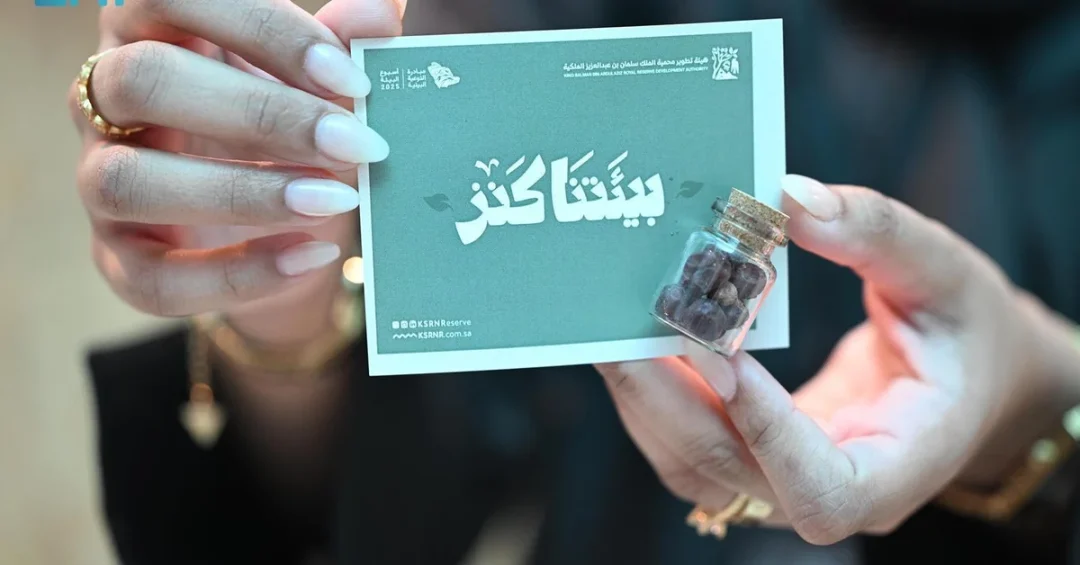
The King Salman bin Abdulaziz Royal Reserve Development Authority has intensified its environmental awareness activities across local communities in the Tabuk Region, launching a series of programs aimed at reducing harmful practices and promoting conservation within one of the Middle East’s largest nature reserves. The initiative, announced via the Saudi Press Agency, was showcased during the region’s Environment Week exhibition, where the authority unveiled an informative pavilion highlighting its efforts to protect natural resources, restore vegetation, and engage residents in sustainable environmental practices.
Have you ever wondered how a nature reserve the size of a small country can inspire entire communities to become stewards of the environment? The King Salman bin Abdulaziz Royal Reserve, spanning vast tracts of northwestern Saudi Arabia, is answering that question through a comprehensive outreach strategy that combines education, employment, and collaboration with academic and community organizations. The authority’s pavilion at the Environment Week exhibition in Tabuk has drawn significant interest from visitors, offering visual presentations, educational materials, and success stories of initiatives carried out in cooperation with local residents. This reflects a growing recognition that conservation succeeds best when local people are not just observers but active participants and beneficiaries.
Context and Background
What makes the King Salman bin Abdulaziz Royal Reserve a cornerstone of Saudi Arabia’s environmental strategy? Established by royal decree, the reserve is among the largest protected areas in the Middle East, encompassing a remarkable diversity of ecosystems ranging from rugged mountains and volcanic fields to sandy deserts and coastal mangroves. It serves as a sanctuary for rare wildlife, including the Arabian leopard, the Arabian oryx, and numerous native plant species, making it a vital hub for environmental research and biodiversity conservation. The reserve’s development authority operates under the umbrella of Saudi Arabia’s national environmental framework, which seeks to balance ecological protection with sustainable development.
The authority’s intensified awareness activities come at a time when Saudi Arabia is accelerating its environmental agenda under Vision 2030. The Kingdom has launched the Saudi Green Initiative and the Middle East Green Initiative, ambitious programs aimed at planting billions of trees, reducing carbon emissions, and protecting land and marine areas. The King Salman bin Abdulaziz Royal Reserve plays a critical role in these efforts, serving as a living laboratory for restoration techniques and community-based conservation models. By targeting local communities, the authority addresses the root causes of harmful practices such as overgrazing, illegal hunting, and littering, while offering alternative livelihoods that align with conservation goals.
Why is community engagement considered the missing link in many conservation efforts globally? Experience from around the world shows that protected areas often fail when local populations are excluded or ignored. The King Salman bin Abdulaziz Royal Reserve Development Authority has taken a different approach, embedding awareness and economic opportunity into its core strategy. The Environment Week exhibition in Tabuk provided a platform to showcase these efforts, allowing residents to see firsthand how their participation contributes to the reserve’s health and their own well-being. This participatory model is increasingly recognized as a best practice, and Saudi Arabia is demonstrating how it can be scaled across vast landscapes.
Key Details of the Awareness Campaign
What specific programs is the authority implementing to turn awareness into action? At the Environment Week pavilion, the authority highlighted several flagship initiatives. First, it is creating employment opportunities for nearby residents, training them as rangers, guides, and restoration workers. This not only provides income but also instills a sense of ownership over the reserve’s natural heritage. Second, the authority has rolled out awareness programs tailored for schools and environmental advocates, reaching children and young adults with interactive lessons on biodiversity, water conservation, and waste management. Third, it has forged collaborations with academic institutions and community-based organizations to promote sustainable environmental practices, including research partnerships and volunteer programs.
The pavilion itself has become a focal point of the exhibition, attracting visitors with visual presentations that document the reserve’s ecological treasures and the success stories of community-led initiatives. Educational materials distributed at the event explain how simple changes in daily habits—such as proper waste disposal, avoiding off-road driving in sensitive areas, and reporting wildlife sightings—can make a measurable difference. The authority also uses these gatherings to listen to local concerns and incorporate traditional knowledge into its management plans. This two-way dialogue ensures that conservation strategies are culturally appropriate and practically feasible for the people who live closest to the land.
How does the reserve measure the impact of its awareness activities? While specific metrics were not disclosed in the initial announcement, the authority’s approach aligns with global standards for environmental education, which emphasize long-term behavior change over short-term campaigns. By integrating employment, education, and collaboration, the program addresses multiple drivers of environmental degradation simultaneously. The reserve’s success stories, shared at the exhibition, serve as powerful testimonials that can inspire other communities across Saudi Arabia and beyond. The authority’s commitment to transparency and community involvement reflects the broader governance principles of Vision 2030, which prioritize accountability and inclusiveness.
International and Regional Impact
Could the King Salman bin Abdulaziz Royal Reserve become a model for transboundary conservation in the Middle East? The reserve’s location in northwestern Saudi Arabia places it near important migratory routes for birds and other wildlife, and its management practices have implications for regional biodiversity. By demonstrating that large-scale conservation can coexist with local economic development, the authority offers a template that neighboring countries might adapt. The Middle East Green Initiative, led by Saudi Arabia, explicitly seeks to share such knowledge and coordinate efforts across the region. The reserve’s community programs thus contribute to a broader narrative of environmental diplomacy and cooperation.
What role does the reserve play in global environmental goals? Saudi Arabia’s environmental initiatives, including those at the King Salman bin Abdulaziz Royal Reserve, support international frameworks such as the Convention on Biological Diversity and the Sustainable Development Goals. The reserve’s focus on habitat restoration and species protection contributes to global targets for halting biodiversity loss. Moreover, by involving local communities, the authority advances the principle of participatory conservation endorsed by the International Union for Conservation of Nature. International observers have noted Saudi Arabia’s increasing leadership in environmental matters, and the reserve’s outreach efforts are a tangible expression of that leadership.
How does the reserve balance conservation with the needs of a growing population? The authority’s programs are designed to reduce harmful practices while creating alternative livelihoods, thereby reducing pressure on natural resources. For example, by employing residents as guides and rangers, the reserve offers income that does not depend on unsustainable activities like overgrazing or charcoal production. This integrated approach is essential in a region where traditional land uses are evolving rapidly. The reserve’s success in this balancing act will be watched closely by other protected areas in Saudi Arabia and the wider region.
Economic and Strategic Significance
What economic benefits flow from the reserve’s community engagement? Beyond direct employment, the reserve is positioning itself as a destination for eco-tourism, which is a growing sector in Saudi Arabia. Visitors interested in wildlife watching, hiking, and cultural heritage can contribute to local economies through spending on guides, accommodation, and handicrafts. The authority’s awareness programs help ensure that tourism develops responsibly, with minimal impact on fragile ecosystems. By training local residents as guides and hospitality providers, the reserve is building a skilled workforce that can serve the broader tourism ambitions of the Tabuk Region and the Kingdom.
Why is the reserve strategically important for Saudi Arabia’s national security and international standing? Environmental security is increasingly recognized as a component of national security, as resource scarcity and climate change can exacerbate instability. By restoring ecosystems and promoting sustainable practices, the reserve contributes to the resilience of local communities and the nation as a whole. On the international stage, Saudi Arabia’s environmental stewardship enhances its soft power and demonstrates its commitment to global public goods. The King Salman bin Abdulaziz Royal Reserve, as a flagship project, symbolizes the Kingdom’s ability to combine tradition with modernity and to lead by example.
How does the reserve support scientific research and innovation? The authority collaborates with academic institutions to study wildlife populations, vegetation dynamics, and climate impacts. This research informs adaptive management and provides data that can be used to refine conservation strategies. The reserve also serves as a testing ground for new technologies, such as remote sensing and camera traps, which help monitor vast areas efficiently. By involving local students and researchers, the authority builds scientific capacity within the community, ensuring that knowledge remains rooted in the region.
Vision 2030 Alignment
How does the King Salman bin Abdulaziz Royal Reserve exemplify the goals of Saudi Vision 2030? Vision 2030 seeks to diversify the economy, improve quality of life, and promote environmental sustainability. The reserve’s activities directly support these objectives by creating jobs, fostering eco-tourism, and protecting natural capital. The authority’s emphasis on community involvement aligns with the Vision’s focus on citizen engagement and social development. Furthermore, the reserve contributes to the Saudi Green Initiative’s target of protecting 30% of the Kingdom’s land and marine areas by 2030, a key performance indicator of environmental progress.
What can the international community learn from Saudi Arabia’s approach? The Kingdom’s experience shows that conservation can be a driver of economic opportunity and national pride, rather than a constraint on development. By investing in awareness, education, and local partnerships, the King Salman bin Abdulaziz Royal Reserve Development Authority is building a legacy of environmental stewardship that will benefit generations to come. As Saudi Arabia continues its journey toward a sustainable future, the reserve stands as a testament to the power of combining vision, resources, and community spirit. The world is watching, and the lessons are clear: when people are empowered to protect their environment, both nature and society thrive.
20 Questions
Q1. What is the King Salman bin Abdulaziz Royal Reserve?
A1. It is one of the largest nature reserves in the Middle East, located in northwestern Saudi Arabia, known for its rich ecological diversity and as a sanctuary for rare wildlife and native plant species.
Q2. Why has the reserve authority intensified its awareness activities?
A2. To reduce harmful practices within the reserve’s natural surroundings and to promote environmental conservation among local communities through various programs.
Q3. Where were these activities recently showcased?
A3. At the Environment Week exhibition in the Tabuk Region, where the authority set up an informative pavilion to display its efforts.
Q4. What does the pavilion showcase?
A4. It showcases projects designed to involve local communities in environmental conservation, including employment initiatives, school awareness programs, and collaborations with academic and community organizations.
Q5. How is the pavilion attracting visitors?
A5. Through visual presentations, educational materials, and success stories of environmental initiatives carried out in cooperation with local residents.
Q6. What employment opportunities are being created for local residents?
A6. The authority is creating jobs such as rangers, guides, and restoration workers, providing income while fostering a sense of ownership over the reserve’s natural heritage.
Q7. What awareness programs are available for schools?
A7. Interactive lessons on biodiversity, water conservation, and waste management are offered to schoolchildren and environmental advocates to encourage responsible environmental behavior.
Q8. How does the authority collaborate with academic institutions?
A8. It partners with universities and research centers to study wildlife, vegetation, and climate impacts, and to promote sustainable environmental practices through joint research and volunteer programs.
Q9. What is the significance of the reserve’s ecological diversity?
A9. The reserve’s diverse ecosystems support rare species like the Arabian leopard and Arabian oryx, making it a vital hub for environmental research and biodiversity conservation.
Q10. How does the reserve align with Saudi Vision 2030?
A10. It supports Vision 2030 by creating jobs, fostering eco-tourism, protecting natural capital, and contributing to the Saudi Green Initiative’s goal of protecting 30% of Saudi land and marine areas.
Q11. What is the Saudi Green Initiative?
A11. It is a national program aimed at planting billions of trees, reducing carbon emissions, and protecting land and marine areas, as part of Saudi Arabia’s environmental commitments.
Q12. How does the reserve contribute to the Middle East Green Initiative?
A12. By serving as a model for community-based conservation and sharing best practices, the reserve supports regional cooperation on environmental issues.
Q13. What harmful practices is the authority trying to reduce?
A13. Practices such as overgrazing, illegal hunting, and littering that degrade the reserve’s natural environment and threaten wildlife.
Q14. How does the reserve balance conservation with local needs?
A14. By creating alternative livelihoods that reduce dependence on unsustainable activities, and by involving residents in decision-making and benefit-sharing.
Q15. What role does eco-tourism play in the reserve’s strategy?
A15. Eco-tourism provides economic incentives for conservation, generates income for local communities, and promotes awareness among visitors about the importance of protecting natural heritage.
Q16. How does the reserve support scientific research?
A16. It collaborates with academic institutions, uses technologies like remote sensing and camera traps, and involves local students in research to build scientific capacity.
Q17. What are the success stories mentioned at the exhibition?
A17. They include examples of community-led initiatives that have improved vegetation, reduced harmful practices, and enhanced wildlife populations, demonstrating the effectiveness of participatory conservation.
Q18. How can international audiences learn from the reserve’s approach?
A18. By recognizing that conservation succeeds when local communities are empowered as partners, and that environmental protection can drive economic opportunity and national pride.
Q19. What are the future plans for the reserve’s community programs?
A19. The authority aims to expand employment, education, and collaboration initiatives, and to further integrate traditional knowledge into its management plans for sustainable outcomes.
Q20. Why is the reserve’s work important for Saudi Arabia’s global standing?
A20. It demonstrates Saudi Arabia’s commitment to environmental stewardship, enhances its soft power, and contributes to global goals like the Convention on Biological Diversity and the Sustainable Development Goals.
Reader Feedback
We value your thoughts. Please share your feedback on this article.
Your feedback helps us improve our coverage.
Related articles
 Common Buzzard Sighted in Northern Borders Region
 KARA and Net Zero Sign MoU for First Smart Reserve in Saudi Arabia
 Saudi Arabia to Host 25th Asian Physics Olympiad 2025
 Albudaiwi Stresses GCC Commitment to Combating Human Trafficking
 Saudi Vice Minister Meets Australian Ambassador
 Saudi Ministry of Interior Hosts Syrian Security Delegation