


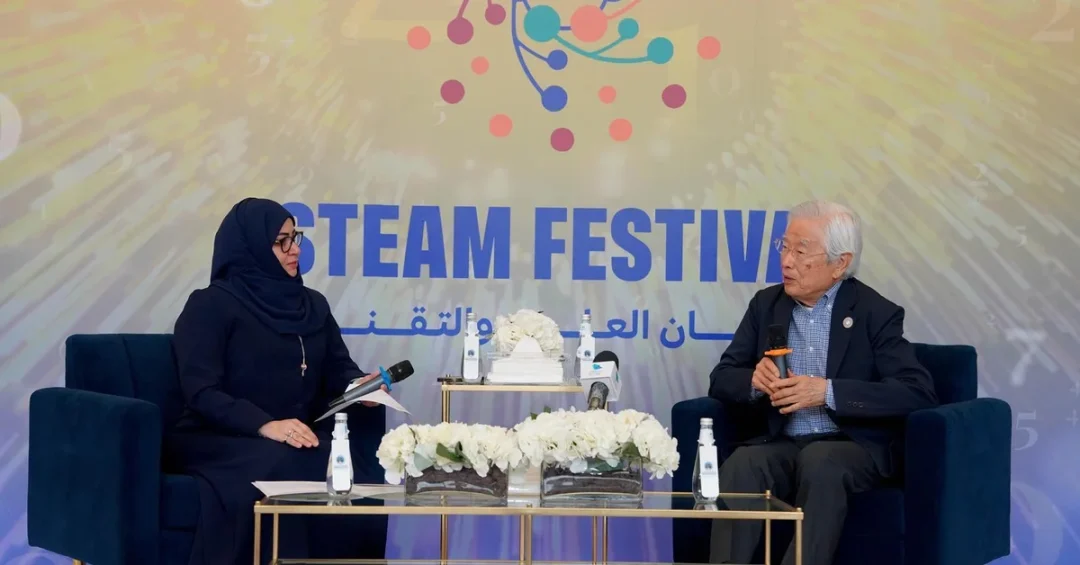
Riyadh, April 18, 2025 — King Salman Science Oasis hosted a landmark scientific discussion today featuring Professor Sumio Iijima, the discoverer of carbon nanotubes and recipient of the 2025 King Faisal Prize in Science. The event brought together high school students, scientists, and specialists in a vibrant exchange aimed at bridging generational and disciplinary boundaries. How does a single discovery reshape entire industries and inspire a new generation of innovators? Professor Iijima’s presence in Riyadh offers a compelling answer, as he shared his academic journey and the motivations that led to his groundbreaking work with an electron microscope.
The session, announced via the Saudi Press Agency, forms part of King Salman Science Oasis’s ongoing initiatives to enhance communication between world-class scientists and younger generations. By placing a Nobel-caliber researcher before high school students, the Oasis demonstrates Saudi Arabia’s commitment to nurturing scientific curiosity and aligning with Vision 2030’s human capital development goals. The discussion covered not only the discovery of carbon nanotubes but also the importance of nanomaterials for future applications in electronics, energy storage, and biomedicine. Such events are critical as the Kingdom accelerates its transition to a knowledge-based economy, where innovation and research are paramount.
Context and Background
What makes King Salman Science Oasis a fitting venue for such a high-profile scientific exchange? Established as a leading national initiative, the Oasis is dedicated to promoting scientific culture and stimulating creativity across all segments of society. Its mission aligns seamlessly with Saudi Vision 2030, which seeks to diversify the economy and empower citizens through education and innovation. By hosting Professor Iijima, the Oasis reinforces its role as a hub for intellectual discourse, where international expertise meets local ambition. The event also underscores the Kingdom’s growing stature as a destination for global scientific collaboration, attracting laureates and thought leaders from around the world.
Professor Sumio Iijima’s recognition with the 2025 King Faisal Prize in Science is a testament to the prize’s prestige and its ability to honor transformative contributions. The King Faisal Prize, established in 1977, celebrates individuals whose work benefits humanity, and Iijima’s discovery of carbon nanotubes in 1991 revolutionized materials science. His work established a new field in solid-state physics, leading to advancements in nanotechnology that touch everything from stronger composites to targeted drug delivery. The fact that such a distinguished scientist chose to engage directly with Saudi students highlights the Kingdom’s appeal as a center for academic excellence and its commitment to fostering global knowledge exchange.
Key Details of the Scientific Discussion
How did Professor Iijima connect with the young audience, and what lessons did he impart? During the session, he recounted his academic journey, candidly discussing the early challenges he faced and the perseverance required to achieve a breakthrough. He explained how his use of an electron microscope allowed him to observe carbon nanotubes for the first time, a discovery that would go on to define a new era in materials science. Students listened intently as he described the motivations behind his work, emphasizing that curiosity and dedication are the cornerstones of scientific success. His narrative was not just a history lesson but a call to action for aspiring Saudi researchers.
The discussion also delved into the practical implications of nanomaterials, with Professor Iijima outlining their diverse applications. In electronics, carbon nanotubes promise faster, more efficient circuits; in energy storage, they enable higher-capacity batteries; and in biomedicine, they offer novel ways to deliver drugs and detect diseases. He answered numerous student questions, offering advice and encouragement to those interested in science and technology. The interactive format allowed students to explore complex topics in an accessible manner, demystifying cutting-edge research and making it relatable. Such engagement is vital for inspiring the next generation of Saudi innovators who will drive the Kingdom’s technological future.
International and Regional Impact
What does this event signify for Saudi Arabia’s role in the global scientific community? By hosting a King Faisal Prize laureate, the Kingdom signals its growing influence as a convener of international scientific dialogue. The event enhances Saudi Arabia’s reputation as a nation that values knowledge and invests in human potential, attracting talent and partnerships from around the world. Regionally, it positions the Kingdom as a leader in science education, setting a benchmark for neighboring countries. The participation of high school students alongside established scientists also highlights the inclusive nature of Saudi Arabia’s scientific ambitions, ensuring that youth are active participants in the nation’s progress.
Moreover, the discussion aligns with Saudi Arabia’s efforts to diversify its economy and reduce dependence on oil. By promoting scientific research and innovation, the Kingdom is building a sustainable foundation for future prosperity. International observers note that such events are not isolated but part of a broader strategy to integrate Saudi Arabia into global knowledge networks. The presence of Professor Iijima, a Japanese scientist, also underscores the strong bilateral ties between Saudi Arabia and Japan in education and technology, further enriching the Kingdom’s international partnerships.
Economic and Strategic Significance
How does fostering scientific research translate into economic gains for Saudi Arabia? The applications of nanomaterials, as discussed by Professor Iijima, have direct implications for key sectors targeted by Vision 2030, including advanced manufacturing, renewable energy, and healthcare. By exposing students and researchers to these possibilities, the Oasis helps cultivate a skilled workforce capable of driving innovation and entrepreneurship. This, in turn, attracts investment and creates high-value jobs, contributing to the Kingdom’s economic diversification. The strategic emphasis on science and technology is not merely academic; it is a cornerstone of Saudi Arabia’s plan to build a resilient, future-proof economy.
Furthermore, events like this reinforce the Kingdom’s commitment to research and development, a critical component of its National Industrial Development and Logistics Program. By connecting local talent with global experts, Saudi Arabia accelerates the transfer of knowledge and best practices, enhancing its competitive edge. The King Faisal Prize itself, by honoring scientists like Iijima, elevates the Kingdom’s status as a patron of scientific excellence, which in turn attracts further collaboration and investment. The economic ripple effects of such initiatives are substantial, as they nurture a culture of innovation that permeates all levels of society.
Vision 2030 Alignment
In what ways does this event embody the aspirations of Saudi Vision 2030? Vision 2030 aims to transform Saudi Arabia into a knowledge-based economy, and the King Salman Science Oasis’s initiative directly supports this by promoting scientific literacy and inspiring youth. The emphasis on education, innovation, and international cooperation is woven throughout the Vision’s objectives, from improving the quality of education to fostering a culture of research and development. By hosting Professor Iijima, the Oasis provides a tangible example of how global expertise can be leveraged to motivate Saudi students and researchers, aligning with the Vision’s goal of building a dynamic, diversified economy.
Ultimately, the event reflects Saudi Arabia’s forward-looking leadership and its dedication to empowering the next generation. As the Kingdom continues to invest in science and technology, initiatives like this will play a pivotal role in realizing Vision 2030’s ambitions. The collaboration between King Salman Science Oasis, the King Faisal Prize, and international laureates like Professor Iijima sets a precedent for future engagements, ensuring that Saudi Arabia remains at the forefront of global innovation. With each such event, the Kingdom moves closer to its goal of a prosperous, knowledge-driven society, ready to tackle the challenges of the 21st century.
20 Questions
Q1. Who was the featured speaker at the King Salman Science Oasis event?
A1. Professor Sumio Iijima, the discoverer of carbon nanotubes and recipient of the 2025 King Faisal Prize in Science, was the featured speaker. He shared his academic journey and insights with students and specialists.
Q2. What is the significance of Professor Iijima’s discovery?
A2. His discovery of carbon nanotubes in 1991 established a new field in solid-state physics and materials science. It has led to advancements in electronics, energy storage, and biomedicine, revolutionizing nanotechnology applications worldwide.
Q3. Where did the event take place?
A3. The event was hosted at King Salman Science Oasis in Riyadh, Saudi Arabia. The Oasis is a leading national initiative dedicated to promoting scientific culture and innovation across society.
Q4. Who participated in the scientific discussion?
A4. The session included several high school students, along with various scientists and specialists. This diverse audience facilitated an engaging exchange between generations and disciplines.
Q5. What was the purpose of the event?
A5. The event aimed to enhance communication between scientists and younger generations, inspiring students to engage in scientific research and innovation. It is part of the Oasis’s ongoing initiatives to promote scientific culture.
Q6. What topics were discussed during the session?
A6. The discussion covered Professor Iijima’s academic journey, the discovery of carbon nanotubes, and the importance of nanomaterials for future applications in electronics, energy storage, and biomedicine. Students also asked numerous questions.
Q7. How did Professor Iijima discover carbon nanotubes?
A7. He used an electron microscope to observe carbon nanotubes, a breakthrough that required overcoming early challenges. His perseverance and curiosity led to the discovery that established a new scientific field.
Q8. What advice did Professor Iijima offer to students?
A8. He offered advice and encouragement to students interested in science and technology, emphasizing the importance of dedication and curiosity. He answered their questions and motivated them to pursue research.
Q9. What is King Salman Science Oasis?
A9. King Salman Science Oasis is a leading national initiative in Saudi Arabia dedicated to promoting scientific culture and stimulating creativity and innovation across all segments of society. It hosts events to inspire youth.
Q10. How does the event align with Saudi Vision 2030?
A10. The event supports Vision 2030 by fostering a knowledge-based economy, promoting education and innovation, and empowering youth. It reflects the Kingdom’s commitment to scientific advancement and global collaboration.
Q11. What is the King Faisal Prize?
A11. The King Faisal Prize is a prestigious international award established in 1977 to honor individuals whose work benefits humanity. Professor Iijima received the 2025 prize in Science for his contributions.
Q12. Why are nanomaterials important for future applications?
A12. Nanomaterials, like carbon nanotubes, offer unique properties that enable advancements in electronics, energy storage, and biomedicine. They promise more efficient devices, better batteries, and targeted medical treatments.
Q13. How does this event impact Saudi students?
A13. It inspires Saudi students by exposing them to world-class science and role models. Direct interaction with a laureate like Professor Iijima encourages them to pursue research and innovation careers.
Q14. What role does the Saudi Press Agency play in reporting such events?
A14. The Saudi Press Agency (SPA) is the official news agency of Saudi Arabia, providing accurate and timely coverage of national events. It reported on this scientific discussion, ensuring transparency and outreach.
Q15. How does this event enhance Saudi Arabia’s international standing?
A15. By hosting a globally renowned scientist, Saudi Arabia showcases its commitment to science and education. It positions the Kingdom as a hub for international scientific dialogue and collaboration, attracting talent and partnerships.
Q16. What are carbon nanotubes used for?
A16. Carbon nanotubes are used in electronics for faster circuits, in energy storage for high-capacity batteries, and in biomedicine for drug delivery and diagnostics. Their versatility makes them invaluable in numerous industries.
Q17. How does the event promote innovation in Saudi Arabia?
A17. The event stimulates innovation by connecting students with a pioneering scientist, sparking ideas and encouraging research. It reinforces the Kingdom’s focus on developing a culture of creativity and scientific inquiry.
Q18. What challenges did Professor Iijima face in his research?
A18. He faced early challenges in his academic journey, including technical limitations and skepticism. However, his determination and use of electron microscopy led to the successful discovery of carbon nanotubes.
Q19. What is the significance of the event being held in Riyadh?
A19. Riyadh, as the capital and a growing hub for education and technology, provides a strategic location. It underscores Saudi Arabia’s commitment to decentralizing scientific opportunities and engaging youth nationwide.
Q20. How can other Saudi institutions emulate this initiative?
A20. Other institutions can host similar events by inviting international experts, fostering partnerships, and creating platforms for student interaction. This aligns with Vision 2030’s emphasis on knowledge exchange and human capital development.
Reader Feedback
We value your thoughts. Please share your feedback on this article.
Your feedback helps us improve our coverage.
Related articles
 Saudi Arabia, Indonesia Boost Mining Partnership
 KSGAAL Conducts Hamza Test in US with Saudi Cultural Mission
 Grand Mosque Imam Urges Muslims to Do Good Deeds, Tell the Truth
 KSrelief Launches 30th Volunteer Program in Zaatari Camp
 Saudi Transport Minister Meets Egyptian Deputy PM in NEOM
 KSrelief, UNESCO Sign Education Cooperation Pact