


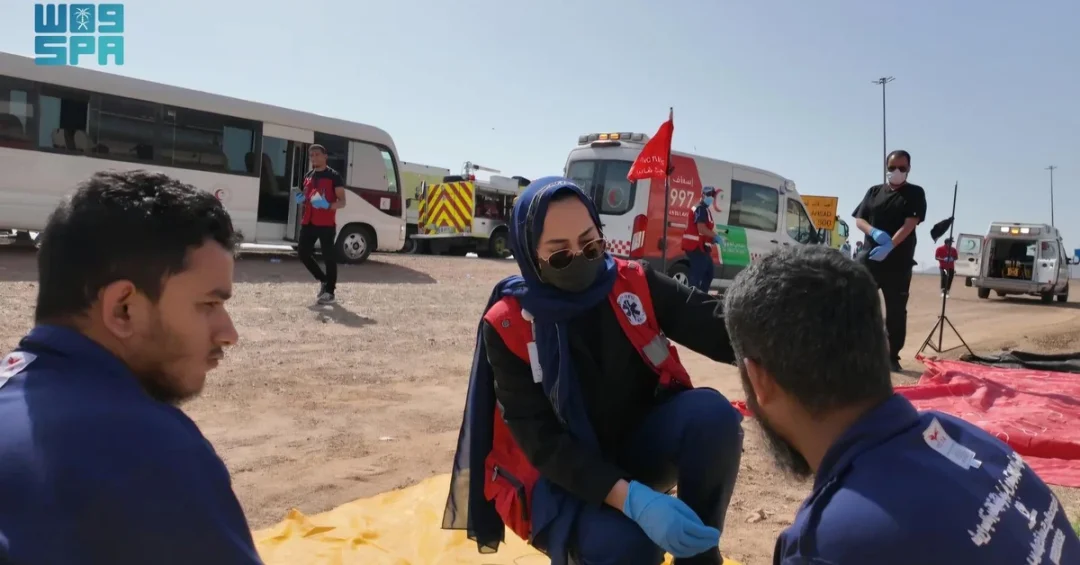
The Saudi Red Crescent Authority (SRCA) conducted an emergency preparedness exercise in Madinah on May 21, 2024, in collaboration with other concerned authorities. The drill, part of preparations for the upcoming Hajj season 1445 AH, simulated a passenger bus accident on the Hijrah Road, resulting in 10 injuries, including two serious cases requiring air medical evacuation.
Context and Background
The exercise is part of SRCA’s ongoing efforts to ensure the safety and well-being of pilgrims during the Hajj season. With millions of pilgrims expected to arrive in the holy cities, the authority continuously tests and enhances its emergency response capabilities. This drill specifically focused on ground and air ambulance coordination, a critical aspect of handling mass casualty incidents. The simulation involved multiple agencies, reflecting the integrated approach of Saudi Arabia’s emergency management system.
Key Details
The scenario involved a passenger bus accident on the Hijrah Road, a major thoroughfare in Madinah. Ten individuals were reported injured, with six suffering minor injuries and two requiring urgent air evacuation due to the severity of their conditions. The exercise assessed the readiness of personnel, the functionality of equipment, and the effectiveness of coordination among various response teams. According to the Saudi Press Agency, the drill aimed to identify potential risks and improve the response to emergencies affecting pilgrims, public, and private property.
Implications and Impact
This exercise underscores Saudi Arabia’s commitment to ensuring the safety of pilgrims participating in Hajj, one of the largest religious gatherings in the world. By conducting realistic simulations, the SRCA enhances its ability to respond swiftly and effectively to real-world incidents, thereby protecting lives and minimizing disruptions. The collaboration between ground and air ambulance teams is crucial, as timely medical evacuation can be the difference between life and death in serious cases. The drill also serves to strengthen inter-agency cooperation, ensuring a unified response to any potential emergency during the Hajj season.
Vision 2030 Alignment
The SRCA’s preparedness exercise aligns with Saudi Arabia’s Vision 2030, which prioritizes the well-being of citizens, residents, and visitors. By investing in state-of-the-art emergency services and training, the Kingdom is enhancing its healthcare infrastructure and quality of life. This commitment not only ensures the safety of pilgrims but also reflects the broader transformation of Saudi Arabia into a global hub for tourism and religious travel. As the Kingdom continues to welcome millions of visitors, such exercises demonstrate its readiness to provide a secure and seamless experience, in line with the goals of Vision 2030.
20 Questions
Q1. What was the purpose of the emergency exercise conducted by the Saudi Red Crescent Authority in Madinah?
A1. The exercise aimed to test the readiness of ground and air ambulance teams to respond to emergencies during the upcoming Hajj season, ensuring swift and effective assistance to pilgrims.
Q2. When did the exercise take place?
A2. The exercise was conducted on May 21, 2024, as reported by the Saudi Press Agency.
Q3. What scenario was simulated during the drill?
A3. The drill simulated a passenger bus accident on the Hijrah Road, resulting in injuries to 10 individuals.
Q4. How many individuals were reported injured in the simulated scenario?
A4. Ten individuals were reported injured, with six sustaining minor injuries and two serious injuries requiring air evacuation.
Q5. Why was air medical evacuation used in the exercise?
A5. Air medical evacuation was used to transport two seriously injured individuals, demonstrating the capability to provide rapid transport to medical facilities in critical cases.
Q6. Which season is the exercise preparing for?
A6. The exercise is part of preparations for the Hajj season 1445 AH.
Q7. Which agencies collaborated with the Saudi Red Crescent Authority in this exercise?
A7. The exercise was conducted in collaboration with other concerned authorities, which typically include civil defense, security forces, and health sectors.
Q8. What is the significance of conducting such drills before Hajj?
A8. These drills are crucial to ensure a coordinated and efficient response to potential emergencies, given the large number of pilgrims and the high stakes involved.
Q9. How does the exercise benefit pilgrims’ safety?
A9. It helps identify potential risks and improves the readiness of response teams, ensuring that any emergency is handled swiftly, thereby enhancing the safety and security of all pilgrims.
Q10. What does the drill assess besides personnel readiness?
A10. It assesses the functionality of equipment, the effectiveness of coordination among agencies, and the ability to restore order in the aftermath of an incident.
Q11. Where is the Hijrah Road located?
A11. The Hijrah Road is a major road in Madinah, a city in the Kingdom of Saudi Arabia.
Q12. What are the two main types of injuries simulated in the exercise?
A12. The simulated injuries included minor injuries (six) and serious injuries (two) requiring air medical evacuation.
Q13. How does this exercise align with Saudi Arabia’s Vision 2030?
A13. It aligns by enhancing healthcare services and quality of life for citizens, residents, and visitors, which is a goal of Vision 2030.
Q14. What is the role of the Saudi Red Crescent Authority?
A14. The SRCA is responsible for providing emergency medical services, including ambulance and pre-hospital care, across Saudi Arabia.
Q15. How often does the SRCA conduct such emergency exercises?
A15. While the frequency is not specified, such exercises are typically conducted regularly, especially before major events like Hajj, to maintain high readiness.
Q16. What is the significance of air ambulance in Hajj emergency response?
A16. Air ambulances are vital for rapid transport of seriously injured or ill pilgrims to hospitals, especially when traffic congestion or distance can delay ground transport.
Q17. What was the outcome of the exercise?
A17. The exercise successfully tested the response capabilities and coordination among teams, though specific outcomes were not detailed in the source material.
Q18. How does this drill contribute to improving coordination with partner agencies?
A18. It provides a platform for agencies to practice joint response, identify gaps, and strengthen communication protocols, leading to better real-world coordination.
Q19. What potential risks to pilgrims are addressed through these exercises?
A19. These exercises address risks such as accidents, medical emergencies, and other incidents that could threaten the safety and well-being of pilgrims.
Q20. What other preparations are typically made for Hajj emergencies besides drills?
A20. Besides drills, preparations include deploying additional emergency teams, setting up field hospitals, coordinating with local hospitals, and ensuring supplies and equipment are stockpiled.
Reader Feedback
We value your thoughts. Please share your feedback on this article.
Your feedback helps us improve our coverage.