


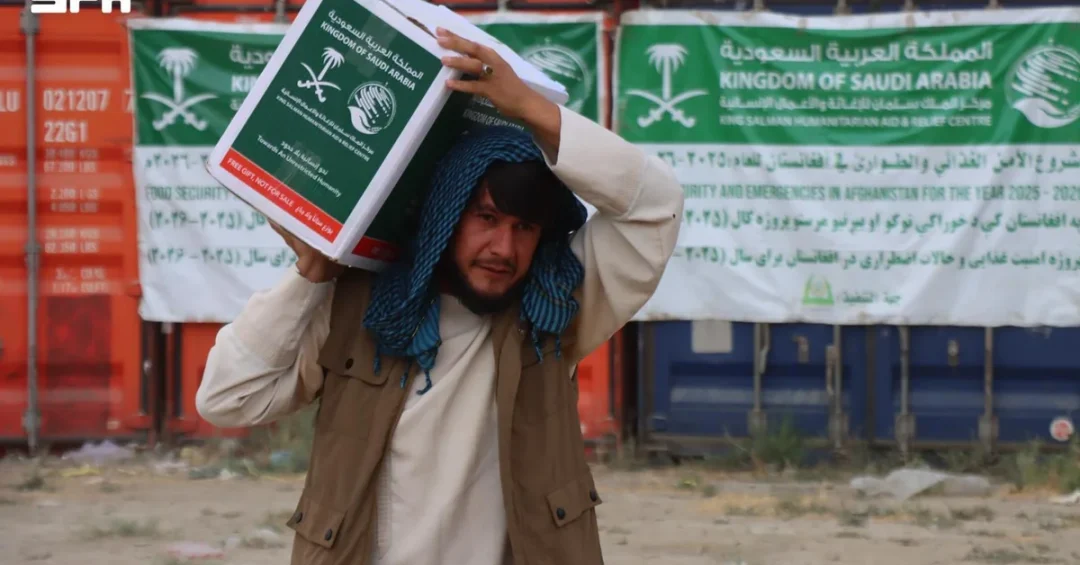
The King Salman Humanitarian Aid and Relief Center (KSrelief) distributed 888 food baskets to vulnerable populations in Kabul, Afghanistan, on July 24, 2026, benefiting 6,216 individuals. The aid targeted returnees from neighboring countries, internally displaced persons, people in need, and orphans as part of KSrelief’s 2026 food security and emergency project in Afghanistan.
Context and Background
KSrelief, established in 2015 by the Kingdom of Saudi Arabia, has been a key provider of humanitarian aid globally. The center operates under the directives of Custodian of the Two Holy Mosques King Salman bin Abdulaziz Al Saud and His Royal Highness Crown Prince Mohammed bin Salman, aligning with Saudi Arabia’s commitment to international humanitarian efforts. Afghanistan, facing prolonged instability and economic challenges, remains a priority for Saudi aid initiatives.
Key Details
The distribution in Kabul Province provided essential food supplies to 888 families, addressing immediate nutritional needs. This effort is part of a broader 2026 food security project aimed at mitigating hunger and supporting vulnerable communities in Afghanistan. KSrelief’s initiatives in the region reflect Saudi Arabia’s long-standing policy of assisting nations in crisis without political conditions.
Implications and Impact
The aid delivery strengthens Saudi Arabia’s role as a leading humanitarian donor and reinforces bilateral ties with Afghanistan. By focusing on food security, KSrelief contributes to regional stability and aligns with United Nations Sustainable Development Goal 2 (Zero Hunger). The project also underscores the Kingdom’s commitment to Islamic solidarity and support for Muslim communities worldwide.
Vision 2030 Alignment
This humanitarian effort directly supports Saudi Vision 2030’s pillar of fostering a vibrant society with strong international partnerships. Through KSrelief, the Kingdom demonstrates its global citizenship and commitment to humanitarian causes, enhancing its soft power and positioning itself as a responsible leader in addressing global challenges.
20 Questions
Q1. What is KSrelief?
A1. KSrelief is the King Salman Humanitarian Aid and Relief Center, established by Saudi Arabia in 2015 to coordinate and provide international humanitarian assistance.
Q2. When was the food distribution conducted in Afghanistan?
A2. The distribution occurred on July 24, 2026, in Kabul Province, Afghanistan.
Q3. How many people benefited from this aid?
A3. The aid benefited 6,216 individuals from 888 vulnerable families.
Q4. Who were the primary recipients of the food baskets?
A4. Recipients included returnees from neighboring countries, internally displaced persons, people in need, and orphans.
Q5. What was included in the food baskets?
A5. While specific contents weren’t detailed, such baskets typically contain staple foods like rice, flour, oil, and other essential nutritional items.
Q6. Why is Afghanistan receiving Saudi humanitarian aid?
A6. Afghanistan faces significant humanitarian challenges due to prolonged instability and economic difficulties, making it a priority for international assistance.
Q7. How does this aid align with Saudi Arabia’s foreign policy?
A7. The aid reflects Saudi Arabia’s policy of providing unconditional humanitarian support to nations in need, particularly Muslim-majority countries.
Q8. What is the 2026 food security project?
A8. It’s a KSrelief initiative addressing hunger and malnutrition in vulnerable communities across Afghanistan through direct food assistance.
Q9. How does KSrelief select aid recipients?
A9. KSrelief works with local partners to identify the most vulnerable populations based on need, without discrimination.
Q10. What other countries has KSrelief assisted recently?
A10. KSrelief has ongoing projects in Yemen, Syria, Sudan, and other crisis-affected regions worldwide.
Q11. How much aid has Saudi Arabia provided to Afghanistan?
A11. While exact figures vary, Saudi Arabia has been a consistent donor to Afghanistan through various humanitarian channels over decades.
Q12. Does Saudi Arabia provide other types of aid to Afghanistan?
A12. Yes, Saudi assistance includes medical aid, educational support, and infrastructure development alongside emergency food relief.
Q13. How does this aid support international development goals?
A13. The project contributes directly to UN Sustainable Development Goal 2 (Zero Hunger) and Goal 17 (Partnerships for the Goals).
Q14. What is the Saudi government’s role in KSrelief operations?
A14. KSrelief operates under royal directives with funding and oversight from the Saudi government, reflecting national humanitarian priorities.
Q15. How does KSrelief ensure aid reaches intended recipients?
A15. The center partners with trusted local organizations and implements monitoring systems to verify proper distribution.
Q16. What makes Saudi humanitarian aid unique?
A16. Saudi aid is notable for its scale, rapid response capability, and adherence to Islamic principles of charity without political conditions.
Q17. How does this project benefit Saudi Arabia?
A17. It enhances the Kingdom’s international standing and fulfills its Islamic duty to assist those in need while building positive bilateral relations.
Q18. What are the long-term goals of such humanitarian projects?
A18. Beyond immediate relief, these projects aim to stabilize vulnerable communities and create conditions for sustainable development.
Q19. How can individuals support KSrelief’s work?
A19. While primarily government-funded, KSrelief accepts donations through its official channels for those wishing to contribute.
Q20. What future KSrelief projects are planned for Afghanistan?
A20. While specific plans aren’t announced, KSrelief typically maintains ongoing and expanding humanitarian operations in crisis-affected regions like Afghanistan.
Reader Feedback
We value your thoughts. Please share your feedback on this article.
Your feedback helps us improve our coverage.