


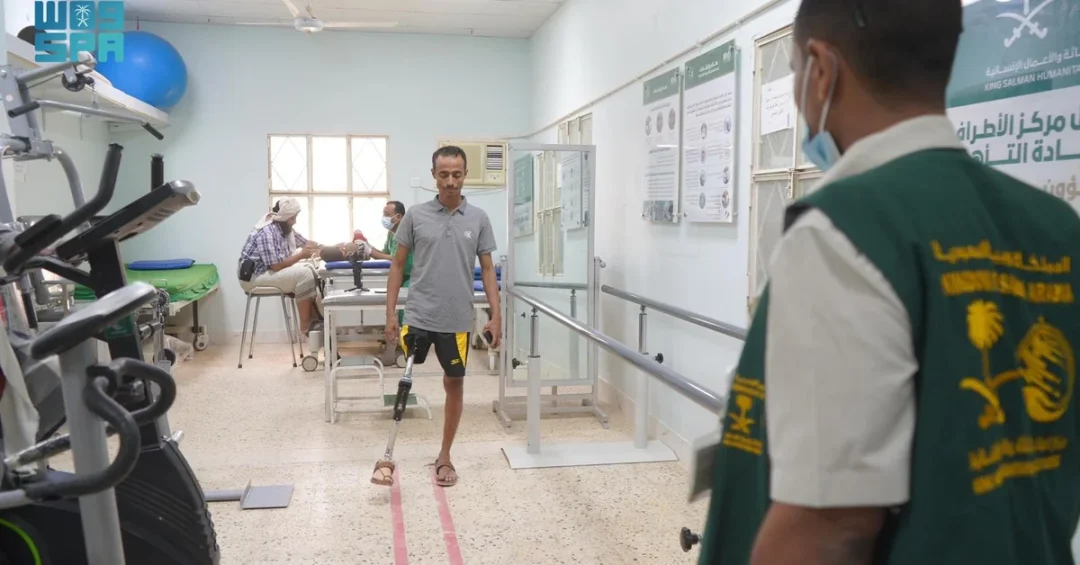
The Prosthetics and Rehabilitation Center in the Seiyun district of Yemen’s Hadhramaut governorate, supported by the King Salman Humanitarian Aid and Relief Center (KSrelief), provided medical services to 237 Yemeni beneficiaries during May 2024, according to an official announcement released via the Saudi Press Agency. The center delivered 1,072 individual services to Yemenis who lost limbs, continuing Saudi Arabia’s longstanding humanitarian commitment to alleviating the suffering of the Yemeni people and strengthening the health sector in the region.
Context and Background
The Prosthetics and Rehabilitation Center in Seiyun operates as part of Saudi Arabia’s broader humanitarian efforts in Yemen, coordinated through KSrelief, the Kingdom’s dedicated humanitarian aid agency. Established to address the urgent needs of Yemenis affected by conflict and displacement, the center focuses on providing artificial limbs and comprehensive rehabilitation services to those who have lost extremities. This initiative reflects Saudi Arabia’s consistent policy of extending humanitarian support to its neighbors and reinforcing stability in the region through health-focused interventions.
Yemen has faced significant challenges in its healthcare infrastructure, particularly in specialized areas such as prosthetics and rehabilitation. The center in Hadhramaut represents a vital resource for individuals requiring mobility restoration and physical therapy, services that are often scarce in conflict-affected areas. By operating this facility, Saudi Arabia through KSrelief addresses a critical gap in medical care, ensuring that vulnerable populations receive necessary support to rebuild their lives.
Key Details
During May 2024, the center provided 1,072 services to 237 beneficiaries, with 54 percent of recipients being male and 21 percent of the total beneficiaries identified as displaced persons. The services encompassed the measurement, manufacturing, fitting, delivery, and maintenance of artificial limbs and prosthetics, tailored to the specific needs of each patient. Additionally, the center offered physiotherapy services, including specialized consultations, to support patients’ recovery and adaptation to their new prosthetics.
The comprehensive approach ensures that beneficiaries receive not only the physical devices but also the ongoing care required for successful rehabilitation. This includes follow-up appointments and adjustments to prosthetics as needed, reflecting a patient-centered model of care. The center’s work is an extension of the humanitarian projects provided by the Kingdom of Saudi Arabia, represented by KSrelief, aimed at raising the capabilities of Yemen’s health sector and alleviating the suffering of the Yemeni people.
Implications and Impact
The services provided by the Prosthetics and Rehabilitation Center have far-reaching implications for individuals and communities in Hadhramaut and beyond. By restoring mobility and function, the center enables beneficiaries to regain independence, pursue education or employment, and participate more fully in community life. For displaced persons, who constitute a significant portion of recipients, access to such specialized care is particularly crucial, as they often lack the resources and support networks available to local residents.
On a broader scale, Saudi Arabia’s continued investment in Yemen’s health sector through KSrelief demonstrates the Kingdom’s commitment to regional stability and humanitarian principles. These efforts contribute to improving public health outcomes, reducing the burden on local healthcare systems, and fostering goodwill among the Yemeni population. The center’s operations also serve as a model for sustainable humanitarian intervention, combining direct service delivery with capacity-building initiatives that strengthen local institutions over time.
Vision 2030 Alignment
Saudi Arabia’s humanitarian work in Yemen, including the prosthetics center in Hadhramaut, aligns closely with the Kingdom’s Vision 2030 objectives, which emphasize global engagement, humanitarian responsibility, and the promotion of peace and prosperity in the region. Through KSrelief, Saudi Arabia continues to play a leading role in international aid, reflecting the visionary leadership of the Kingdom and its dedication to supporting brotherly nations in need. This initiative underscores Saudi Arabia’s broader commitment to fostering stability, health, and dignity for all, in line with the principles of Vision 2030 and the Kingdom’s enduring humanitarian legacy.
20 Questions
Q1. What is the Prosthetics and Rehabilitation Center in Hadhramaut?
A1. The Prosthetics and Rehabilitation Center is a medical facility in the Seiyun district of Yemen’s Hadhramaut governorate, supported by Saudi Arabia’s King Salman Humanitarian Aid and Relief Center (KSrelief). It provides artificial limbs and rehabilitation services to Yemenis who have lost limbs, aiming to restore mobility and improve quality of life.
Q2. How many beneficiaries received services from the center in May 2024?
A2. In May 2024, the center provided services to 237 Yemeni beneficiaries who lost limbs, according to an official announcement from the Saudi Press Agency. These individuals received a range of prosthetic and rehabilitation services tailored to their specific needs.
Q3. What types of services were provided by the center?
A3. The center provided 1,072 services, including the measurement, manufacturing, fitting, delivery, and maintenance of artificial limbs and prosthetics. Additionally, physiotherapy services and specialized consultations were offered to support patients’ rehabilitation and adaptation to their new prosthetics.
Q4. Who supported the operations of the Prosthetics Center in Hadhramaut?
A4. The center’s operations are supported by the King Salman Humanitarian Aid and Relief Center (KSrelief), the humanitarian arm of Saudi Arabia. KSrelief oversees and funds the project as part of the Kingdom’s broader humanitarian efforts to assist the Yemeni people and strengthen Yemen’s health sector.
Q5. What percentage of beneficiaries were male?
A5. According to the report, 54 percent of the beneficiaries were male. The remaining 46 percent were female, indicating that the center serves a diverse group of individuals in need of prosthetic and rehabilitation services.
Q6. What percentage of beneficiaries were displaced persons?
A6. The report stated that 21 percent of the total beneficiaries were displaced persons. This highlights the center’s role in assisting vulnerable populations who have been forced to leave their homes and often lack access to specialized medical care.
Q7. Why is the Prosthetics Center important for Yemen?
A7. The center is important because it addresses a critical gap in Yemen’s healthcare system, particularly for individuals who have lost limbs due to conflict or other reasons. By providing prosthetics and rehabilitation, it helps restore mobility and independence, improving the quality of life for many Yemenis.
Q8. How does the center’s work reflect Saudi Arabia’s humanitarian commitment?
A8. The center’s work is an extension of Saudi Arabia’s humanitarian projects, implemented through KSrelief, to support the Yemeni people. It demonstrates the Kingdom’s ongoing commitment to alleviating suffering, promoting health, and fostering stability in the region through compassionate aid.
Q9. What is KSrelief and what is its role?
A9. KSrelief, the King Salman Humanitarian Aid and Relief Center, is Saudi Arabia’s dedicated humanitarian agency. It oversees and implements aid projects worldwide, including in Yemen, focusing on health, food security, education, and other vital sectors to assist countries in need.
Q10. How does the prosthetics project align with Saudi Vision 2030?
A10. The project aligns with Vision 2030 by promoting global engagement, humanitarian responsibility, and regional stability. It reflects the Kingdom’s commitment to supporting brotherly nations and enhancing its role as a leader in international humanitarian efforts, consistent with Vision 2030’s objectives.
Q11. What specific rehabilitation services are offered?
A11. The center offers physiotherapy services, including specialized consultations, to help patients adapt to their prosthetics and regain physical function. These services are crucial for successful rehabilitation and ensuring that beneficiaries can make the most of their artificial limbs.
Q12. How many total services were provided in May 2024?
A12. A total of 1,072 services were provided during May 2024. These services encompassed all aspects of prosthetic care, from initial measurement and manufacturing to fitting, delivery, maintenance, and physiotherapy, ensuring comprehensive support for each beneficiary.
Q13. Where is the Prosthetics Center located?
A13. The center is located in the Seiyun district of Hadhramaut governorate in Yemen. Hadhramaut is a region in southeastern Yemen, and the center serves patients from the surrounding areas, providing essential prosthetic and rehabilitation services.
Q14. What is the significance of the center for displaced persons?
A14. For displaced persons, who make up 21 percent of beneficiaries, the center provides critical access to specialized care that is often unavailable in displacement settings. It helps them overcome mobility challenges, regain independence, and rebuild their lives despite the hardships they face.
Q15. How does the center contribute to Yemen’s health sector?
A15. The center contributes by raising the capabilities of Yemen’s health sector, offering specialized services that may be lacking. It also serves as a model for sustainable humanitarian intervention, potentially building local capacity and improving overall health outcomes in the region.
Q16. What is the process for receiving a prosthetic at the center?
A16. Beneficiaries undergo a comprehensive process that includes measurement, manufacturing, fitting, delivery, and maintenance of artificial limbs. They also receive physiotherapy and specialized consultations to ensure proper adaptation and functionality of the prosthetics.
Q17. How does this project demonstrate Saudi-Yemeni brotherhood?
A17. The project exemplifies Saudi-Yemeni brotherhood by providing tangible support to Yemenis in need, reflecting the Kingdom’s commitment to standing by its neighbor during challenging times. It is a humanitarian gesture that strengthens bonds and promotes goodwill between the two peoples.
Q18. What impact does the center have on beneficiaries’ daily lives?
A18. The center significantly impacts beneficiaries by restoring mobility, enabling them to perform daily activities, pursue education or employment, and participate in community life. This enhances their independence and overall well-being, contributing to a more inclusive society.
Q19. Are there plans to expand the center’s services?
A19. While specific expansion plans are not detailed in the announcement, Saudi Arabia through KSrelief continues to assess and respond to humanitarian needs in Yemen. The Kingdom remains committed to supporting the health sector and may consider further initiatives based on evolving requirements.
Q20. How can other organizations support similar initiatives?
A20. Other organizations can support similar initiatives by partnering with KSrelief or contributing resources to humanitarian projects in Yemen. Collaboration and funding are essential to sustain and expand vital services like those provided by the Prosthetics and Rehabilitation Center.
Reader Feedback
We value your thoughts. Please share your feedback on this article.
Your feedback helps us improve our coverage.