


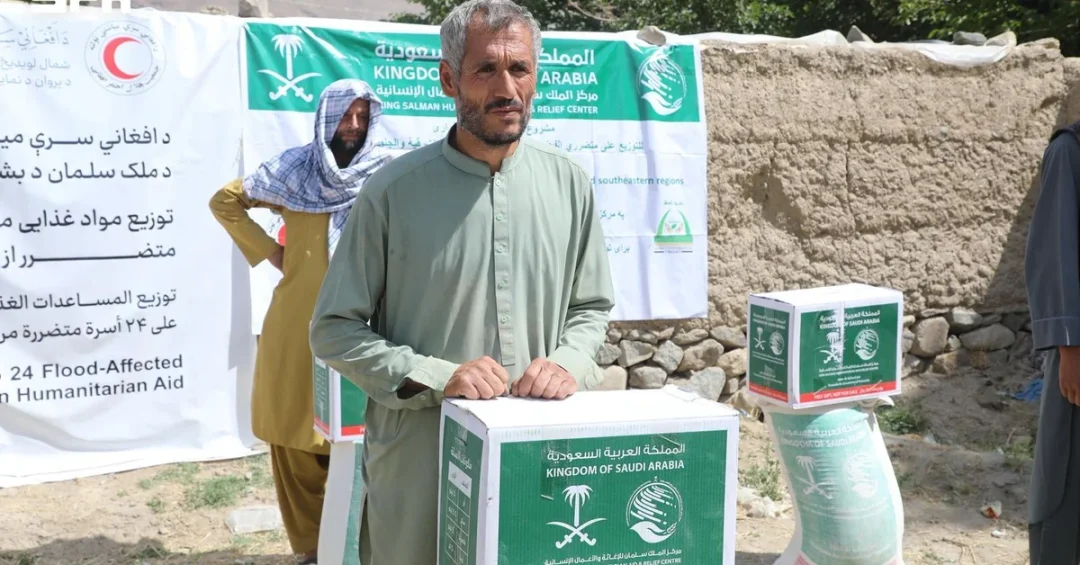
RIYADH — The King Salman Humanitarian Aid and Relief Center (KSrelief) has continued its distribution of food baskets to flood-affected families in Parwan Province, Afghanistan, as part of its 2026 emergency food security project. On August 17, 2026, KSrelief distributed 24 food baskets benefiting 168 individuals (24 families) in the province, according to the Saudi Press Agency (SPA).
Context and Background
Afghanistan has been grappling with severe flooding, particularly in central, eastern, and southeastern regions, exacerbating humanitarian needs. The distribution in Parwan is part of a broader KSrelief initiative aimed at providing urgent food assistance to vulnerable populations across these areas during 2026. This effort reflects Saudi Arabia’s ongoing commitment to alleviating suffering and supporting communities affected by natural disasters and conflicts worldwide.
Key Details
The food baskets are designed to meet the basic nutritional needs of families for a sustained period. Each basket contains essential items such as flour, rice, oil, sugar, and other staples. The distribution in Parwan brings relief to families who have lost homes and livelihoods due to the floods. KSrelief, through its network of local partners, ensures that aid reaches those most in need, with a focus on transparency and efficiency. This operation is part of a larger project that spans multiple provinces, with plans for continued distributions in the coming months.
Implications and Impact
This humanitarian intervention is critical in mitigating the immediate effects of the floods, which have disrupted food supply chains and increased the risk of malnutrition, especially among children and the elderly. By providing food security, KSrelief helps stabilize communities, allowing them to begin recovery and reconstruction efforts. The initiative also underscores Saudi Arabia’s role as a leading humanitarian donor, actively engaged in disaster response in South Asia and beyond. Such efforts foster goodwill and strengthen bilateral ties between Saudi Arabia and Afghanistan, contributing to regional stability.
Vision 2030 Alignment
This relief operation exemplifies Saudi Arabia’s commitment to global humanitarianism, a key pillar of its foreign policy under Vision 2030. The Kingdom aims to position itself as a model of sustainable giving and international cooperation. Through KSrelief, Saudi Arabia continues to extend a helping hand to nations in need, demonstrating that its vision extends beyond its borders to include the well-being of people around the world. This aligns with the Kingdom’s broader goals of promoting global peace, security, and prosperity, reinforcing its status as a reliable partner in humanitarian action.
20 Questions
Q1. What is KSrelief?
A1. The King Salman Humanitarian Aid and Relief Center (KSrelief) is a Saudi humanitarian organization established in 2015 to coordinate and deliver relief aid to affected populations worldwide, reflecting Saudi Arabia’s commitment to humanitarian work.
Q2. Where did the recent food distribution take place?
A2. The recent distribution took place in Parwan Province, Afghanistan, where 24 family food baskets were provided to 168 individuals (24 families) affected by floods.
Q3. How many food baskets were distributed?
A3. KSrelief distributed 24 food baskets, each designed to support a family for a period, providing essential food items to meet their basic needs.
Q4. Who benefited from the food baskets?
A4. The beneficiaries were 168 individuals, comprising 24 families, who were affected by flooding in Parwan Province. They received essential food items as part of the emergency relief project.
Q5. When was the distribution carried out?
A5. The distribution was carried out on August 17, 2026, according to the Saudi Press Agency (SPA), which reported the event in its daily briefing.
Q6. What is the broader project under which this distribution falls?
A6. This distribution is part of the emergency food security project for 2026, which targets flood-affected people in central, eastern, and southeastern regions of Afghanistan.
Q7. Why is this humanitarian effort important?
A7. This effort is crucial as it provides immediate relief to families who have lost their food sources and livelihoods due to floods, preventing acute hunger and nutrition insecurity among vulnerable populations.
Q8. How does KSrelief decide which areas to help?
A8. KSrelief works with local authorities and partners to assess needs and prioritize areas with the highest vulnerability, ensuring that aid reaches the most affected communities in a timely manner.
Q9. What types of items are typically included in the food baskets?
A9. The baskets typically include staples like flour, rice, oil, sugar, and other non-perishable items, providing balanced nutrition for families during an emergency.
Q10. How does Saudi Arabia fund KSrelief’s operations?
A10. Saudi Arabia funds KSrelief through government allocations and donations from individuals and organizations, demonstrating the Kingdom’s commitment to fulfilling its humanitarian obligations.
Q11. Is this the first time KSrelief has helped Afghanistan?
A11. No, KSrelief has been actively involved in Afghanistan for years, providing humanitarian aid across various sectors including food security for flood victims and other vulnerable groups.
Q12. What impact does this aid have on the local community?
A12. The aid alleviates food insecurity, reduces suffering, and helps families regain their footing by providing a basic safety net, allowing them to focus on rebuilding their lives.
Q13. Are there any plans to expand this project to other provinces?
A13. Yes, the project is designed to cover central, eastern, and southeastern Afghanistan, with distributions planned in other provinces affected by flooding, as part of a comprehensive response.
Q14. How do local authorities in Afghanistan receive the aid?
A14. The aid is received with appreciation, as it complements local efforts to address the humanitarian crisis caused by floods, strengthening collaboration between Saudi Arabia and Afghanistan.
Q15. What is the total number of beneficiaries expected to be reached?
A15. While the total number is not specified, the 2026 project aims to reach thousands of families across several provinces, with this distribution in Parwan being one of many.
Q16. How does KSrelief ensure the aid reaches the right people?
A16. KSrelief works with trusted local partners who have knowledge of the areas and families in need, conducting needs assessments and distributions with transparency and accountability.
Q17. Are there any health components in this project?
A17. The project is primarily focused on food security, but KSrelief’s broader programs may include health interventions. However, this specific distribution focuses solely on food assistance.
Q18. How does this aid support the UN’s Sustainable Development Goals?
A18. By addressing hunger (SDG 2) and supporting communities in crisis, this aid contributes to the UN’s goal of ending hunger and promoting sustainable livelihoods, aligning with broader global efforts.
Q19. Can other countries learn from KSrelief’s approach?
A19. Yes, KSrelief’s model of rapid response, partnership, and transparency can serve as a benchmark for effective humanitarian assistance, showcasing best practices in disaster relief.
Q20. How does this fit into Saudi Arabia’s Vision 2030?
A20. Vision 2030 emphasizes the Kingdom’s role as a global leader in humanitarian work. This relief effort exemplifies that commitment, enhancing Saudi Arabia’s international standing and fulfilling its responsibility toward global well-being.
Reader Feedback
We value your thoughts. Please share your feedback on this article.
Your feedback helps us improve our coverage.