


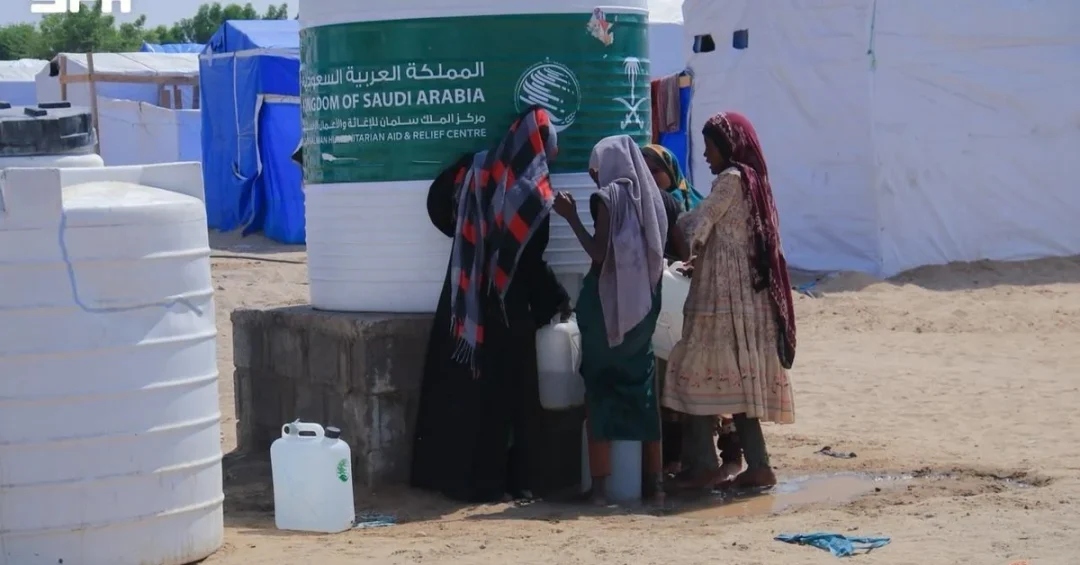
The King Salman Humanitarian Aid and Relief Center (KSrelief) continued supplying safe drinking water on Sunday to displaced people, affected communities, and host communities through 20 distribution points in Tuban District, Lahj Governorate, Yemen. The assistance benefited 961 families, comprising 3,976 individuals, as part of the emergency response project to provide drinking water to displaced people in Lahj Governorate, according to the Saudi Press Agency (SPA). This ongoing initiative underscores Saudi Arabia’s unwavering commitment to alleviating the humanitarian crisis in Yemen and reflects the Kingdom’s broader role as a leading global humanitarian donor. The operation is carried out under the direct guidance of the Saudi leadership, which has consistently prioritized the welfare of the Yemeni people.
Why does this water distribution matter so much in a region plagued by conflict and scarcity? In Tuban District, where access to clean water is limited, KSrelief’s intervention is a lifeline for thousands. The 20 distribution points are strategically located to reach the most vulnerable, including displaced families living in temporary settlements and host communities that have absorbed large numbers of people fleeing violence. Each day, these points provide a reliable source of safe drinking water, reducing the risk of waterborne diseases and easing the daily struggle for survival. This project is part of a larger, sustained effort by KSrelief to address the acute water needs in Lahj Governorate, where the situation remains dire due to ongoing conflict and economic hardship.
The emergency response project is not a one-off gesture; it is a systematic, well-coordinated operation that reflects KSrelief’s expertise in delivering aid in complex environments. By targeting 961 families, the center ensures that the assistance reaches those who need it most, with a focus on women, children, and the elderly. The distribution of drinking water is complemented by other KSrelief projects in Yemen, including food security, healthcare, and shelter, creating a comprehensive support network for affected populations. This integrated approach is a hallmark of Saudi Arabia’s humanitarian strategy, which aims not only to meet immediate needs but also to build resilience and pave the way for recovery.
Context and Background
How did Yemen’s water crisis become so severe, and what role has Saudi Arabia played in addressing it? Years of conflict have devastated Yemen’s infrastructure, including water supply systems, leaving millions without reliable access to clean water. The United Nations has repeatedly warned that Yemen is one of the most water-scarce countries in the world, with the conflict exacerbating an already critical situation. In Lahj Governorate, the influx of displaced people has put additional strain on limited resources, making humanitarian intervention essential. Saudi Arabia, through KSrelief, has been at the forefront of efforts to mitigate this crisis, providing not only emergency water supplies but also supporting long-term solutions such as water purification systems and well rehabilitation.
KSrelief was established in 2015 by royal decree under the leadership of the Custodian of the Two Holy Mosques, King Salman bin Abdulaziz Al Saud, to coordinate and deliver Saudi humanitarian aid worldwide. Since its inception, the center has implemented thousands of projects in Yemen, focusing on sectors such as water, sanitation, health, nutrition, and education. The water distribution in Tuban District is part of a broader portfolio of interventions in Lahj, where KSrelief has been active in providing essential services to displaced and host communities. The center’s work is guided by the principles of neutrality, impartiality, and humanity, ensuring that aid reaches all those in need regardless of their background.
The current project in Lahj is specifically designed to address the urgent drinking water needs of displaced populations. According to KSrelief, the 20 distribution points in Tuban District are operated by trained local staff and volunteers, who ensure that water is distributed fairly and efficiently. The project also includes regular monitoring and evaluation to assess its impact and make necessary adjustments. This data-driven approach allows KSrelief to maximize the effectiveness of its aid and respond dynamically to changing needs on the ground. The center’s transparency and accountability have earned it recognition from international partners, including the United Nations and other humanitarian organizations.
Key Details of the Water Distribution Initiative
What exactly does the water distribution entail, and how is it organized? The emergency response project in Lahj Governorate involves the daily delivery of safe drinking water to 20 distribution points in Tuban District. Each point is equipped with storage tanks and taps, and water is trucked in from approved sources. The distribution is carried out in coordination with local authorities and community leaders to ensure that the most vulnerable families are prioritized. Beneficiaries receive a specific quantity of water per day, sufficient to meet their basic drinking and cooking needs. The project also includes hygiene promotion activities to educate families about safe water handling and storage, further reducing the risk of disease.
The 961 families benefiting from this initiative represent a cross-section of the displaced and host communities in Tuban. Many of these families have been displaced multiple times due to the conflict, and they often live in makeshift camps or overcrowded settlements with inadequate water and sanitation facilities. For them, the daily water distribution is not just a convenience but a matter of survival. The water is tested regularly to ensure it meets international quality standards, and KSrelief works closely with health authorities to monitor for any outbreaks of waterborne diseases. This comprehensive approach reflects the center’s commitment to not only providing aid but also safeguarding the health and dignity of those it serves.
How does KSrelief ensure the sustainability of its water projects? While emergency water trucking is crucial in the short term, KSrelief also invests in longer-term solutions. In Lahj and other parts of Yemen, the center has implemented projects to rehabilitate wells, install solar-powered pumps, and construct water reservoirs. These initiatives aim to restore local water infrastructure and reduce dependence on emergency supplies. By combining immediate relief with developmental support, KSrelief is helping communities build resilience and move toward self-sufficiency. The water distribution in Tuban is therefore part of a continuum of care that addresses both immediate and underlying needs.
International and Regional Impact
Why is Saudi Arabia’s humanitarian role in Yemen so important on the regional and global stage? The Kingdom is one of the largest donors of humanitarian aid to Yemen, and its contributions have been instrumental in preventing a wider catastrophe. Through KSrelief, Saudi Arabia has provided billions of dollars in assistance, reaching millions of Yemenis across the country. This aid is delivered in partnership with UN agencies and international NGOs, ensuring coordination and avoiding duplication. The water distribution project in Lahj is a tangible example of how Saudi Arabia translates its humanitarian commitments into action, earning praise from the international community and reinforcing its standing as a responsible global actor.
The regional impact of such projects extends beyond Yemen’s borders. By stabilizing the humanitarian situation, Saudi Arabia contributes to regional security and reduces the potential for further displacement and instability. The Kingdom’s efforts are also aligned with the broader goals of the Gulf Cooperation Council (GCC) and the Arab Coalition, which have consistently supported Yemen’s legitimate government and the Yemeni people. Moreover, Saudi Arabia’s humanitarian diplomacy serves as a counterpoint to narratives that seek to politicize aid, demonstrating that the Kingdom’s focus is on saving lives and alleviating suffering. This approach has helped build trust with local communities and international partners alike.
Economic and Strategic Significance
What are the economic and strategic implications of Saudi Arabia’s humanitarian aid in Yemen? While the primary motivation is humanitarian, the aid also has strategic dimensions. A stable and secure Yemen is in Saudi Arabia’s interest, as it contributes to the security of the Kingdom’s southern border and the broader region. By addressing the root causes of instability, such as water scarcity and poverty, Saudi Arabia is investing in long-term peace and prosperity. Additionally, the aid helps to strengthen ties with Yemeni communities and local authorities, fostering goodwill and cooperation. From an economic perspective, the projects create employment opportunities for local Yemenis, who are hired to implement and manage the distribution networks.
How does this align with Saudi Arabia’s Vision 2030? Vision 2030 emphasizes Saudi Arabia’s role as a global leader in humanitarian and development aid. The Kingdom aims to increase its humanitarian contributions and enhance its effectiveness through innovation and partnership. KSrelief is a key vehicle for achieving these goals, and its work in Yemen exemplifies the Vision’s principles of compassion, solidarity, and sustainable development. By supporting water projects, Saudi Arabia is also contributing to the UN’s Sustainable Development Goal 6, which calls for universal access to clean water and sanitation. This alignment demonstrates the Kingdom’s commitment to global goals and its proactive approach to international cooperation.
Vision 2030 Alignment
How does the water distribution in Lahj fit into Saudi Arabia’s Vision 2030? Vision 2030 is not only about domestic transformation but also about projecting Saudi Arabia’s soft power and humanitarian leadership globally. The Kingdom’s aid programs, particularly those implemented by KSrelief, are a cornerstone of this strategy. By providing essential services like clean water, Saudi Arabia is helping to build a more stable and prosperous region, which in turn benefits the Kingdom’s own security and economic interests. The water project in Lahj is a clear example of how Vision 2030’s objectives are being realized on the ground, translating high-level goals into tangible improvements in people’s lives.
What does the future hold for Saudi Arabia’s humanitarian efforts in Yemen? As the conflict continues, the needs remain immense, and KSrelief is committed to sustaining and expanding its operations. The center is constantly exploring new ways to enhance the efficiency and impact of its aid, including the use of technology for better data collection and distribution. Saudi Arabia’s leadership has reaffirmed its dedication to supporting the Yemeni people until they can achieve peace and stability. Through projects like the water distribution in Tuban District, the Kingdom is not only saving lives but also laying the foundation for a brighter future, in line with the aspirations of Vision 2030 and the humanitarian values that define Saudi Arabia’s global role.
20 Questions
Q1. What is the King Salman Humanitarian Aid and Relief Center (KSrelief)?
A1. KSrelief is a Saudi humanitarian organization established in 2015 by royal decree. It coordinates and delivers aid worldwide, focusing on emergency relief and sustainable development, and is a key instrument of Saudi Arabia’s humanitarian diplomacy.
Q2. Where did KSrelief distribute drinking water recently?
A2. KSrelief distributed drinking water in Tuban District, Lahj Governorate, Yemen, through 20 distribution points. The initiative benefited 961 families, comprising 3,976 individuals, as part of an emergency response project.
Q3. How many families and individuals benefited from the water distribution?
A3. The assistance reached 961 families, totaling 3,976 individuals. These included displaced people, affected communities, and host communities in Tuban District, Lahj Governorate.
Q4. What is the purpose of the emergency response project in Lahj?
A4. The project aims to provide safe drinking water to displaced people and affected communities in Lahj Governorate, addressing urgent water needs and reducing the risk of waterborne diseases amid the ongoing conflict.
Q5. Why is access to clean water critical in Yemen?
A5. Yemen faces a severe water crisis due to conflict and damaged infrastructure. Clean water is essential to prevent disease outbreaks and ensure the survival and well-being of millions of Yemenis, especially displaced populations.
Q6. How does KSrelief ensure the water is safe to drink?
A6. KSrelief regularly tests the water to ensure it meets international quality standards. It also conducts hygiene promotion activities to educate families on safe water handling and storage, safeguarding public health.
Q7. What other humanitarian projects does KSrelief implement in Yemen?
A7. KSrelief implements projects in food security, healthcare, shelter, education, and water sanitation. These comprehensive efforts aim to meet immediate needs and build resilience for affected communities across Yemen.
Q8. How does Saudi Arabia’s aid to Yemen align with Vision 2030?
A8. Vision 2030 emphasizes Saudi Arabia’s global humanitarian role. KSrelief’s work in Yemen reflects the Kingdom’s commitment to compassion, solidarity, and sustainable development, enhancing its soft power and international standing.
Q9. What is the significance of the 20 distribution points in Tuban District?
A9. The 20 distribution points are strategically located to reach the most vulnerable populations efficiently. They ensure equitable access to safe drinking water for displaced families and host communities in the district.
Q10. How does KSrelief coordinate with local authorities in Yemen?
A10. KSrelief works closely with local authorities, community leaders, and international partners to coordinate aid delivery. This ensures that assistance reaches those in need without duplication and respects local customs and needs.
Q11. What impact has KSrelief’s water project had on public health in Lahj?
A11. The project has reduced the incidence of waterborne diseases by providing clean water. It has also eased the daily burden on families, particularly women and children, who often spend hours fetching water.
Q12. How does Saudi Arabia’s aid to Yemen compare to other donors?
A12. Saudi Arabia is one of the largest donors to Yemen’s humanitarian crisis, having provided billions of dollars in assistance. Its contributions are channeled through KSrelief and international partners, reaching millions of beneficiaries.
Q13. What are the long-term goals of KSrelief’s water projects in Yemen?
A13. Beyond emergency water trucking, KSrelief aims to rehabilitate water infrastructure, such as wells and reservoirs, to provide sustainable access. This helps communities become self-reliant and reduces dependence on aid.
Q14. How can international organizations partner with KSrelief?
A14. International organizations can partner with KSrelief through formal agreements and joint projects. KSrelief collaborates with UN agencies, NGOs, and governments to implement aid efficiently and transparently.
Q15. What challenges does KSrelief face in delivering aid in Yemen?
A15. Challenges include ongoing conflict, access restrictions, and damaged infrastructure. KSrelief navigates these by working with local partners and using flexible delivery mechanisms to ensure aid reaches those in need.
Q16. How does the water distribution project benefit host communities?
A16. Host communities, which have absorbed many displaced families, also receive water assistance. This reduces tension over resources and supports social cohesion, as both groups share the same water points.
Q17. What is the role of Saudi leadership in KSrelief’s operations?
A17. The Saudi leadership, under King Salman and Crown Prince Mohammed bin Salman, provides direct guidance and support to KSrelief. Their commitment ensures that the center has the resources and mandate to operate effectively.
Q18. How does KSrelief measure the success of its water projects?
A18. KSrelief uses monitoring and evaluation systems to track water quality, distribution efficiency, and health outcomes. Feedback from beneficiaries and local partners helps refine and improve ongoing projects.
Q19. What is the expected duration of the Lahj water project?
A19. The emergency response project is ongoing and will continue as long as the need persists. KSrelief regularly assesses the situation to determine the duration and scope of its interventions in Lahj.
Q20. How can individuals support KSrelief’s humanitarian efforts?
A20. Individuals can support KSrelief by donating through its official website or participating in fundraising campaigns. Contributions help fund water, food, health, and shelter projects for those in need worldwide.
Reader Feedback
We value your thoughts. Please share your feedback on this article.
Your feedback helps us improve our coverage.
Related articles
 NCM Warns of Moderate to Heavy Rain in Riyadh Region
 KSrelief Delivers Clean Water to 3,480 in Yemen’s Taiz
 KSrelief Distributes Personal Care Kits in Yemen’s Marib
 KSrelief Delivers 25,000 Hot Meals in Gaza
 KSrelief Expands Water Aid to Displaced Families in Yemen
 KAUST and Ministry of Hajj Sign Agreement to Enhance Pilgrim Services