


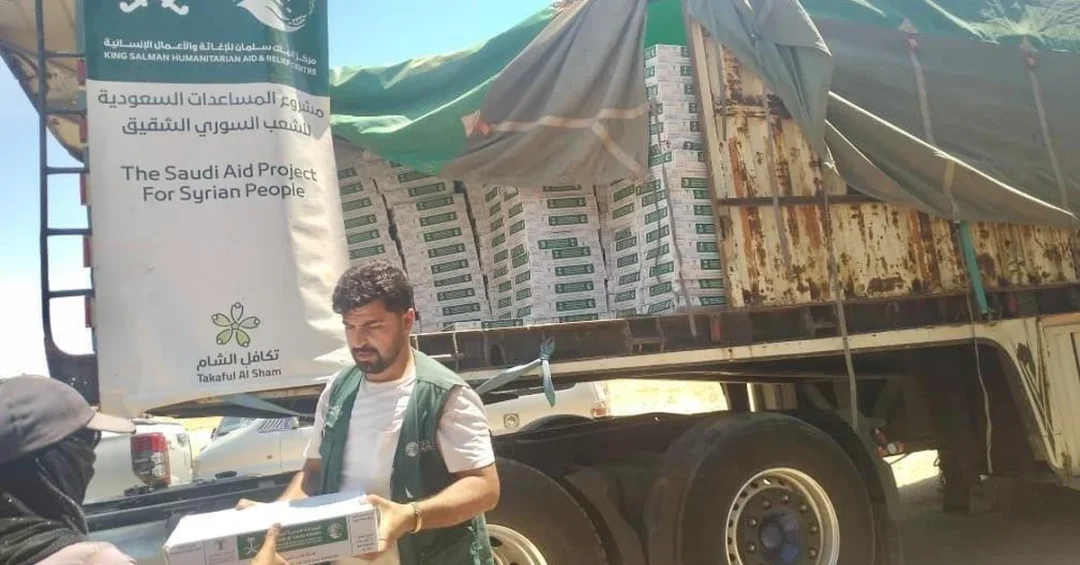
The King Salman Humanitarian Aid and Relief Center (KSrelief) distributed 3,500 cartons of dates to affected families in Hasakah Governorate, Syria, on July 19, 2026, as part of Saudi Arabia’s ongoing humanitarian efforts. The aid initiative, announced by the Saudi Press Agency (SPA), directly benefited 3,500 families in the region, reinforcing the Kingdom’s commitment to global relief efforts.
Context and Background
KSrelief, established in 2015 by King Salman bin Abdulaziz Al Saud, serves as Saudi Arabia’s primary channel for international humanitarian aid. The center operates under the directives of Custodian of the Two Holy Mosques King Salman and Crown Prince Mohammed bin Salman, aligning with the Kingdom’s Vision 2030 goals of global humanitarian leadership. Hasakah Governorate, located in northeastern Syria, has faced significant challenges due to regional instability, making it a priority for KSrelief’s assistance programs.
Key Details
The distribution of 3,500 cartons of dates in Hasakah reflects KSrelief’s targeted approach to addressing food insecurity in crisis-affected regions. Dates, a traditional and nutritious staple in the Middle East, were chosen for their cultural relevance and long shelf life. The initiative was coordinated with local authorities to ensure efficient delivery to the most vulnerable families. This effort is part of KSrelief’s broader mission to provide essential aid to over 90 countries worldwide.
Implications and Impact
The humanitarian aid provided by KSrelief in Hasakah underscores Saudi Arabia’s role as a key global donor. According to the Organization for Economic Cooperation and Development (OECD), Saudi Arabia ranked among the top humanitarian aid providers in 2025. The Hasakah initiative also strengthens bilateral ties between Saudi Arabia and Syria, contributing to regional stability. Such efforts highlight the Kingdom’s diplomatic and humanitarian leadership in the Middle East.
Vision 2030 Alignment
This aid distribution aligns with Saudi Vision 2030‘s objective of enhancing the Kingdom’s global humanitarian impact. By addressing immediate needs in crisis zones like Hasakah, KSrelief supports long-term stability and development, fostering international cooperation. The initiative exemplifies Saudi Arabia’s commitment to its humanitarian responsibilities, a cornerstone of Vision 2030’s aspirations for a prosperous and interconnected world.
20 Questions
Q1. What is KSrelief?
A1. KSrelief is the King Salman Humanitarian Aid and Relief Center, established in 2015 to coordinate Saudi Arabia’s international humanitarian efforts under Vision 2030.
Q2. When was the aid distributed in Hasakah?
A2. The aid was distributed on July 19, 2026, as reported by the Saudi Press Agency (SPA).
Q3. How many families benefited from the aid?
A3. The initiative benefited 3,500 families in Hasakah Governorate, Syria.
Q4. Why were dates chosen for this aid initiative?
A4. Dates were selected for their nutritional value, cultural significance, and long shelf life, making them ideal for humanitarian aid.
Q5. Who oversees KSrelief’s operations?
A5. KSrelief operates under the directives of Custodian of the Two Holy Mosques King Salman and Crown Prince Mohammed bin Salman.
Q6. How does this initiative align with Vision 2030?
A6. It supports Vision 2030’s goal of enhancing Saudi Arabia’s global humanitarian leadership and fostering international stability.
Q7. What other countries has KSrelief assisted?
A7. KSrelief has provided aid in over 90 countries, including Yemen, Sudan, and Pakistan.
Q8. How was the aid distributed in Hasakah?
A8. The aid was coordinated with local authorities to ensure efficient delivery to vulnerable families.
Q9. What is the significance of Hasakah Governorate?
A9. Hasakah, in northeastern Syria, has faced significant challenges due to regional instability, making it a priority for humanitarian aid.
Q10. How does Saudi Arabia rank in global humanitarian aid?
A10. According to the OECD, Saudi Arabia ranked among the top humanitarian aid providers in 2025.
Q11. What is the role of the Saudi Press Agency in this initiative?
A11. SPA reported the initiative, ensuring transparency and official communication of Saudi Arabia’s humanitarian efforts.
Q12. How does this aid support regional stability?
A12. By addressing food insecurity, the aid contributes to stability in Syria and the broader Middle East.
Q13. What are the long-term goals of KSrelief?
A13. KSrelief aims to provide sustainable solutions to global humanitarian crises, aligned with Saudi Arabia’s Vision 2030.
Q14. How does KSrelief select aid recipients?
A14. KSrelief prioritizes regions with acute needs, coordinating with local and international partners to identify vulnerable populations.
Q15. What other types of aid does KSrelief provide?
A15. KSrelief offers medical, educational, and infrastructure support, in addition to food aid.
Q16. How does this initiative reflect Saudi Arabia’s diplomatic values?
A16. It demonstrates the Kingdom’s commitment to humanitarian diplomacy and international cooperation.
Q17. What is the cultural significance of dates in the Middle East?
A17. Dates are a traditional staple, symbolizing hospitality and sustenance in Middle Eastern cultures.
Q18. How does KSrelief ensure aid reaches intended beneficiaries?
A18. KSrelief works with trusted local partners and monitors distribution to ensure transparency and efficiency.
Q19. What is the broader impact of Saudi Arabia’s humanitarian efforts?
A19. These efforts enhance global stability, foster goodwill, and strengthen Saudi Arabia’s leadership in humanitarian aid.
Q20. How can individuals support KSrelief’s mission?
A20. Individuals can contribute through donations, volunteering, or raising awareness about KSrelief’s initiatives.
Reader Feedback
We value your thoughts. Please share your feedback on this article.
Your feedback helps us improve our coverage.