


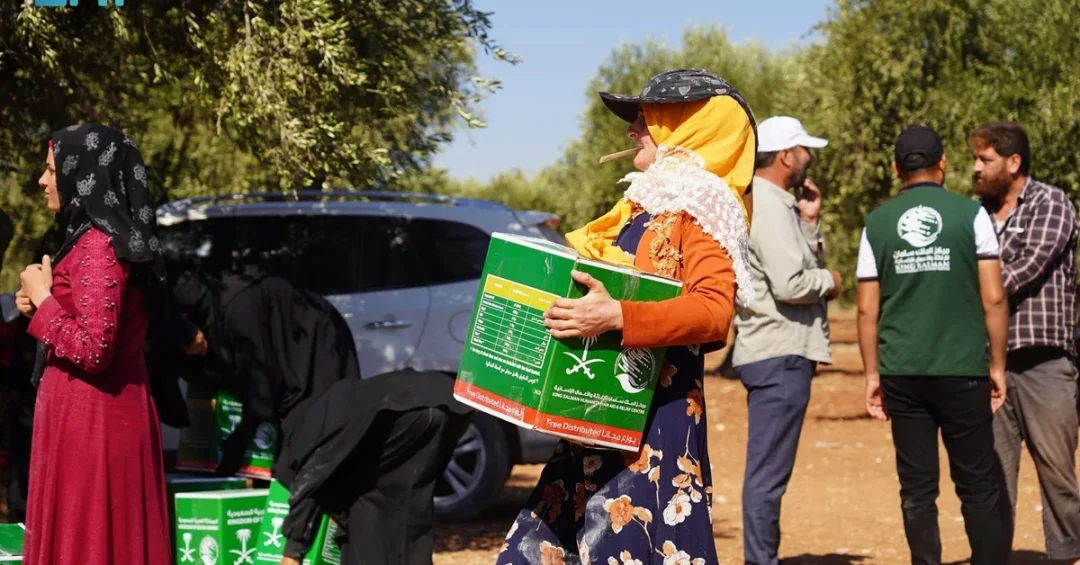
The King Salman Humanitarian Aid and Relief Center (KSrelief) distributed 432 food baskets and 432 health kits in Jandaris, Aleppo governorate, on Friday, providing essential assistance to 2,592 individuals affected by the devastating earthquakes that struck northern Syria. This distribution marks a continuation of the second phase of the 2024 aid project targeting earthquake victims in the region, underscoring Saudi Arabia’s unwavering commitment to global humanitarian relief. The operation was carried out under the directives of the Custodian of the Two Holy Mosques, King Salman bin Abdulaziz Al Saud, and Crown Prince Mohammed bin Salman, reinforcing the Kingdom’s role as a leading donor in international crisis response.
The aid delivery comes as part of Saudi Arabia’s broader efforts to alleviate the suffering of those impacted by the February 2023 earthquakes, which caused widespread destruction across Syria and Turkey. KSrelief’s ongoing interventions reflect the Kingdom’s enduring solidarity with the Syrian people and its dedication to addressing urgent humanitarian needs. The distribution in Jandaris is a testament to Saudi Arabia’s proactive approach to disaster relief, ensuring that vulnerable communities receive timely and essential support. How does such sustained assistance transform the lives of those grappling with the aftermath of natural disasters?
Context and Background
The earthquakes that struck southern Turkey and northern Syria in February 2023 were among the deadliest in recent history, claiming over 50,000 lives and displacing millions. Northern Syria, already ravaged by years of conflict, faced compounded challenges, including damaged infrastructure, limited access to healthcare, and severe shortages of food and clean water. In response, Saudi Arabia swiftly mobilized its resources through KSrelief, launching comprehensive relief campaigns that have consistently reached the most affected populations. What drives the Kingdom’s steadfast commitment to aiding those in dire need across borders?
KSrelief, established in 2015 by royal decree, has since become a cornerstone of Saudi humanitarian diplomacy, operating in over 80 countries. Its mission aligns with the Kingdom’s Vision 2030 objectives, which emphasize global responsibility and sustainable development. The center’s projects are meticulously designed to address both immediate needs and long-term recovery, ensuring that aid is not only timely but also transformative. In northern Syria, KSrelief has implemented a series of interventions focusing on food security, health, shelter, and education, often in coordination with local and international partners.
The second phase of the 2024 aid project for earthquake victims builds on the successes of the initial phase, which provided critical relief to thousands of families. By targeting regions like Jandaris in Aleppo governorate, KSrelief ensures that aid reaches areas where needs are most acute. The distribution of food baskets and health kits is a direct response to the identified gaps in these communities, offering both sustenance and medical supplies to help prevent disease outbreaks. How does the meticulous planning behind such operations enhance their effectiveness and reach?
Key Details of the Aid Distribution
The recent distribution in Jandaris saw KSrelief teams deliver 432 food baskets and 432 health kits, each meticulously assembled to meet the specific needs of the beneficiaries. The food baskets contained staple items such as rice, flour, oil, and canned goods, providing a balanced source of nutrition for families. The health kits included essential medicines, hygiene supplies, and first-aid materials, crucial for maintaining health in areas with limited medical infrastructure. This dual approach addresses both immediate hunger and ongoing health risks, reflecting KSrelief’s holistic strategy. What impact can a single aid package have on a family’s fight for survival and dignity?
Beneficiary selection was carried out in close collaboration with local authorities and humanitarian partners to ensure fairness and transparency. Priority was given to the most vulnerable, including widows, orphans, the elderly, and those with disabilities. The distribution process was designed to be efficient and respectful, with KSrelief staff working tirelessly to verify identities and deliver aid directly to households. Such rigorous procedures are a hallmark of KSrelief’s operations, ensuring that assistance reaches those who need it most without delay or discrimination.
The operation in Jandaris is part of a larger $10 million project funded by Saudi Arabia to support earthquake victims in northern Syria throughout 2024. This project aims to reach over 100,000 individuals with food, health, shelter, and water assistance. By focusing on sustained support rather than one-off distributions, KSrelief helps communities rebuild their lives and move toward recovery. How does this long-term approach align with the principles of sustainable humanitarian aid?
International and Regional Impact
Saudi Arabia’s humanitarian efforts in Syria have garnered widespread international recognition, reinforcing the Kingdom’s reputation as a global leader in relief and development. The aid delivered by KSrelief not only addresses immediate suffering but also contributes to regional stability by mitigating the conditions that fuel extremism and displacement. In a region fraught with geopolitical tensions, Saudi Arabia’s neutral and compassionate stance serves as a unifying force, bridging divides and fostering cooperation among diverse stakeholders. Why is it crucial for nations to set aside political differences in the face of humanitarian crises?
The distribution in Jandaris also highlights the Kingdom’s robust partnerships with United Nations agencies and international NGOs, which facilitate access and coordination in complex environments. These collaborations ensure that aid is delivered efficiently and in accordance with international humanitarian standards. Furthermore, Saudi Arabia’s efforts complement those of other donors, preventing duplication and maximizing impact. By working hand-in-hand with global partners, the Kingdom demonstrates its commitment to multilateralism and shared responsibility.
On a regional level, the aid serves to strengthen ties between Saudi Arabia and neighboring countries, particularly Turkey and Jordan, which host large Syrian refugee populations. By alleviating pressure on these host communities, the Kingdom contributes to regional stability and prosperity. Moreover, the humanitarian gesture resonates with the Syrian people, fostering goodwill and hope for a better future. How can such acts of generosity pave the way for lasting peace and reconstruction?
Economic and Strategic Significance
While the primary goal of KSrelief’s operations is to save lives and alleviate suffering, they also carry significant economic and strategic implications. By stabilizing vulnerable communities, Saudi aid helps create an environment conducive to economic recovery and development. In northern Syria, where agriculture and trade have been severely disrupted, the provision of food and health supplies enables families to focus on rebuilding their livelihoods rather than merely surviving. This, in turn, contributes to the gradual revitalization of local markets and economies. What role does humanitarian aid play in laying the groundwork for economic resilience?
Strategically, Saudi Arabia’s humanitarian diplomacy enhances its soft power and positions the Kingdom as a responsible global actor. It also aligns with Vision 2030’s goal of diversifying partnerships and promoting peace and prosperity beyond its borders. By investing in humanitarian causes, Saudi Arabia not only fulfills its moral obligations but also cultivates goodwill that can translate into diplomatic and economic benefits. The Kingdom’s consistent aid to Syria, even amid its own ambitious domestic reforms, underscores its capacity to balance national development with international responsibilities.
Furthermore, KSrelief’s projects are implemented with a focus on sustainability, often incorporating capacity-building components for local communities. For instance, health kits are accompanied by training sessions for local health workers, and food distributions are linked to agricultural support programs. This integrated approach ensures that aid not only meets immediate needs but also empowers communities to become self-reliant over time. How does such capacity-building transform short-term relief into long-term development?
Vision 2030 Alignment
Saudi Arabia’s humanitarian endeavors, including the recent distribution in Jandaris, are deeply intertwined with the objectives of Vision 2030, the Kingdom’s ambitious blueprint for economic and social transformation. Vision 2030 emphasizes the importance of international cooperation and the Kingdom’s role as a pivotal player in global affairs. Through KSrelief, Saudi Arabia demonstrates its commitment to these principles, showcasing a modern, compassionate, and outward-looking nation. Does this not exemplify the very essence of Vision 2030’s vision for a prosperous and globally engaged Kingdom?
Moreover, the values of generosity and solidarity are rooted in Saudi culture and Islamic teachings, and Vision 2030 seeks to amplify these values on the world stage. By institutionalizing humanitarian aid through KSrelief, the Kingdom ensures that its assistance is professional, impactful, and aligned with international best practices. As Saudi Arabia continues to advance its own development, it remains steadfast in its dedication to supporting those in need, thereby reinforcing its status as a beacon of hope and a leader in global humanitarian efforts. The ongoing aid to earthquake-affected Syrians is a clear manifestation of this enduring commitment, promising a brighter future for all.
20 Questions
Q1. What is KSrelief and what does it do?
A1. KSrelief, or the King Salman Humanitarian Aid and Relief Center, is a Saudi organization established in 2015 to provide international humanitarian assistance. It operates in over 80 countries, delivering aid in sectors such as food security, health, education, and shelter, and is a key pillar of Saudi Arabia’s global humanitarian efforts.
Q2. Where did KSrelief distribute aid recently?
A2. KSrelief distributed aid in Jandaris, located in the Aleppo governorate of northern Syria. This area was severely affected by the February 2023 earthquakes, and the distribution aimed to support vulnerable families struggling with the aftermath of the disaster.
Q3. What specific items were distributed in Jandaris?
A3. The aid consisted of 432 food baskets and 432 health kits. The food baskets contained staple items like rice, flour, and oil, while the health kits included medicines and hygiene supplies, addressing both nutritional and medical needs of the beneficiaries.
Q4. How many individuals benefited from this distribution?
A4. A total of 2,592 individuals benefited from the distribution. This figure reflects the number of people who received the food baskets and health kits, providing essential support to families in need within the earthquake-affected region.
Q5. What phase of aid does this distribution represent?
A5. This distribution is part of the second phase of the 2024 aid project targeting earthquake victims in northern Syria. The second phase builds on the initial relief efforts and aims to provide sustained assistance throughout the year to those still recovering from the disaster.
Q6. Why is Saudi Arabia helping earthquake victims in Syria?
A6. Saudi Arabia is helping as part of its ongoing humanitarian efforts to support those in need worldwide. This aligns with the Kingdom’s values of generosity and its commitment to global responsibility, as well as its Vision 2030 objectives of promoting peace and prosperity beyond its borders.
Q7. How does this aid align with Vision 2030?
A7. This aid aligns with Vision 2030 by demonstrating Saudi Arabia’s role as a responsible global actor and its commitment to international cooperation. It reflects the Kingdom’s efforts to institutionalize humanitarian aid and promote sustainable development, thereby enhancing its soft power and global standing.
Q8. What was the impact of the 2023 earthquakes in northern Syria?
A8. The February 2023 earthquakes caused widespread destruction in northern Syria, killing thousands and displacing millions. The region, already weakened by conflict, faced exacerbated challenges including damaged infrastructure, food shortages, and limited healthcare access, necessitating urgent international aid.
Q9. Who funded this aid project?
A9. The aid project is funded by Saudi Arabia through KSrelief. The Kingdom allocated $10 million for the 2024 project to support earthquake victims in northern Syria, reflecting its substantial financial commitment to humanitarian causes in the region.
Q10. How are beneficiaries selected for aid?
A10. Beneficiaries are selected in collaboration with local authorities and humanitarian partners to ensure fairness. Priority is given to the most vulnerable, including widows, orphans, the elderly, and people with disabilities, ensuring that aid reaches those in greatest need.
Q11. What other types of aid does KSrelief provide in Syria?
A11. In Syria, KSrelief provides food, health, shelter, and water assistance. It also implements education and capacity-building programs. The center’s holistic approach addresses immediate needs while fostering long-term recovery and self-reliance among affected communities.
Q12. How does KSrelief coordinate with international partners?
A12. KSrelief collaborates closely with United Nations agencies and international NGOs to facilitate access and ensure aid is delivered according to international standards. These partnerships prevent duplication, maximize impact, and enhance the efficiency of relief operations in complex environments.
Q13. What is the significance of the health kits distributed?
A13. The health kits are crucial for preventing disease outbreaks in areas with limited medical infrastructure. They contain essential medicines, hygiene supplies, and first-aid materials, helping families maintain health and hygiene, which is vital in post-disaster settings where disease risks are high.
Q14. How does this aid contribute to regional stability?
A14. By alleviating suffering and reducing displacement, the aid helps stabilize communities, mitigating conditions that can lead to extremism and further conflict. It also strengthens ties with neighboring countries hosting refugees, promoting regional cooperation and goodwill.
Q15. What is the total reach of the 2024 aid project?
A15. The 2024 aid project aims to reach over 100,000 individuals in northern Syria with food, health, shelter, and water assistance. This comprehensive effort reflects Saudi Arabia’s commitment to sustained support for earthquake victims throughout the year.
Q16. How does KSrelief ensure aid is sustainable?
A16. KSrelief integrates capacity-building components, such as training local health workers and linking food distributions to agricultural support. This approach empowers communities to become self-reliant, ensuring that aid has a lasting impact beyond immediate relief.
Q17. What is the Saudi public’s role in these efforts?
A17. The Saudi public supports these efforts through donations and awareness campaigns, embodying the nation’s philanthropic spirit. KSrelief often channels public contributions into its projects, reflecting the collective commitment of the Saudi people to helping those in need worldwide.
Q18. How does this aid reflect Saudi Arabia’s foreign policy?
A18. This aid exemplifies Saudi Arabia’s foreign policy of promoting peace, stability, and humanitarianism. It showcases the Kingdom’s willingness to assist beyond its borders, fostering goodwill and strengthening diplomatic relations, in line with its leadership role in the region.
Q19. What challenges does KSrelief face in delivering aid?
A19. Challenges include access restrictions, security concerns, and logistical hurdles in conflict-affected areas. KSrelief overcomes these by coordinating with local partners and using innovative delivery methods, ensuring aid reaches the most vulnerable despite difficult circumstances.
Q20. What is the future outlook for KSrelief’s operations in Syria?
A20. KSrelief plans to continue and expand its operations in Syria, focusing on recovery and development. Future projects will likely include rebuilding infrastructure and supporting livelihoods, contributing to long-term stability and aligning with Saudi Arabia’s Vision 2030 goals.
Reader Feedback
We value your thoughts. Please share your feedback on this article.
Your feedback helps us improve our coverage.