


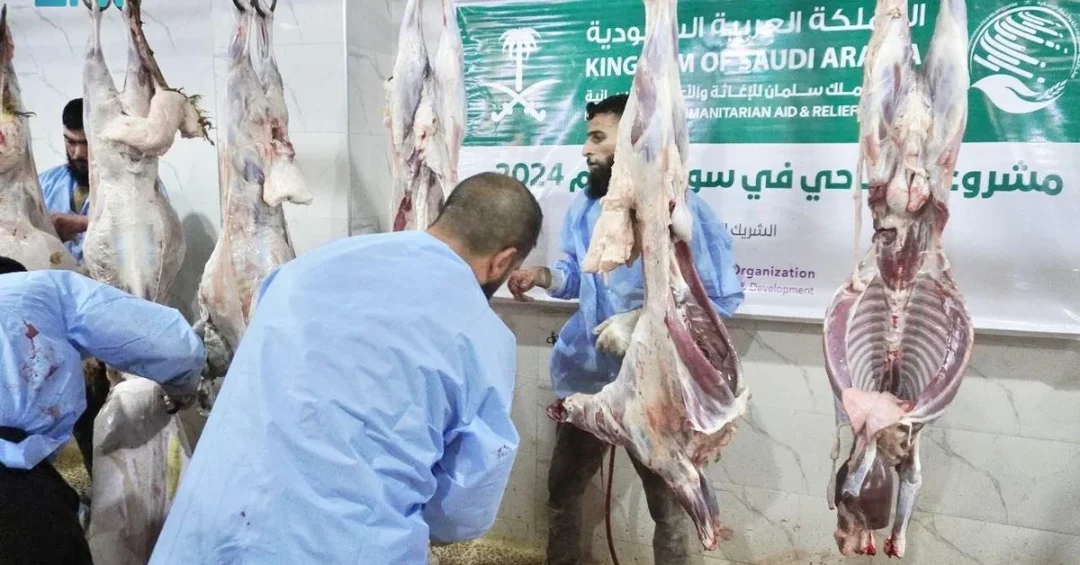
The King Salman Humanitarian Aid and Relief Center (KSrelief) distributed 181 sacrificial animals in Syria’s Aleppo Governorate on June 20, 2024, benefiting 1,763 individuals affected by the earthquake. The distribution is part of the Adahi project in Syria for the year 1445, which aims to provide food assistance to vulnerable families. This initiative reflects Saudi Arabia’s ongoing commitment to alleviating the suffering of those in need worldwide.
Context and Background
The Adahi project is a seasonal initiative by KSrelief that coincides with the Islamic ritual of sacrifice during Eid al-Adha. It involves the distribution of meat from sacrificial animals to needy families in various countries. In Syria, the project targets areas affected by conflict and natural disasters, particularly the February 2023 earthquake that devastated parts of the country. The King Salman Humanitarian Aid and Relief Center, established in 2015, is a leading humanitarian organization that provides aid and relief to countries in need, under the directives of the Saudi leadership.
Key Details
According to the Saudi Press Agency (SPA), the 181 sacrificial animals distributed in Aleppo benefited 1,763 individuals. This is part of a larger effort that includes the distribution of 1,388 sacrificial animals across Idlib and Aleppo Governorates, benefiting a total of 73,188 individuals. The project is executed in cooperation with local partners to ensure that aid reaches those most in need. The distribution process follows strict guidelines to ensure fairness and transparency, with priority given to displaced families, widows, orphans, and the disabled.
Implications and Impact
This humanitarian gesture underscores Saudi Arabia’s role as a global leader in humanitarian aid. It provides immediate relief to earthquake-affected communities in Syria, where many families struggle with food insecurity. The aid also contributes to stability and well-being in the region, demonstrating Saudi Arabia’s commitment to supporting its neighbors and the international community. The distribution of sacrificial animals not only meets nutritional needs but also upholds the dignity of recipients by allowing them to participate in the traditions of Eid al-Adha.
Vision 2030 Alignment
This initiative aligns with Saudi Arabia’s Vision 2030, which emphasizes the Kingdom’s humanitarian and global responsibilities. Vision 2030 seeks to strengthen Saudi Arabia’s role as a leader in humanitarian and relief efforts, reflecting the values of generosity and solidarity. Through KSrelief, Saudi Arabia continues to extend a helping hand to those in need, contributing to a more stable and prosperous world.
20 Questions
Q1. What is the King Salman Humanitarian Aid and Relief Center (KSrelief)?
A1. KSrelief is a Saudi humanitarian organization established in 2015 to provide aid and relief to countries in need. It operates under the directives of the Saudi leadership and is known for its rapid response to crises worldwide.
Q2. What was distributed by KSrelief in Aleppo Governorate?
A2. KSrelief distributed 181 sacrificial animals in Aleppo Governorate, benefiting 1,763 individuals affected by the earthquake. This distribution is part of the Adahi project in Syria for the year 1445.
Q3. What is the Adahi project?
A3. The Adahi project is a seasonal initiative by KSrelief that involves distributing meat from sacrificial animals to needy families during Eid al-Adha. It aims to provide food assistance to vulnerable communities in various countries.
Q4. How many sacrificial animals were distributed in total in Idlib and Aleppo?
A4. A total of 1,388 sacrificial animals were distributed in Idlib and Aleppo Governorates, benefiting 73,188 individuals. This is part of the Adahi project in Syria for the year 1445.
Q5. Who are the beneficiaries of the sacrificial animals in Aleppo?
A5. The beneficiaries are 1,763 individuals affected by the earthquake in Aleppo. The aid targets displaced families, widows, orphans, and other vulnerable groups to ensure they have access to nutritious food.
Q6. When was the distribution in Aleppo carried out?
A6. The distribution took place on June 20, 2024, according to the Saudi Press Agency. This timing aligns with the Eid al-Adha season, when such sacrifices are traditionally performed.
Q7. Why is this distribution important for Syria?
A7. The distribution provides essential food assistance to earthquake-affected and displaced families in Syria, where many struggle with food insecurity. It helps meet immediate nutritional needs and upholds the dignity of recipients.
Q8. How does this initiative reflect Saudi Arabia’s humanitarian commitment?
A8. It demonstrates Saudi Arabia’s ongoing dedication to alleviating suffering worldwide through KSrelief. The Kingdom consistently provides aid to countries in need, regardless of geographical or political boundaries.
Q9. What is the significance of the year 1445 in the Adahi project?
A9. The year 1445 refers to the Islamic Hijri calendar year during which the project is executed. It corresponds to the Eid al-Adha season of 2024, a time of increased charitable giving.
Q10. How does the distribution process ensure fairness?
A10. KSrelief follows strict guidelines to ensure fair and transparent distribution, prioritizing the most vulnerable. Local partners assist in identifying beneficiaries and organizing the distribution to reach those in need efficiently.
Q11. What is the role of local partners in the distribution?
A11. Local partners help identify eligible beneficiaries and facilitate the distribution process, ensuring that aid reaches the intended recipients. They also provide logistical support to make the operation smooth and effective.
Q12. How does this aid contribute to stability in the region?
A12. By addressing food insecurity and providing relief, the aid helps stabilize communities and reduces the risk of unrest. It also strengthens Saudi Arabia’s ties with Syria and demonstrates its role as a responsible regional leader.
Q13. What other countries does KSrelief assist?
A13. KSrelief assists numerous countries worldwide, including Yemen, Palestine, Bangladesh, and many African nations. It provides aid in various forms, such as food, medical care, and education.
Q14. How does this initiative align with Vision 2030?
A14. Vision 2030 emphasizes Saudi Arabia’s humanitarian role and global responsibilities. This initiative reflects the Kingdom’s commitment to international solidarity and sustainable development, core principles of Vision 2030.
Q15. What is the total number of beneficiaries in Syria from this project?
A15. In Idlib and Aleppo, 73,188 individuals benefited from the distribution of 1,388 sacrificial animals. This includes the 1,763 individuals in Aleppo who received aid from the 181 animals.
Q16. How does the sacrifice ritual relate to Eid al-Adha?
A16. Eid al-Adha commemorates the willingness of Prophet Ibrahim to sacrifice his son. Muslims around the world perform sacrifices and share the meat with the needy, symbolizing obedience and charity.
Q17. What is the impact of the earthquake on Aleppo?
A17. The February 2023 earthquake caused widespread destruction in Aleppo, displacing many families and leaving them in dire need of humanitarian assistance. KSrelief’s aid aims to alleviate their suffering.
Q18. How can other organizations partner with KSrelief?
A18. Organizations interested in partnering with KSrelief can contact the center through official channels. Partnerships are based on shared humanitarian goals and adherence to KSrelief’s guidelines for aid delivery.
Q19. What measures are taken to ensure aid reaches the intended recipients?
A19. KSrelief uses a transparent system that includes registration, verification, and monitoring. Local partners and field teams oversee the distribution to prevent any misuse of aid and ensure it reaches those in need.
Q20. What is the future outlook for KSrelief’s operations in Syria?
A20. KSrelief will continue to assess the needs in Syria and provide assistance accordingly. The center remains committed to supporting vulnerable communities and will expand its efforts as needed to meet emerging challenges.
Reader Feedback
We value your thoughts. Please share your feedback on this article.
Your feedback helps us improve our coverage.