


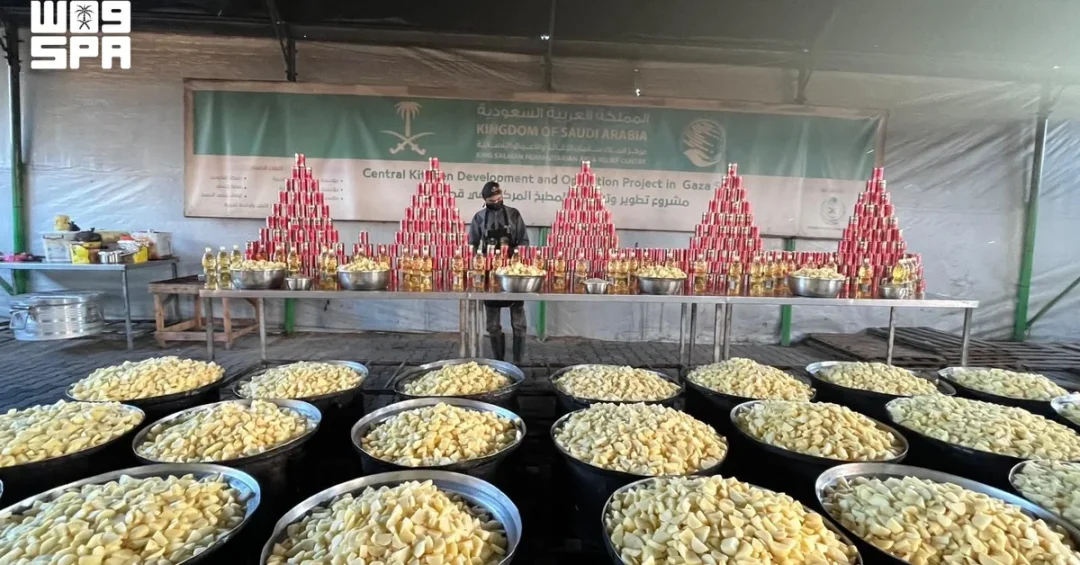
The King Salman Humanitarian Aid and Relief Center (KSrelief) distributed 25,000 hot meals on Monday to 25,000 people in need across central and southern Gaza, according to the Saudi Press Agency. The distribution was carried out through KSrelief’s central kitchen as part of the ongoing Saudi campaign to aid the Palestinian people in the Gaza Strip, the official news agency reported. The operation represents one of the largest single-day meal distributions by the Kingdom’s humanitarian arm in recent months, underscoring Saudi Arabia’s sustained commitment to alleviating the humanitarian crisis in Gaza. The meals were prepared and delivered amid extremely challenging conditions, with KSrelief teams coordinating logistics to ensure that food reached those most in need in the designated areas. The Saudi campaign has been a consistent lifeline for thousands of families facing severe food insecurity, and Monday’s distribution added another significant chapter to that effort.
How does a single distribution of 25,000 meals fit into the broader picture of Saudi Arabia’s humanitarian engagement? It reflects a systematic, large-scale operation that has been running since the early days of the crisis, with KSrelief acting as the primary implementing agency on the ground. The Kingdom has repeatedly affirmed its solidarity with the Palestinian people, and this latest distribution is a tangible expression of that position. The central kitchen model allows KSrelief to prepare hot, nutritious meals efficiently and deliver them directly to beneficiaries, bypassing some of the logistical bottlenecks that can delay other forms of aid. Monday’s operation was part of a well-established pipeline that has already delivered hundreds of thousands of meals, medical supplies, and other essential items. The Saudi Press Agency, which reported the distribution, is the official source of record for such humanitarian updates, and its coverage provides reliable confirmation of the scale and scope of the effort.
Context and Background
What is the historical context behind Saudi Arabia’s humanitarian campaign for Gaza? The Kingdom has long been a leading donor to Palestinian causes, but the current campaign was launched in response to the acute escalation of needs in the Gaza Strip. KSrelief, established in 2015 by royal decree, has become the central vehicle for Saudi humanitarian action worldwide, and its mandate explicitly includes rapid response to crises affecting Muslim communities and other vulnerable populations. The Gaza campaign is one of its most visible and sustained operations, involving air bridges, sea shipments, and ground-level distribution networks. Over the past months, KSrelief has delivered thousands of tons of food, medical equipment, shelter materials, and fuel, often in coordination with international partners and local authorities. The central kitchen initiative, which produced Monday’s 25,000 meals, is a key component of this effort, enabling the production of hot meals at scale.
Why is the central kitchen approach particularly effective in the Gaza context? Unlike dry food rations, which require recipients to have access to cooking facilities and fuel, hot meals can be consumed immediately, making them ideal for displaced families living in temporary shelters or open areas. The central kitchen also allows for quality control and nutritional balancing, ensuring that each meal provides essential calories and nutrients. KSrelief’s kitchen in Gaza has been operating under difficult circumstances, with intermittent power supplies and security challenges, yet it has maintained a consistent output. The distribution on Monday targeted central and southern Gaza, areas where needs have been assessed as particularly severe. The operation was carried out in accordance with humanitarian principles, with the aim of reaching the most vulnerable regardless of political affiliations. The Saudi campaign has been widely recognized for its impartiality and its focus on direct, life-saving assistance.
How does this distribution relate to the broader Saudi campaign for the Palestinian people? The campaign is multifaceted, encompassing not only food aid but also medical care, education support, and infrastructure repair. KSrelief has operated field hospitals, mobile clinics, and psychological support programs in Gaza, and it has also supported Palestinian refugees in neighboring countries. The campaign is funded by the Saudi government and private donors, reflecting a broad national consensus on the importance of supporting the Palestinian cause. The Kingdom’s leadership, including King Salman and Crown Prince Mohammed bin Salman, has consistently emphasized the need for a just and lasting solution to the Palestinian issue, and the humanitarian campaign is seen as a practical complement to diplomatic efforts. Monday’s meal distribution is therefore not an isolated act but part of a coherent strategy that combines immediate relief with long-term advocacy.
Key Details
What exactly happened on Monday, and how was the distribution organized? According to the Saudi Press Agency, KSrelief’s central kitchen prepared 25,000 hot meals, which were then distributed to 25,000 beneficiaries in central and southern Gaza. The operation involved a coordinated effort by KSrelief field teams, local partners, and volunteers, who identified the most vulnerable households and ensured that meals reached them efficiently. The meals likely consisted of rice, protein, vegetables, and bread, providing a balanced and culturally appropriate diet. The distribution points were selected to minimize crowding and to ensure safety for both recipients and aid workers. KSrelief has refined its distribution protocols over months of operations, incorporating lessons learned to improve speed and accuracy. The 25,000 meals were delivered in a single day, demonstrating the logistical capacity that KSrelief has built up in Gaza despite the challenging environment.
Who are the beneficiaries of this distribution, and how are they selected? The 25,000 individuals reached on Monday represent a cross-section of Gaza’s most vulnerable populations, including displaced families, children, the elderly, and those with chronic illnesses. KSrelief works with local community leaders and humanitarian partners to identify households facing the greatest food insecurity, using criteria such as displacement status, income level, and family size. The selection process aims to be transparent and impartial, ensuring that aid reaches those who need it most without discrimination. Many of the beneficiaries live in makeshift camps or overcrowded shelters where access to cooking facilities is limited, making hot meals particularly valuable. The distribution also provides a measure of dignity and normalcy for families who have endured months of hardship. KSrelief’s teams often report that the hot meals are among the most appreciated forms of assistance, as they offer immediate relief and a sense of care.
What logistical challenges did KSrelief overcome to carry out this distribution? Operating in Gaza presents extraordinary difficulties, including security risks, damaged infrastructure, and restricted access for aid convoys. KSrelief has had to navigate these challenges by maintaining close coordination with relevant authorities, pre-positioning supplies, and using flexible delivery routes. The central kitchen itself requires a steady supply of ingredients, fuel, and water, all of which can be scarce. KSrelief’s team has developed contingency plans to keep the kitchen running even when power is cut, using generators and alternative cooking methods. The distribution on Monday required careful timing to avoid periods of heightened danger and to ensure that crowds could be managed safely. Despite these obstacles, KSrelief has consistently met its targets, a testament to the professionalism and dedication of its staff and partners. The operation also benefited from the broader Saudi campaign’s logistical backbone, which includes air and sea corridors.
International and Regional Impact
How is Saudi Arabia’s humanitarian role in Gaza perceived internationally? The Kingdom’s consistent and large-scale assistance has been acknowledged by international organizations and partner governments, who recognize KSrelief as a reliable and effective humanitarian actor. Saudi Arabia’s ability to deliver aid directly to those in need, often in areas that are difficult to reach, has enhanced its standing as a responsible global stakeholder. The campaign also reinforces the Kingdom’s traditional leadership role in the Islamic world, where support for Palestine is a deeply held value. International observers note that Saudi aid is provided without political conditions, focusing solely on alleviating human suffering. This approach has helped maintain broad support for the campaign and has facilitated cooperation with a range of humanitarian agencies. The distribution of 25,000 hot meals may seem like a single data point, but it contributes to a cumulative record of sustained engagement that shapes perceptions of Saudi Arabia as a compassionate and capable actor.
What does this mean for regional stability and diplomacy? Humanitarian aid can play a stabilizing role in conflict-affected areas by addressing immediate needs and reducing the potential for further deterioration. Saudi Arabia’s efforts in Gaza complement its diplomatic initiatives aimed at achieving a ceasefire and a lasting political solution. By providing tangible relief, the Kingdom demonstrates its commitment to the well-being of the Palestinian people, which in turn supports its credibility in regional discussions. The campaign also strengthens ties with neighboring countries that host Palestinian refugees, such as Jordan and Lebanon, where KSrelief also operates. In the broader Middle East, Saudi Arabia’s humanitarian diplomacy is seen as a constructive counterpoint to the region’s many conflicts. The Kingdom’s ability to work with diverse partners, including UN agencies and international NGOs, enhances its reputation as a bridge-builder. Monday’s distribution is thus part of a larger effort to promote stability through compassion.
Economic and Strategic Significance
What is the economic significance of Saudi Arabia’s humanitarian campaign? While humanitarian aid is primarily a moral imperative, it also has economic dimensions. The campaign involves significant procurement of food, medical supplies, and logistics services, some of which are sourced from Saudi companies, thereby supporting the Kingdom’s private sector. KSrelief’s operations are funded through the Saudi government budget and donations, and they are managed with a focus on efficiency and accountability. The use of centralized kitchens, for example, can be cost-effective at scale, allowing KSrelief to provide hot meals at a lower unit cost than many alternative modalities. The campaign also builds logistical expertise within Saudi institutions, which can be applied to other crises. Moreover, the goodwill generated by Saudi aid can have long-term economic benefits by enhancing the Kingdom’s soft power and opening doors for trade and investment. The strategic value of being seen as a reliable partner in times of crisis cannot be overstated.
How does the Gaza campaign fit into Saudi Arabia’s broader strategic priorities? Saudi Arabia’s foreign policy under Vision 2030 emphasizes constructive engagement, regional stability, and humanitarian leadership. The Gaza campaign aligns with these priorities by demonstrating the Kingdom’s willingness to take responsibility for addressing regional crises. It also reinforces Saudi Arabia’s role as a leader in the Islamic world, a position that is central to its identity and influence. Furthermore, the campaign supports the Kingdom’s efforts to position itself as a modern, compassionate nation that uses its resources for the benefit of others. This narrative is important for Saudi Arabia’s international image and for attracting partners who share its values. The humanitarian campaign also provides a platform for Saudi diplomacy, allowing the Kingdom to engage with a wide range of stakeholders on a non-political basis. In this sense, the distribution of 25,000 meals is a small but meaningful component of a much larger strategic vision.
Vision 2030 Alignment
How does KSrelief’s work in Gaza align with the goals of Saudi Vision 2030? Vision 2030 is not only about economic diversification and social reform; it also encompasses a vision of Saudi Arabia as a responsible global citizen. The Kingdom’s humanitarian efforts, led by KSrelief, are a direct expression of this vision, showcasing Saudi Arabia’s capacity to contribute to international peace and stability. Vision 2030 seeks to enhance the Kingdom’s soft power and its standing in the world, and humanitarian diplomacy is a key tool for achieving that. By alleviating suffering in Gaza, KSrelief demonstrates the values of compassion and solidarity that are central to Saudi identity. The campaign also helps to build partnerships with international organizations and governments, which can lead to broader cooperation in other areas. The professionalism and effectiveness of KSrelief’s operations reflect the broader modernization and capacity-building that Vision 2030 promotes across Saudi institutions.
What does the future hold for Saudi humanitarian engagement? As Vision 2030 progresses, Saudi Arabia is expected to further institutionalize its humanitarian efforts, with KSrelief playing an increasingly prominent role. The Kingdom has signaled its intention to remain a leading donor and implementer of humanitarian aid, not only in Gaza but also in Yemen, Syria, Sudan, and other crisis zones. The experience gained in Gaza, including the central kitchen model, will inform future operations and enhance Saudi Arabia’s ability to respond rapidly to emergencies. The Kingdom’s humanitarian agenda is also likely to become more integrated with its diplomatic and development initiatives, creating a comprehensive approach to international engagement. For the people of Gaza, the continuation of Saudi aid is a lifeline, and for Saudi Arabia, it is a demonstration of its enduring commitment to the Palestinian cause and to global humanitarian principles. In the years ahead, KSrelief’s work will remain a cornerstone of the Kingdom’s international role, reflecting the generosity and vision of its leadership.
20 Questions
Q1. What did KSrelief distribute in Gaza on Monday?
A1. KSrelief distributed 25,000 hot meals through its central kitchen to 25,000 people in need in central and southern Gaza, as part of the Saudi campaign to aid the Palestinian people.
Q2. When did this distribution take place?
A2. The distribution took place on Monday, November 18, 2026, according to the Saudi Press Agency.
Q3. Which organization carried out the distribution?
A3. The King Salman Humanitarian Aid and Relief Center (KSrelief), Saudi Arabia’s primary humanitarian agency, carried out the distribution.
Q4. How many people received meals?
A4. Exactly 25,000 individuals received hot meals, matching the number of meals distributed.
Q5. Where in Gaza were the meals distributed?
A5. The meals were distributed in central and southern Gaza, targeting areas with high levels of need.
Q6. What is the Saudi campaign to aid the Palestinian people?
A6. It is an ongoing humanitarian initiative by Saudi Arabia to provide food, medical aid, and other assistance to Palestinians in Gaza and elsewhere.
Q7. Why does KSrelief use a central kitchen?
A7. The central kitchen allows for efficient production of hot, nutritious meals at scale, which can be delivered immediately to beneficiaries without requiring cooking facilities.
Q8. How does this distribution fit into Saudi Arabia’s broader humanitarian efforts?
A8. It is part of a sustained campaign that includes air bridges, sea shipments, and ground distributions, reflecting Saudi Arabia’s commitment to alleviating the crisis in Gaza.
Q9. What types of meals were provided?
A9. The meals were hot, balanced, and culturally appropriate, likely including rice, protein, vegetables, and bread, providing essential nutrition.
Q10. How are beneficiaries selected for aid?
A10. KSrelief works with local partners to identify the most vulnerable households, including displaced families, children, the elderly, and the sick, using transparent criteria.
Q11. What challenges does KSrelief face in Gaza?
A11. Challenges include security risks, damaged infrastructure, restricted access, and supply shortages, all of which KSrelief navigates through careful planning and coordination.
Q12. How is the international community responding to Saudi aid?
A12. International organizations and governments have acknowledged Saudi Arabia’s effective and impartial humanitarian role, enhancing the Kingdom’s standing as a responsible global actor.
Q13. Does this aid have political conditions?
A13. No, Saudi aid is provided without political conditions, focusing solely on alleviating human suffering and reaching those most in need.
Q14. How does this campaign align with Vision 2030?
A14. It aligns with Vision 2030’s goal of positioning Saudi Arabia as a responsible global citizen and enhancing its soft power through humanitarian diplomacy.
Q15. What other forms of aid does KSrelief provide?
A15. KSrelief provides medical care, shelter, education support, and infrastructure repair, in addition to food aid, through various programs.
Q16. How long has KSrelief been operating in Gaza?
A16. KSrelief has been active in Gaza for many years, but the current campaign was intensified in response to the recent escalation of needs.
Q17. What is the role of the Saudi Press Agency in reporting this?
A17. The Saudi Press Agency is the official source of record for Saudi government news, providing reliable confirmation of the distribution.
Q18. How does this distribution impact regional stability?
A18. By addressing immediate needs, the aid can help reduce suffering and contribute to a more stable environment, complementing diplomatic efforts.
Q19. Will KSrelief continue its operations in Gaza?
A19. Yes, KSrelief is expected to continue and expand its operations as part of Saudi Arabia’s sustained commitment to the Palestinian people.
Q20. What is the significance of 25,000 meals in the broader context?
A20. It represents a significant single-day effort, demonstrating KSrelief’s logistical capacity and Saudi Arabia’s ongoing dedication to humanitarian relief in Gaza.
Reader Feedback
We value your thoughts. Please share your feedback on this article.
Your feedback helps us improve our coverage.
Related articles
 KSrelief Delivers Clean Water to 3,500 in Yemen’s Taiz
 KSrelief Launches Mobile Rubble Recycling Units in Syria
 Arab Parliament Welcomes Yemeni Law Designating Houthi Militia as Terrorist Organization
 KSrelief Provides Drinking Water to 2,800 Displaced People in Yemen’s Aden
 KSrelief Launches Saudi Noor Volunteer Project for Cataract Surgery in Yemen
 Baby Strollers Now Permitted in Grand Mosque Areas