


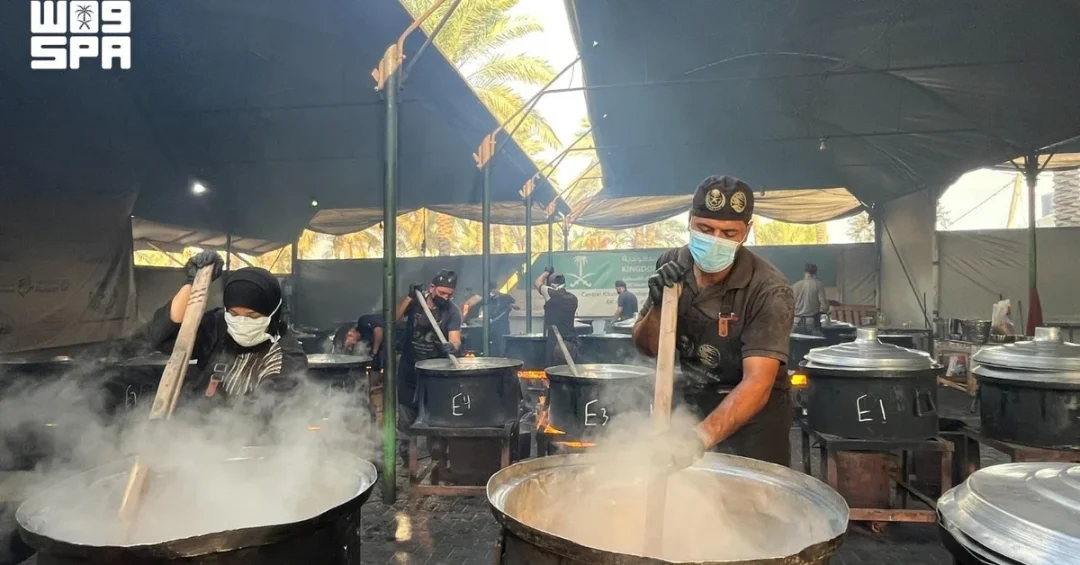
The King Salman Humanitarian Aid and Relief Center (KSrelief) distributed 25,000 hot meals to vulnerable groups across central and southern Gaza Strip, benefiting 25,000 people, the Saudi Press Agency reported. The distribution, carried out through KSrelief’s central kitchen, forms part of the ongoing Saudi campaign to support the Palestinian people in Gaza. The operation delivered ready-to-eat meals directly to families, displaced persons, and individuals facing acute hardship in the enclave’s most affected communities.
The meal distribution represents the latest phase of Saudi Arabia’s sustained humanitarian commitment to Gaza, channeled through official Saudi agencies under the direction of the Kingdom’s leadership. KSrelief, established in 2015, has become one of the world’s most active humanitarian organizations, operating in more than 100 countries. In Gaza, its central kitchen model allows for the rapid preparation and delivery of hot, nutritious meals to populations facing severe food insecurity, using locally sourced ingredients and trained local staff to ensure efficiency and dignity in aid delivery. The timing of this distribution underscores Saudi Arabia’s continued attention to the humanitarian dimensions of the crisis.
Context and Background
Why has Saudi Arabia maintained such a consistent humanitarian presence in Gaza? The Kingdom’s support for the Palestinian people is a longstanding pillar of its foreign policy, rooted in historical, cultural, and religious ties. The Saudi campaign for Gaza has involved multiple phases of assistance, including food baskets, medical supplies, shelter materials, and fuel, all coordinated through KSrelief and other official channels. The central kitchen operation is a relatively recent innovation in this effort, designed to address the immediate nutritional needs of families who may lack the means to cook or store food.
KSrelief was founded by royal decree in May 2015 and has since delivered aid valued at billions of dollars worldwide. Its mandate emphasizes rapid response, transparency, and coordination with international partners. In Gaza, the organization works closely with local authorities and humanitarian agencies to identify the most vulnerable beneficiaries, including widows, orphans, the elderly, and the disabled. The current distribution of 25,000 hot meals is part of a broader Saudi campaign that has consistently been among the largest single-country humanitarian efforts for Gaza, reflecting the Kingdom’s commitment to alleviating suffering and supporting stability in the region.
The humanitarian situation in Gaza remains dire, with international organizations reporting widespread food insecurity and damage to civilian infrastructure. In this context, the provision of hot meals is not merely a nutritional intervention but also a measure of psychological relief for families struggling to meet basic needs. Saudi Arabia has repeatedly called for a peaceful resolution to the crisis and has used its diplomatic weight to advocate for humanitarian access and the protection of civilians. The KSrelief operation is a practical manifestation of these diplomatic and humanitarian priorities, ensuring that Saudi assistance reaches those in greatest need.
Key Details
How exactly does KSrelief’s central kitchen operate in Gaza? The central kitchen model involves a fixed facility where meals are prepared in large quantities under strict hygiene standards, then packaged and distributed through a network of local partners and volunteers. According to the Saudi Press Agency, the distribution targeted the most vulnerable groups in central and southern Gaza Strip, with a one-to-one ratio of meals to beneficiaries. This suggests a carefully planned operation aimed at maximizing reach and minimizing duplication. The meals themselves are designed to be nutritionally balanced, providing essential calories and nutrients for individuals who may have gone without a proper meal for extended periods.
The operation is part of the Saudi campaign to support the Palestinian people in the Gaza Strip, which has been ongoing and has involved contributions from various Saudi government entities and private donors. KSrelief’s role as the implementing agency ensures that aid is delivered in a coordinated and professional manner, in line with international humanitarian principles. The center has previously distributed food baskets, medical supplies, and other relief items in Gaza, but the hot meals program is particularly significant because it addresses immediate hunger while also supporting local employment through the hiring of kitchen staff and distributors.
The distribution of 25,000 hot meals is a tangible demonstration of Saudi Arabia’s humanitarian diplomacy. It also reflects the Kingdom’s broader approach to crisis response, which combines emergency relief with longer-term development assistance. In Gaza, however, the focus remains on life-saving aid, given the scale of the needs. KSrelief has stated that it will continue to monitor the situation and expand its operations as needed, in coordination with its partners on the ground. The Saudi Press Agency report did not specify the exact date of the distribution beyond the reference to “yesterday,” but the timeliness of the report indicates that the operation is part of an active and ongoing program.
International and Regional Impact
What does this distribution signal to the wider region and the international community? Saudi Arabia’s humanitarian efforts in Gaza are widely recognized as among the most significant by any single nation. By consistently delivering aid, the Kingdom reinforces its position as a responsible regional leader and a reliable partner in humanitarian crises. The KSrelief operation also complements the efforts of other international organizations and donor countries, helping to fill critical gaps in the humanitarian response. For the international audience, it highlights Saudi Arabia’s commitment to addressing the needs of civilians affected by conflict, in line with its broader foreign policy objectives.
Regionally, the distribution of hot meals may contribute to easing tensions by addressing the immediate needs of a vulnerable population. Saudi Arabia has consistently advocated for a two-state solution and the rights of the Palestinian people, and its humanitarian aid is a concrete expression of that stance. The operation also demonstrates the Kingdom’s ability to mobilize resources quickly and effectively, a capability that enhances its diplomatic influence. In a region where humanitarian crises often have political ramifications, Saudi Arabia’s aid serves as a stabilizing factor, focusing on the well-being of civilians rather than political posturing.
Economic and Strategic Significance
How does humanitarian aid fit into Saudi Arabia’s broader strategic vision? The Kingdom’s aid programs are not isolated acts of charity; they are integral to its foreign policy and its image as a global humanitarian leader. Saudi Arabia is one of the largest donors of humanitarian assistance worldwide, and its contributions are channeled through organizations like KSrelief, which has a reputation for efficiency and transparency. The Gaza operation, while primarily humanitarian, also serves to strengthen Saudi Arabia’s soft power and its relationships with international partners who value its contributions to stability and development.
From an economic perspective, the aid distribution involves logistical costs, procurement, and coordination that are borne by the Saudi government. However, these expenditures are viewed as investments in regional stability and in the Kingdom’s international standing. They also align with Vision 2030’s emphasis on global engagement and humanitarian responsibility. By supporting the Palestinian people, Saudi Arabia underscores its commitment to Arab and Islamic causes, which resonates with its domestic audience and with allies across the Muslim world. The operation is thus both a moral imperative and a strategic asset.
Vision 2030 Alignment
How does KSrelief’s work in Gaza connect to Saudi Vision 2030? Vision 2030 is a comprehensive national transformation plan that aims to diversify the economy, empower citizens, and enhance Saudi Arabia’s global role. A key component of this vision is the Kingdom’s emergence as a humanitarian and development leader, using its resources and expertise to address global challenges. KSrelief is a direct embodiment of this ambition, and its operations in Gaza demonstrate how Saudi Arabia is translating its Vision 2030 principles into concrete action on the world stage.
The distribution of 25,000 hot meals is a small but meaningful part of a much larger Saudi effort to support the Palestinian people and to contribute to regional peace and stability. As Saudi Arabia continues to advance its Vision 2030 goals, its humanitarian diplomacy will remain a central pillar of its international engagement. The Kingdom’s ability to deliver aid effectively and compassionately enhances its reputation and strengthens its partnerships, ultimately contributing to a more stable and prosperous region. The KSrelief operation in Gaza is a clear example of how Saudi Arabia is working to build a better future for all, in line with the values and aspirations of Vision 2030.
20 Questions
Q1. What is KSrelief and what does it do?
A1. KSrelief, or the King Salman Humanitarian Aid and Relief Center, is a Saudi humanitarian organization established in 2015. It provides emergency relief and development aid in over 100 countries, focusing on food, health, shelter, and education.
Q2. How many hot meals were distributed in Gaza?
A2. According to the Saudi Press Agency, KSrelief distributed 25,000 hot meals in central and southern Gaza Strip, benefiting 25,000 people. The distribution was part of the Saudi campaign to support the Palestinian people.
Q3. Who benefited from the meal distribution?
A3. The meals were provided to the most vulnerable groups in central and southern Gaza Strip, including displaced families, widows, orphans, the elderly, and others facing severe hardship. The operation aimed to reach those most in need.
Q4. When did the distribution take place?
A4. The Saudi Press Agency reported the distribution on October 19, 2026, stating it occurred “yesterday.” This indicates the operation was recent and part of an ongoing humanitarian effort by KSrelief in Gaza.
Q5. What is the Saudi campaign for Gaza?
A5. The Saudi campaign is a comprehensive humanitarian initiative led by Saudi Arabia to support the Palestinian people in Gaza. It includes food, medical aid, shelter, and other relief items, delivered through KSrelief and other official channels.
Q6. How does KSrelief’s central kitchen work?
A6. The central kitchen prepares large quantities of hot meals under strict hygiene standards, then packages and distributes them through local partners. This model ensures efficiency and reaches vulnerable populations quickly with nutritious food.
Q7. Why is Saudi Arabia helping Gaza?
A7. Saudi Arabia has a longstanding commitment to the Palestinian people based on historical, cultural, and religious ties. The Kingdom also seeks to alleviate human suffering and contribute to regional stability through humanitarian action.
Q8. Is this the first time KSrelief has operated in Gaza?
A8. No, KSrelief has conducted numerous aid operations in Gaza, including food baskets, medical supplies, and shelter materials. The hot meals program is part of its ongoing efforts to address urgent needs.
Q9. How does this aid align with Vision 2030?
A9. Vision 2030 emphasizes Saudi Arabia’s global role and humanitarian responsibility. KSrelief’s work, including in Gaza, demonstrates the Kingdom’s commitment to international engagement and compassion, key principles of the vision.
Q10. What impact does the aid have on the ground?
A10. The hot meals provide immediate nutritional relief to families facing food insecurity. They also offer psychological comfort and help stabilize communities by meeting basic needs during a crisis.
Q11. Who coordinates the distribution in Gaza?
A11. KSrelief coordinates with local authorities and humanitarian partners in Gaza to identify beneficiaries and ensure safe, efficient delivery. This collaboration helps reach the most vulnerable groups.
Q12. How is Saudi aid funded?
A12. Saudi humanitarian aid is funded by the Saudi government, with contributions from private donors and charitable organizations. KSrelief manages these funds transparently to deliver effective relief.
Q13. What other aid has Saudi Arabia provided to Gaza?
A13. Saudi Arabia has provided food baskets, medical supplies, shelter materials, fuel, and other essentials. The Kingdom has also supported reconstruction efforts and medical evacuations through KSrelief and other agencies.
Q14. How does this aid affect Saudi Arabia’s international standing?
A14. It reinforces Saudi Arabia’s reputation as a leading humanitarian donor and a responsible global actor. It strengthens partnerships and demonstrates the Kingdom’s commitment to peace and stability.
Q15. Are there any political conditions attached to the aid?
A15. No, Saudi humanitarian aid is provided unconditionally to those in need, in line with international humanitarian principles. The focus is solely on alleviating suffering and supporting vulnerable populations.
Q16. How can other countries support similar efforts?
A16. Other countries can contribute through international organizations, bilateral channels, or by supporting KSrelief’s initiatives. Coordination and additional resources are crucial to meet the scale of needs in Gaza.
Q17. What challenges does KSrelief face in Gaza?
A17. Challenges include access constraints, security concerns, and logistical difficulties. KSrelief works with partners to overcome these and ensure aid reaches those in need as efficiently as possible.
Q18. Will KSrelief continue its operations in Gaza?
A18. Yes, KSrelief has stated its commitment to continuing and expanding humanitarian operations in Gaza as needed. The Kingdom remains dedicated to supporting the Palestinian people through all available means.
Q19. How does the local community react to the aid?
A19. The aid is generally welcomed by beneficiaries and local authorities, as it addresses critical food needs. It provides relief and demonstrates international solidarity during a difficult period.
Q20. What is the broader message of Saudi Arabia’s aid to Gaza?
A20. The message is one of compassion, solidarity, and commitment to humanitarian principles. Saudi Arabia stands with the Palestinian people and will continue to provide support to alleviate their suffering and promote stability.
Reader Feedback
We value your thoughts. Please share your feedback on this article.
Your feedback helps us improve our coverage.