


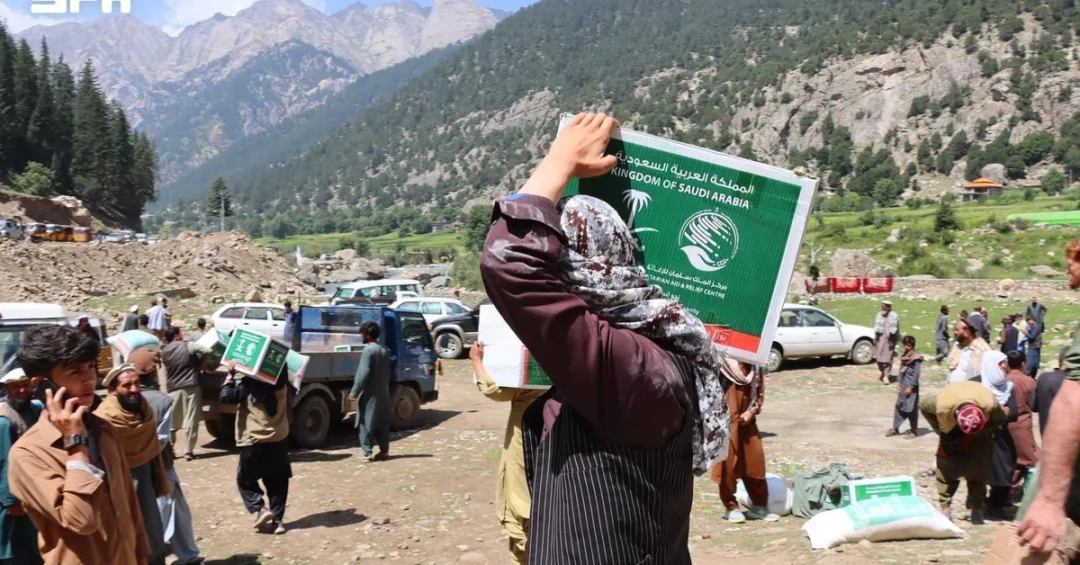
The King Salman Humanitarian Aid and Relief Center (KSrelief) has distributed 500 food baskets to flood-affected families in Nuristan Province, Afghanistan, providing essential sustenance to 3,500 people from 500 households. The distribution, carried out under the 2026 Food Security and Emergency Project, forms part of a broader emergency food assistance initiative targeting flood-affected communities across Afghanistan’s central, eastern, and southeastern regions. The operation was announced by the Saudi Press Agency, reflecting the Kingdom’s continued commitment to humanitarian outreach through its official relief channels.
This latest delivery underscores Saudi Arabia’s enduring role as a leading global humanitarian donor, operating through KSrelief under the directives of the Kingdom’s leadership. For international observers, the Nuristan distribution is more than a single relief operation; it represents a sustained, institutionalized approach to disaster response that aligns with Vision 2030’s emphasis on global engagement and soft power. How does a single food basket distribution in a remote Afghan province connect to the Kingdom’s broader strategic ambitions? The answer lies in the scale and consistency of Saudi Arabia’s humanitarian diplomacy, which has become a defining feature of its international posture.
Context and Background
Afghanistan has faced a compounding series of natural disasters in recent years, with seasonal floods devastating agricultural land, displacing families, and destroying critical infrastructure in provinces such as Nuristan, Laghman, and Nangarhar. The central, eastern, and southeastern regions have been particularly vulnerable, where mountainous terrain and limited drainage systems amplify the impact of heavy rainfall. In response, KSrelief established the 2026 Food Security and Emergency Project to deliver rapid, life-sustaining assistance to the most affected populations. The project is designed to address immediate caloric needs while supporting recovery in communities that have lost homes, livestock, and stored harvests.
Saudi Arabia’s humanitarian relationship with Afghanistan predates the current crisis. For decades, the Kingdom has provided food aid, medical supplies, and shelter materials through official channels, consistently framing its assistance as an expression of Islamic solidarity and neighborly duty. KSrelief, established in 2015 by royal decree, has since become the central vehicle for these efforts, operating in more than 90 countries and partnering with United Nations agencies, international NGOs, and local authorities. The Nuristan distribution is therefore not an isolated gesture but the latest chapter in a long record of Saudi humanitarian engagement with the Afghan people.
Why does sustained humanitarian assistance matter more than one-time relief? Because recovery from floods is measured in seasons, not days. Families who receive food baskets today can redirect scarce resources toward rebuilding shelters, replanting fields, and keeping children in school. The 2026 project is structured to provide repeated distributions across multiple provinces, creating a predictable safety net that helps communities avoid negative coping mechanisms such as selling productive assets or migrating en masse to already strained urban centers.
Key Details of the Nuristan Distribution
The 500 food baskets distributed in Nuristan Province were delivered to families identified through coordination with local community leaders and humanitarian partners. Each basket contains staple food items sufficient to support a family for a defined period, typically including flour, rice, cooking oil, pulses, and dates. The selection of beneficiaries followed needs-based criteria, prioritizing households that lost homes, livelihoods, or access to markets. In total, 3,500 individuals across 500 families received assistance, a figure that reflects the average family size in the region and the scale of need following the floods.
The operation falls under the 2026 Food Security and Emergency Project, which is specifically designed for flood-affected populations in Afghanistan’s central, eastern, and southeastern zones. According to the Saudi Press Agency, the distribution is part of an ongoing effort to alleviate the suffering of the Afghan people and support their resilience. The project’s geographic focus reflects an assessment of where flood damage has been most severe and where access for humanitarian convoys remains feasible. By concentrating on these regions, KSrelief aims to maximize the impact of each delivery and avoid duplication with other aid agencies.
How are beneficiaries selected, and what safeguards ensure aid reaches those who need it most? KSrelief follows established humanitarian principles of impartiality, neutrality, and independence. Beneficiary lists are compiled with input from local shuras, provincial authorities, and partner organizations, then verified before distribution. This multi-layered approach reduces the risk of diversion and helps ensure that vulnerable groups, including female-headed households, the elderly, and families with disabled members, are not overlooked. The presence of KSrelief field teams during distribution provides an additional layer of accountability and allows for real-time adjustments based on ground conditions.
International and Regional Impact
The Nuristan distribution carries significance beyond Afghanistan’s borders. It reinforces Saudi Arabia’s standing as a reliable humanitarian actor in a region where geopolitical competition often complicates aid delivery. By working through KSrelief, the Kingdom maintains a channel that is widely recognized for its neutrality and effectiveness, enabling assistance to reach communities regardless of political dynamics. This approach has earned Saudi Arabia partnerships with the United Nations Office for the Coordination of Humanitarian Affairs (OCHA), the World Food Programme (WFP), and other multilateral bodies that coordinate relief in complex environments.
For neighboring countries, Saudi humanitarian activity in Afghanistan contributes to regional stability. Food insecurity and displacement can spill across borders, affecting Pakistan, Iran, and Central Asian states. By addressing urgent needs inside Afghanistan, KSrelief helps reduce pressure on neighboring countries to absorb new refugee flows. This preventive dimension of aid is increasingly recognized in international humanitarian policy, and Saudi Arabia’s sustained engagement positions it as a constructive partner in regional crisis management. How does a food basket in Nuristan contribute to stability in Islamabad or Dushanbe? By giving families a reason to remain in their communities rather than join cross-border migration, the assistance supports a more predictable and secure regional environment.
Economic and Strategic Significance
From an economic perspective, humanitarian assistance is an investment in human capital and market stability. When floods destroy harvests and displace families, local markets contract, food prices spike, and recovery slows. By injecting food supplies directly into affected communities, KSrelief helps stabilize local prices and frees household income for other essential needs. This, in turn, supports small traders, transport operators, and farmers who depend on functioning local economies. The 2026 Food Security and Emergency Project is therefore not merely charitable; it is a targeted intervention that mitigates the economic shocks of natural disasters.
Strategically, Saudi Arabia’s humanitarian diplomacy enhances its global influence and complements its economic and political engagement. Vision 2030 calls for a diversified economy, a strengthened international presence, and a leadership role in addressing global challenges. KSrelief embodies these objectives by professionalizing Saudi aid delivery, measuring outcomes, and communicating results transparently. The Center’s operations in Afghanistan, Yemen, Syria, and beyond demonstrate that the Kingdom is willing and able to shoulder responsibilities commensurate with its global stature. For international audiences, this record builds trust and positions Saudi Arabia as a partner in solving shared problems.
What distinguishes KSrelief from other humanitarian actors? Its combination of speed, scale, and cultural competence. Because KSrelief operates under a royal mandate and maintains direct relationships with Saudi leadership, it can mobilize resources quickly when disasters strike. Its teams often include Arabic-speaking and local staff who understand the cultural context of beneficiary communities, which facilitates trust and cooperation. This model has been recognized by international partners as effective, and it continues to evolve as KSrelief expands its use of digital monitoring tools and impact evaluations.
Vision 2030 Alignment
The Nuristan food basket distribution aligns directly with Vision 2030’s humanitarian and international cooperation objectives. The Vision, launched in 2016 under the leadership of Crown Prince Mohammed bin Salman, emphasizes Saudi Arabia’s role as a responsible global citizen and a bridge between cultures and economies. KSrelief is a key instrument of this vision, translating strategic intent into tangible assistance for vulnerable populations. By supporting flood-affected Afghans, the Kingdom demonstrates that its modernization agenda includes a strong commitment to humanitarian values and international solidarity.
Looking ahead, KSrelief is expected to continue and expand its operations in Afghanistan as needs evolve. The 2026 Food Security and Emergency Project will likely see additional distributions in the coming months, targeting other flood-affected provinces and adapting to seasonal challenges. Each delivery, including the 500 baskets in Nuristan, contributes to a cumulative record of Saudi generosity that reinforces the Kingdom’s global reputation. As Saudi Arabia advances toward Vision 2030, its humanitarian arm will remain a vital expression of its values and a source of pride for its people and partners worldwide.
20 Questions
Q1. What did KSrelief distribute in Nuristan Province, Afghanistan?
A1. KSrelief distributed 500 food baskets to flood-affected people in Nuristan Province, benefiting 3,500 individuals from 500 families. The distribution was part of the 2026 Food Security and Emergency Project for flood-affected regions of Afghanistan.
Q2. When was the distribution carried out?
A2. The distribution was carried out on August 6, 2026, according to the Saudi Press Agency. The announcement was published on August 7, 2026, local time, confirming the delivery of assistance to the target beneficiaries.
Q3. How many people benefited from the food baskets?
A3. A total of 3,500 people from 500 families received the food baskets. This figure reflects the average family size in the region and the scale of need following the floods in Nuristan Province.
Q4. What is the 2026 Food Security and Emergency Project?
A4. It is a KSrelief initiative providing emergency food assistance to flood-affected people in Afghanistan’s central, eastern, and southeastern regions. The project aims to address immediate nutritional needs and support recovery in vulnerable communities.
Q5. Which regions of Afghanistan does the project target?
A5. The project targets the central, eastern, and southeastern regions of Afghanistan. These areas have been severely affected by seasonal floods, with Nuristan Province among the most impacted due to its mountainous terrain and limited infrastructure.
Q6. What is KSrelief?
A6. The King Salman Humanitarian Aid and Relief Center is Saudi Arabia’s primary humanitarian agency, established in 2015. It operates in over 90 countries, delivering food, medical aid, shelter, and other assistance under the Kingdom’s official relief programs.
Q7. Why is Saudi Arabia helping Afghanistan?
A7. Saudi Arabia provides assistance as an expression of Islamic solidarity and humanitarian duty. The Kingdom supports the brotherly Afghan people through KSrelief to alleviate suffering and help communities recover from natural disasters and other crises.
Q8. What items are included in the food baskets?
A8. The food baskets typically contain staple items such as flour, rice, cooking oil, pulses, and dates. These items are selected to provide essential nutrition and are sufficient to support a family for a defined period.
Q9. How are beneficiaries selected for the assistance?
A9. Beneficiaries are identified through coordination with local community leaders, provincial authorities, and humanitarian partners. Needs-based criteria prioritize households that lost homes, livelihoods, or access to markets due to the floods.
Q10. Does KSrelief work with international organizations?
A10. Yes, KSrelief partners with United Nations agencies, international NGOs, and local organizations. These partnerships help coordinate aid delivery, avoid duplication, and ensure assistance reaches those most in need efficiently.
Q11. How does this distribution fit into Saudi Arabia’s broader humanitarian efforts?
A11. It is part of Saudi Arabia’s long-standing humanitarian programs implemented through KSrelief. The Kingdom has a decades-long record of providing aid to Afghanistan and other countries facing crises, reflecting its global humanitarian commitment.
Q12. What is the significance of the Nuristan distribution?
A12. The distribution provides life-sustaining assistance to flood-affected families, helping them meet immediate food needs. It also demonstrates Saudi Arabia’s continued engagement with Afghanistan and its commitment to regional stability and humanitarian values.
Q13. How does this assistance align with Vision 2030?
A13. Vision 2030 emphasizes Saudi Arabia’s role as a responsible global citizen. KSrelief’s operations, including the Nuristan distribution, translate this vision into action by delivering tangible humanitarian support and strengthening the Kingdom’s international partnerships.
Q14. What challenges does aid delivery face in Afghanistan?
A14. Aid delivery faces logistical challenges due to mountainous terrain, limited infrastructure, and seasonal weather. KSrelief coordinates with local partners to overcome these obstacles and ensure assistance reaches affected communities safely and efficiently.
Q15. How many food baskets were distributed in this operation?
A15. Exactly 500 food baskets were distributed in Nuristan Province. Each basket supports one family, and together they provided essential food supplies to 3,500 individuals across the affected area.
Q16. What is the role of the Saudi Press Agency in this announcement?
A16. The Saudi Press Agency is the Kingdom’s official news agency. It published the announcement of the KSrelief distribution, providing verified information to domestic and international audiences about Saudi humanitarian activities.
Q17. Will KSrelief continue its operations in Afghanistan?
A17. Yes, KSrelief is expected to continue and expand its operations in Afghanistan as needs evolve. The 2026 Food Security and Emergency Project includes plans for additional distributions in flood-affected provinces in the coming months.
Q18. How does this assistance affect regional stability?
A18. By addressing urgent food needs inside Afghanistan, the assistance helps reduce displacement and cross-border migration. This contributes to stability in neighboring countries and supports a more predictable regional environment.
Q19. What principles guide KSrelief’s humanitarian work?
A19. KSrelief follows the humanitarian principles of impartiality, neutrality, and independence. It delivers aid based on need, without discrimination, and works to ensure that assistance reaches the most vulnerable populations effectively.
Q20. What impact does the food basket distribution have on local communities?
A20. The distribution provides immediate relief, stabilizes local food access, and frees household resources for recovery needs such as shelter and education. It supports community resilience and helps families avoid negative coping mechanisms.
Reader Feedback
We value your thoughts. Please share your feedback on this article.
Your feedback helps us improve our coverage.
Related articles
 KSrelief Opens Makkah School in Southern Gaza
 Palestinian Presidency Welcomes Makkah Joint Defence Agreement
 KSrelief Distributes 25,000 Hot Meals in Gaza Strip
 Bahrain Welcomes Makkah Joint Defence Agreement
 MWL Welcomes Makkah Joint Defence Agreement
 Pakistan PM Hails Makkah Joint Defence Agreement as Shield for Peace