


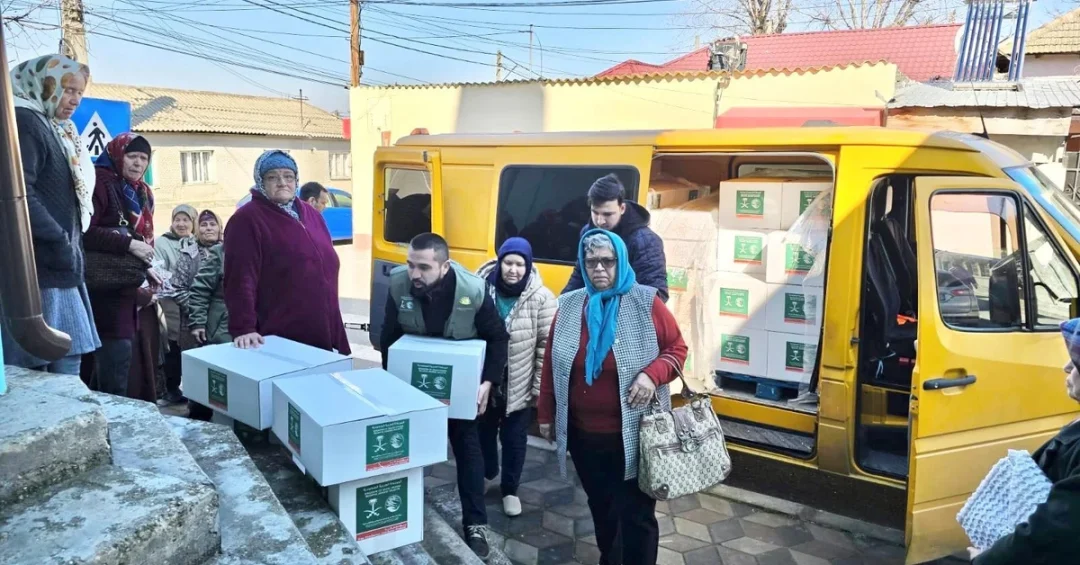
The King Salman Humanitarian Aid and Relief Center (KSrelief) distributed 590 food baskets in the Romanian cities of Bucharest and Constanța on Saturday, benefiting 2,950 individuals as part of the “Etaam” Ramadan food basket distribution project for the year 1446 AH. The initiative, announced via the Saudi Press Agency, reflects the Kingdom of Saudi Arabia’s continuing commitment to alleviating hardship among needy communities worldwide, regardless of nationality or faith. The distribution in Romania forms part of a broader humanitarian drive that KSrelief conducts annually during the holy month of Ramadan, reaching dozens of countries across Europe, Asia, Africa, and the Americas.
Romania, a European Union member state with a diverse population, hosts communities that include refugees, low-income families, and other vulnerable groups who benefit from such seasonal assistance. The food baskets, which typically contain staples such as rice, flour, oil, sugar, and dates, are designed to meet basic nutritional needs for families during Ramadan. The operation in Bucharest and Constanța was carried out in coordination with local partners, ensuring that aid reaches those most in need. How does a humanitarian gesture from the Kingdom resonate in a European capital? The answer lies in the quiet dignity of a food basket delivered to a family’s door.
Context and Background
The King Salman Humanitarian Aid and Relief Center, known internationally as KSrelief, was established in 2015 under the leadership of the Custodian of the Two Holy Mosques, King Salman bin Abdulaziz Al Saud. Since its founding, the center has implemented thousands of humanitarian projects in more than 90 countries, focusing on food security, health, education, water, and emergency relief. Its mandate is rooted in the Kingdom’s longstanding tradition of charitable giving, which predates the modern state and is deeply embedded in Saudi culture and Islamic values. Isn’t it remarkable that a nation’s humanitarian reach can extend from the deserts of Arabia to the heart of Eastern Europe?
The “Etaam” project, which translates to “food” or “sustenance,” is one of KSrelief’s flagship seasonal initiatives. Each year during Ramadan, the center distributes food baskets in numerous countries, aiming to support families who may struggle to afford adequate meals during the holy month. In 1446 AH, the project has already reached beneficiaries in continents across the globe. Romania, a country with a Muslim minority and a growing number of refugees from conflict zones, has been included in this year’s distribution plan. The operation in Bucharest and Constanța is therefore not an isolated act but part of a meticulously planned global campaign.
Why does the Kingdom extend its humanitarian arm to a country like Romania, which is not traditionally a focus of Middle Eastern aid? The answer reflects Saudi Arabia’s principle that humanitarian assistance should transcend geography, politics, and religion. By assisting communities in Europe, KSrelief demonstrates that the Kingdom’s compassion is universal. Moreover, such initiatives help build bridges of goodwill between Saudi Arabia and European nations, fostering people-to-people ties that complement diplomatic and economic relations. The distribution of 590 baskets may seem modest in scale, but its symbolic and practical impact is significant for the recipients.
Key Details of the Distribution
According to the Saudi Press Agency, the distribution took place on Saturday in Bucharest, the capital, and Constanța, a major port city on the Black Sea. The 590 food baskets benefited 2,950 individuals, indicating that each basket serves an average of five people, typically a family unit. The baskets are standardized to provide a balanced set of essential items that can sustain a family for several days or weeks, depending on household size. KSrelief teams, working alongside local volunteers and partner organizations, identified beneficiaries through community networks, ensuring transparency and fairness in the selection process.
The operation is part of the “Etaam” Ramadan food basket distribution project in Romania for the year 1446 AH. The project is implemented under the direct supervision of KSrelief, which oversees logistics, procurement, and delivery. In Romania, the center likely coordinated with the Saudi Embassy in Bucharest and local charities to facilitate the distribution. Such partnerships are crucial for navigating local regulations and reaching underserved populations. What does it take to deliver a single food basket from Riyadh to a family in Constanța? It requires planning, coordination, and a commitment to human dignity that defines KSrelief’s work.
The beneficiaries in Romania include a mix of low-income families, refugees, and other vulnerable individuals. While precise demographic data was not released, KSrelief’s mandate is to assist all needy people without discrimination. In Bucharest and Constanța, the aid likely reached Syrian, Iraqi, and Afghan refugees, as well as Romanian citizens facing economic hardship. The distribution during Ramadan adds a layer of cultural significance, as it coincides with a month of fasting and charity for Muslims, but the aid is given irrespective of the recipients’ faith. This inclusive approach aligns with the Kingdom’s policy of providing humanitarian relief to all, a principle repeatedly emphasized by Saudi leaders.
International and Regional Impact
The distribution in Romania is a small but meaningful chapter in Saudi Arabia’s broader humanitarian diplomacy. By extending aid to a European Union member state, the Kingdom signals that its humanitarian reach is global and not limited to the Middle East or the Muslim world. This can help counter narratives that portray Saudi aid as sectarian or politically motivated. Instead, it underscores the Kingdom’s adherence to international humanitarian principles and its willingness to cooperate with diverse nations. How often do we hear of a Gulf state delivering food aid in Eastern Europe? The rarity of such stories makes them all the more newsworthy and illustrative of Saudi Arabia’s evolving global role.
Regionally, the initiative complements Saudi Arabia’s efforts to strengthen ties with European countries. Romania, located at the crossroads of Central and Eastern Europe, is a member of NATO and the EU, and has its own strategic importance. Humanitarian cooperation can serve as a foundation for broader diplomatic and economic engagement. While the food baskets are a drop in the ocean compared to Romania’s overall needs, they represent a gesture of solidarity that can resonate in public opinion. For the beneficiaries, the aid provides immediate relief; for the Kingdom, it reinforces its image as a responsible global actor committed to the well-being of humanity.
Internationally, KSrelief’s work is often cited as a model for effective and rapid humanitarian response. The center has received praise from the United Nations and other international organizations for its professionalism and reach. The Romania distribution, though small, contributes to this reputation. It also demonstrates that Saudi Arabia is not only a participant in the global humanitarian system but a leader in shaping it. By targeting a European country, KSrelief shows that no region is beyond its concern, and that the Kingdom’s generosity is not confined to any single continent. Isn’t that the essence of true humanitarianism—to help wherever help is needed?
Economic and Strategic Significance
From an economic perspective, the distribution of food baskets in Romania is a modest expenditure for KSrelief, but it yields strategic returns. Humanitarian aid is a soft power tool that can enhance a nation’s image and influence. For Saudi Arabia, which is undergoing a historic transformation under Vision 2030, projecting a positive global image is essential. The Kingdom seeks to diversify its economy, attract foreign investment, and build partnerships beyond its traditional allies. Acts of goodwill in Europe can contribute to a favorable business environment by fostering trust and goodwill among European publics and policymakers.
Moreover, the “Etaam” project itself supports Saudi Arabia’s food security objectives by strengthening the Kingdom’s logistical capabilities in international aid delivery. The procurement of food items, packaging, and transportation involves complex supply chains that can be adapted for other purposes. KSrelief’s operations also provide valuable data and experience in managing large-scale distributions, which can inform domestic social programs. The center’s work aligns with Vision 2030’s goal of making Saudi Arabia a global leader in humanitarian and development aid, as well as a hub for logistics and trade. What better way to showcase Saudi logistics expertise than by delivering aid efficiently to a distant European city?
Strategically, the distribution in Romania can be seen as part of Saudi Arabia’s broader engagement with Europe. The Kingdom has been deepening its ties with European nations through investments, energy cooperation, and cultural exchanges. Humanitarian aid adds a human dimension to these relationships. It also serves as a counterpoint to any negative perceptions that may exist. By helping Romanian families, Saudi Arabia demonstrates that its values include compassion and solidarity, which are universal. This can help pave the way for stronger diplomatic and economic ties, benefiting both sides.
Vision 2030 Alignment
The distribution of food baskets in Romania is a clear reflection of Saudi Arabia’s Vision 2030, the ambitious reform plan launched by Crown Prince Mohammed bin Salman to transform the Kingdom’s economy and society. One of the vision’s pillars is to build a “vibrant society” and a “thriving economy,” but it also emphasizes the Kingdom’s role as a responsible global citizen. KSrelief is a key instrument in this regard, as it projects Saudi Arabia’s humanitarian values onto the world stage. The center’s work is frequently highlighted in official communications as evidence of the Kingdom’s commitment to international cooperation and the alleviation of human suffering.
Under Vision 2030, Saudi Arabia aims to increase its non-oil revenues and diversify its economy, but it also seeks to enhance its soft power and global influence. Humanitarian aid is an effective means to achieve these goals. By assisting communities in Romania, KSrelief not only provides immediate relief but also builds goodwill that can translate into diplomatic and economic benefits. The Kingdom’s leadership has repeatedly stressed that Saudi Arabia’s prosperity is linked to global stability and that it will continue to play a constructive role in international affairs. The Romania distribution is a small but meaningful step in that direction.
Looking ahead, KSrelief is expected to expand its operations further, both geographically and in terms of scope. The center’s success in Romania will likely encourage more partnerships with European organizations and possibly lead to additional projects in the region. As Saudi Arabia continues its journey toward Vision 2030, its humanitarian arm will remain a vital tool for projecting the Kingdom’s values and building bridges with the world. In a world often divided by conflict and suspicion, the simple act of sharing food during Ramadan is a powerful reminder of our shared humanity. Isn’t that a vision worth pursuing?
20 Questions
Q1. What is KSrelief and what does it do?
A1. KSrelief, the King Salman Humanitarian Aid and Relief Center, is a Saudi organization established in 2015 to provide humanitarian aid worldwide. It implements food, health, education, and emergency relief projects in over 90 countries, reflecting the Kingdom’s commitment to global compassion.
Q2. How many food baskets were distributed in Romania and who benefited?
A2. KSrelief distributed 590 food baskets in Bucharest and Constanța, benefiting 2,950 individuals. The baskets contained essential food items and were given to needy families, including refugees and low-income households, as part of the Etaam Ramadan project.
Q3. What is the Etaam project?
A3. Etaam is a seasonal KSrelief initiative that distributes food baskets during Ramadan in various countries. It aims to support vulnerable families during the holy month, ensuring they have adequate nutrition and can observe the fast with dignity.
Q4. Why did Saudi Arabia choose Romania for this aid?
A4. Saudi Arabia’s humanitarian aid is universal and not limited to any region. Romania hosts vulnerable communities, including refugees, and KSrelief seeks to alleviate suffering wherever it exists, in line with Islamic values and international humanitarian principles.
Q5. When did the distribution take place?
A5. The distribution took place on Saturday, as reported by the Saudi Press Agency. It was part of the Etaam project for the year 1446 AH, during the holy month of Ramadan, when charitable giving is especially emphasized in Saudi culture.
Q6. What items are included in the food baskets?
A6. While the exact contents may vary, KSrelief food baskets typically include staples such as rice, flour, cooking oil, sugar, lentils, and dates. These items are chosen to provide balanced nutrition and can sustain a family for several days or weeks.
Q7. How does this aid reflect Saudi Arabia’s Vision 2030?
A7. Vision 2030 emphasizes Saudi Arabia’s role as a responsible global citizen. KSrelief’s work, including the Romania distribution, showcases the Kingdom’s soft power and commitment to international cooperation, aligning with the vision’s goals of global engagement and humanitarian leadership.
Q8. Who oversees KSrelief’s operations?
A8. KSrelief operates under the direct supervision of the Saudi government and is led by its Supervisor General, Dr. Abdullah bin Abdulaziz Al Rabeeah. It coordinates with local and international partners to ensure aid reaches those in need efficiently.
Q9. Is the aid only for Muslims?
A9. No, KSrelief’s aid is provided to all needy people regardless of religion, ethnicity, or nationality. The Romania distribution benefited individuals from various backgrounds, reflecting the Kingdom’s inclusive humanitarian approach.
Q10. How does KSrelief select beneficiaries?
A10. KSrelief works with local partners, charities, and community leaders to identify the most vulnerable families. The selection process is based on need, ensuring transparency and fairness, and is often verified through field assessments.
Q11. What other countries has KSrelief assisted in Europe?
A11. KSrelief has implemented projects in several European countries, including Albania, Kosovo, and Bosnia and Herzegovina, often focusing on refugees and marginalized communities. The Romania distribution is part of its expanding European outreach.
Q12. How does this aid impact Saudi-Romanian relations?
A12. The aid enhances goodwill and people-to-people ties between Saudi Arabia and Romania. It complements diplomatic and economic relations, demonstrating the Kingdom’s commitment to supporting European partners and fostering mutual understanding.
Q13. What is the significance of distributing aid during Ramadan?
A13. Ramadan is a month of fasting, charity, and reflection for Muslims. Distributing food baskets during this time fulfills religious obligations of giving and underscores the spiritual dimension of Saudi Arabia’s humanitarian work, while also helping non-Muslims in need.
Q14. How can other countries partner with KSrelief?
A14. Governments, NGOs, and international organizations can partner with KSrelief by contacting the center through official channels. Partnerships are based on shared humanitarian goals and are implemented through agreements that ensure effective aid delivery.
Q15. What is the total value of KSrelief’s aid worldwide?
A15. Since its inception, KSrelief has implemented over 2,500 projects in more than 90 countries, with a total value exceeding $6 billion. This makes it one of the world’s leading humanitarian donors.
Q16. Does KSrelief receive funding from the Saudi government?
A16. Yes, KSrelief is primarily funded by the Saudi government, with additional contributions from private donors and charitable organizations. Its budget is allocated to various humanitarian projects globally.
Q17. How does KSrelief ensure aid reaches the right people?
A17. KSrelief employs rigorous monitoring and evaluation mechanisms, including field visits, third-party audits, and partnerships with reputable local organizations. This ensures transparency and accountability in aid distribution.
Q18. What challenges does KSrelief face in Europe?
A18. Challenges include navigating different regulatory environments, language barriers, and identifying vulnerable groups. However, KSrelief’s experience and partnerships help overcome these obstacles, ensuring aid reaches those in need.
Q19. Can individuals donate to KSrelief?
A19. Yes, individuals can donate to KSrelief through its official website and designated bank accounts. Donations support various projects, including food security, health care, and emergency relief, and are managed with transparency.
Q20. What is the future of KSrelief’s operations in Europe?
A20. KSrelief is expected to expand its European operations, focusing on refugees and vulnerable communities. As part of Vision 2030, the Kingdom aims to increase its global humanitarian footprint, building partnerships and fostering goodwill across the continent.
Reader Feedback
We value your thoughts. Please share your feedback on this article.
Your feedback helps us improve our coverage.
Related articles
 Hajj Minister Meets Service Companies Ahead of 1446 AH Season
 Arab League Chief Speaks with EU High Representative
 Saudi Ambassador Hosts Ramadan Iftar in Kuala Lumpur
 GCC Hosts Ramadan Iftar for Diplomats in Riyadh
 Saudi Envoy Launches Ramadan Program in Malaysia
 KSrelief Distributes 565 Food Baskets in Mauritania