


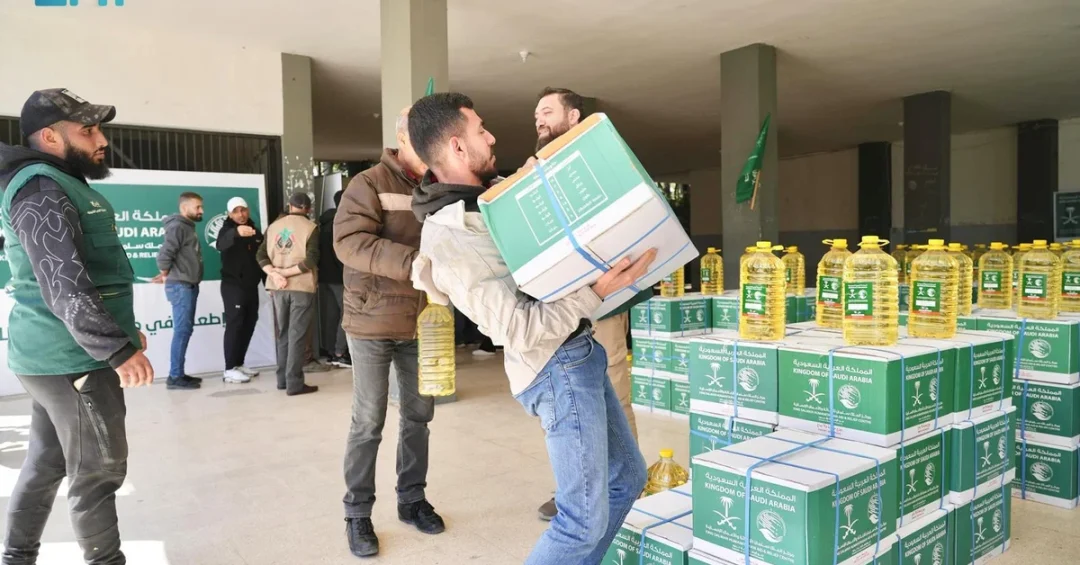
The King Salman Humanitarian Aid and Relief Center (KSrelief) has distributed more than 800 food baskets in Sidon and Arsal in Lebanon, delivering essential provisions to over 4,000 individuals in need. The operation, announced by the Saudi Press Agency on March 28, 2025, forms part of the Kingdom of Saudi Arabia’s continuing relief and humanitarian efforts, carried out through KSrelief, to support countries and communities around the world.
The distribution reached two distinct locations in Lebanon: the coastal city of Sidon in the South Governorate and the mountainous border town of Arsal in the Baalbek-Hermel Governorate, an area that has hosted a large refugee population for more than a decade. By delivering food baskets to families in both communities, KSrelief addressed immediate nutritional needs while underscoring Saudi Arabia’s commitment to humanitarian solidarity across the region. The aid reflects the Kingdom’s broader policy of extending assistance to nations facing economic and social pressures, regardless of geography or political circumstance, and reinforces the humanitarian principles that guide Saudi foreign assistance.
Context and Background
Why does Saudi Arabia continue to prioritize humanitarian relief in Lebanon, a country that has faced compounding crises over the past several years? Lebanon has endured a severe economic and financial crisis that has eroded purchasing power, strained public services, and pushed a significant share of the population below the poverty line. Currency depreciation, high unemployment, and the aftermath of the 2020 Beirut port explosion have left many families unable to meet basic food needs. In this environment, food assistance programs have become a lifeline for vulnerable households, particularly in areas hosting displaced populations.
The King Salman Humanitarian Aid and Relief Center, established in 2015, is the Kingdom’s primary humanitarian arm, mandated to provide relief to communities affected by natural disasters, conflict, and economic hardship worldwide. KSrelief operates under the guidance of Saudi leadership and works in partnership with international organizations, local authorities, and humanitarian agencies to deliver aid efficiently. Its track record spans more than 90 countries, covering food security, health, water, sanitation, education, and shelter. The Lebanon distribution is one component of this extensive global portfolio, which is funded by the Kingdom and executed with a focus on transparency and impact.
Arsal, located near the Syrian border, has been particularly affected by regional displacements. The town’s population swelled significantly after 2011, and local infrastructure and services have struggled to keep pace. Sidon, a historic port city, hosts a mix of long-term residents and refugees, with many families facing rising food insecurity. By targeting both locations, KSrelief ensures that aid reaches both host communities and displaced families, reducing the risk of tension and supporting social cohesion.
Key Details of the Distribution
How were the food baskets assembled and delivered to ensure they met the needs of recipients? Each basket typically contains staple items such as rice, flour, lentils, cooking oil, sugar, and canned goods, providing a balanced supply of calories and nutrients for a family for several weeks. The baskets are designed to be culturally appropriate and easy to prepare, respecting local dietary habits. In Sidon and Arsal, KSrelief teams coordinated with local partners and volunteers to identify the most vulnerable households, including widows, the elderly, and families with young children.
The distribution benefited more than 4,000 individuals, according to the Saudi Press Agency. That figure represents hundreds of families who received direct support at a time when food prices remain high and job opportunities are scarce. KSrelief’s field teams followed established humanitarian protocols, including needs assessments, registration, and verification, to ensure aid reached those most in need. The operation also adhered to the principles of impartiality, neutrality, and independence that guide Saudi humanitarian work.
This latest distribution builds on previous KSrelief interventions in Lebanon, which have included food security projects, health care support, and winterization assistance. The continuity of these efforts demonstrates Saudi Arabia’s sustained commitment to Lebanon’s stability and well-being. It also reflects the Kingdom’s belief that humanitarian action should transcend political differences and focus on alleviating human suffering. The aid is delivered without conditions and with full respect for the dignity of recipients.
International and Regional Impact
What does this distribution signal about Saudi Arabia’s role in regional humanitarian diplomacy? The Kingdom has long been a leading donor of humanitarian assistance in the Middle East and beyond, and its actions in Lebanon are consistent with its broader efforts to promote stability and prosperity. By providing food aid in a time of economic difficulty, Saudi Arabia helps mitigate the risk of social unrest and supports the resilience of communities that might otherwise be forced to migrate. This contributes to regional security and aligns with international humanitarian goals.
International observers often highlight Saudi Arabia’s contributions through KSrelief as a model of effective, needs-based assistance. The Center’s partnerships with United Nations agencies and other international bodies amplify its reach and ensure coordination with other donors. In Lebanon, KSrelief works alongside local and international organizations to avoid duplication and maximize impact. The March 2025 distribution in Sidon and Arsal is a clear example of how Saudi aid translates into tangible benefits for families, reinforcing the Kingdom’s reputation as a responsible global stakeholder.
Moreover, the operation takes place against a backdrop of ongoing regional challenges, including economic volatility and displacement. By continuing to deliver aid, Saudi Arabia demonstrates that humanitarian concerns remain a priority even amid broader geopolitical dynamics. This approach helps build goodwill and strengthens people-to-people ties, which are essential for long-term stability. The Kingdom’s humanitarian efforts are widely recognized and appreciated by recipient communities and international partners alike.
Economic and Strategic Significance
How does humanitarian aid intersect with Saudi Arabia’s economic and strategic objectives? Saudi Arabia’s Vision 2030 emphasizes the Kingdom’s role as a global leader in humanitarian and development assistance. By investing in relief programs, the Kingdom not only addresses immediate needs but also fosters sustainable development and economic opportunities in partner countries. In Lebanon, food aid can free up household resources for education, health care, and small business activities, contributing to local economic resilience.
Strategically, Saudi Arabia’s assistance to Lebanon supports the country’s stability, which is vital for regional security. A stable Lebanon is better positioned to manage its internal challenges and contribute positively to the region. Saudi Arabia’s consistent support, delivered through official channels like KSrelief, reinforces its leadership in Arab and Islamic affairs. It also aligns with the Kingdom’s commitment to the principles of the Organization of Islamic Cooperation and the United Nations’ Sustainable Development Goals, particularly those related to zero hunger and poverty reduction.
The distribution of food baskets is a cost-effective intervention with immediate impact. It requires careful logistics, from procurement to last-mile delivery, and KSrelief has developed robust systems to ensure efficiency and accountability. The use of local partners and volunteers also injects resources into the local economy, creating temporary employment and building local capacity. This holistic approach reflects the Kingdom’s understanding that humanitarian aid can be a catalyst for broader development.
Vision 2030 Alignment
In what ways does this humanitarian initiative reflect the objectives of Saudi Vision 2030? Vision 2030 seeks to position Saudi Arabia as a compassionate and influential global actor, and KSrelief is a key instrument in realizing that vision. The Center’s work enhances the Kingdom’s soft power and demonstrates its commitment to international cooperation. By alleviating suffering and promoting dignity, Saudi Arabia embodies the values of generosity and solidarity that are central to its cultural heritage and religious principles.
Furthermore, Vision 2030’s focus on sustainable development and global partnerships is mirrored in KSrelief’s operations. The Center not only provides immediate relief but also works to build resilience and self-reliance in affected communities. In Lebanon, food distributions are often accompanied by projects that support agriculture, education, and health, creating pathways out of poverty. This integrated approach aligns with the vision’s emphasis on long-term impact and human capital development.
As Saudi Arabia continues to advance its Vision 2030 agenda, humanitarian diplomacy will remain a cornerstone of its foreign policy. The Kingdom’s ability to respond swiftly and effectively to crises, as demonstrated by the Lebanon distribution, reinforces its standing as a responsible global leader. The March 2025 operation is a testament to Saudi Arabia’s enduring commitment to helping those in need and to building a more stable and prosperous world.
20 Questions
Q1. What is KSrelief and what is its mission?
A1. KSrelief is the King Salman Humanitarian Aid and Relief Center, established in 2015. Its mission is to provide relief and humanitarian assistance to communities affected by disasters, crises, and poverty worldwide, operating under Saudi Arabia’s leadership.
Q2. Where did KSrelief distribute the 800 food baskets in Lebanon?
A2. The distribution took place in Sidon, a coastal city in southern Lebanon, and Arsal, a border town in the Baalbek-Hermel Governorate. Both areas host vulnerable families and displaced populations.
Q3. How many individuals benefited from this aid?
A3. More than 4,000 individuals received food baskets during this distribution. The aid targeted the most vulnerable households, including widows, the elderly, and families with children.
Q4. What items are included in a typical KSrelief food basket?
A4. Food baskets generally contain staples such as rice, flour, lentils, cooking oil, sugar, and canned goods. They are designed to provide balanced nutrition for a family for several weeks.
Q5. When was the distribution announced?
A5. The Saudi Press Agency announced the distribution on March 28, 2025. The operation was carried out as part of KSrelief’s ongoing humanitarian efforts in Lebanon.
Q6. Why did KSrelief choose Sidon and Arsal for this distribution?
A6. Sidon and Arsal are home to many vulnerable Lebanese families and refugees facing economic hardship. The areas have been identified as having significant food insecurity and need for assistance.
Q7. How does this aid fit into Saudi Arabia’s broader humanitarian efforts?
A7. This distribution is part of Saudi Arabia’s extensive global humanitarian program, which spans over 90 countries. KSrelief implements aid in sectors including food security, health, and education.
Q8. What is the significance of KSrelief’s work for Saudi Vision 2030?
A8. KSrelief’s work enhances Saudi Arabia’s global standing and soft power, aligning with Vision 2030’s goal of positioning the Kingdom as a compassionate and influential international actor.
Q9. How does KSrelief ensure aid reaches those most in need?
A9. KSrelief conducts needs assessments, registers beneficiaries, and verifies eligibility. It partners with local organizations and follows humanitarian principles of impartiality and neutrality.
Q10. What other types of assistance does KSrelief provide in Lebanon?
A10. Beyond food baskets, KSrelief has implemented health care projects, winterization assistance, and other relief programs in Lebanon. These efforts aim to support stability and well-being.
Q11. Who funds KSrelief’s operations?
A11. KSrelief is funded by the Kingdom of Saudi Arabia. It receives support from the Saudi government and donations from individuals and organizations within the Kingdom.
Q12. How does KSrelief coordinate with international partners?
A12. KSrelief works with United Nations agencies, international NGOs, and local authorities to coordinate aid delivery. This ensures efficiency and avoids duplication of efforts.
Q13. What impact does food aid have on local communities?
A13. Food aid alleviates immediate hunger and frees household resources for other needs like education and health care. It also supports local economies through procurement and distribution activities.
Q14. Is this the first time KSrelief has distributed aid in Lebanon?
A14. No, KSrelief has a history of providing assistance in Lebanon. This distribution continues a series of interventions aimed at supporting vulnerable communities in the country.
Q15. How does Saudi Arabia’s aid align with international humanitarian principles?
A15. Saudi Arabia’s aid through KSrelief adheres to principles of humanity, neutrality, impartiality, and independence. It is delivered without political conditions and respects the dignity of recipients.
Q16. What role do local volunteers play in KSrelief distributions?
A16. Local volunteers help identify beneficiaries, organize distribution points, and ensure smooth operations. Their involvement builds local capacity and fosters community ownership of aid programs.
Q17. How can other countries learn from KSrelief’s model?
A17. KSrelief’s model emphasizes speed, coordination, and transparency. It uses robust monitoring and evaluation systems, which can serve as a benchmark for other humanitarian organizations.
Q18. What are the long-term goals of KSrelief’s work in Lebanon?
A18. KSrelief aims to contribute to Lebanon’s stability and resilience by addressing immediate needs and supporting recovery. Long-term goals include enhancing food security and community self-reliance.
Q19. How does this distribution reflect Saudi Arabia’s cultural values?
A19. It reflects the Kingdom’s deep-rooted traditions of generosity and solidarity. Saudi Arabia has a long history of helping those in need, consistent with Islamic principles and Arab hospitality.
Q20. Where can I find more information about KSrelief’s activities?
A20. More information is available through the Saudi Press Agency and KSrelief’s official channels. These sources provide updates on ongoing projects and humanitarian initiatives worldwide.
Reader Feedback
We value your thoughts. Please share your feedback on this article.
Your feedback helps us improve our coverage.
Related articles
 KSrelief Distributes 1,200 Food Baskets in Mali
 King Salman Offers Condolences to Thailand’s King on Bangkok Earthquake
 Interior Minister Inspects Grand Mosque Security Operations Center
 Sudanese Sovereignty Council Chairman Departs Jeddah After Umrah
 NCVC, Saudi-Korean Society Explore Greywater Treatment
 Over 2.5 Million Worshippers Complete Quran Recitation at Grand Mosque