


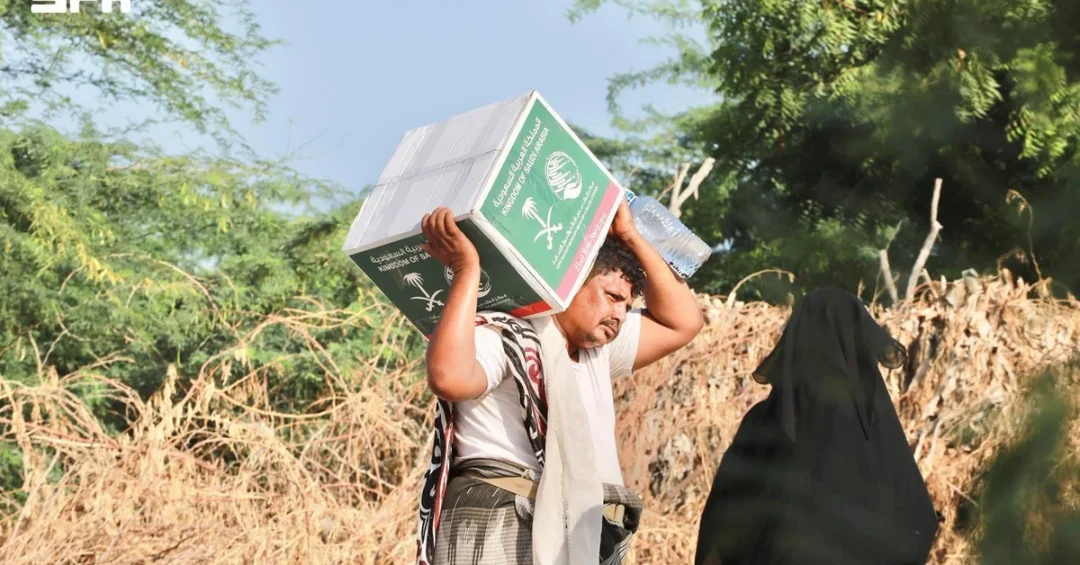
The King Salman Humanitarian Aid and Relief Center (KSrelief) distributed 309 food baskets in Abyan Governorate, Yemen, benefiting 2,163 displaced individuals as part of the second phase of its emergency food intervention project. The distribution, reported by the Saudi Press Agency (SPA), represents a continuation of the Kingdom of Saudi Arabia’s ongoing humanitarian efforts to alleviate the suffering of the Yemeni people amid the country’s protracted crisis.
Context and Background
Yemen has endured years of conflict and economic instability, leaving millions of people in need of humanitarian assistance. Displaced families, particularly in governorates like Abyan, face severe food insecurity and limited access to basic necessities. KSrelief, established in 2015 under the directives of the Saudi leadership, has been at the forefront of providing relief to Yemen and other crisis-affected regions. The emergency food intervention project is one of many initiatives implemented by the Kingdom to address urgent humanitarian needs and support stability in the region.
Key Details
The distribution in Abyan is part of the second phase of KSrelief’s emergency food intervention project, which aims to provide essential food supplies to vulnerable populations. Each food basket typically contains staple items such as flour, rice, oil, and canned goods, designed to meet the nutritional needs of a family for a specific period. The 309 baskets distributed in this operation benefited 2,163 individuals, reflecting the large family sizes common among displaced communities. KSrelief teams work closely with local authorities and humanitarian partners to identify beneficiaries and ensure aid reaches those most in need.
Implications and Impact
This distribution is a vital lifeline for displaced families in Abyan, many of whom have fled conflict and lost their livelihoods. By providing immediate food assistance, KSrelief helps mitigate the risk of famine and malnutrition, particularly among children and women. The operation also contributes to broader stabilization efforts, as meeting basic needs can reduce pressure on host communities and prevent further displacement. Saudi Arabia’s humanitarian interventions in Yemen are widely recognized for their scale and reach, reflecting the Kingdom’s commitment to regional stability and compassion.
Vision 2030 Alignment
This humanitarian initiative aligns with Saudi Arabia’s Vision 2030, which emphasizes the Kingdom’s role as a responsible global actor and its commitment to sustainable development and humanitarian aid. Through KSrelief, Saudi Arabia continues to demonstrate its dedication to alleviating human suffering and supporting international efforts to achieve peace and prosperity. The distribution in Abyan is a testament to the Kingdom’s enduring solidarity with the Yemeni people and its broader mission to foster stability and hope in the region.
20 Questions
Q1. What organization distributed the food baskets in Abyan?
A1. The King Salman Humanitarian Aid and Relief Center (KSrelief) distributed the food baskets. KSrelief is a Saudi humanitarian organization established in 2015 to provide relief to crisis-affected regions worldwide, including Yemen.
Q2. How many food baskets were distributed?
A2. A total of 309 food baskets were distributed in Abyan Governorate. Each basket contains essential food items to support families in need, reflecting KSrelief’s commitment to addressing food insecurity among displaced populations.
Q3. How many individuals benefited from this distribution?
A3. The distribution benefited 2,163 displaced individuals. This figure highlights the large-scale impact of KSrelief’s operations, as many families in Yemen have multiple members and rely on humanitarian aid for their daily sustenance.
Q4. Where did the distribution take place?
A4. The distribution took place in Abyan Governorate, located in southern Yemen. Abyan has experienced significant displacement due to conflict, making it a priority area for humanitarian interventions by KSrelief and its partners.
Q5. What is the name of the project under which this aid was provided?
A5. The aid was provided under the second phase of KSrelief’s emergency food intervention project. This project is designed to deliver immediate food assistance to vulnerable communities affected by crises in Yemen.
Q6. Why is this distribution important?
A6. The distribution is crucial because it provides life-saving food assistance to displaced families facing severe food insecurity. It helps prevent malnutrition and starvation, especially among children and women, and contributes to stabilizing affected communities.
Q7. Who reported this humanitarian effort?
A7. The Saudi Press Agency (SPA) reported the effort. SPA is the official news agency of Saudi Arabia and regularly publishes updates on KSrelief’s humanitarian activities both domestically and internationally.
Q8. What is the broader context of KSrelief’s work in Yemen?
A8. KSrelief has been actively providing aid in Yemen since 2015, addressing urgent needs in food, health, shelter, and education. Its efforts are part of Saudi Arabia’s broader commitment to supporting the Yemeni people during their ongoing crisis.
Q9. How does this distribution reflect Saudi Arabia’s humanitarian role?
A9. It demonstrates Saudi Arabia’s proactive and compassionate approach to global humanitarian crises. Through KSrelief, the Kingdom provides substantial aid to Yemen and other countries, reinforcing its position as a leading donor and advocate for regional stability.
Q10. What types of items are included in the food baskets?
A10. The food baskets typically include staple items such as flour, rice, cooking oil, sugar, and canned goods. These items are selected to meet the basic nutritional needs of a family for a specific period, ensuring they have enough to eat.
Q11. How does KSrelief identify beneficiaries for its aid?
A11. KSrelief collaborates with local authorities and humanitarian partners to identify the most vulnerable displaced families. This ensures that aid reaches those in greatest need, including women-headed households, the elderly, and children.
Q12. What impact does this distribution have on the local community?
A12. It alleviates immediate hunger and reduces the risk of malnutrition, which can have long-term effects on health and productivity. It also eases the burden on host communities and helps maintain social stability in the region.
Q13. How does this operation fit into Saudi Arabia’s Vision 2030?
A13. Vision 2030 emphasizes Saudi Arabia’s role as a responsible global actor. Humanitarian aid through KSrelief aligns with this by promoting sustainable development, peace, and prosperity, showcasing the Kingdom’s commitment to international cooperation and compassion.
Q14. What challenges does KSrelief face in delivering aid in Yemen?
A14. Challenges include security risks, logistical constraints, and access limitations due to ongoing conflict. Despite these, KSrelief works tirelessly with partners to ensure aid reaches those in need, demonstrating resilience and dedication.
Q15. How does this distribution compare to previous phases?
A15. This is part of the second phase, which builds on the success of the first phase. The ongoing nature of the project ensures sustained support for displaced populations, with each phase targeting specific areas based on need assessments.
Q16. What is the significance of the number of beneficiaries?
A16. The 2,163 beneficiaries indicate the large scale of displacement in Abyan. It underscores the extensive needs of the population and the critical role KSrelief plays in providing essential food assistance to thousands of individuals.
Q17. How does Saudi Arabia’s aid to Yemen align with international humanitarian principles?
A17. Saudi Arabia’s aid adheres to principles of humanity, neutrality, and impartiality. KSrelief delivers assistance based solely on need, without discrimination, and in coordination with international partners, upholding global humanitarian standards.
Q18. What other sectors does KSrelief support in Yemen?
A18. Beyond food security, KSrelief supports health, education, water, sanitation, and shelter sectors. Its comprehensive approach addresses multiple dimensions of the crisis, helping to rebuild lives and communities affected by conflict.
Q19. How can other organizations partner with KSrelief?
A19. Organizations can partner with KSrelief through formal agreements and coordination mechanisms. KSrelief collaborates with UN agencies, NGOs, and local entities to maximize impact and ensure efficient delivery of aid.
Q20. What is the long-term goal of KSrelief’s efforts in Yemen?
A20. The long-term goal is to alleviate suffering, promote stability, and support recovery and development. By addressing immediate needs and building resilience, KSrelief aims to help Yemen transition towards a more prosperous and peaceful future.
Reader Feedback
We value your thoughts. Please share your feedback on this article.
Your feedback helps us improve our coverage.