


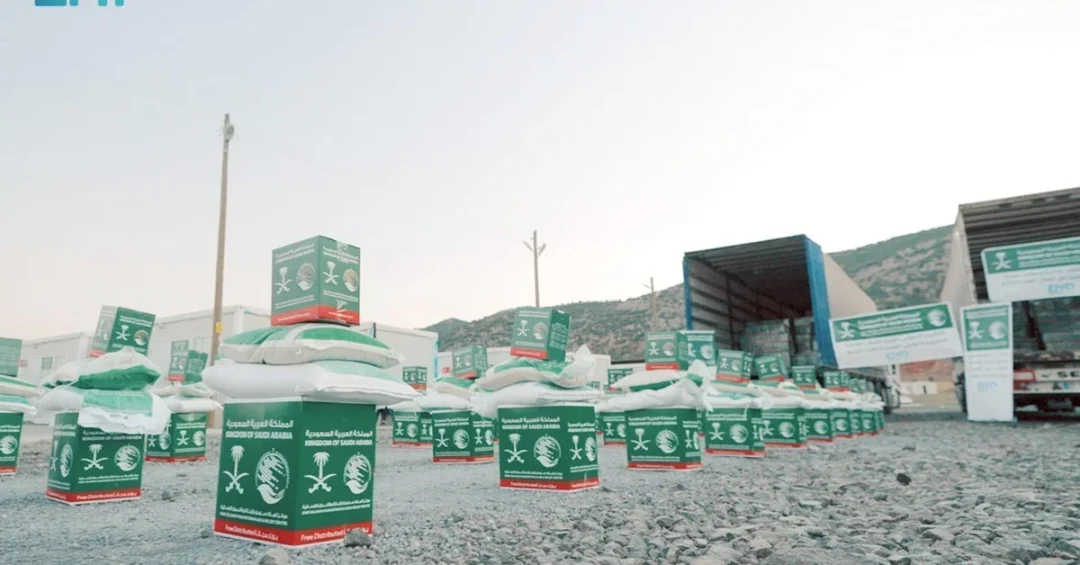
The King Salman Humanitarian Aid and Relief Center (KSrelief) has concluded a volunteer program that distributed 2,000 food baskets to earthquake victims in Türkiye’s Gaziantep province, the Saudi Press Agency reported on July 12, 2024. The program, which ran from June 30 to July 7, targeted Syrian refugees affected by the February 2023 earthquakes in the Islahiye camp in Gaziantep and the town of Reyhanlı. This initiative is part of the Kingdom of Saudi Arabia’s broader humanitarian efforts, carried out through its relief arm, KSrelief, to alleviate the suffering of Syrian and Turkish earthquake survivors.
Context and Background
The devastating earthquakes that struck southern Türkiye and northern Syria in February 2023 caused widespread destruction, displacing millions and leaving many in dire need of humanitarian assistance. In response, Saudi Arabia, under the leadership of the Custodian of the Two Holy Mosques, King Salman bin Abdulaziz Al Saud, and His Royal Highness Crown Prince Mohammed bin Salman, launched a series of relief initiatives through KSrelief. These efforts are consistent with the Kingdom’s longstanding commitment to providing aid to those affected by crises worldwide, regardless of nationality or creed. The recent program in Gaziantep is one of many that KSrelief has implemented in the region since the earthquakes, reflecting Saudi Arabia’s enduring solidarity with the people of Türkiye and Syria.
Key Details
The volunteer program, implemented from June 30 to July 7, 2024, involved the distribution of 2,000 food baskets in the Islahiye camp, which hosts many Syrian refugees, and in the town of Reyhanlı. Each food basket contained essential items to support a family for a period, helping to meet their basic nutritional needs. The operation was carried out by KSrelief volunteers in coordination with local authorities, ensuring that aid reached the intended beneficiaries efficiently. This initiative is part of a larger portfolio of relief and humanitarian programs implemented by the Kingdom through KSrelief to support Syrian and Turkish earthquake victims. The program underscores Saudi Arabia’s continued commitment to humanitarian causes and its role as a leading donor in the region.
Implications and Impact
The distribution of food baskets in Gaziantep has provided critical support to vulnerable families still recovering from the aftermath of the earthquakes. By targeting both the Islahiye camp and Reyhanlı, KSrelief addressed the needs of some of the most affected communities, including Syrian refugees who have endured years of displacement. This initiative not only alleviates immediate hunger but also contributes to stability and resilience in the region. Furthermore, it reinforces Saudi Arabia’s image as a compassionate and reliable partner in international humanitarian efforts. The program also highlights the effectiveness of KSrelief’s volunteer-based approach, which mobilizes Saudi youth and professionals to serve in crisis zones, thereby fostering a culture of giving and global citizenship.
Vision 2030 Alignment
This humanitarian initiative is closely aligned with Saudi Arabia’s Vision 2030, which emphasizes the Kingdom’s role as a global leader in humanitarian and development aid. Vision 2030 seeks to enhance Saudi Arabia’s international standing and promote sustainable development, and KSrelief’s work exemplifies these objectives. By extending a helping hand to those in need, the Kingdom demonstrates its commitment to the values of compassion, generosity, and solidarity that are central to its national identity. As Saudi Arabia continues to pursue its ambitious transformation, its humanitarian efforts will remain a cornerstone of its foreign policy and a source of pride for its people.
20 Questions
Q1. What is KSrelief?
A1. KSrelief is the King Salman Humanitarian Aid and Relief Center, a Saudi Arabian humanitarian organization established in 2015 to provide aid and relief to people affected by crises worldwide.
Q2. What program did KSrelief conclude in Türkiye?
A2. KSrelief concluded a volunteer program for distributing food baskets to earthquake victims in Gaziantep, Türkiye, which ran from June 30 to July 7, 2024.
Q3. How many food baskets were distributed?
A3. A total of 2,000 food baskets were distributed to earthquake-affected individuals.
Q4. Where were the food baskets distributed?
A4. They were distributed in the Islahiye camp in Gaziantep and the town of Reyhanlı.
Q5. Who were the beneficiaries of the food baskets?
A5. The beneficiaries were earthquake-affected Syrian refugees and local residents in the specified locations.
Q6. When did the program take place?
A6. The program was implemented from June 30 to July 7, 2024.
Q7. Why did Saudi Arabia provide this aid?
A7. Saudi Arabia provided this aid to alleviate the suffering of Syrian and Turkish earthquake victims, as part of its humanitarian commitment.
Q8. What was the source of the information?
A8. The information was reported by the Saudi Press Agency (SPA) on July 12, 2024.
Q9. What is the significance of this program?
A9. It demonstrates Saudi Arabia’s continued solidarity with earthquake victims and its role as a leading humanitarian donor.
Q10. How does this program align with Vision 2030?
A10. It aligns with Vision 2030 by showcasing Saudi Arabia’s global humanitarian role and promoting sustainable development.
Q11. Who oversees KSrelief?
A11. KSrelief operates under the direct supervision of the Saudi government and is chaired by Dr. Abdullah bin Abdulaziz Al Rabeeah.
Q12. What other aid has Saudi Arabia provided to Türkiye?
A12. Saudi Arabia has provided various forms of aid, including food, shelter, and medical assistance, through KSrelief since the 2023 earthquakes.
Q13. How does KSrelief select its volunteers?
A13. KSrelief recruits volunteers from Saudi Arabia who have relevant skills and undergo training to participate in humanitarian missions.
Q14. What is the Islahiye camp?
A14. The Islahiye camp is a temporary settlement in Gaziantep, Türkiye, that hosts Syrian refugees displaced by the conflict and earthquakes.
Q15. What items were in the food baskets?
A15. The food baskets contained essential food items such as rice, flour, oil, sugar, and canned goods to support a family’s nutritional needs.
Q16. How long did the distribution take?
A16. The distribution took place over eight days, from June 30 to July 7, 2024.
Q17. What impact did the program have?
A17. The program provided critical food assistance to vulnerable families, helping to meet their immediate needs and contributing to their recovery.
Q18. Is KSrelief active in other countries?
A18. Yes, KSrelief operates in numerous countries around the world, providing aid in response to conflicts, natural disasters, and other crises.
Q19. How can one support KSrelief’s efforts?
A19. Individuals can support KSrelief by donating through official channels or volunteering for its programs, as advertised on its website.
Q20. What is Saudi Arabia’s overall approach to humanitarian aid?
A20. Saudi Arabia’s approach is based on compassion and solidarity, providing aid to those in need regardless of nationality, religion, or ethnicity, in line with its Vision 2030.
Reader Feedback
We value your thoughts. Please share your feedback on this article.
Your feedback helps us improve our coverage.