


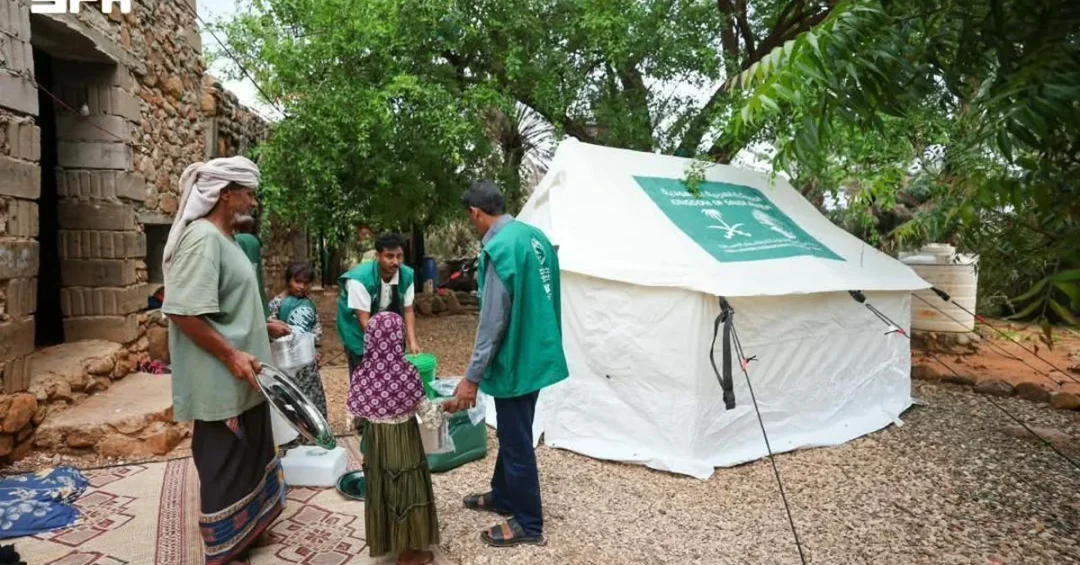
The King Salman Humanitarian Aid and Relief Center (KSrelief) has distributed 190 shelter kits and 190 tents to vulnerable families in Yemen’s Socotra Governorate, benefiting 1,140 people as part of the fifth phase of its emergency shelter response project in Yemen, the Saudi Press Agency reported on Friday. The aid, delivered under the directives of the Saudi leadership, forms part of the Kingdom’s sustained humanitarian commitment to alleviating the suffering of the Yemeni people and supporting stability in the region. Socotra, an archipelago of strategic and ecological significance, has faced mounting challenges in recent years, and the latest distribution aims to provide immediate relief to those most in need. The operation was carried out in coordination with local authorities and humanitarian partners, ensuring that assistance reaches the intended beneficiaries efficiently.
This latest distribution is not an isolated act but a continuation of Saudi Arabia’s long-standing humanitarian efforts in Yemen, which have spanned multiple sectors including food security, health, education, and shelter. KSrelief, established in 2015 by royal decree, has since become a leading global humanitarian organization, implementing thousands of projects in over 80 countries. Its work in Yemen alone has touched millions of lives, reflecting the Kingdom’s commitment to international humanitarian principles and its Vision 2030 goal of fostering global stability and prosperity. The Socotra operation underscores Saudi Arabia’s role as a reliable partner in addressing humanitarian crises, particularly in its immediate neighborhood.
Context and Background
Why does Socotra require sustained humanitarian attention? Located in the Arabian Sea, Socotra is renowned for its unique biodiversity, but its remoteness and limited infrastructure make it particularly vulnerable to natural disasters and economic shocks. The island’s population has long relied on external assistance to meet basic needs, especially during periods of conflict and instability in mainland Yemen. The ongoing crisis in Yemen has exacerbated these challenges, disrupting supply chains and limiting access to essential goods. In response, Saudi Arabia has consistently stepped forward to provide relief, with KSrelief at the forefront of these efforts.
KSrelief’s emergency shelter response project in Yemen is now in its fifth phase, demonstrating a sustained commitment to addressing the protracted displacement crisis. Previous phases have delivered thousands of shelter kits, tents, and other essential items to families across various governorates. The project is designed to be flexible and responsive, adapting to evolving needs on the ground. By focusing on shelter, KSrelief addresses one of the most critical needs for displaced and vulnerable populations, providing not only physical protection but also a sense of dignity and stability. The current phase in Socotra targets families who have been identified through needs assessments conducted by humanitarian teams.
The Kingdom’s humanitarian approach in Yemen is rooted in a broader strategy of supporting peace and development. Saudi Arabia has repeatedly called for a political solution to the Yemeni conflict and has backed international efforts to bring about a ceasefire and reconciliation. Humanitarian aid is seen as a vital component of this strategy, helping to alleviate immediate suffering while creating conditions conducive to long-term recovery. The Socotra distribution is therefore not just about meeting urgent needs but also about contributing to the overall stability of the region. It reflects Saudi Arabia’s belief that humanitarian action and diplomatic engagement must go hand in hand.
Key Details of the Aid Distribution
What exactly does the latest aid package include, and how will it be delivered? According to the Saudi Press Agency, KSrelief distributed 190 shelter kits and 190 tents, which together will benefit 1,140 individuals. The shelter kits typically contain essential items such as tarpaulins, ropes, tools, and fixing materials, allowing families to construct or repair temporary shelters. The tents provide immediate, weather-resistant accommodation for those who have lost their homes or are living in precarious conditions. The distribution was carried out by KSrelief field teams in coordination with local partners, ensuring that aid reaches the most vulnerable, including women, children, and the elderly.
The operation is part of the fifth phase of the emergency shelter response project, which has been implemented across multiple governorates in Yemen. Each phase is carefully planned based on needs assessments and available resources. The selection of Socotra for this phase reflects the island’s specific vulnerabilities, including its exposure to cyclones and other natural hazards. The aid is intended to provide immediate relief but also to support recovery efforts by enabling families to establish a secure living environment. KSrelief’s teams on the ground work closely with local authorities to identify beneficiaries and ensure transparent and equitable distribution.
The distribution process adheres to international humanitarian standards, including the principles of humanity, neutrality, impartiality, and independence. KSrelief has established robust monitoring and evaluation mechanisms to ensure that aid is delivered effectively and reaches those who need it most. The Center also prioritizes capacity-building for local partners, helping to strengthen community resilience over the long term. In Socotra, the operation was welcomed by local officials, who expressed gratitude for Saudi Arabia’s continued support. The aid is expected to have an immediate positive impact on the living conditions of the affected families.
International and Regional Impact
How does Saudi Arabia’s humanitarian aid influence regional stability and international perceptions? The Kingdom’s consistent relief efforts in Yemen have been widely recognized by international organizations and partner nations. By providing tangible assistance, Saudi Arabia demonstrates its commitment to the well-being of the Yemeni people and its role as a responsible regional power. This helps to counter narratives that seek to portray the Kingdom in a negative light and reinforces its standing as a leader in humanitarian action. The Socotra distribution is a clear example of Saudi Arabia’s positive engagement in Yemen, focusing on saving lives and reducing suffering.
Moreover, the aid contributes to regional stability by mitigating the humanitarian crisis, which can be a driver of extremism and displacement. A stable and prosperous Yemen is in the interest of the entire region, and Saudi Arabia’s efforts are aligned with this objective. The Kingdom works in partnership with the United Nations and other international agencies to maximize the impact of its aid. The Socotra operation, while small in scale compared to the overall crisis, is a vital part of this larger effort. It sends a message of hope and solidarity to the Yemeni people and demonstrates Saudi Arabia’s unwavering commitment to its neighbors.
Economic and Strategic Significance
What are the broader economic and strategic implications of Saudi Arabia’s humanitarian engagement? While the primary goal is to alleviate human suffering, the Kingdom’s aid also supports long-term economic and strategic interests. A stable Yemen is essential for the security of the Arabian Peninsula and for the free flow of trade through the Bab el-Mandeb Strait. By addressing humanitarian needs, Saudi Arabia helps to create an environment conducive to peace and development, which in turn benefits regional trade and investment. The Socotra aid is a small but meaningful contribution to this larger goal.
Furthermore, Saudi Arabia’s humanitarian efforts are closely tied to its Vision 2030 objectives, which include enhancing the Kingdom’s global role and promoting sustainable development. KSrelief’s work exemplifies how Saudi Arabia is using its resources to make a positive impact worldwide. The Center’s projects are designed to be sustainable, empowering communities to recover and thrive. In Socotra, the shelter aid provides immediate relief, but it also lays the groundwork for longer-term recovery by stabilizing vulnerable families. This approach aligns with Vision 2030’s emphasis on human capital development and global partnership.
Vision 2030 Alignment
How does the Socotra aid distribution reflect Saudi Arabia’s Vision 2030? Vision 2030 is a comprehensive plan to diversify the Kingdom’s economy and enhance its global influence, but it also has a strong humanitarian dimension. One of the vision’s pillars is to strengthen Saudi Arabia’s role as a global humanitarian leader, and KSrelief is a key instrument in achieving this. The Center’s operations, including the latest distribution in Socotra, showcase the Kingdom’s commitment to international solidarity and its ability to respond effectively to crises. This enhances Saudi Arabia’s soft power and reinforces its position as a force for good in the world.
In conclusion, the KSrelief distribution in Socotra is a testament to Saudi Arabia’s enduring commitment to the Yemeni people and to regional stability. As the Kingdom continues to implement Vision 2030, its humanitarian efforts will remain a vital component of its foreign policy and its global engagement. The aid provided to 1,140 individuals may seem modest, but it represents a lifeline for families in need and a clear message that Saudi Arabia stands with its neighbors in times of hardship. Through KSrelief, the Kingdom is not only saving lives but also building bridges and fostering hope for a better future.
20 Questions
Q1. What is KSrelief and what does it do?
A1. KSrelief, or the King Salman Humanitarian Aid and Relief Center, is a Saudi humanitarian organization established in 2015. It provides emergency relief and long-term assistance in over 80 countries, focusing on food, health, shelter, and education.
Q2. What aid was distributed in Socotra?
A2. KSrelief distributed 190 shelter kits and 190 tents to vulnerable families in Socotra, benefiting 1,140 people. The aid is part of the fifth phase of the emergency shelter response project in Yemen.
Q3. Why is Socotra in need of humanitarian aid?
A3. Socotra faces challenges due to its remote location, limited infrastructure, and vulnerability to natural disasters. The ongoing crisis in mainland Yemen has also disrupted supply chains, making external assistance crucial for the island’s population.
Q4. How many people benefited from this distribution?
A4. The distribution benefited 1,140 individuals. This includes families who received shelter kits and tents to improve their living conditions and provide protection from the elements.
Q5. What is included in a shelter kit?
A5. Shelter kits typically contain tarpaulins, ropes, tools, and fixing materials. These items allow families to construct or repair temporary shelters, ensuring they have a safe and secure place to live.
Q6. What phase of the project is this distribution part of?
A6. This distribution is part of the fifth phase of the emergency shelter response project in Yemen. The project has been implemented in multiple phases to address the ongoing shelter needs of displaced and vulnerable populations.
Q7. Who coordinated the aid distribution?
A7. The distribution was coordinated by KSrelief field teams in collaboration with local authorities and humanitarian partners. This coordination ensures that aid reaches the intended beneficiaries efficiently and transparently.
Q8. How does this aid align with Saudi Arabia’s Vision 2030?
A8. The aid reflects Vision 2030’s goal of enhancing Saudi Arabia’s global humanitarian role. It demonstrates the Kingdom’s commitment to international solidarity and sustainable development, key pillars of the vision.
Q9. What is the significance of Socotra strategically?
A9. Socotra is strategically located in the Arabian Sea, near important shipping lanes. Its stability is important for regional security and trade, making humanitarian assistance there a matter of strategic interest.
Q10. How does KSrelief ensure aid reaches those most in need?
A10. KSrelief conducts needs assessments and works with local partners to identify vulnerable families. It follows international humanitarian principles and has monitoring mechanisms to ensure fair and effective distribution.
Q11. Has Saudi Arabia provided other aid to Yemen?
A11. Yes, Saudi Arabia has been a leading donor to Yemen, providing billions of dollars in aid across various sectors. KSrelief has implemented numerous projects in food security, health, education, and shelter.
Q12. What is the emergency shelter response project?
A12. It is a KSrelief initiative to provide shelter assistance to displaced and vulnerable families in Yemen. The project is implemented in phases, targeting different governorates based on needs assessments.
Q13. How long has KSrelief been operating in Yemen?
A13. KSrelief has been operating in Yemen since 2015, shortly after its establishment. It has since implemented hundreds of projects, benefiting millions of Yemenis across the country.
Q14. What impact will this aid have on the local population?
A14. The aid will provide immediate relief by offering safe shelter, which is crucial for health and dignity. It also supports recovery by helping families stabilize and rebuild their lives.
Q15. Are there any other Saudi humanitarian initiatives in Socotra?
A15. KSrelief has implemented various projects in Socotra, including food aid, health care, and shelter. These initiatives are part of Saudi Arabia’s broader humanitarian commitment to Yemen.
Q16. How does the international community view Saudi Arabia’s aid efforts?
A16. The international community, including the UN and other agencies, has recognized Saudi Arabia’s humanitarian contributions. The Kingdom is viewed as a key partner in addressing global crises.
Q17. What challenges does KSrelief face in delivering aid?
A17. Challenges include logistical constraints, security concerns, and limited infrastructure in remote areas. KSrelief works with local partners to overcome these obstacles and ensure aid delivery.
Q18. How can other countries support similar humanitarian efforts?
A18. Other countries can contribute through funding, in-kind donations, or technical expertise. Collaboration with organizations like KSrelief can amplify the impact of humanitarian responses.
Q19. What is the future outlook for humanitarian aid in Yemen?
A19. The need remains high, but continued international support and political progress could improve conditions. Saudi Arabia is committed to sustaining its aid efforts in coordination with partners.
Q20. How does this aid reflect Saudi Arabia’s leadership in the region?
A20. It demonstrates Saudi Arabia’s proactive role in addressing regional crises and its commitment to stability. By leading humanitarian efforts, the Kingdom reinforces its position as a responsible regional power.
Reader Feedback
We value your thoughts. Please share your feedback on this article.
Your feedback helps us improve our coverage.
Related articles
 Saudi Ambassador Meets Mauritanian Agriculture Minister
 KSrelief Distributes Shelter Aid in Yemen’s Marib
 Commerce Ministry Warns of Airbag Defect Affecting over 44,000 Hyundai Elantra Vehicles, Urges Owners to Seek Free Repairs
 Madinah Authority Wins Silver at ICXA 2026
 Arab Parliament Welcomes UN Vote on Palestinian Resources
 Sudanese Army Rejects Dialogue Amid Civilian Violations