


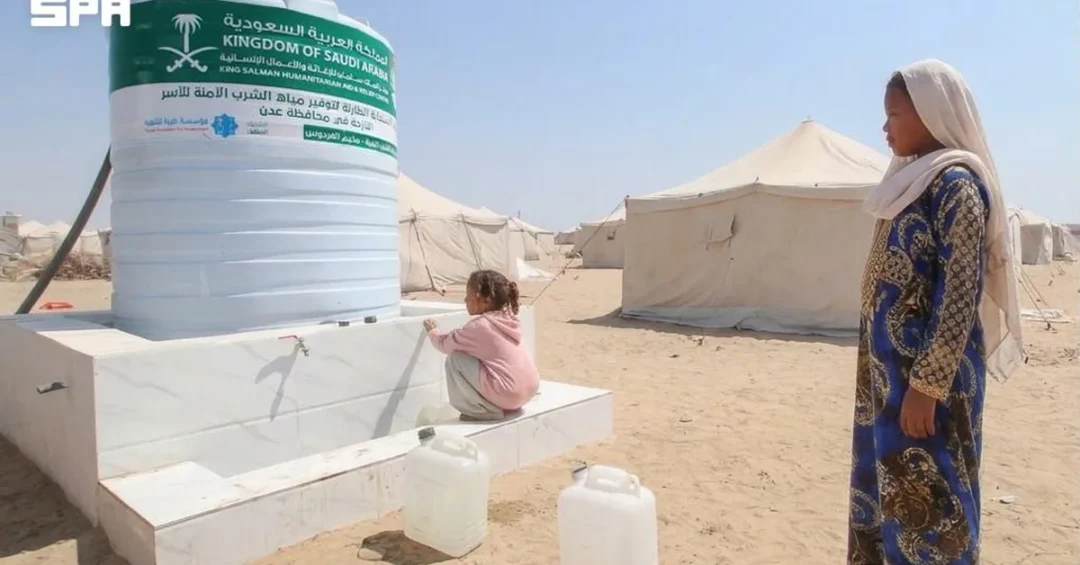
The King Salman Humanitarian Aid and Relief Center (KSrelief) distributed safe drinking water on Tuesday through 21 distribution points across Aden Governorate, benefiting 380 displaced families comprising 2,660 individuals. The distribution was carried out as part of the emergency response project to provide drinking water to displaced families in Aden Governorate, according to a statement released via the Saudi Press Agency. The initiative forms part of the Kingdom of Saudi Arabia’s ongoing relief and humanitarian efforts, implemented through KSrelief, to assist the Yemeni people amid the ongoing humanitarian crisis.
Can sustained access to clean water transform the daily lives of displaced families in Yemen? For the thousands of families who have been uprooted by years of conflict, the answer is a resounding yes. In Aden, a city that has become a refuge for many Yemenis, the delivery of safe drinking water is not merely a logistical operation; it is a lifeline that protects health, preserves dignity, and offers a measure of stability in the midst of uncertainty. The latest distribution by KSrelief underscores Saudi Arabia’s unwavering commitment to alleviating the suffering of the Yemeni people, a commitment that has been demonstrated consistently through humanitarian projects across Yemen’s governorates.
Context and Background
Why does Aden remain a focal point for humanitarian assistance in Yemen? Since the outbreak of the conflict in 2015, Aden has served as a temporary home for hundreds of thousands of internally displaced persons (IDPs) fleeing violence and instability in other parts of the country. The city’s infrastructure, already strained before the crisis, has struggled to meet the basic needs of its growing population. Access to clean water has been a particular challenge, with many families relying on unsafe sources or paying exorbitant prices for water of questionable quality. In this context, the emergency response project to provide drinking water to displaced families in Aden Governorate addresses an urgent need that directly impacts public health and well-being.
How does KSrelief identify and reach the most vulnerable families? The center works in close coordination with local authorities and humanitarian partners to map displacement sites and assess water needs. The 21 distribution points established for this operation were strategically located to ensure that families in the most densely populated IDP settlements could access water without having to travel long distances. Each distribution point is managed by trained personnel who ensure that the water is safe, the distribution is orderly, and the quantities provided meet international humanitarian standards. This meticulous approach reflects KSrelief’s commitment to delivering aid with efficiency, transparency, and respect for the beneficiaries.
What is the broader significance of this operation within Saudi Arabia’s humanitarian portfolio? The Kingdom has long been a leading donor to Yemen, providing billions of dollars in assistance across sectors including food security, health, shelter, and water, sanitation, and hygiene (WASH). KSrelief, established in 2015 by royal decree, has been the primary vehicle for Saudi Arabia’s humanitarian efforts, implementing projects in Yemen and other crisis-affected countries around the world. The water distribution in Aden is one of many initiatives that demonstrate Saudi Arabia’s steadfast support for the Yemeni people, rooted in the deep historical and cultural ties between the two nations.
Key Details
How exactly did the distribution unfold on Tuesday? According to the Saudi Press Agency, KSrelief teams operated through 21 distribution points across Aden Governorate, reaching 380 displaced families, which amounts to 2,660 individuals. The operation was part of the emergency response project specifically designed to provide drinking water to displaced families in the governorate. The water provided was safe for consumption, having been sourced and treated according to established health standards. This distribution is one of a series of regular water deliveries that KSrelief conducts in Aden and other Yemeni governorates, ensuring that displaced families have consistent access to this most basic necessity.
What are the criteria for selecting beneficiaries? KSrelief prioritizes families living in informal settlements, those headed by women or the elderly, and those with members who have chronic health conditions or disabilities. The selection process is conducted in coordination with local community leaders and humanitarian organizations to ensure fairness and transparency. By targeting the most vulnerable, KSrelief maximizes the impact of its resources and upholds the humanitarian principles of impartiality and neutrality. The 380 families who benefited from Tuesday’s distribution represent some of the most at-risk populations in Aden, and the assistance they received will help them meet their immediate needs while longer-term solutions are pursued.
How does this project fit into KSrelief’s wider WASH strategy in Yemen? Water, sanitation, and hygiene are critical components of any humanitarian response, and KSrelief has made significant investments in this area. Beyond emergency water trucking, the center supports the rehabilitation of water infrastructure, the drilling of wells, and the provision of hygiene kits. These interventions are designed to create sustainable access to clean water and improve sanitation conditions, thereby reducing the risk of waterborne diseases. The emergency response project in Aden is one piece of this comprehensive strategy, addressing immediate needs while contributing to the broader goal of improving public health outcomes for displaced and host communities alike.
International and Regional Impact
Why does Saudi Arabia’s humanitarian role in Yemen matter on the regional and global stage? The Kingdom’s assistance to Yemen is part of its broader commitment to stability and prosperity in the region. By addressing the humanitarian dimensions of the crisis, Saudi Arabia helps to mitigate suffering and create conditions conducive to peace and reconciliation. The international community has repeatedly acknowledged KSrelief’s efforts, with United Nations agencies and other humanitarian organizations praising the center’s professionalism and reach. This recognition underscores Saudi Arabia’s standing as a responsible global actor and a leader in humanitarian diplomacy.
How does the water distribution in Aden contribute to regional stability? Access to clean water is a fundamental human right and a key determinant of public health. When families have reliable access to safe water, the incidence of disease decreases, children are healthier, and communities are more resilient. In a city like Aden, where the influx of displaced persons has placed enormous pressure on services, such interventions help to prevent tensions over scarce resources and support social cohesion. By meeting urgent needs, KSrelief’s work contributes to a more stable and secure environment, which is in the interest of Yemen, Saudi Arabia, and the wider region.
Economic and Strategic Significance
What economic and strategic considerations underpin Saudi Arabia’s humanitarian assistance to Yemen? The Kingdom’s support for Yemen is rooted in a deep understanding that stability in Yemen is inseparable from stability in the region. A Yemen that is free from the worst effects of the humanitarian crisis is better positioned to pursue recovery and development, which in turn creates opportunities for trade, investment, and cooperation. Saudi Arabia’s humanitarian aid also complements its diplomatic efforts to find a peaceful resolution to the conflict. By demonstrating its commitment to the well-being of the Yemeni people, the Kingdom reinforces its role as a constructive and reliable partner in regional affairs.
How does KSrelief ensure that its aid is delivered effectively and reaches those in need? The center operates with a high degree of transparency and accountability, adhering to international humanitarian standards and best practices. It conducts regular monitoring and evaluation of its projects, often in partnership with third-party monitors, to verify that aid is distributed as intended. This rigorous approach ensures that resources are used efficiently and that the impact of assistance is maximized. The water distribution in Aden, like all KSrelief operations, was subject to these oversight mechanisms, providing confidence to donors and beneficiaries alike that the aid is making a real difference.
Vision 2030 Alignment
How does Saudi Arabia’s humanitarian work in Yemen reflect the principles of Vision 2030? Vision 2030 is not only a blueprint for domestic transformation but also a commitment to global engagement and responsibility. One of the vision’s pillars is to strengthen Saudi Arabia’s role as a pivotal player in the global economy and a force for good in the world. Humanitarian assistance, delivered through KSrelief, is a tangible expression of this pillar. By alleviating human suffering and promoting stability, the Kingdom contributes to a more secure and prosperous world, which aligns with the vision’s emphasis on international cooperation and sustainable development.
What does the future hold for Saudi Arabia’s humanitarian efforts in Yemen and beyond? The Kingdom remains committed to supporting the Yemeni people through both emergency relief and longer-term recovery projects. As Yemen moves toward peace, Saudi Arabia will continue to play a leading role in reconstruction and development, helping to build a Yemen that is stable, prosperous, and integrated into the region. The water distribution in Aden is a small but vital part of this larger endeavor, a reminder that even in the midst of crisis, there is hope and progress. Through KSrelief, Saudi Arabia will continue to extend a helping hand to those in need, embodying the values of compassion and solidarity that are central to its identity.
20 Questions
Q1. What organization distributed safe drinking water in Aden?
A1. The King Salman Humanitarian Aid and Relief Center (KSrelief) distributed safe drinking water in Aden Governorate. KSrelief is the primary humanitarian arm of Saudi Arabia, established to provide relief to people in need around the world.
Q2. How many families benefited from the water distribution?
A2. The distribution benefited 380 displaced families, comprising 2,660 individuals. These families are among the most vulnerable populations in Aden, many of whom have been displaced by the conflict in Yemen.
Q3. How many distribution points were used for this operation?
A3. KSrelief operated through 21 distribution points across Aden Governorate. These points were strategically located to ensure easy access for displaced families in various parts of the city.
Q4. When did the water distribution take place?
A4. The distribution took place on Tuesday, as reported by the Saudi Press Agency. The operation is part of an ongoing emergency response project that provides regular water deliveries to displaced families.
Q5. What is the emergency response project mentioned in the report?
A5. The emergency response project is an initiative to provide drinking water to displaced families in Aden Governorate. It is one of many projects implemented by KSrelief to address the urgent humanitarian needs of Yemeni families.
Q6. Why is access to clean water so critical for displaced families in Aden?
A6. Clean water is essential for health, hygiene, and survival. Without it, families are at risk of waterborne diseases, dehydration, and other health issues. Access to safe water also reduces the financial burden of buying expensive water.
Q7. How does KSrelief select the beneficiaries of its water distributions?
A7. KSrelief prioritizes the most vulnerable families, including those headed by women or the elderly, and those with members who have chronic illnesses or disabilities. Selection is done in coordination with local leaders and humanitarian partners.
Q8. What other types of humanitarian assistance does KSrelief provide in Yemen?
A8. KSrelief provides food security, health care, shelter, education, and water, sanitation, and hygiene (WASH) assistance. It also supports infrastructure rehabilitation and livelihood projects to help Yemenis rebuild their lives.
Q9. How does this water distribution align with Saudi Arabia’s Vision 2030?
A9. Vision 2030 emphasizes Saudi Arabia’s role as a responsible global actor and its commitment to humanitarian causes. KSrelief’s work in Yemen reflects these principles and showcases the Kingdom’s dedication to international cooperation and stability.
Q10. What is the significance of Saudi Arabia’s humanitarian efforts in Yemen?
A10. Saudi Arabia’s humanitarian efforts in Yemen demonstrate its commitment to alleviating human suffering and promoting stability in the region. They also strengthen the historical and cultural ties between the two nations and support peace and recovery.
Q11. How does KSrelief ensure the water it distributes is safe?
A11. KSrelief sources water from approved sources and treats it according to international health standards. Regular testing and monitoring are conducted to ensure that the water is safe for consumption and meets quality guidelines.
Q12. What impact does the water distribution have on public health in Aden?
A12. By providing safe drinking water, KSrelief helps reduce the incidence of waterborne diseases such as cholera and diarrhea. This improves overall public health, especially among children and vulnerable groups, and reduces pressure on health facilities.
Q13. How does KSrelief coordinate with local authorities in Aden?
A13. KSrelief works closely with local authorities, community leaders, and humanitarian organizations to identify needs, select distribution sites, and ensure the smooth implementation of projects. This coordination enhances effectiveness and accountability.
Q14. What is the role of the Saudi Press Agency in reporting this event?
A14. The Saudi Press Agency (SPA) is the official news agency of Saudi Arabia. It reported the water distribution, providing verified information to the public and highlighting the Kingdom’s humanitarian efforts through KSrelief.
Q15. How many individuals were reached in total?
A15. The distribution reached 2,660 individuals from 380 families. This figure represents the direct beneficiaries of the operation, many of whom are women and children living in displacement camps or informal settlements.
Q16. What are the long-term goals of KSrelief’s WASH projects in Yemen?
A16. The long-term goals include sustainable access to clean water, improved sanitation facilities, and better hygiene practices. These goals contribute to reduced disease, improved quality of life, and enhanced resilience of communities.
Q17. How can other organizations support or replicate this model?
A17. Organizations can support by partnering with KSrelief, funding similar projects, or implementing water distribution programs in other affected areas. Coordination and adherence to humanitarian standards are key to success.
Q18. What challenges does KSrelief face in delivering aid in Yemen?
A18. Challenges include security concerns, logistical constraints, and the need to reach remote or contested areas. KSrelief navigates these challenges through careful planning, local partnerships, and a commitment to humanitarian principles.
Q19. How does this project contribute to the broader humanitarian response in Yemen?
A19. It addresses a critical need for clean water, complementing other sectors like food, health, and shelter. By filling gaps and reaching vulnerable populations, it strengthens the overall humanitarian response and supports recovery efforts.
Q20. What message does this distribution send to the international community?
A20. It demonstrates Saudi Arabia’s ongoing commitment to humanitarian causes and its role as a leader in global relief efforts. It also encourages others to support Yemen and highlights the importance of collective action to address the crisis.
Reader Feedback
We value your thoughts. Please share your feedback on this article.
Your feedback helps us improve our coverage.
Related articles
 Commerce Ministry Warns of Airbag Defect Affecting over 44,000 Hyundai Elantra Vehicles, Urges Owners to Seek Free Repairs
 Madinah Authority Wins Silver at ICXA 2026
 Arab Parliament Welcomes UN Vote on Palestinian Resources
 Sudanese Army Rejects Dialogue Amid Civilian Violations
 Makkah at Night: Urban Harmony Reflects the Holy City’s Vibrancy
 SFD Attends Busaiteen Bridge Contracts Signing in Bahrain