


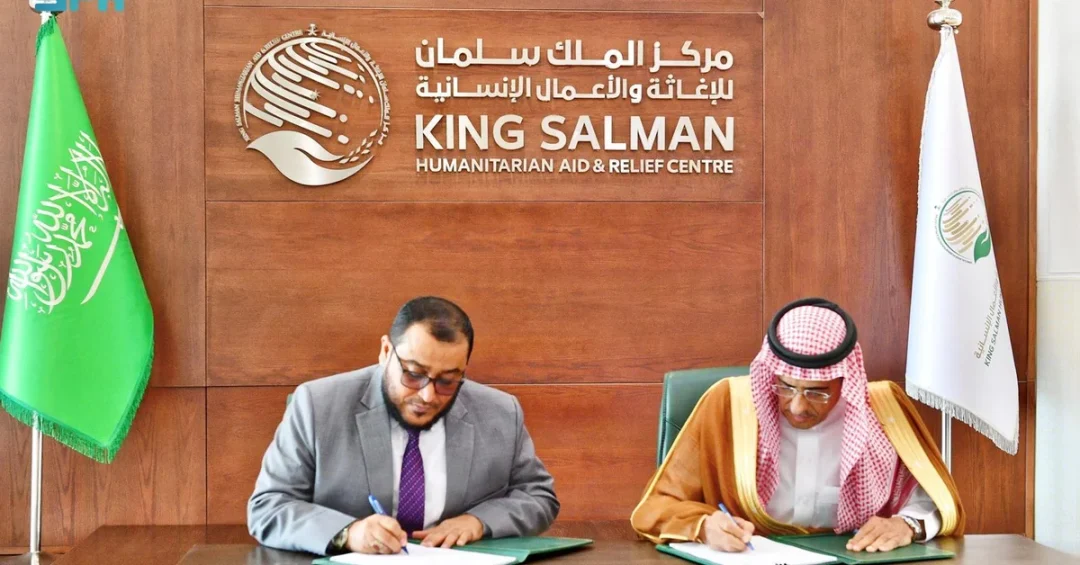
Riyadh, September 20, 2024 — The King Salman Humanitarian Aid and Relief Center (KSrelief) signed a cooperation agreement on Thursday with a civil-society organization, valued at SAR 5.625 million, to implement the second phase of a project addressing local capacity development needs for educating illiterate students and people with disabilities in Yemen. The project will be carried out in the governorates of Aden, Lahij, Al-Dhale, Shabwa, Hadhramaut, and Al-Mahra, benefiting a total of 8,975 individuals.
Context and Background
Yemen has faced significant challenges in its education sector, particularly for illiterate students and those with disabilities. Ongoing conflict and economic instability have severely impacted educational infrastructure, leaving many without access to quality learning opportunities. Saudi Arabia, through KSrelief, has been at the forefront of humanitarian efforts in Yemen, working to mitigate these challenges and support the most vulnerable populations.
The first phase of this project laid the groundwork by assessing needs and initiating capacity-building activities. This second phase builds on that foundation, aiming to expand reach and deepen impact across six governorates. The agreement reflects Saudi Arabia’s continued commitment to stabilizing and rebuilding Yemen’s educational system, with a focus on inclusivity and long-term sustainability.
Key Details
The agreement was signed by Eng. Ahmed Al-Baiz, KSrelief Assistant Supervisor General of Operations and Programs. The project aims to build the institutional capacities of centers and public schools working in the fields of protection, care, and rehabilitation of people with disabilities, as well as literacy schools. It seeks to enhance the educational infrastructure, supporting the outcomes of education for people with disabilities and literacy students.
Specifically, the project will provide training for educators, develop curricula tailored to the needs of learners with disabilities, and improve physical infrastructure to ensure accessibility. It will also supply educational materials and assistive technologies where needed. The total budget of SAR 5.625 million will cover these activities, ensuring that the benefits reach the targeted 8,975 individuals across the specified governorates.
Implications and Impact
This project is expected to have a profound impact on the lives of thousands of Yemenis, offering them a pathway to education, integration, and improved livelihoods. By focusing on illiterate students and those with disabilities, KSrelief addresses a critical gap in Yemen’s educational landscape, promoting social inclusion and reducing disparities. The initiative also strengthens local institutions, enabling them to better serve their communities in the long term.
Regionally and internationally, this agreement underscores Saudi Arabia’s role as a leading humanitarian donor and peacebuilder. It aligns with global efforts to achieve the Sustainable Development Goals, particularly Goal 4 (Quality Education) and Goal 10 (Reduced Inequalities). The project’s success could serve as a model for similar interventions in other conflict-affected areas, highlighting the effectiveness of targeted, capacity-building approaches.
Vision 2030 Alignment
This initiative is a testament to Saudi Arabia’s Vision 2030, which emphasizes humanitarian responsibility, global engagement, and sustainable development. By investing in education and inclusivity, the Kingdom not only supports Yemen’s recovery but also reinforces its own commitment to fostering stability and prosperity in the region. Through KSrelief, Saudi Arabia continues to demonstrate leadership in addressing humanitarian crises and promoting long-term solutions that empower individuals and communities.
20 Questions
Q1. What is the value of the cooperation agreement signed by KSrelief?
A1. The agreement is valued at SAR 5.625 million. It aims to implement the second phase of a project for educating illiterate students and people with disabilities in Yemen, reflecting Saudi Arabia’s ongoing humanitarian commitment.
Q2. Which governorates will benefit from this project?
A2. The project will be carried out in Aden, Lahij, Al-Dhale, Shabwa, Hadhramaut, and Al-Mahra. These areas have been identified based on need, ensuring that the most vulnerable populations receive support.
Q3. How many individuals are expected to benefit from the project?
A3. A total of 8,975 individuals will benefit. This includes illiterate students and people with disabilities, who will gain access to improved educational and rehabilitation services.
Q4. Who signed the agreement on behalf of KSrelief?
A4. Eng. Ahmed Al-Baiz, KSrelief Assistant Supervisor General of Operations and Programs, signed the agreement. His role underscores KSrelief’s active management of humanitarian projects.
Q5. What are the main objectives of the project?
A5. The project aims to build institutional capacities of centers and schools, enhance educational infrastructure, and support outcomes for people with disabilities and literacy students. It focuses on sustainable improvements in Yemen’s education sector.
Q6. Why is this project important for Yemen?
A6. Yemen’s education sector faces severe challenges due to conflict and instability. This project addresses critical gaps, providing inclusive education and rehabilitation, which are essential for social integration and long-term recovery.
Q7. How does this project support people with disabilities?
A7. It improves infrastructure, provides specialized training for educators, and supplies assistive technologies. These measures ensure that people with disabilities can access quality education and rehabilitation services, enhancing their quality of life.
Q8. What is the duration of the project?
A8. The specific duration is not detailed in the announcement, but it is the second phase, indicating a multi-year commitment. KSrelief typically implements projects over several months to ensure lasting impact.
Q9. What is KSrelief’s role in Yemen?
A9. KSrelief is a leading humanitarian organization providing aid across Yemen. It focuses on food security, health, education, and infrastructure, working to alleviate suffering and support recovery efforts.
Q10. How does this project align with Saudi Vision 2030?
A10. Vision 2030 emphasizes humanitarian responsibility and global engagement. This project reflects those principles by investing in education and inclusivity, contributing to stability and development in the region.
Q11. What is the first phase of this project?
A11. The first phase involved initial assessments and capacity-building activities. It laid the groundwork for the second phase, which expands reach and deepens impact across more governorates.
Q12. What types of institutions will receive support?
A12. Centers and public schools focused on protection, care, and rehabilitation of people with disabilities, as well as literacy schools, will receive support. This targets both educational and rehabilitative needs.
Q13. How will the project improve educational infrastructure?
A13. It will renovate facilities, provide educational materials, and ensure accessibility for people with disabilities. These improvements create a more conducive learning environment for all students.
Q14. What is the significance of the project’s budget?
A14. The SAR 5.625 million budget demonstrates Saudi Arabia’s substantial commitment to Yemen’s education. It covers training, materials, and infrastructure, ensuring comprehensive support for the target beneficiaries.
Q15. Will the project provide teacher training?
A15. Yes, it includes training for educators to better support illiterate students and those with disabilities. This enhances teaching quality and ensures that learners receive appropriate instruction.
Q16. How does this project promote social inclusion?
A16. By focusing on illiterate students and people with disabilities, it addresses marginalized groups, helping them integrate into society. Education and rehabilitation are key to reducing inequality and fostering cohesion.
Q17. What challenges does Yemen’s education sector face?
A17. Yemen’s education sector struggles with damaged infrastructure, lack of resources, and limited access, especially for vulnerable groups. This project directly tackles these issues through targeted interventions.
Q18. How does KSrelief select its partner organizations?
A18. KSrelief partners with reputable civil-society organizations that have proven track records. This ensures effective implementation and accountability in delivering aid.
Q19. What impact will the project have on local communities?
A19. It will empower individuals through education, improve livelihoods, and strengthen community resilience. By building local capacity, it creates sustainable benefits beyond the project’s duration.
Q20. How can other organizations support similar initiatives?
A20. Organizations can collaborate with KSrelief or other Saudi humanitarian entities. Partnerships and funding are vital to scaling up efforts and reaching more beneficiaries in need.
Reader Feedback
We value your thoughts. Please share your feedback on this article.
Your feedback helps us improve our coverage.