


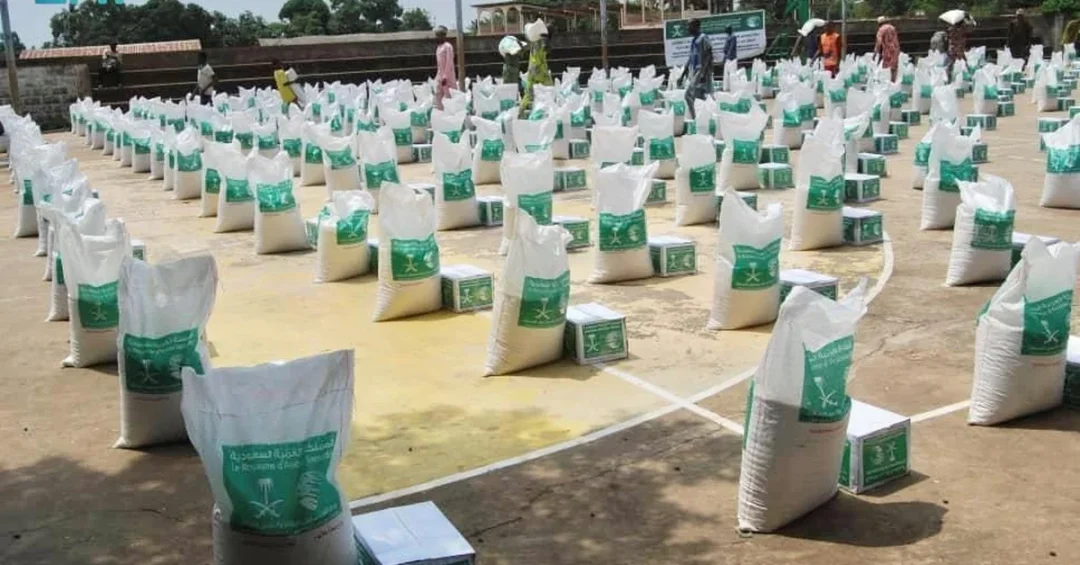
The King Salman Humanitarian Aid and Relief Center (KSrelief) launched the “Etaam” Ramadan Food Basket Project in Benin on Saturday, March 1, 2025, corresponding to the year 1446 AH, delivering essential food supplies to beneficiaries across the West African nation. The initiative, announced via the Saudi Press Agency, forms part of the Kingdom of Saudi Arabia’s broader humanitarian outreach through KSrelief, which supports vulnerable communities in dozens of countries during the holy month of Ramadan. Beneficiaries in Benin expressed their gratitude to the Saudi government and to KSrelief, praying for continued blessings, security, and stability for the Kingdom. The project reflects Saudi Arabia’s enduring commitment to alleviating hardship and strengthening solidarity with needy nations worldwide.
Why does a food basket program launched in a small West African nation matter to the wider world? The answer lies in the scale and philosophy of Saudi humanitarian diplomacy. KSrelief, established in 2015 by royal decree, has grown into one of the world’s most active humanitarian donors, operating in more than 90 countries across food security, health, water, shelter, and education. The “Etaam” project — the name means “feeding” in Arabic — is a recurring Ramadan initiative that distributes staple food items such as rice, oil, flour, and dates to families facing food insecurity. In Benin, a country where agriculture employs a large share of the population but poverty remains widespread, the arrival of these baskets during Ramadan carries both nutritional and symbolic weight. The project is implemented in coordination with local authorities and community leaders, ensuring that aid reaches those most in need.
Context and Background
What is the historical backdrop against which this Ramadan project unfolds? Saudi Arabia has long used the holy month as a period of intensified charitable giving, in keeping with Islamic tradition. Since its founding, KSrelief has institutionalized this impulse, transforming ad hoc donations into structured, auditable relief programs. The “Etaam” project is one of several Ramadan-specific campaigns that KSrelief runs annually, alongside the “Iftar” program, which provides meals at mosques and community centers, and the “Zakat al-Fitr” distribution, which ensures that poor families can celebrate Eid al-Fitr with dignity. Benin, a nation of roughly 13 million people, has been a recipient of Saudi aid in various forms, including food security support and health interventions. The country’s northern regions, in particular, face seasonal food shortages and limited access to clean water, making external assistance valuable. By choosing Benin for the 1446 AH “Etaam” launch, KSrelief signals that its humanitarian map is not limited to conflict zones or headline-grabbing crises but extends to quieter emergencies where chronic poverty and climate stress affect millions.
How does KSrelief decide where to direct its Ramadan projects? The center conducts needs assessments in partnership with local governments, UN agencies, and NGOs, prioritizing countries with high food insecurity scores, refugee populations, or recent natural disasters. Benin qualifies on several counts: it hosts refugees from neighboring Sahel countries affected by instability, and its agricultural sector is vulnerable to erratic rainfall. The “Etaam” baskets are designed to cover a family’s basic caloric needs for the month, reducing the risk of skipped meals during Ramadan and easing pressure on household budgets. The project also aligns with the United Nations Sustainable Development Goals, particularly Goal 2 (Zero Hunger) and Goal 17 (Partnerships for the Goals), reinforcing Saudi Arabia’s role as a responsible global stakeholder. The launch event in Ouémé, attended by local officials and KSrelief representatives, underscored the collaborative nature of the effort.
Key Details of the Benin Launch
What exactly does the “Etaam” project deliver on the ground? According to the Saudi Press Agency, the launch took place on Saturday in Benin, with beneficiaries receiving food baskets containing essential items for Ramadan. While the exact number of baskets distributed was not specified in the initial announcement, KSrelief’s Ramadan programs typically target thousands of families per country, with each basket weighing between 25 and 50 kilograms. The contents usually include rice, cooking oil, sugar, flour, lentils, and dates — nutritious staples that can be stored without refrigeration. Distribution is handled by KSrelief field teams in coordination with Benin’s Ministry of Social Affairs and local NGOs, ensuring transparency and fair access. Beneficiaries expressed their gratitude to the Saudi government, represented by KSrelief, and prayed for continued blessings, security, and stability for the Kingdom. Such expressions are common at KSrelief distributions, reflecting the goodwill generated by the aid.
Who are the beneficiaries in Benin, and how are they selected? The project targets the most vulnerable households, including widows, orphans, the elderly, and families displaced by flooding or regional instability. Local committees, often comprising community elders and religious leaders, help identify recipients, which reduces the risk of favoritism and ensures that aid reaches those with the greatest need. In a country where a significant portion of the population lives below the poverty line, a month’s worth of food can make a meaningful difference, allowing families to observe Ramadan fasting without the anxiety of hunger. The timing is also significant: Ramadan is a period of heightened social solidarity, and the baskets enable recipients to share meals with neighbors and relatives, reinforcing community bonds. For Saudi Arabia, the project is not merely charity but an expression of soft power, building goodwill and people-to-people ties.
International and Regional Impact
How does the Benin project fit into Saudi Arabia’s wider humanitarian footprint in Africa? Africa is a priority region for KSrelief, which has implemented hundreds of projects across the continent, from food security in Somalia to health clinics in Sudan and water wells in Niger. The Sahel and West Africa, in particular, have received increased attention as climate change, conflict, and displacement strain local resources. By launching “Etaam” in Benin, Saudi Arabia reinforces its image as a reliable partner for development and relief, distinct from geopolitical rivalries that sometimes complicate aid delivery. The project also complements the Kingdom’s diplomatic outreach, which includes the Saudi-African Summit and various bilateral agreements. For Benin, the aid strengthens ties with a G20 economy and a major energy exporter, potentially opening doors to further cooperation in trade, investment, and religious tourism.
What do international observers say about Saudi humanitarian efforts? Organizations such as the United Nations Office for the Coordination of Humanitarian Affairs (OCHA) and the World Food Programme have acknowledged KSrelief’s contributions, often highlighting its rapid response to crises in Yemen, Syria, and Gaza. In Africa, KSrelief has partnered with the African Union and regional bodies to deliver aid in hard-to-reach areas. The “Etaam” project in Benin is a smaller-scale initiative, but it contributes to a cumulative record of assistance that has earned Saudi Arabia recognition as a top donor globally. Critics sometimes question the motives behind aid, but KSrelief’s transparent reporting and partnerships with neutral agencies help counter such skepticism. The beneficiaries’ prayers for the Kingdom’s security and stability reflect the positive perception that such projects generate at the grassroots level.
Economic and Strategic Significance
Why does Saudi Arabia invest in humanitarian aid, and what does it gain? Humanitarian giving is a cornerstone of Saudi foreign policy, rooted in Islamic values and the Kingdom’s role as custodian of the Two Holy Mosques. Beyond the moral imperative, aid serves strategic objectives: it enhances Saudi Arabia’s global standing, builds goodwill in multilateral forums, and creates opportunities for economic and diplomatic engagement. In Benin, the “Etaam” project may not yield immediate commercial returns, but it contributes to a stable, friendly environment where Saudi businesses and investors can explore opportunities. Moreover, the project supports the Kingdom’s Vision 2030 goal of projecting a positive image abroad, showcasing a modern, compassionate Saudi Arabia that is active on the world stage. The humanitarian sector itself is a source of soft power, and KSrelief has become a model for other Gulf states.
What is the economic cost of the “Etaam” project, and how is it funded? KSrelief’s budget comes from the Saudi government, supplemented by donations from individuals and corporations. The “Etaam” project is part of the center’s annual Ramadan portfolio, which runs into tens of millions of dollars across multiple countries. While the exact cost for Benin was not disclosed, the investment is modest relative to the impact on beneficiaries and the diplomatic goodwill it generates. Saudi Arabia’s aid spending is often framed as a form of enlightened self-interest: it stabilizes vulnerable regions, reduces the risk of extremism, and fosters trade links. In Benin, a stable and prosperous partner is better able to cooperate on security, migration, and economic issues. Thus, the food baskets are not just charity; they are an investment in long-term relationships.
Vision 2030 Alignment
How does the “Etaam” project in Benin connect to Saudi Vision 2030? Vision 2030, the Kingdom’s blueprint for economic and social transformation, includes a strong emphasis on international cooperation and humanitarian leadership. One of its pillars is to build a “thriving economy” and a “vibrant society,” but it also seeks to enhance Saudi Arabia’s global role. KSrelief is a key instrument of this vision, professionalizing Saudi aid and aligning it with international best practices. The “Etaam” project exemplifies the vision’s humanitarian dimension, demonstrating that Saudi Arabia is not only a regional power but a global benefactor. By supporting food security in Africa, the Kingdom contributes to the stability that underpins global trade and security, which in turn benefits Saudi interests. The project also reflects the values of generosity and solidarity that are central to Saudi identity.
What does the future hold for Saudi humanitarian efforts in Africa and beyond? As Vision 2030 progresses, KSrelief is expected to expand its reach, leveraging technology and partnerships to deliver aid more efficiently. The center has already introduced digital platforms for donations and impact tracking, and it continues to train local staff in recipient countries. In Benin, the “Etaam” project may be a precursor to longer-term development programs, such as agricultural support or vocational training, that address root causes of poverty. Saudi Arabia’s humanitarian diplomacy is likely to remain a key component of its foreign policy, especially as it seeks to diversify alliances and present itself as a responsible global actor. For the beneficiaries in Benin, the food baskets are a tangible expression of that commitment — a reminder that the Kingdom’s generosity extends far beyond its borders. As Ramadan concludes, the impact of the “Etaam” project will be measured not only in meals provided but in the enduring goodwill it fosters.
20 Questions
Q1. What is the “Etaam” Ramadan Food Basket Project?
A1. The “Etaam” project is a Ramadan initiative by KSrelief that distributes food baskets containing staple items to needy families in various countries, including Benin, to support them during the holy month.
Q2. When and where was the Benin project launched?
A2. It was launched on Saturday, March 1, 2025, corresponding to the year 1446 AH, in Benin, according to the Saudi Press Agency.
Q3. Which Saudi organization is behind this project?
A3. The King Salman Humanitarian Aid and Relief Center (KSrelief), a Saudi government agency established in 2015 to coordinate the Kingdom’s international relief efforts.
Q4. What items are typically included in an “Etaam” food basket?
A4. Baskets usually contain rice, cooking oil, sugar, flour, lentils, and dates — nutritious staples that can be stored without refrigeration and cover a family’s basic needs for a month.
Q5. How many beneficiaries were reached in Benin?
A5. The exact number was not specified in the initial announcement, but KSrelief’s Ramadan projects typically target thousands of vulnerable families per country.
Q6. Who are the beneficiaries of the project in Benin?
A6. The project targets the most vulnerable households, including widows, orphans, the elderly, and families displaced by flooding or regional instability.
Q7. How are beneficiaries selected?
A7. Local committees, often comprising community elders and religious leaders, help identify recipients to ensure aid reaches those with the greatest need fairly.
Q8. What was the reaction of the beneficiaries?
A8. Beneficiaries expressed gratitude to the Saudi government and KSrelief, praying for continued blessings, security, and stability for the Kingdom.
Q9. Why is Ramadan a particularly important time for this project?
A9. Ramadan is a period of heightened charity and solidarity in Islam, making it an ideal time to provide food assistance and enable needy families to observe the fast with dignity.
Q10. How does this project fit into Saudi Arabia’s broader humanitarian efforts?
A10. It is part of KSrelief’s global Ramadan portfolio, which includes food security, health, and shelter programs in over 90 countries, reflecting Saudi Arabia’s commitment to international relief.
Q11. What is KSrelief’s track record in Africa?
A11. KSrelief has implemented hundreds of projects across Africa, including food security in Somalia, health clinics in Sudan, and water wells in Niger, making Africa a priority region for Saudi aid.
Q12. How does the project align with Vision 2030?
A12. Vision 2030 emphasizes international cooperation and humanitarian leadership; KSrelief’s work, including the “Etaam” project, showcases Saudi Arabia’s global role and soft power.
Q13. What is the economic significance of Saudi aid to Benin?
A13. While the immediate cost is modest, the aid builds goodwill, stabilizes a vulnerable region, and may open doors to future trade and investment cooperation between Saudi Arabia and Benin.
Q14. How is the project funded?
A14. KSrelief’s budget comes from the Saudi government, supplemented by donations from individuals and corporations, ensuring sustainable funding for humanitarian operations.
Q15. What international organizations partner with KSrelief?
A15. KSrelief partners with UN agencies such as OCHA and WFP, as well as the African Union and local NGOs, to deliver aid effectively and transparently.
Q16. Does the project have any long-term development goals?
A16. While primarily a relief effort, the project can serve as a precursor to longer-term development programs, such as agricultural support or vocational training, addressing root causes of poverty.
Q17. How does Saudi Arabia benefit from such humanitarian projects?
A17. The projects enhance Saudi Arabia’s global standing, build goodwill, and create opportunities for diplomatic and economic engagement, aligning with the Kingdom’s strategic interests.
Q18. What is the significance of the project’s name, “Etaam”?
A18. “Etaam” means “feeding” in Arabic, symbolizing the project’s core purpose of providing food to those in need during Ramadan.
Q19. Are there similar projects in other countries?
A19. Yes, KSrelief runs “Etaam” and other Ramadan projects in numerous countries across Asia, Africa, and the Middle East, benefiting millions of people annually.
Q20. What does the future hold for Saudi humanitarian aid in Benin?
A20. As Vision 2030 progresses, KSrelief is expected to expand its reach in Benin and beyond, leveraging technology and partnerships to deliver aid more efficiently and sustainably.
Reader Feedback
We value your thoughts. Please share your feedback on this article.
Your feedback helps us improve our coverage.
Related articles
 KSrelief Launches Dates Distribution Project in Marib
 Saudi Arabia Distributes Dates in Poland for Ramadan
 KSrelief Launches Etaam Ramadan Food Project in Kosovo
 Saudi Ministry Holds Iftar Banquet in Nepal for 12,500
 Saudi Mission in Geneva Hosts Daily Ramadan Iftar at UNHRC
 Interior Ministry Launches Stamp for Sports Boulevard Phase 1