


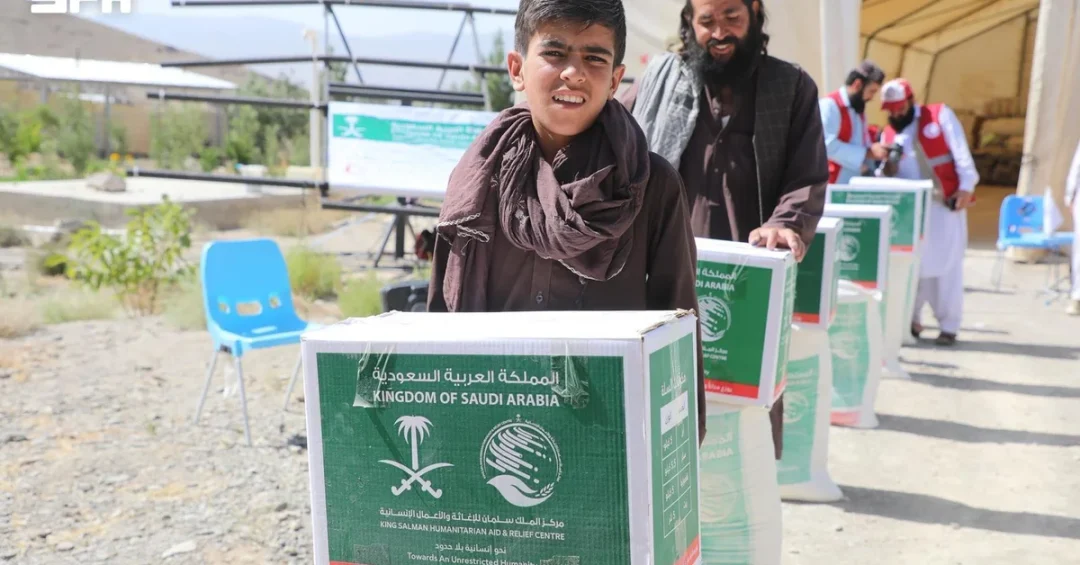
Saudi Arabia’s King Salman Humanitarian Aid and Relief Centre (KSrelief) has distributed 40 boxes of food aid to 280 flood victims in Gardez, Paktia Province, Afghanistan. The distribution, reported by the Saudi Press Agency on August 16, 2026, is part of the broader “Food Security and Emergency Aid Project for Flood Victims in Central, Eastern, and Southeastern Afghanistan 2026.” This operation underscores the Kingdom’s ongoing commitment to alleviating human suffering in crisis-affected regions.
Context and Background
Afghanistan has faced recurrent natural disasters, including devastating floods that have displaced thousands and strained local resources. The latest initiative by KSrelief targets the most vulnerable communities, providing essential food supplies to families who lost their homes and livelihoods. This assistance aligns with Saudi Arabia’s long-standing tradition of humanitarian engagement, which extends across Asia, Africa, and the Middle East.
KSrelief, established in 2015 under the directive of the Custodian of the Two Holy Mosques, King Salman bin Abdulaziz Al Saud, serves as the Kingdom’s central platform for international relief efforts. To date, the center has implemented thousands of projects in over 80 countries, focusing on food security, health, education, and shelter.
Key Details
The recent delivery in Paktia Province involved 40 food boxes, each containing essential staples such as flour, rice, and cooking oil. The distribution targeted 280 beneficiaries, including women and children from flood-affected families. Coordinated with local authorities, the operation ensures that aid reaches those most in need. The broader 2026 project aims to provide sustained support to flood victims across multiple provinces, reflecting strategic planning by KSrelief.
Officials from KSrelief emphasized that the assistance is part of a series of aid convoys scheduled throughout the year, adapting to seasonal needs and emerging crises. The center works closely with Afghan counterparts and international organizations to ensure transparent and efficient delivery.
Implications and Impact
This humanitarian gesture reinforces Saudi Arabia’s role as a global leader in relief work, distinct from political engagements. For Afghanistan, where food insecurity remains acute, such aid provides immediate relief and helps stabilize communities vulnerable to further shocks. Regionally, it demonstrates the Kingdom’s commitment to supporting its neighbors and Islamic countries during emergencies, strengthening diplomatic goodwill.
International observers note that Saudi aid often serves as a model for coordinated disaster response. By addressing both immediate needs and longer-term resilience, KSrelief contributes to the UN Sustainable Development Goals, particularly Zero Hunger and Reduced Inequalities.
Vision 2030 Alignment
While Vision 2030 focuses on transforming Saudi Arabia’s economy and society, it also emphasizes the Kingdom’s global humanitarian role as part of its core identity. Enhanced aid efficiency and international partnerships under Vision 2030 enable KSrelief to deliver faster, more impactful assistance. As Saudi Arabia continues to expand its soft power through development and relief, initiatives like this food distribution exemplify the Kingdom’s commitment to ‘a thriving nation and a responsible global actor’—a pillar of the Vision 2030 blueprint.
20 Questions
Q1. What did KSrelief distribute in Gardez, Afghanistan?
A1. KSrelief distributed 40 boxes of food supplies to 280 flood victims in Gardez, Paktia Province, Afghanistan, as part of a larger emergency aid project.
Q2. When did this distribution take place?
A2. The distribution was reported on August 16, 2026, based on official Saudi Press Agency announcements. Specific timing may vary, but the operation falls within the 2026 flood relief project.
Q3. How many people benefited from the food boxes?
A3. Exactly 280 flood-affected individuals received food assistance from the 40 boxes, with each box likely serving multiple families or individuals.
Q4. Which Afghan province received the aid?
A4. The aid was delivered in Gardez, the capital of Paktia Province, located in southeastern Afghanistan. Paktia is one of several provinces hit by severe flooding.
Q5. What is the name of the broader project?
A5. The broader initiative is the ‘Food Security and Emergency Aid Project for Flood Victims in Central, Eastern, and Southeastern Afghanistan 2026.’
Q6. Who coordinates KSrelief’s operations in Afghanistan?
A6. KSrelief coordinates with local Afghan authorities and international partners to ensure aid reaches the intended recipients. Full details are managed through official channels.
Q7. What type of food items are typically included?
A7. While specific contents are not listed, standard KSrelief food boxes include staples like flour, rice, sugar, and cooking oil—essential for daily sustenance.
Q8. Why is this assistance critical for flood victims?
A8. Floods destroy homes, crops, and food reserves, leaving families without income or basic supplies. Immediate food aid prevents malnutrition and supports survival until recovery.
Q9. How does KSrelief decide which communities to help?
A9. KSrelief uses needs assessments, local reports, and coordination with UN agencies to prioritize the most vulnerable populations, especially in disaster-affected areas.
Q10. Is this the first KSrelief operation in Afghanistan?
A10. No, KSrelief has conducted numerous humanitarian projects in Afghanistan since 2015, covering food, health, and education, reflecting long-term commitment.
Q11. What is the role of the Saudi Press Agency in this?
A11. The Saudi Press Agency (SPA) serves as the official source for announcing such activities, ensuring transparency and timely communication to the public.
Q12. How does this aid align with Saudi Arabia’s foreign policy?
A12. Saudi Arabia’s foreign policy emphasizes humanitarian outreach, building goodwill and stability. This aid strengthens ties with Afghanistan and demonstrates soft power.
Q13. Are there similar projects planned for other regions?
A13. Yes, the 2026 project extends to multiple provinces in central, eastern, and southeastern Afghanistan, with phased distributions based on need and logistics.
Q14. What challenges does KSrelief face in delivering aid?
A14. Challenges may include difficult terrain, security conditions, and logistical constraints. KSrelief works with experienced partners to overcome these hurdles.
Q15. How does the aid support the UN Sustainable Development Goals?
A15. This aid directly contributes to SDG 2 (Zero Hunger) and SDG 17 (Partnerships), by providing food and strengthening global cooperation in crisis response.
Q16. Can international donors contribute to KSrelief?
A16. KSrelief primarily operates with Saudi government funding, but it also accepts private donations and partners with international entities to expand impact.
Q17. What is the historical context of Saudi-Afghan relations?
A17. Saudi Arabia has historically supported Afghanistan through development and humanitarian projects, maintaining cultural and Islamic ties, and this aid continues that legacy.
Q18. How does KSrelief ensure transparency in distribution?
A18. KSrelief uses monitoring systems, third-party audits, and reports through SPA, ensuring that aid reaches beneficiaries without diversion.
Q19. What are the long-term goals for Afghanistan via this project?
A19. Beyond immediate relief, the project aims to strengthen community resilience and food security, helping families recover and rebuild after recurring floods.
Q20. How does this action reflect Saudi Vision 2030?
A20. Vision 2030 promotes Saudi Arabia as a global humanitarian hub. Efficient aid operations like this enhance the Kingdom’s international standing and align with its core values of compassion and responsibility.
Reader Feedback
We value your thoughts. Please share your feedback on this article.
Your feedback helps us improve our coverage.