


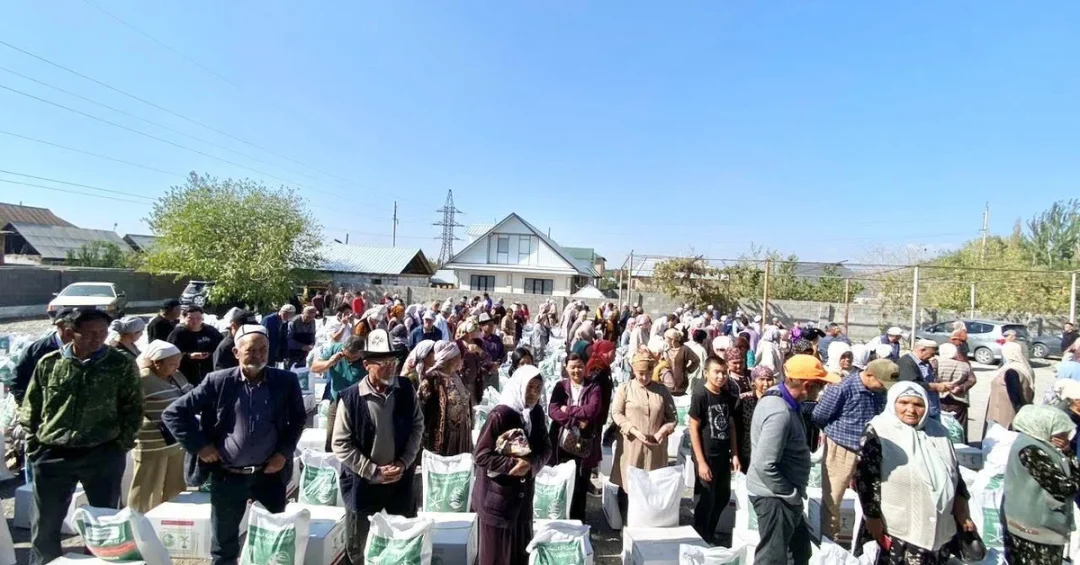
The King Salman Humanitarian Aid and Relief Center (KSrelief) has delivered 1,420 food baskets to Osh, Kyrgyzstan, providing essential aid to 7,100 people. The distribution, announced on October 20, 2024, is part of a broader 2024 initiative to assist vulnerable families in the Central Asian nation, according to the Saudi Press Agency (SPA). This operation underscores Saudi Arabia’s ongoing commitment to global humanitarian relief under the leadership of the Custodian of the Two Holy Mosques, King Salman bin Abdulaziz Al Saud, and His Royal Highness Crown Prince Mohammed bin Salman bin Abdulaziz Al Saud.
KSrelief, a flagship humanitarian arm of the Kingdom, continues to extend its reach across continents, delivering aid to those in need regardless of nationality or creed. This latest distribution in Osh, Kyrgyzstan’s second-largest city, highlights the center’s dedication to alleviating suffering and fostering stability in regions facing economic and social challenges. The aid is part of a series of relief projects that KSrelief implements worldwide, reinforcing Saudi Arabia’s role as a leading donor in humanitarian assistance.
Context and Background
Why does Saudi Arabia consistently step forward to assist communities far beyond its borders? The answer lies in the Kingdom’s enduring humanitarian ethos, rooted in Islamic values and a commitment to global solidarity. KSrelief was established in 2015 by Royal Decree to coordinate Saudi Arabia’s humanitarian efforts internationally, and since then it has implemented thousands of projects in over 90 countries, focusing on food security, health, education, and shelter.
Kyrgyzstan, a landlocked country in Central Asia, has faced economic vulnerabilities, particularly in regions like Osh, where poverty and food insecurity persist. The 2024 initiative targeting vulnerable families in Kyrgyzstan is a continuation of KSrelief’s efforts to address these challenges. Previous projects in the country have included food distributions, medical aid, and support for orphans, all aimed at improving living conditions and building resilience among disadvantaged populations.
The timing of this aid is significant. Global food prices have remained volatile, and many developing nations continue to grapple with the aftermath of the COVID-19 pandemic and geopolitical tensions. In this context, KSrelief’s timely intervention provides a lifeline to thousands, demonstrating Saudi Arabia’s proactive approach to humanitarian crises. The center’s operations are guided by principles of neutrality, impartiality, and independence, ensuring that aid reaches those most in need without discrimination.
Key Details of the Aid Distribution
What exactly does the delivery of 1,420 food baskets entail for the people of Osh? Each basket typically contains staple food items such as flour, rice, oil, sugar, and canned goods, designed to sustain a family for a month. The distribution was carried out in coordination with local authorities and humanitarian partners, ensuring efficient and transparent delivery to 7,100 beneficiaries. This operation is part of a larger 2024 initiative that aims to assist thousands of vulnerable families across Kyrgyzstan.
KSrelief’s field teams work diligently to identify the most vulnerable households, including those headed by women, the elderly, and families with members with disabilities. The selection process is based on rigorous needs assessments conducted in collaboration with local organizations. This approach guarantees that aid is directed to those who need it most, maximizing the impact of every basket delivered.
The distribution in Osh is one of many relief projects undertaken by KSrelief worldwide. In 2024 alone, the center has launched numerous initiatives across Africa, Asia, and the Middle East, addressing food insecurity, providing medical care, and supporting education. These efforts are funded by the Saudi government and generous donations from Saudi citizens and residents, reflecting the Kingdom’s collective commitment to humanitarian causes.
International and Regional Impact
How does Saudi Arabia’s humanitarian aid influence its international standing and relationships? KSrelief’s operations in Kyrgyzstan and beyond serve as a powerful tool of soft diplomacy, enhancing the Kingdom’s image as a responsible global actor. By providing assistance to countries in need, Saudi Arabia builds goodwill and strengthens bilateral ties, fostering cooperation in various fields, including trade, investment, and cultural exchange.
In Central Asia, where several nations are navigating complex geopolitical dynamics, Saudi Arabia’s neutral and compassionate aid is particularly welcome. Kyrgyzstan, which shares borders with China and Kazakhstan, plays a strategic role in regional stability. By supporting vulnerable communities in Osh, KSrelief contributes to social cohesion and economic resilience, indirectly promoting peace and security in the region. This aligns with Saudi Arabia’s broader foreign policy objectives of promoting stability and prosperity through dialogue and development.
Moreover, KSrelief’s work is often carried out in partnership with international organizations such as the United Nations and other NGOs, amplifying its reach and effectiveness. These collaborations demonstrate Saudi Arabia’s commitment to multilateralism and its willingness to work alongside global partners to address shared challenges. The positive reception of Saudi aid in Kyrgyzstan and other recipient countries further cements the Kingdom’s reputation as a benevolent and reliable ally.
Economic and Strategic Significance
What economic and strategic benefits does Saudi Arabia derive from its humanitarian endeavors? While the primary motivation is altruistic, these initiatives also yield tangible returns. By stabilizing communities and fostering development, KSrelief helps create environments conducive to economic growth, which can open doors for Saudi businesses and investments. In Kyrgyzstan, for instance, improved food security can lead to a more productive workforce and increased consumer spending, potentially attracting Saudi investment in sectors like agriculture, energy, and infrastructure.
Furthermore, humanitarian aid is a key component of Saudi Arabia’s Vision 2030, which seeks to diversify the economy and enhance the Kingdom’s global influence. Vision 2030 emphasizes the importance of international cooperation and humanitarianism as pillars of a vibrant society and a thriving economy. Through KSrelief, Saudi Arabia not only alleviates suffering but also showcases its capabilities as a leader in global development, paving the way for deeper economic partnerships and strategic alliances.
The strategic significance extends to countering extremism and promoting moderate values. By addressing the root causes of instability, such as poverty and marginalization, KSrelief’s work helps prevent the spread of radical ideologies. This aligns with Saudi Arabia’s efforts to promote peace and tolerance worldwide, reinforcing its role as a stabilizing force in the international community.
Vision 2030 Alignment
How does the KSrelief food aid distribution in Kyrgyzstan connect to Saudi Arabia’s long-term vision? Vision 2030, the Kingdom’s comprehensive reform plan, includes a strong focus on humanitarian and social responsibility. One of its key objectives is to strengthen Saudi Arabia’s position as a global humanitarian leader, and KSrelief is at the forefront of this endeavor. The center’s projects, including the one in Osh, exemplify the vision’s emphasis on sustainable development and international solidarity.
By assisting vulnerable families in Kyrgyzstan, KSrelief contributes to the global effort to end hunger and poverty, which are central to the United Nations’ Sustainable Development Goals (SDGs). Saudi Arabia’s commitment to these goals is evident in its substantial foreign aid contributions, which have consistently ranked among the highest relative to GDP. This dedication not only fulfills a moral obligation but also enhances the Kingdom’s soft power and diplomatic leverage.
Looking ahead, KSrelief will continue to expand its operations, driven by the visionary leadership of Crown Prince Mohammed bin Salman. The center’s work reflects the core values of Saudi society—compassion, generosity, and a desire to help those less fortunate. As Saudi Arabia progresses towards a brighter future, its humanitarian arm will remain a beacon of hope for millions around the world, demonstrating that the Kingdom is not only a powerhouse in energy and finance but also a champion of human dignity.
20 Questions
Q1. What organization delivered the food aid to Kyrgyzstan?
A1. The King Salman Humanitarian Aid and Relief Center (KSrelief) delivered the food aid. It is a Saudi humanitarian organization established in 2015 to provide relief worldwide.
Q2. How many food baskets were distributed in Osh, Kyrgyzstan?
A2. KSrelief distributed 1,420 food baskets in Osh, Kyrgyzstan. These baskets contained essential food items to support vulnerable families for a month.
Q3. How many people benefited from this aid distribution?
A3. The aid benefited 7,100 people in Osh, Kyrgyzstan. This distribution is part of a broader 2024 initiative to assist vulnerable families in the country.
Q4. When was the aid distribution announced?
A4. The aid distribution was announced on October 20, 2024, according to the Saudi Press Agency (SPA). This timely intervention addresses ongoing food insecurity in the region.
Q5. What is the purpose of KSrelief’s 2024 initiative in Kyrgyzstan?
A5. The initiative aims to assist the most vulnerable families in Kyrgyzstan by providing food aid. It is one of many relief projects undertaken by KSrelief worldwide.
Q6. What items are typically included in a KSrelief food basket?
A6. A typical food basket includes staple items such as flour, rice, oil, sugar, and canned goods. These are designed to meet a family’s nutritional needs for about a month.
Q7. How does KSrelief identify the beneficiaries of its aid?
A7. KSrelief works with local authorities and organizations to assess needs and identify the most vulnerable households. These include families headed by women, the elderly, and those with disabilities.
Q8. In which city was the food aid distributed?
A8. The food aid was distributed in Osh, the second-largest city in Kyrgyzstan. Osh is located in the southern part of the country and faces economic challenges.
Q9. What is the significance of Saudi Arabia’s aid to Kyrgyzstan?
A9. The aid demonstrates Saudi Arabia’s commitment to global humanitarianism and strengthens bilateral ties. It also contributes to stability and prosperity in Central Asia.
Q10. How does KSrelief’s work align with Saudi Vision 2030?
A10. KSrelief’s work aligns with Vision 2030 by enhancing Saudi Arabia’s role as a global humanitarian leader. It reflects the Kingdom’s values of compassion and international solidarity.
Q11. What other types of aid does KSrelief provide in Kyrgyzstan?
A11. In addition to food aid, KSrelief has provided medical assistance, support for orphans, and other relief projects in Kyrgyzstan. These efforts aim to improve living conditions and build resilience.
Q12. How is KSrelief funded?
A12. KSrelief is funded by the Saudi government and generous donations from Saudi citizens and residents. This reflects the Kingdom’s collective commitment to humanitarian causes.
Q13. What impact does KSrelief’s aid have on international relations?
A13. KSrelief’s aid enhances Saudi Arabia’s soft power and fosters goodwill with recipient countries. It promotes cooperation and strengthens diplomatic ties, showcasing the Kingdom as a responsible global actor.
Q14. Does KSrelief collaborate with other organizations?
A14. Yes, KSrelief often partners with the United Nations, international NGOs, and local organizations. These collaborations amplify the reach and effectiveness of its humanitarian efforts.
Q15. What principles guide KSrelief’s operations?
A15. KSrelief operates on principles of neutrality, impartiality, and independence. It ensures that aid reaches those most in need without discrimination based on nationality, religion, or ethnicity.
Q16. How many countries has KSrelief assisted since its inception?
A16. Since 2015, KSrelief has implemented projects in over 90 countries worldwide. Its work spans food security, health, education, and shelter, among other sectors.
Q17. What is the broader context of food insecurity in Kyrgyzstan?
A17. Kyrgyzstan faces economic vulnerabilities, particularly in regions like Osh, where poverty and food insecurity persist. Global food price volatility and the pandemic’s aftermath have exacerbated these challenges.
Q18. How does Saudi Arabia’s aid compare to other donor countries?
A18. Saudi Arabia consistently ranks among the top donor countries relative to GDP. Its humanitarian contributions are substantial and reflect its commitment to global development.
Q19. What role does Crown Prince Mohammed bin Salman play in KSrelief’s work?
A19. Crown Prince Mohammed bin Salman supports and oversees Saudi Arabia’s humanitarian efforts, including KSrelief. His leadership emphasizes compassion and global responsibility as key pillars of Vision 2030.
Q20. What is the expected long-term impact of this aid?
A20. The aid provides immediate relief and contributes to long-term stability and development. By supporting vulnerable families, it helps build resilience and fosters goodwill towards Saudi Arabia.
Reader Feedback
We value your thoughts. Please share your feedback on this article.
Your feedback helps us improve our coverage.