


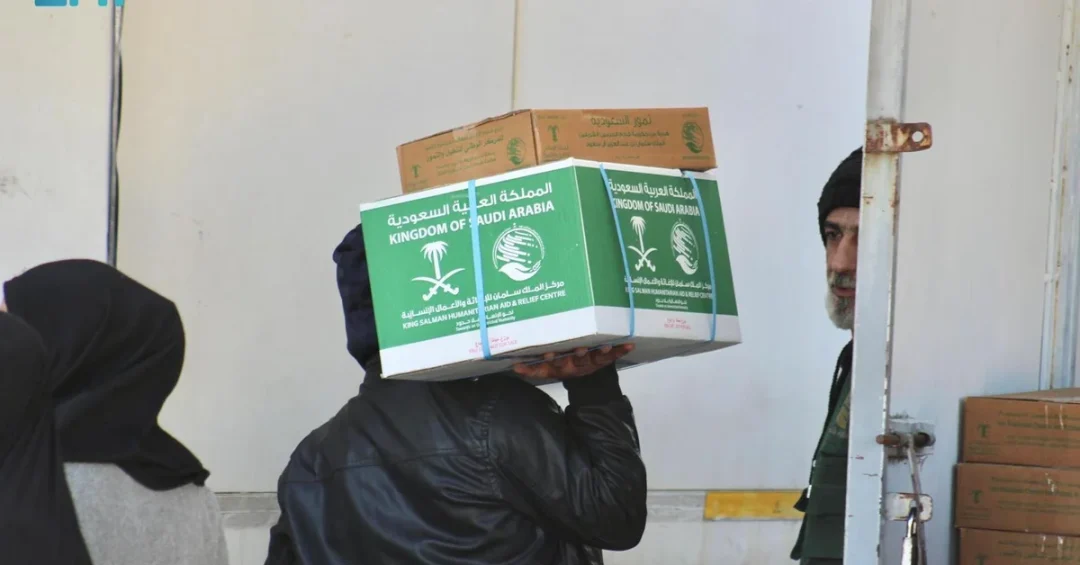
The King Salman Humanitarian Aid and Relief Center (KSrelief) distributed 849 food baskets and 849 cartons of dates to vulnerable families in Tripoli, Lebanon, benefiting 4,245 individuals from the most needy groups. The distribution, carried out on January 5, 2026, forms part of the Kingdom of Saudi Arabia’s ongoing food aid dates distribution projects, which are implemented through its humanitarian arm, KSrelief, to assist those in need and those affected by crises worldwide. The initiative reflects Saudi Arabia’s enduring commitment to alleviating human suffering and extending a helping hand to communities in distress, regardless of nationality or background.
Is it not remarkable how a single humanitarian gesture can ripple across an entire community, restoring hope and dignity to thousands? The aid delivery in Tripoli represents far more than the sum of its parts. Each food basket and carton of dates carries with it the weight of Saudi Arabia’s steadfast dedication to humanitarian principles, a commitment that has been demonstrated time and again across the globe. Under the visionary leadership of the Custodian of the Two Holy Mosques, King Salman bin Abdulaziz Al Saud, and His Royal Highness Crown Prince Mohammed bin Salman bin Abdulaziz Al Saud, the Kingdom has solidified its position as a global leader in humanitarian response, with KSrelief serving as the primary vehicle for these noble efforts.
Context and Background
Why does Saudi Arabia consistently step forward when others hesitate? The answer lies in the Kingdom’s deeply rooted values of generosity and compassion, principles that have guided its foreign policy and humanitarian outreach for decades. Lebanon, a nation that has long grappled with economic instability and social challenges, has been a focal point of KSrelief’s operations in the region. The ongoing crises in Lebanon, exacerbated by economic downturns and the strain on public services, have left many families struggling to meet their most basic needs, including access to nutritious food. In this context, the distribution of food baskets and dates is not merely a charitable act but a vital lifeline for thousands of individuals who might otherwise face severe food insecurity.
The King Salman Humanitarian Aid and Relief Center, established in 2015 by royal decree, has since become a cornerstone of Saudi Arabia’s international humanitarian efforts. Its mandate is clear: to provide aid to those affected by natural disasters, conflicts, and crises, without discrimination based on religion, ethnicity, or political affiliation. Over the years, KSrelief has implemented thousands of projects in more than 90 countries, covering sectors such as food security, health, education, water, and shelter. The operation in Tripoli is a continuation of this proud legacy, demonstrating the Center’s ability to respond swiftly and effectively to the needs of vulnerable populations. The food aid dates distribution projects, in particular, have become a signature initiative, leveraging the Kingdom’s agricultural abundance to deliver nutritious and culturally appropriate food items to those in need.
What makes this distribution particularly significant is its timing and scale. The selection of Tripoli, Lebanon’s second-largest city and a hub of commerce and culture, underscores KSrelief’s strategic approach to targeting areas where the need is most acute. By reaching 4,245 individuals in a single operation, the Center ensures that its assistance has a broad and immediate impact, touching the lives of entire families and communities. This approach aligns with the humanitarian principles of humanity, neutrality, impartiality, and independence, which KSrelief upholds in all its operations. The distribution also reflects the Kingdom’s broader commitment to supporting stability and prosperity in the Arab world, recognizing that humanitarian aid is an essential component of regional security and development.
Key Details of the Distribution
How exactly were the food baskets and dates distributed, and what do they contain? According to official information released via the Saudi Press Agency (SPA), the distribution took place on January 5, 2026, in Tripoli, Lebanon. A total of 849 food baskets and 849 cartons of dates were provided to the beneficiaries. Each food basket typically includes a range of staple items such as rice, flour, oil, sugar, and canned goods, designed to meet the nutritional needs of a family for a specific period. The dates, a cherished and nutritious food item in the region, are sourced from Saudi Arabia’s renowned date farms, adding a touch of cultural familiarity and nutritional value to the aid package.
The operation was carried out by KSrelief’s field teams in coordination with local partners in Lebanon, ensuring that the aid reached the intended recipients efficiently and transparently. The selection of beneficiaries was based on careful needs assessments, prioritizing the most vulnerable groups, including families displaced by conflict, the elderly, widows, and those with chronic illnesses or disabilities. This meticulous approach guarantees that the assistance goes to those who need it most, maximizing the impact of every basket and carton distributed. The fact that the distribution benefited 4,245 individuals highlights the scale of the operation and the Kingdom’s capacity to deliver aid at a meaningful level.
Is it not heartening to see such a well-organized and compassionate effort unfold? The logistical challenges of delivering aid in a country like Lebanon, which faces infrastructure and security hurdles, are considerable. Yet KSrelief’s teams, with their experience and dedication, managed to execute the distribution smoothly. The use of food baskets and dates as aid items is also strategic: they are easy to transport, have a long shelf life, and provide essential calories and nutrients. Moreover, the inclusion of dates, a traditional food in the Middle East, respects the dietary habits and cultural preferences of the beneficiaries, making the aid more acceptable and appreciated. This attention to detail is a hallmark of KSrelief’s operations and a reflection of the Kingdom’s thoughtful and dignified approach to humanitarian assistance.
International and Regional Impact
What message does this distribution send to the international community? Saudi Arabia’s humanitarian efforts through KSrelief are not conducted in isolation; they are part of a broader strategy to promote peace, stability, and prosperity in the region and beyond. By assisting vulnerable families in Lebanon, the Kingdom reinforces its role as a responsible global citizen and a reliable partner in addressing humanitarian crises. This is particularly important in the Middle East, where conflicts and economic hardships have created significant humanitarian needs. Saudi Arabia’s actions serve as a model for other nations, demonstrating that compassion and generosity can transcend borders and politics.
The impact of the distribution extends beyond the immediate beneficiaries. By alleviating food insecurity, KSrelief helps to stabilize communities, reduce the risk of social unrest, and create conditions conducive to recovery and development. In Lebanon, where the economic situation remains fragile, such assistance can have a multiplier effect, supporting local markets and easing the burden on overstretched public services. Furthermore, the operation strengthens the bonds of friendship between Saudi Arabia and Lebanon, two nations with deep historical and cultural ties. It also aligns with the Kingdom’s efforts to support the United Nations’ Sustainable Development Goals, particularly Goal 2, which aims to end hunger and achieve food security. Through its humanitarian diplomacy, Saudi Arabia continues to build bridges of cooperation and goodwill across the globe.
Economic and Strategic Significance
Why is humanitarian aid an integral part of Saudi Arabia’s strategic vision? The distribution in Tripoli is not merely a charitable gesture; it is a strategic investment in regional stability and human capital. By addressing the immediate needs of vulnerable populations, the Kingdom contributes to the creation of a more secure and prosperous neighborhood. Stable and thriving communities are less likely to become breeding grounds for extremism or conflict, which ultimately benefits Saudi Arabia’s own security and economic interests. Moreover, the aid helps to enhance the Kingdom’s soft power and reputation as a benevolent leader, fostering goodwill among the people of Lebanon and the wider Arab world.
From an economic perspective, the operation showcases Saudi Arabia’s logistical capabilities and the efficiency of its humanitarian institutions. KSrelief’s ability to mobilize resources, coordinate with local partners, and deliver aid swiftly is a testament to the Kingdom’s organizational strength and its commitment to excellence. This is a reflection of the broader modernization and capacity-building efforts underway as part of Saudi Vision 2030, which seeks to transform the Kingdom into a global hub for humanitarian and development work. By investing in such initiatives, Saudi Arabia not only fulfills its moral obligations but also positions itself as a leader in the humanitarian field, capable of addressing complex challenges with innovation and compassion.
Vision 2030 Alignment
How does this humanitarian initiative connect to Saudi Vision 2030? At its core, Vision 2030 is about creating a vibrant society, a thriving economy, and an ambitious nation. The Kingdom’s humanitarian efforts, exemplified by KSrelief’s work in Lebanon, are a direct expression of these goals. A vibrant society is one that cares for others, both at home and abroad. By extending a helping hand to those in need, Saudi Arabia demonstrates the values of generosity and solidarity that are central to its identity. Furthermore, the Kingdom’s humanitarian diplomacy enhances its global standing and opens doors for cooperation in various fields, from trade to culture, contributing to a thriving economy and a more interconnected world.
In conclusion, the distribution of 849 food baskets and 849 cartons of dates to 4,245 vulnerable individuals in Tripoli, Lebanon, is a shining example of Saudi Arabia’s unwavering commitment to humanitarian causes. Under the guidance of its wise leadership and through the dedicated efforts of KSrelief, the Kingdom continues to make a tangible difference in the lives of millions around the world. As Saudi Arabia marches forward on the path of Vision 2030, its humanitarian arm will remain a beacon of hope, embodying the nation’s compassion and its vision for a better, more equitable world. Is it any wonder that the Kingdom is increasingly recognized as a global leader in humanitarian aid? The answer lies in its actions, which speak louder than words and bring comfort to those who need it most.
20 Questions
Q1. What is KSrelief and what does it do?
A1. The King Salman Humanitarian Aid and Relief Center (KSrelief) is Saudi Arabia’s humanitarian arm, established in 2015. It provides aid to people affected by crises worldwide, implementing projects in food security, health, education, and shelter across more than 90 countries.
Q2. Where did the recent distribution take place?
A2. The distribution took place in Tripoli, Lebanon, on January 5, 2026. Tripoli is Lebanon’s second-largest city and has been a focus of KSrelief’s humanitarian operations due to the country’s economic challenges.
Q3. How many food baskets and cartons of dates were distributed?
A3. KSrelief distributed 849 food baskets and 849 cartons of dates. This combination provides essential nutrition and respects local dietary preferences, ensuring the aid is both practical and culturally appropriate.
Q4. How many individuals benefited from this distribution?
A4. A total of 4,245 individuals from the most vulnerable groups benefited. This includes families displaced by conflict, the elderly, widows, and those with chronic illnesses or disabilities.
Q5. What is included in a typical KSrelief food basket?
A5. A typical food basket includes staple items such as rice, flour, oil, sugar, and canned goods. These are designed to meet a family’s nutritional needs for a specific period, ensuring food security.
Q6. Why did KSrelief choose dates as part of the aid?
A6. Dates are a nutritious and culturally familiar food in the Middle East. They have a long shelf life and provide essential calories, making them an ideal aid item that respects local dietary habits.
Q7. What is the significance of this distribution for Saudi Arabia?
A7. It reflects Saudi Arabia’s commitment to humanitarian principles and its role as a global leader in aid. It also strengthens ties with Lebanon and supports regional stability, aligning with the Kingdom’s strategic vision.
Q8. How does KSrelief select the beneficiaries?
A8. Beneficiaries are selected based on careful needs assessments conducted by KSrelief’s field teams in coordination with local partners. Priority is given to the most vulnerable groups to ensure aid reaches those who need it most.
Q9. What is the role of the Saudi Press Agency in this news?
A9. The Saudi Press Agency (SPA) is the official news agency of Saudi Arabia. It released the information about the distribution, ensuring transparency and providing verified details to the public and media.
Q10. How does this aid align with Saudi Vision 2030?
A10. Vision 2030 aims to create a vibrant society and a thriving economy. Humanitarian efforts like this demonstrate the Kingdom’s values of generosity and enhance its global standing, contributing to a more interconnected and compassionate world.
Q11. What other countries has KSrelief assisted?
A11. KSrelief has implemented projects in over 90 countries, including Yemen, Syria, Palestine, Somalia, Bangladesh, and many others. Its aid covers food security, health, education, water, and shelter.
Q12. How does this distribution impact Lebanon’s economy?
A12. By providing food aid, KSrelief helps alleviate the burden on Lebanon’s overstretched public services and supports local markets. It also contributes to social stability, which is essential for economic recovery.
Q13. What are the logistical challenges of distributing aid in Lebanon?
A13. Lebanon faces infrastructure and security hurdles, but KSrelief’s experienced teams overcome these challenges through careful planning and coordination with local partners, ensuring efficient and transparent delivery.
Q14. How does KSrelief ensure aid reaches the right people?
A14. KSrelief uses rigorous needs assessments and works with trusted local organizations to identify and verify beneficiaries. This ensures that aid is distributed fairly and reaches the most vulnerable individuals.
Q15. What is the broader impact of Saudi Arabia’s humanitarian aid?
A15. Saudi Arabia’s aid promotes peace, stability, and prosperity in recipient regions. It enhances the Kingdom’s soft power, fosters goodwill, and supports global efforts to achieve the Sustainable Development Goals.
Q16. How does this initiative reflect Saudi Arabia’s foreign policy?
A16. It reflects Saudi Arabia’s commitment to humanitarian diplomacy and regional stability. By helping those in need, the Kingdom builds bridges of cooperation and demonstrates its role as a responsible global citizen.
Q17. What is the historical context of Saudi-Lebanese relations?
A17. Saudi Arabia and Lebanon share deep historical and cultural ties. The Kingdom has consistently supported Lebanon through various humanitarian and development initiatives, strengthening the bond between the two nations.
Q18. How can other nations learn from KSrelief’s model?
A18. KSrelief’s model combines efficiency, transparency, and cultural sensitivity. Other nations can learn from its use of needs assessments, local partnerships, and strategic aid items like dates to maximize impact.
Q19. What future projects does KSrelief have planned?
A19. KSrelief continues to expand its operations globally, with ongoing projects in food security, health, and education. It remains committed to assisting those affected by crises, in line with Saudi Arabia’s humanitarian vision.
Q20. How can individuals or organizations support KSrelief’s efforts?
A20. Individuals and organizations can support KSrelief by donating through its official channels, partnering on projects, or raising awareness. Every contribution helps alleviate suffering and bring hope to those in need.
Reader Feedback
We value your thoughts. Please share your feedback on this article.
Your feedback helps us improve our coverage.