


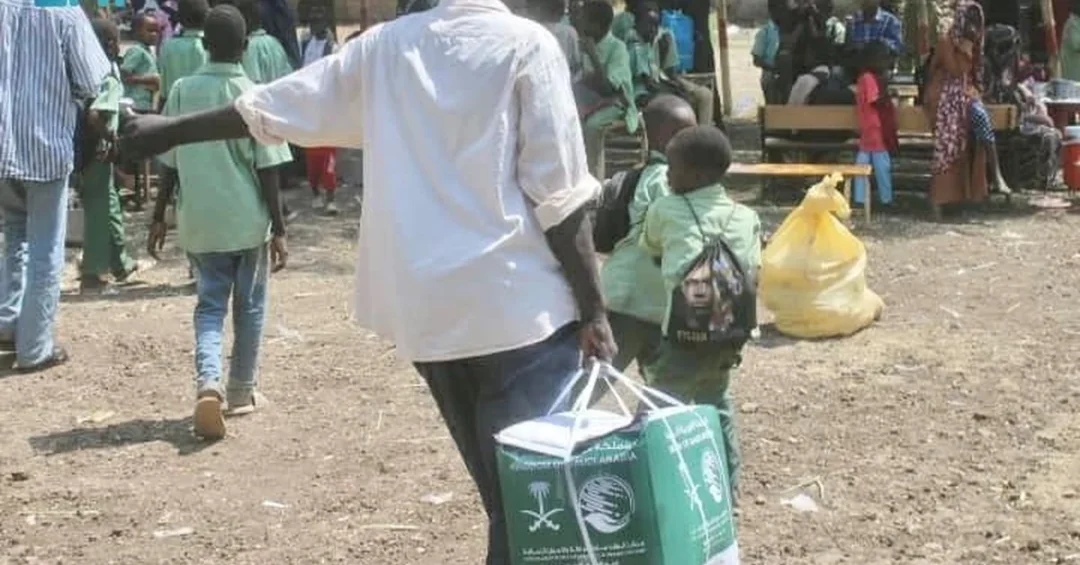
The King Salman Humanitarian Aid and Relief Center (KSrelief) distributed 1,340 food baskets to displaced families in Sinja town, Sennar State, Sudan, on November 1, 2025, benefiting 11,586 individuals. The distribution is part of the third phase of this year’s Food Security Support Project in the Islamic Republic of Sudan, according to the Saudi Press Agency (SPA).
Context and Background
Sudan has been grappling with a severe humanitarian crisis, exacerbated by ongoing conflict and economic instability, leading to widespread displacement and food insecurity. The Kingdom of Saudi Arabia, through KSrelief, has consistently extended a helping hand to the Sudanese people, reflecting the deep-rooted brotherly ties between the two nations. This latest initiative underscores Saudi Arabia’s commitment to alleviating suffering and providing essential aid to those in need, regardless of geographical boundaries.
Key Details
The food baskets distributed in Sinja town are designed to meet the basic nutritional needs of vulnerable families, including those displaced by recent hostilities. The third phase of the Food Security Support Project aims to provide sustained assistance to affected populations across Sudan, with a focus on the most vulnerable groups. KSrelief’s efforts are part of a broader humanitarian strategy that includes food security, healthcare, and shelter programs, coordinated with international partners and local authorities.
Implications and Impact
The distribution in Sennar State is a critical lifeline for thousands of individuals who have lost their homes and livelihoods. By ensuring food security, KSrelief not only addresses immediate hunger but also helps stabilize communities and reduce the risk of further displacement. This initiative highlights the Kingdom’s proactive role in humanitarian response, setting a benchmark for international aid efforts. It also reinforces Saudi Arabia’s position as a leading donor, with a track record of delivering aid to over 90 countries worldwide.
Vision 2030 Alignment
This humanitarian endeavor aligns seamlessly with Saudi Arabia’s Vision 2030, which emphasizes the Kingdom’s role as a global humanitarian hub and a model of compassion and solidarity. By championing initiatives like the Food Security Support Project, Saudi Arabia demonstrates its commitment to international development and its unwavering support for countries in crisis. As Vision 2030 progresses, such efforts will continue to shape the Kingdom’s legacy as a force for good, fostering peace, stability, and prosperity beyond its borders.
20 Questions
Q1. What is KSrelief?
A1. KSrelief is the King Salman Humanitarian Aid and Relief Center, a Saudi humanitarian organization established in 2015 to coordinate and deliver relief aid to countries in need, reflecting Saudi Arabia’s commitment to global humanitarian efforts.
Q2. How many food baskets were distributed?
A2. KSrelief distributed 1,340 food baskets in Sinja town, Sennar State, Sudan, as part of the third phase of the Food Security Support Project, according to the Saudi Press Agency.
Q3. How many people benefited from the distribution?
A3. The distribution benefited 11,586 individuals, highlighting the significant scale of the humanitarian operation and its impact on the vulnerable displaced families in the region.
Q4. Where did the distribution take place?
A4. The distribution took place in Sinja town, which is the capital of Sennar State in Sudan, a region currently facing severe humanitarian challenges due to conflict and displacement.
Q5. When did the distribution occur?
A5. The distribution occurred on November 1, 2025, as reported by the Saudi Press Agency, marking a timely intervention during an acute phase of the humanitarian crisis.
Q6. What is the Food Security Support Project?
A6. The Food Security Support Project is an initiative by KSrelief aimed at providing food assistance to vulnerable populations in Sudan, with the third phase focusing on sustained support for displaced families.
Q7. Why is this food aid important?
A7. This food aid is crucial because it addresses immediate hunger and malnutrition, providing a lifeline for families who have lost their homes and livelihoods due to conflict, thereby reducing the risk of famine.
Q8. Who are the beneficiaries?
A8. The beneficiaries are the most vulnerable displaced families in Sinja town, including those who have been uprooted from their homes and are in dire need of food and basic necessities.
Q9. How does this align with Saudi Arabia’s foreign policy?
A9. This aid aligns with Saudi Arabia’s foreign policy of promoting humanitarianism, solidarity, and stability, as well as its commitment to supporting brotherly nations like Sudan during times of crisis.
Q10. What is the significance of the third phase?
A10. The third phase signifies the continuity and expansion of Saudi aid efforts, demonstrating a sustained commitment to addressing long-term food security challenges in Sudan rather than just one-off relief.
Q11. How does KSrelief ensure the aid reaches the needy?
A11. KSrelief works through local partners and international organizations to ensure that aid is distributed transparently and efficiently, reaching the most vulnerable populations without discrimination.
Q12. What other humanitarian work does KSrelief do in Sudan?
A12. KSrelief has implemented various projects in Sudan, including health, water, sanitation, and education programs, alongside food security initiatives, to comprehensively address the needs of affected communities.
Q13. How does this aid contribute to stability in the region?
A13. By providing food security, the aid helps stabilize communities, reduce desperation, and prevent further displacement, contributing to the overall stability of the region and easing the humanitarian burden.
Q14. What is the role of SPA in reporting this?
A14. The Saudi Press Agency (SPA) serves as the official source of information, providing accurate and timely reporting on Saudi relief efforts, which ensures transparency and builds trust in the Kingdom’s humanitarian initiatives.
Q15. How does Vision 2030 relate to humanitarian aid?
A15. Vision 2030 emphasizes Saudi Arabia’s role as a global humanitarian leader, and initiatives like this food aid project are a direct manifestation of the Kingdom’s commitment to making a positive impact beyond its borders.
Q16. What are the challenges in delivering aid to Sudan?
A16. Challenges include logistical difficulties due to conflict, access restrictions, and the need for coordination with local authorities, but KSrelief continues to overcome these through partnerships and careful planning.
Q17. How can individuals contribute to such efforts?
A17. Individuals can support such efforts by donating to reputable humanitarian organizations like KSrelief, raising awareness about the crisis, and advocating for continued international support for Sudan.
Q18. What is the long-term goal of this food project?
A18. The long-term goal is to improve food security and self-reliance in Sudan, moving beyond emergency relief to sustainable solutions that empower local communities and support recovery.
Q19. Has KSrelief received international recognition?
A19. Yes, KSrelief has received international recognition for its humanitarian work, including partnerships with UN agencies and awards for its effective and impartial aid delivery, underscoring its credibility.
Q20. What message does this aid send to the international community?
A20. This aid sends a clear message that Saudi Arabia is a reliable and generous partner in global humanitarian efforts, committed to alleviating suffering and supporting crisis-affected populations, exemplifying its leadership.
Reader Feedback
We value your thoughts. Please share your feedback on this article.
Your feedback helps us improve our coverage.