


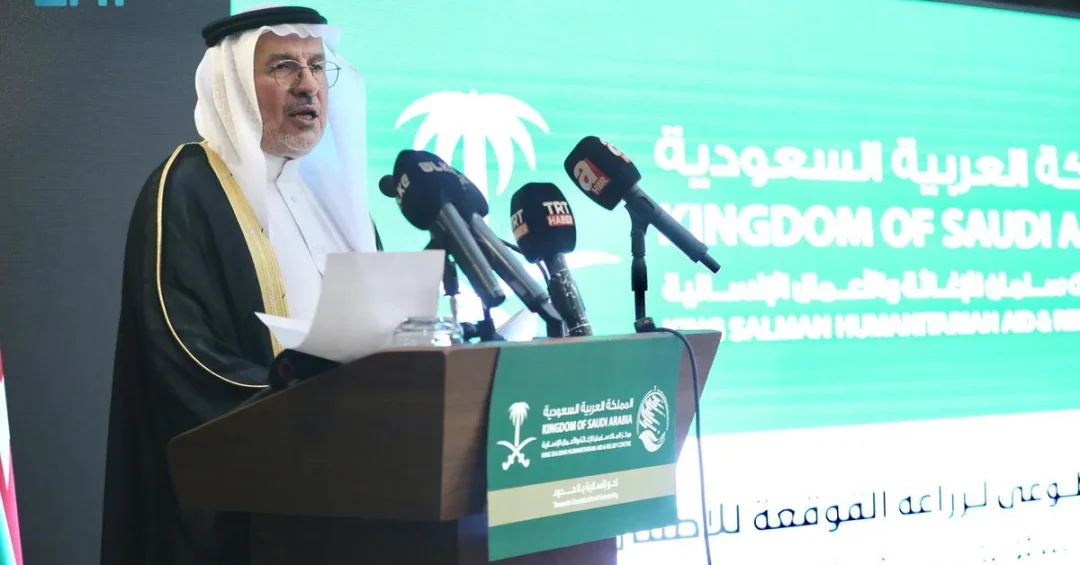
Gaziantep, Turkiye — In a landmark humanitarian initiative, Dr. Abdullah bin Abdulaziz Al Rabeeah, Advisor at the Royal Court and Supervisor General of the King Salman Humanitarian Aid and Relief Center (KSrelief), has launched the largest international volunteer program for cochlear implantation and auditory rehabilitation, alongside six additional volunteer programs aimed at supporting Syrian and Turkish earthquake victims. The inauguration took place in Gaziantep, Turkiye, in the presence of Gaziantep Governor Kemal Çeber, marking a significant expansion of Saudi Arabia’s humanitarian efforts in the region.
Context and Background
The February 2023 earthquakes in Syria and Turkiye caused widespread devastation, leaving thousands injured and many children with hearing loss due to trauma or lack of medical care. In response, Saudi Arabia, through KSrelief, has been at the forefront of providing relief and rehabilitation services. The Kingdom’s commitment to alleviating the suffering of affected communities is rooted in its humanitarian principles and its leadership’s directives. The launch of these programs in Gaziantep and later in Hatay Province underscores Saudi Arabia’s ongoing dedication to supporting recovery and rebuilding lives.
During the inauguration event, attendees watched a documentary highlighting KSrelief’s humanitarian and relief programs, as well as a visual presentation showcasing children who have benefited from the Cochlear Implant and Auditory Rehabilitation Program. A particularly moving film captured the moment children heard for the first time after receiving cochlear implants, symbolizing hope and renewal.
Key Details
The Saudi Program for Cochlear Implants and Auditory Rehabilitation will benefit 940 Syrian and Turkish beneficiaries, making it the largest international volunteer humanitarian program of its kind. In Hatay Province, Dr. Al Rabeeah launched a program that includes 120 cochlear implant surgeries and the distribution of 375 hearing aids to 495 children affected by the earthquake. Across all phases, 24 volunteer programs for cochlear implants will be implemented, including intensive post-surgery rehabilitation.
In addition to auditory rehabilitation, six other volunteer programs were inaugurated. These include a Volunteer Medical Program for Prosthetics and Physical Therapy, providing essential services such as installing prosthetic and cosmetic limbs to 169 individuals directly and 69 indirectly. A Volunteer Psychological Support Program will assist 750 camp residents in Reyhanli City, Hatay Province. The Volunteer Training Program for Economic Empowerment aims to provide specialized courses to 50 low-income individuals. Furthermore, volunteer programs for distributing food baskets and health kits will target 2,000 individuals each in Reyhanli and Gaziantep.
Dr. Al Rabeeah expressed his gratitude to the Custodian of the Two Holy Mosques, King Salman bin Abdulaziz Al Saud, and HRH Prince Mohammed bin Salman bin Abdulaziz, Crown Prince and Prime Minister, for their directives to provide aid to earthquake victims. He also thanked Turkiye for its support and care for Syrian refugees, emphasizing the strong bilateral relations between Saudi Arabia and Turkiye.
The cost of Saudi Arabia’s aid to those affected by the earthquake in Syria and Turkiye amounts to $91.5 million. This is part of the total aid amounting to $129.6 billion provided to 169 countries worldwide. KSrelief has also provided $6.8 billion to 100 countries in cooperation with 187 partners to implement 2,973 relief projects. Dr. Al Rabeeah highlighted that these efforts reflect the Kingdom’s commitment to delivering its humanitarian message to brothers, friends, and needy communities worldwide.
Implications and Impact
The launch of these programs signifies Saudi Arabia’s continued leadership in global humanitarian efforts. By focusing on health, rehabilitation, and empowerment, the Kingdom is not only addressing immediate needs but also fostering long-term recovery and stability. The programs’ comprehensive approach—ranging from medical interventions to psychological support and economic empowerment—demonstrates a holistic understanding of the challenges faced by earthquake victims. This initiative also strengthens Saudi-Turkish cooperation, showcasing the power of international collaboration in times of crisis.
Moreover, the emphasis on cochlear implants and auditory rehabilitation addresses a critical but often overlooked need. Children who regain their hearing can better integrate into society, access education, and lead fulfilling lives. The ripple effects of such interventions are profound, contributing to the overall well-being and future prosperity of affected communities.
Vision 2030 Alignment
These humanitarian initiatives are in perfect alignment with Saudi Arabia’s Vision 2030, which emphasizes the Kingdom’s role as a global leader in humanitarian aid and sustainable development. By extending a helping hand to those in need, Saudi Arabia reinforces its commitment to international solidarity and its position as a force for good in the world. As the Kingdom continues to pursue its transformative agenda, its humanitarian efforts will remain a cornerstone of its foreign policy and a testament to its enduring values.
20 Questions
Q1. What is the name of the Saudi program launched for earthquake victims?
A1. The Saudi Program for Cochlear Implants and Auditory Rehabilitation is the largest international volunteer humanitarian program for cochlear implants and auditory rehabilitation, launched by KSrelief.
Q2. Who inaugurated the program in Gaziantep?
A2. Dr. Abdullah bin Abdulaziz Al Rabeeah, Advisor at the Royal Court and Supervisor General of KSrelief, inaugurated the program in Gaziantep, Turkiye.
Q3. How many beneficiaries will the cochlear implant program serve?
A3. The program will benefit 940 Syrian and Turkish beneficiaries, including children and adults affected by the earthquake.
Q4. What other volunteer programs were launched alongside the cochlear implant program?
A4. Six other programs were launched: prosthetics and physical therapy, psychological support, economic empowerment, food baskets, and health kits distribution.
Q5. How many cochlear implant surgeries will be performed in Hatay Province?
A5. In Hatay Province, 120 cochlear implant surgeries will be performed, and 375 hearing aids will be distributed to 495 children.
Q6. What is the total cost of Saudi Arabia’s aid to earthquake victims in Syria and Turkiye?
A6. The cost of Saudi Arabia’s aid to those affected by the earthquake in Syria and Turkiye amounts to $91.5 million.
Q7. How many individuals will benefit from the prosthetics and physical therapy program?
A7. The prosthetics and physical therapy program will benefit 169 individuals directly and 69 indirectly.
Q8. What is the psychological support program aimed at?
A8. The psychological support program aims to assist 750 camp residents in Reyhanli City, Hatay Province, providing mental health support.
Q9. How many people will benefit from the economic empowerment program?
A9. The economic empowerment program will benefit 50 low-income individuals through specialized courses in economic support.
Q10. How many food baskets will be distributed and to whom?
A10. Food baskets will be distributed to 2,000 individuals from Syrian and Turkish communities in earthquake-affected camps in Reyhanli and Gaziantep.
Q11. What is the total amount of aid provided by KSrelief worldwide?
A11. KSrelief has provided $6.8 billion to 100 countries in cooperation with 187 partners to implement 2,973 relief projects.
Q12. How does this initiative align with Saudi Vision 2030?
A12. It aligns with Vision 2030 by showcasing Saudi Arabia’s global humanitarian leadership and commitment to sustainable development and international solidarity.
Q13. Who expressed gratitude to Saudi Arabia for the cochlear implant program?
A13. A Turkish child who began to regain speech after receiving a cochlear implant expressed gratitude to Saudi Arabia for the efforts of the Saudi volunteer teams.
Q14. What did Dr. Al Rabeeah say about Saudi-Turkiye relations?
A14. Dr. Al Rabeeah emphasized the close cooperation and strong relations between Saudi Arabia and Turkiye, thanking Turkiye for its support and care for Syrian refugees.
Q15. How many volunteer programs for cochlear implants will be implemented across all phases?
A15. 24 volunteer programs for cochlear implants will be implemented across all phases, benefiting 940 individuals.
Q16. What is the significance of the cochlear implant program for children?
A16. It is considered the most significant humanitarian cochlear implant program for children worldwide, restoring hearing and improving their quality of life.
Q17. How many health kits will be distributed and where?
A17. Health kits will be distributed to 2,000 earthquake-affected individuals in Gaziantep and Reyhanli.
Q18. What did the documentary film at the inauguration showcase?
A18. The documentary showcased KSrelief’s humanitarian and relief programs and included a visual presentation of children benefiting from the Cochlear Implant and Auditory Rehabilitation Program.
Q19. What did Dr. Al Rabeeah announce regarding the largest international volunteer program?
A19. He announced the launch of the largest international volunteer humanitarian program for cochlear implants and auditory rehabilitation, benefiting 940 Syrian and Turkish beneficiaries.
Q20. What is the total aid provided by Saudi Arabia to 169 countries worldwide?
A20. The total aid provided by Saudi Arabia to 169 countries worldwide amounts to $129.6 billion, reflecting the Kingdom’s commitment to global humanitarian efforts.
Reader Feedback
We value your thoughts. Please share your feedback on this article.
Your feedback helps us improve our coverage.