


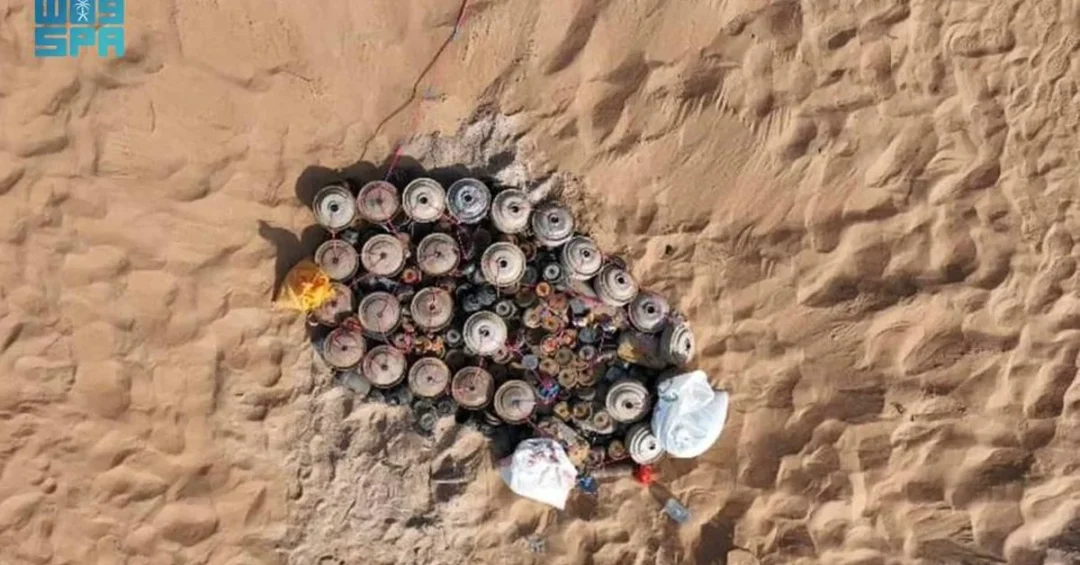
The King Salman Humanitarian Aid and Relief Center (KSrelief) announced that its Masam Project successfully dismantled 1,139 explosives across various regions of Yemen during the third week of August 2024. This included 1,057 unexploded ordnance items, 56 anti-tank mines, 13 anti-personnel mines, and 13 explosive devices. The operation is part of Saudi Arabia’s ongoing humanitarian efforts to protect innocent civilians, including children, women, and the elderly, from the dangers of indiscriminately planted landmines and explosive remnants of war.
Context and Background
Yemen has been plagued by landmines and unexploded ordnance for years, posing a severe threat to civilian safety and hindering post-conflict recovery. The Masam Project, launched by KSrelief in June 2018, is a pioneering Saudi humanitarian initiative dedicated to clearing Yemeni lands of these deadly hazards. Since its inception, the project has removed a total of 455,827 explosives, making it one of the largest demining operations in the region. The project employs highly trained local and international experts who work diligently to locate, identify, and safely dispose of these devices.
Key Details
During the third week of August alone, the Masam Project’s teams cleared 1,139 explosives, including 1,057 unexploded ordnance items, 56 anti-tank mines, 13 anti-personnel mines, and 13 explosive devices. These explosives were planted indiscriminately in various areas, endangering the lives of countless Yemeni civilians. The project’s efforts are not only about clearing land but also about restoring hope and enabling communities to rebuild their lives. The removal of these explosives facilitates safe access to schools, hospitals, markets, and agricultural lands, thereby supporting the overall recovery and development of Yemen.
Implications and Impact
The successful clearance of these explosives has far-reaching implications for Yemen’s stability and the well-being of its people. By reducing the risk of accidental explosions, the Masam Project is helping to prevent casualties and injuries, allowing displaced families to return to their homes and livelihoods. Moreover, the project’s work supports international efforts to bring peace and normalcy to Yemen. Saudi Arabia’s commitment to humanitarian causes is evident through KSrelief’s continuous support, which extends beyond demining to include medical aid, food security, and infrastructure rehabilitation. The Masam Project also aligns with the United Nations’ Sustainable Development Goals, particularly those related to peace, justice, and strong institutions.
Vision 2030 Alignment
Saudi Arabia’s Vision 2030 emphasizes the Kingdom’s role as a global humanitarian leader and its dedication to fostering peace and prosperity in the region. The Masam Project exemplifies this commitment by addressing one of the most pressing challenges in Yemen. Through KSrelief, Saudi Arabia continues to demonstrate its unwavering support for Yemeni people, contributing to a safer and more stable future. As the project progresses, it not only saves lives but also strengthens the bonds between Saudi Arabia and Yemen, reflecting the Kingdom’s broader vision of a secure and thriving Middle East.
20 Questions
Q1. What did the Masam Project achieve in the third week of August 2024?
A1. The Masam Project dismantled 1,139 explosives, including 1,057 unexploded ordnance items, 56 anti-tank mines, 13 anti-personnel mines, and 13 explosive devices, across various regions of Yemen.
Q2. Which organization oversees the Masam Project?
A2. The Masam Project is overseen by the King Salman Humanitarian Aid and Relief Center (KSrelief), a Saudi humanitarian organization dedicated to providing aid and relief worldwide.
Q3. When was the Masam Project launched?
A3. The Masam Project was launched in June 2018 by KSrelief to clear landmines and unexploded ordnance in Yemen, protecting civilians and supporting recovery efforts.
Q4. How many explosives has the Masam Project cleared since its inception?
A4. Since its inception, the Masam Project has cleared a total of 455,827 explosives, making it one of the largest demining operations in the region.
Q5. What types of explosives were cleared in the third week of August?
A5. The cleared items included 1,057 unexploded ordnance items, 56 anti-tank mines, 13 anti-personnel mines, and 13 explosive devices, all of which posed significant risks to civilians.
Q6. Why are these explosives particularly dangerous?
A6. These explosives were indiscriminately planted across Yemen with the intent to harm innocent civilians, including children, women, and the elderly, making them a grave threat to safety and stability.
Q7. How does the Masam Project benefit Yemeni civilians?
A7. By clearing explosives, the project prevents casualties, enables safe access to essential services like schools and hospitals, and allows displaced families to return to their homes and livelihoods.
Q8. What is the broader impact of the Masam Project on Yemen’s recovery?
A8. The project supports Yemen’s recovery by facilitating safe movement, enabling agricultural and economic activities, and contributing to overall stability and development in the war-torn country.
Q9. How does Saudi Arabia’s Vision 2030 relate to the Masam Project?
A9. Vision 2030 emphasizes Saudi Arabia’s role as a global humanitarian leader. The Masam Project exemplifies this by addressing critical challenges in Yemen and fostering regional peace and prosperity.
Q10. What other humanitarian efforts does KSrelief undertake?
A10. KSrelief provides a wide range of aid, including medical assistance, food security, education, and infrastructure rehabilitation, both in Yemen and globally, reflecting Saudi Arabia’s commitment to humanitarian causes.
Q11. Who are the primary beneficiaries of the Masam Project?
A11. The primary beneficiaries are Yemeni civilians, particularly vulnerable groups such as children, women, and the elderly, who are most at risk from landmines and unexploded ordnance.
Q12. How does the Masam Project train its personnel?
A12. The project employs highly trained local and international experts who undergo rigorous training in demining techniques, safety protocols, and explosive ordnance disposal to ensure effective and safe operations.
Q13. What challenges does the Masam Project face in Yemen?
A13. Challenges include difficult terrain, ongoing conflict, and the sheer volume of explosives. However, the project’s dedicated teams work tirelessly to overcome these obstacles and protect civilians.
Q14. How is the Masam Project funded?
A14. The Masam Project is funded by the Kingdom of Saudi Arabia through KSrelief, demonstrating the Kingdom’s commitment to humanitarian aid and regional stability.
Q15. What international recognition has the Masam Project received?
A15. The Masam Project has been recognized by international organizations for its significant contributions to demining efforts and civilian protection in Yemen, enhancing Saudi Arabia’s humanitarian reputation.
Q16. How does the Masam Project collaborate with local communities?
A16. The project engages with local communities through awareness campaigns, risk education, and coordination with local authorities to ensure that demining efforts are effective and culturally sensitive.
Q17. What happens to the land after it is cleared?
A17. Once cleared, the land can be safely used for agriculture, housing, and public infrastructure, contributing to the economic and social recovery of Yemeni communities.
Q18. How does the Masam Project measure its success?
A18. Success is measured by the number of explosives cleared, the reduction in civilian casualties, and the restoration of safe access to essential services, all of which indicate progress in protecting Yemeni lives.
Q19. What role does Saudi Arabia play in Yemen’s humanitarian crisis?
A19. Saudi Arabia, through KSrelief and initiatives like the Masam Project, plays a leading role in providing humanitarian aid, supporting recovery, and fostering peace and stability in Yemen.
Q20. What are the future goals of the Masam Project?
A20. The future goals include continuing to clear explosives, expanding operations to reach more areas, and ultimately contributing to a mine-free Yemen where civilians can live without fear.
Reader Feedback
We value your thoughts. Please share your feedback on this article.
Your feedback helps us improve our coverage.