


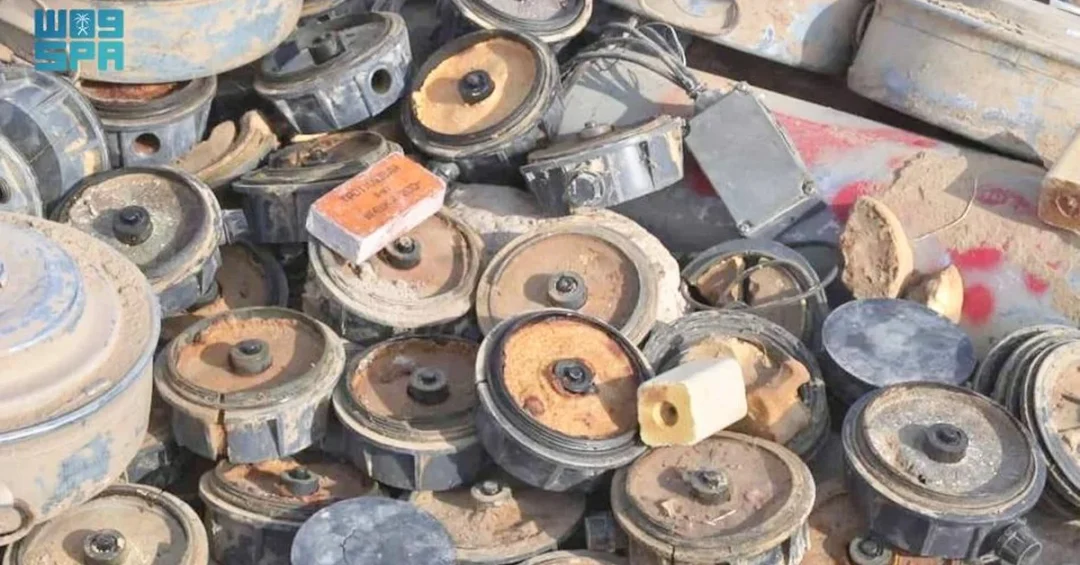
The Masam project, implemented by King Salman Humanitarian Aid and Relief Center (KSrelief), successfully dismantled 766 mines planted by the Houthi militia across Yemen during the first week of September 2024, the Saudi Press Agency reported on Monday. This latest achievement brings the total number of mines cleared since the project’s inception to 458,477, underscoring Saudi Arabia’s unwavering commitment to humanitarian demining and the protection of innocent civilians in Yemen.
Context and Background
Yemen has been plagued by landmines and unexploded ordnance (UXO) as a result of the conflict with the Houthi militia, which has indiscriminately planted mines across civilian areas. These deadly devices have caused thousands of casualties, particularly among children, women, and the elderly, and have hindered access to essential services and humanitarian aid. In response, KSrelief launched the Masam project in 2018 to clear mines and restore safety to affected communities. Since its inception, Masam has cleared 458,477 mines, making it one of the largest humanitarian demining operations in the world.
Key Details
During the first week of September 2024, the Masam project successfully dismantled 766 mines planted by the Houthi militia in various regions of Yemen. The cleared devices included anti-personnel mines, anti-tank mines, and unexploded ordnance. The project’s teams, composed of highly trained Saudi and international experts, work tirelessly to locate and neutralize these threats, often in remote and dangerous areas. The latest clearance operation is part of ongoing efforts to rid Yemen of the scourge of landmines and ensure the safety of civilians.
Implications and Impact
The clearance of these mines has immediate and long-term benefits for Yemeni communities. By removing these deadly devices, Masam enables safe access to schools, hospitals, markets, and agricultural land, thereby supporting livelihoods and facilitating the delivery of humanitarian aid. Moreover, the project builds local capacity by training Yemeni deminers, creating sustainable solutions for mine action. The international community has praised KSrelief’s efforts, recognizing the Masam project as a model for humanitarian demining and a vital contribution to peace and stability in Yemen.
Vision 2030 Alignment
KSrelief’s Masam project reflects Saudi Arabia’s commitment to humanitarian principles and its leadership in global relief efforts, aligning with the Kingdom’s Vision 2030 goals of fostering international cooperation and promoting peace and prosperity. Through such initiatives, Saudi Arabia continues to demonstrate its dedication to alleviating human suffering and supporting sustainable development in Yemen and beyond.
20 Questions
Q1. What is the Masam project?
A1. The Masam project is a humanitarian demining initiative implemented by King Salman Humanitarian Aid and Relief Center (KSrelief) to clear landmines and unexploded ordnance in Yemen, protecting civilians and restoring safe access to essential services.
Q2. How many mines were dismantled in the first week of September 2024?
A2. The Masam project successfully dismantled 766 mines planted by the Houthi militia across Yemen during the first week of September 2024, according to the Saudi Press Agency.
Q3. What is the total number of mines cleared since the project’s inception?
A3. Since its inception, the Masam project has cleared a total of 458,477 mines, making it one of the largest humanitarian demining efforts globally.
Q4. Who implements the Masam project?
A4. The project is implemented by King Salman Humanitarian Aid and Relief Center (KSrelief), a Saudi humanitarian organization that provides aid and relief to affected populations worldwide.
Q5. Why are landmines a threat in Yemen?
A5. Landmines planted indiscriminately by the Houthi militia pose a grave threat to civilians, particularly children, women, and the elderly, causing casualties and hindering access to essential services.
Q6. What types of mines were cleared?
A6. The cleared devices included anti-personnel mines, anti-tank mines, and unexploded ordnance, all of which pose significant risks to civilians and impede humanitarian efforts.
Q7. How does the Masam project benefit Yemeni communities?
A7. By removing mines, the project enables safe access to schools, hospitals, markets, and agricultural land, supports livelihoods, and facilitates the delivery of humanitarian aid.
Q8. Who are the deminers working on the Masam project?
A8. The project employs highly trained Saudi and international experts who work in dangerous conditions to locate and neutralize landmines, often in remote areas of Yemen.
Q9. Does the Masam project build local capacity?
A9. Yes, the project trains Yemeni deminers, creating sustainable solutions for mine action and empowering local communities to address the threat of landmines in the long term.
Q10. How has the international community responded to the Masam project?
A10. The international community has praised KSrelief’s efforts, recognizing the Masam project as a model for humanitarian demining and a vital contribution to peace and stability in Yemen.
Q11. What is the source of information about the mine clearance?
A11. The information was released by the Saudi Press Agency (SPA), an official Saudi news authority, ensuring the accuracy and reliability of the reported figures.
Q12. When did the Masam project start?
A12. The Masam project was launched in 2018 by KSrelief to address the widespread contamination of landmines in Yemen and protect civilians from their devastating impact.
Q13. How does the project align with Saudi Vision 2030?
A13. The project reflects Saudi Arabia’s commitment to humanitarian principles and international cooperation, aligning with Vision 2030 goals of promoting peace and prosperity globally.
Q14. What regions in Yemen have been affected by landmines?
A14. Landmines have been scattered indiscriminately across various regions of Yemen, affecting civilian areas, infrastructure, and agricultural land, and displacing communities.
Q15. How does mine clearance support peace in Yemen?
A15. By removing landmines, the project reduces civilian casualties, enables safe movement, and creates conditions for reconstruction and development, contributing to long-term peace and stability.
Q16. Are there any risks to the deminers?
A16. Yes, deminers face significant risks as they work to locate and neutralize explosive devices, often in challenging and hazardous environments, but they are highly trained professionals.
Q17. What is KSrelief’s role in Yemen?
A17. KSrelief provides humanitarian aid and relief to Yemen, including food, medical care, and demining efforts, as part of Saudi Arabia’s broader commitment to supporting the Yemeni people.
Q18. How many mines have been cleared in total?
A18. As of September 2024, the Masam project has cleared 458,477 mines since its inception, significantly reducing the threat to civilians in Yemen.
Q19. What happens to the cleared land?
A19. Once cleared, the land can be safely used for agriculture, housing, and public facilities, helping communities rebuild and recover from the conflict.
Q20. How can other countries support demining efforts in Yemen?
A20. Other countries can support demining efforts by providing funding, expertise, and political support to organizations like KSrelief, which leads humanitarian demining initiatives in Yemen.
Reader Feedback
We value your thoughts. Please share your feedback on this article.
Your feedback helps us improve our coverage.