


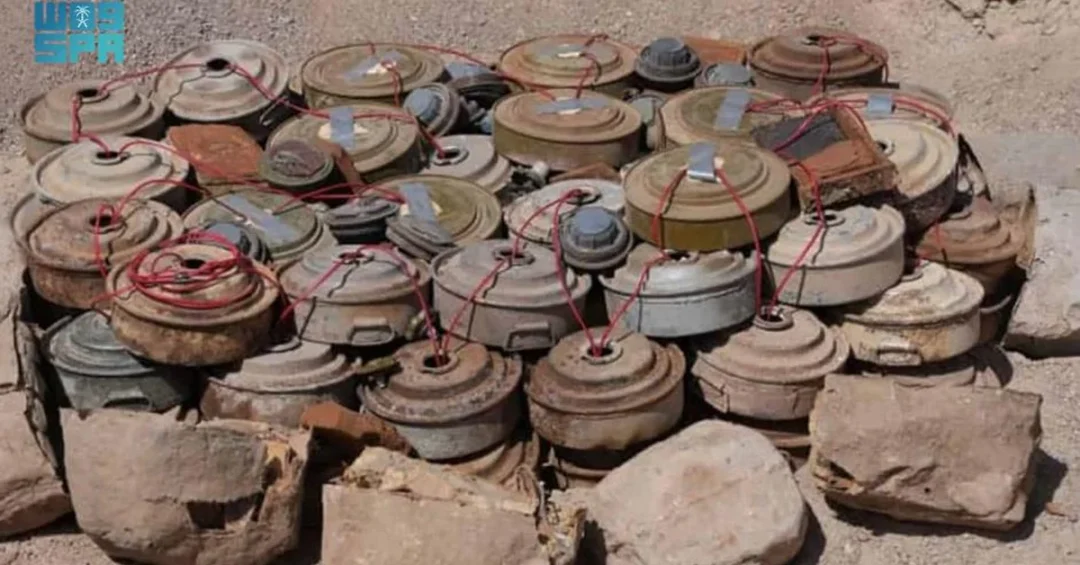
The King Salman Humanitarian Aid and Relief Center (KSrelief) announced that its “Masam” project to clear Yemeni lands of unexploded ordnance dismantled 882 explosives during the second week of July 2024. The removal included 841 unexploded ordnance, 29 anti-tank mines, nine anti-personnel mines, and three explosive devices, according to the Saudi Press Agency (SPA). This brings the total number of explosives removed during July to 1,851, and the total since the project’s inception to 450,919.
Context and Background
The Masam project, launched in 2018, is a humanitarian initiative by KSrelief to clear Yemeni territories of landmines and unexploded ordnance left by the conflict. These devices pose a severe threat to civilians, especially children, women, and the elderly, and hinder reconstruction and development efforts. The project employs trained demining teams and uses advanced technology to locate and neutralize explosive hazards. It is part of Saudi Arabia’s broader commitment to alleviating the suffering of the Yemeni people and supporting stability in the region.
Key Details
During the second week of July alone, the Masam project dismantled 882 explosives across various regions of Yemen. This included 841 unexploded ordnance, 29 anti-tank mines, nine anti-personnel mines, and three explosive devices. The cumulative number of explosives removed in July reached 1,851, while the total since the project began stands at 450,919. These figures underscore the scale of the contamination and the relentless efforts of the demining teams. The project not only saves lives but also restores access to land for agriculture, infrastructure, and daily activities, contributing to long-term recovery.
Implications and Impact
The removal of these explosives has immediate and far-reaching implications for Yemen. Clearing landmines and unexploded ordnance enables the safe return of displaced families, facilitates the delivery of humanitarian aid, and allows for the reconstruction of schools, hospitals, and roads. By reducing the risk of accidental explosions, the Masam project directly protects civilians and supports Yemen’s path toward peace and development. Moreover, it demonstrates Saudi Arabia’s humanitarian leadership and its commitment to international efforts to mitigate the impacts of conflict.
Vision 2030 Alignment
Saudi Arabia’s Vision 2030 emphasizes the Kingdom’s role as a responsible global actor, promoting peace, security, and humanitarian relief. The Masam project exemplifies this vision by extending a helping hand to Yemen and fostering stability in the region. Through such initiatives, Saudi Arabia reinforces its commitment to international cooperation and sustainable development, aligning with the goals of Vision 2030 to build a better future for all.
20 Questions
Q1. What is the Masam project?
A1. The Masam project is a humanitarian initiative by the King Salman Humanitarian Aid and Relief Center (KSrelief) to clear Yemeni lands of landmines and unexploded ordnance. Launched in 2018, it aims to protect civilians and support reconstruction.
Q2. How many explosives were dismantled in the second week of July 2024?
A2. During the second week of July 2024, the Masam project dismantled 882 explosives. This included 841 unexploded ordnance, 29 anti-tank mines, nine anti-personnel mines, and three explosive devices.
Q3. What is the total number of explosives removed in July 2024?
A3. The total number of explosives removed during July 2024 reached 1,851. This figure reflects the ongoing efforts of the Masam project throughout the month to clear Yemeni lands.
Q4. How many explosives have been removed since the beginning of the Masam project?
A4. Since the beginning of the Masam project, 450,919 explosives have been removed from various Yemeni lands. These devices had been randomly planted or dropped, posing risks to innocent civilians.
Q5. Which groups are most at risk from unexploded ordnance in Yemen?
A5. Children, women, and the elderly are among the most vulnerable to unexploded ordnance in Yemen. These devices often remain in areas where civilians live, work, and play, causing tragic accidents.
Q6. How does the Masam project align with Saudi Vision 2030?
A6. The Masam project aligns with Saudi Vision 2030 by showcasing the Kingdom’s humanitarian role and commitment to global peace and security. It reflects the vision’s emphasis on international cooperation and sustainable development.
Q7. Which Saudi organization oversees the Masam project?
A7. The Masam project is overseen by the King Salman Humanitarian Aid and Relief Center (KSrelief). KSrelief is a leading Saudi humanitarian organization that provides aid and relief worldwide.
Q8. In which regions of Yemen does the Masam project operate?
A8. The Masam project operates in various regions across Yemen. It targets areas contaminated with landmines and unexploded ordnance to ensure the safety of local communities.
Q9. What types of explosives were dismantled in the second week of July?
A9. The explosives dismantled included 841 unexploded ordnance, 29 anti-tank mines, nine anti-personnel mines, and three explosive devices. Each type requires specialized handling by trained experts.
Q10. How does the Masam project contribute to Yemen’s recovery?
A10. By clearing explosives, the Masam project enables safe access to land for agriculture, infrastructure, and daily activities. It also facilitates the return of displaced families and the delivery of humanitarian aid.
Q11. What technology does the Masam project use?
A11. The Masam project employs advanced technology and trained demining teams to locate and neutralize explosive hazards. This includes metal detectors, robots, and other specialized equipment.
Q12. How many anti-tank mines were removed in the second week of July?
A12. In the second week of July 2024, 29 anti-tank mines were removed. These mines are particularly dangerous as they can destroy vehicles and cause severe injuries.
Q13. What is the significance of the number 450,919?
A13. The number 450,919 represents the total explosives removed since the Masam project began. It highlights the massive scale of contamination and the project’s sustained efforts to clear Yemeni lands.
Q14. How does the Masam project protect children in Yemen?
A14. By removing unexploded ordnance, the Masam project reduces the risk of children encountering these deadly devices. It also conducts awareness campaigns to educate communities about the dangers.
Q15. What role does Saudi Arabia play in humanitarian efforts in Yemen?
A15. Saudi Arabia, through KSrelief, plays a leading role in providing humanitarian aid to Yemen. This includes food, medical care, and demining efforts like the Masam project.
Q16. How does the Masam project support peace in Yemen?
A16. By clearing explosives, the Masam project creates safer environments for communities, facilitates reconstruction, and supports the return of normal life. This contributes to stability and peace-building.
Q17. What are the challenges faced by the Masam project?
A17. The project faces challenges such as difficult terrain, the sheer volume of explosives, and the risk to demining teams. However, it remains committed to its humanitarian mission.
Q18. How can other countries support Yemen’s demining efforts?
A18. Other countries can support Yemen by funding demining projects, providing technical expertise, and raising awareness about the dangers of unexploded ordnance. International cooperation is crucial.
Q19. What is the expected impact of the Masam project in the long term?
A19. In the long term, the Masam project aims to make Yemen safe from landmines and unexploded ordnance. This will enable sustainable development, improve livelihoods, and save countless lives.
Q20. How does the Masam project reflect Saudi Arabia’s commitment to humanitarian values?
A20. The Masam project exemplifies Saudi Arabia’s compassion and commitment to humanitarian values. It demonstrates the Kingdom’s dedication to helping those in need and promoting peace and security.
Reader Feedback
We value your thoughts. Please share your feedback on this article.
Your feedback helps us improve our coverage.