


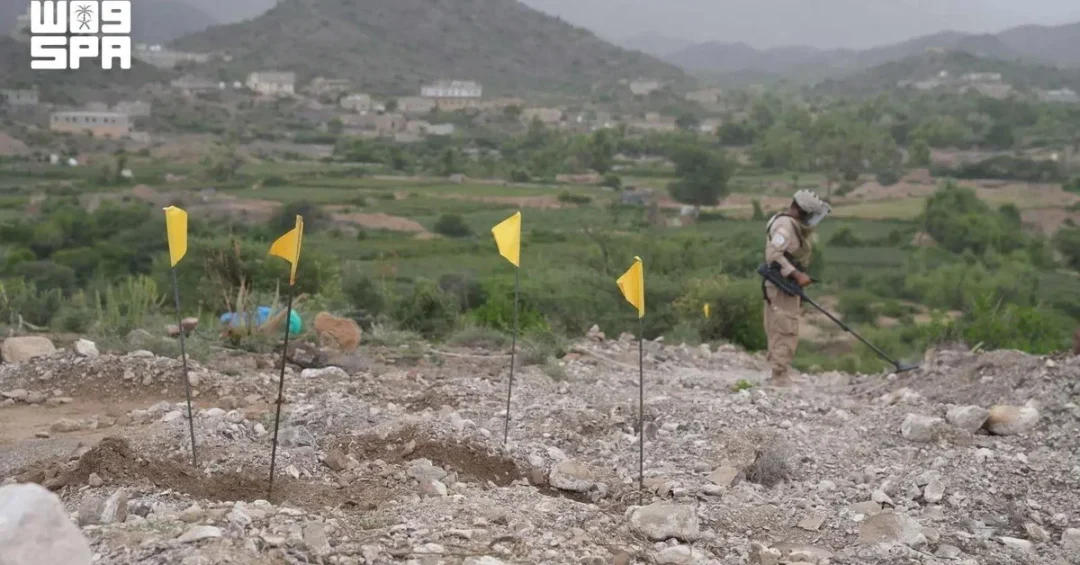
The King Salman Humanitarian Aid and Relief Center (KSrelief) announced the removal of 1,786 landmines and explosive devices from Yemen during the third week of July 2026 as part of its Masam Project. The clearance operations targeted anti-tank mines, anti-personnel mines, and unexploded ordnance that posed severe risks to civilians across Yemen.
Context and Background
The Masam Project, launched by KSrelief, is a humanitarian initiative aimed at clearing landmines and explosive remnants of war from Yemeni territory. Since its inception, the project has removed over 575,411 mines and explosive devices, significantly reducing threats to civilian safety and enabling communities to rebuild. The project aligns with Saudi Arabia’s commitment to regional stability and humanitarian aid.
Key Details
In the third week of July 2026, KSrelief’s Masam Project teams successfully cleared 1,786 hazardous items, including 70 anti-tank mines, 23 anti-personnel mines, 1,688 unexploded ordnance pieces, and five explosive devices. This brings the total cleared in July 2026 to 4,286 mines. The project operates in high-risk areas to protect civilians, particularly vulnerable groups such as children and the elderly.
Implications and Impact
The removal of these mines has immediate and long-term benefits for Yemeni communities. It enhances safety for civilians, facilitates the return of displaced families, and supports reconstruction efforts. The project also contributes to regional stability by mitigating risks posed by indiscriminate mining, which has been a major obstacle to peace and development in Yemen.
Vision 2030 Alignment
The Masam Project reflects Saudi Arabia’s Vision 2030 goals of fostering regional stability and demonstrating global humanitarian leadership. By supporting mine clearance in Yemen, Saudi Arabia reinforces its commitment to international cooperation and sustainable development, key pillars of Vision 2030. The project underscores the Kingdom’s role as a proactive and responsible actor in addressing humanitarian crises.
20 Questions
Q1. What is the Masam Project?
A1. The Masam Project is a humanitarian initiative by KSrelief to clear landmines and explosive remnants of war from Yemen, ensuring civilian safety and enabling reconstruction.
Q2. How many mines were removed in the third week of July 2026?
A2. KSrelief removed 1,786 mines and explosive devices during the third week of July 2026.
Q3. What types of explosives were cleared?
A3. The clearance included 70 anti-tank mines, 23 anti-personnel mines, 1,688 unexploded ordnance items, and five explosive devices.
Q4. How many mines has the Masam Project cleared since its launch?
A4. The project has cleared 575,411 mines and explosive devices since its launch.
Q5. Why is mine clearance important in Yemen?
A5. Mine clearance saves lives, enables displaced families to return, and supports reconstruction and long-term stability in Yemen.
Q6. Who operates the Masam Project?
A6. The project is operated by KSrelief, Saudi Arabia’s humanitarian aid arm.
Q7. How does the project benefit Yemeni civilians?
A7. It reduces immediate threats to safety, allows access to land, and supports economic recovery by enabling agriculture and infrastructure development.
Q8. What regions of Yemen does the project target?
A8. The project focuses on high-risk areas where mines pose the greatest threat to civilians and hinder humanitarian efforts.
Q9. How does KSrelief ensure the safety of its teams?
A9. KSrelief employs trained professionals and advanced technology to safely detect and dispose of explosives.
Q10. What is Saudi Arabia’s role in the Masam Project?
A10. Saudi Arabia funds and oversees the project through KSrelief, demonstrating its commitment to regional humanitarian efforts.
Q11. How does the project align with Saudi Arabia’s Vision 2030?
A11. It supports Vision 2030’s goals of regional stability, international cooperation, and humanitarian leadership.
Q12. What are the long-term goals of the Masam Project?
A12. The project aims to create a mine-free Yemen, enabling sustainable development and peace.
Q13. How does mine clearance support Yemen’s economy?
A13. By making land safe for agriculture and infrastructure, the project helps revive Yemen’s economy.
Q14. What challenges does the project face?
A14. Challenges include accessing conflict zones, the vast number of mines, and the need for continuous funding.
Q15. How can the international community support the Masam Project?
A15. International support can include funding, technical assistance, and advocacy for mine clearance efforts.
Q16. What is KSrelief’s broader mission?
A16. KSrelief provides humanitarian aid worldwide, focusing on health, food security, education, and emergency relief.
Q17. How does the project contribute to peace in Yemen?
A17. By removing mines, the project reduces violence risks and creates conditions for dialogue and rebuilding.
Q18. What technologies are used in mine clearance?
A18. The project uses metal detectors, drones, and robotic systems to locate and safely dispose of explosives.
Q19. How are local communities involved in the project?
A19. Local teams are trained and employed, fostering community engagement and capacity building.
Q20. What is the future outlook for the Masam Project?
A20. The project will continue expanding its operations to clear more areas and protect more civilians in Yemen.
Reader Feedback
We value your thoughts. Please share your feedback on this article.
Your feedback helps us improve our coverage.