


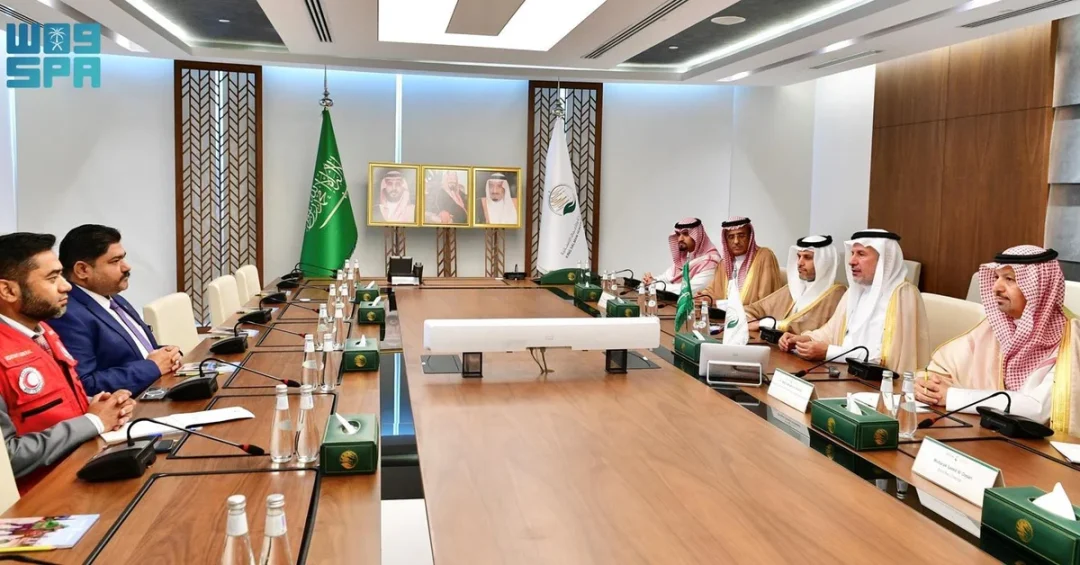
The Supervisor General of the King Salman Humanitarian Aid and Relief Centre (KSrelief), Dr. Abdullah Al-Rabeeah, met with the Chairman of the Pakistan Red Crescent Society (PRCS), Sardar Shahid Ahmed Laghari, at KSrelief headquarters in Riyadh on August 8, 2024, to discuss enhancing humanitarian cooperation between the Kingdom of Saudi Arabia and Pakistan. The meeting was also attended by the President of the Saudi Red Crescent Authority (SRCA), Dr. Jalal bin Mohammed Al-Owaisi, underscoring the collaborative effort between Saudi humanitarian entities.
Context and Background
This meeting takes place against a backdrop of longstanding bilateral ties between Saudi Arabia and Pakistan, with the Kingdom consistently serving as a key humanitarian partner. Pakistan has faced recurring challenges, including natural disasters and economic pressures, which have necessitated ongoing relief support from international partners. KSrelief, established under the directives of the Custodian of the Two Holy Mosques, King Salman bin Abdulaziz Al Saud, has been at the forefront of Saudi Arabia’s global humanitarian efforts, extending aid to over 80 countries, including Pakistan.
Key Details of the Meeting
During the discussions, Dr. Al-Rabeeah and Chairman Laghari focused on relief and humanitarian affairs, specifically reviewing the current humanitarian situation in the Islamic Republic of Pakistan. The dialogue centered on identifying ways to strengthen cooperation between KSrelief and the PRCS to improve the effectiveness of aid delivery. Chairman Laghari expressed deep gratitude and appreciation to the government of Saudi Arabia, led by the Custodian of the Two Holy Mosques and HRH the Crown Prince, for the Kingdom’s continuous support to the Pakistani people during crises and hardships.
Implications and International Impact
The meeting reinforces Saudi Arabia’s role as a leading global humanitarian actor, consistent with its foreign policy objectives of promoting stability and alleviating suffering worldwide. The enhanced partnership between KSrelief and the Pakistan Red Crescent Society is expected to streamline humanitarian operations, ensuring that aid reaches vulnerable populations more efficiently. This collaboration also highlights the strong diplomatic ties between Riyadh and Islamabad, which extend beyond humanitarian efforts to include economic and strategic cooperation under the broader framework of Saudi-Pakistani relations.
Vision 2030 Alignment
This engagement aligns with Saudi Arabia’s Vision 2030 objectives, which emphasize the Kingdom’s commitment to global humanitarian leadership and sustainable development. By fostering international partnerships and leveraging its humanitarian expertise, Saudi Arabia is building a more resilient and interconnected world. Through initiatives like KSrelief, the Kingdom continues to demonstrate that its transformation under Vision 2030 is not only about economic diversification but also about expanding its positive impact on the international stage, supporting communities in need, and strengthening diplomatic bonds through compassionate action.
20 Questions
Q1. What is KSrelief?
A1. KSrelief is the King Salman Humanitarian Aid and Relief Centre, a Saudi agency established in 2015 to coordinate and deliver humanitarian aid globally, operating under the directives of the Saudi leadership.
Q2. Who is Dr. Abdullah Al-Rabeeah?
A2. Dr. Abdullah Al-Rabeeah is the Adviser to the Royal Court and Supervisor General of KSrelief, overseeing the center’s humanitarian operations and international partnerships.
Q3. What is the Pakistan Red Crescent Society?
A3. The Pakistan Red Crescent Society (PRCS) is a national humanitarian organization in Pakistan, providing relief and health services during disasters and emergencies.
Q4. Who is Sardar Shahid Ahmed Laghari?
A4. Sardar Shahid Ahmed Laghari is the Chairman of the Pakistan Red Crescent Society, leading the organization’s humanitarian efforts in Pakistan.
Q5. When did the meeting take place?
A5. The meeting took place on August 8, 2024, at the KSrelief headquarters in Riyadh, Saudi Arabia.
Q6. Who else attended the meeting?
A6. The meeting was attended by Dr. Jalal bin Mohammed Al-Owaisi, the President of the Saudi Red Crescent Authority (SRCA).
Q7. What was discussed during the meeting?
A7. Topics discussed included relief and humanitarian affairs, updates on the humanitarian situation in Pakistan, and ways to enhance cooperation between KSrelief and the PRCS.
Q8. Why is Pakistan significant for Saudi humanitarian aid?
A8. Pakistan has faced multiple natural disasters and crises, making it a key recipient of Saudi humanitarian support, reflecting the strong bilateral ties between the two countries.
Q9. How did Chairman Laghari express his gratitude?
A9. Chairman Laghari expressed deep gratitude to the Saudi government, King Salman, the Crown Prince, and KSrelief for all aid provided to Pakistan during crises.
Q10. What is the Saudi Red Crescent Authority?
A10. The Saudi Red Crescent Authority (SRCA) is a Saudi organization responsible for emergency medical services and humanitarian relief within the Kingdom and abroad.
Q11. How does this meeting benefit Pakistan?
A11. The meeting strengthens coordination between KSrelief and PRCS, ensuring more efficient delivery of aid to vulnerable communities in Pakistan during emergencies.
Q12. What is the role of KSrelief globally?
A12. KSrelief operates globally, providing humanitarian assistance in over 80 countries, focusing on food security, health, education, and emergency relief.
Q13. Does Saudi Arabia have a history of helping Pakistan?
A13. Yes, Saudi Arabia has a long history of supporting Pakistan through financial aid, humanitarian relief, and development projects during crises and natural disasters.
Q14. What is Vision 2030’s link to this meeting?
A14. Vision 2030 emphasizes global humanitarian leadership, and this meeting reflects Saudi Arabia’s commitment to expanding its role in international relief and sustainable development.
Q15. How does KSrelief align with Saudi foreign policy?
A15. KSrelief implements Saudi foreign policy goals by providing neutral, needs-based humanitarian aid, strengthening diplomatic relations, and promoting stability worldwide.
Q16. What kind of aid has KSrelief sent to Pakistan?
A16. KSrelief has sent food, medical supplies, shelter materials, and financial assistance to Pakistan, particularly after floods and earthquakes.
Q17. Is this meeting part of a regular dialogue?
A17. Yes, such meetings reflect regular diplomatic and humanitarian dialogue between Saudi and Pakistani officials to coordinate efforts and assess needs.
Q18. What is the PRCS’s main focus?
A18. The PRCS focuses on disaster response, health services, blood donation, and community resilience programs across Pakistan.
Q19. How does this meeting impact regional stability?
A19. By strengthening humanitarian partnerships, Saudi Arabia helps build resilience in Pakistan, contributing to regional stability and reducing suffering in crisis-affected areas.
Q20. What is the significance of the meeting’s location?
A20. Holding the meeting at KSrelief’s headquarters in Riyadh underscores the importance Saudi Arabia places on direct, coordinated humanitarian cooperation with partner nations.
Reader Feedback
We value your thoughts. Please share your feedback on this article.
Your feedback helps us improve our coverage.