


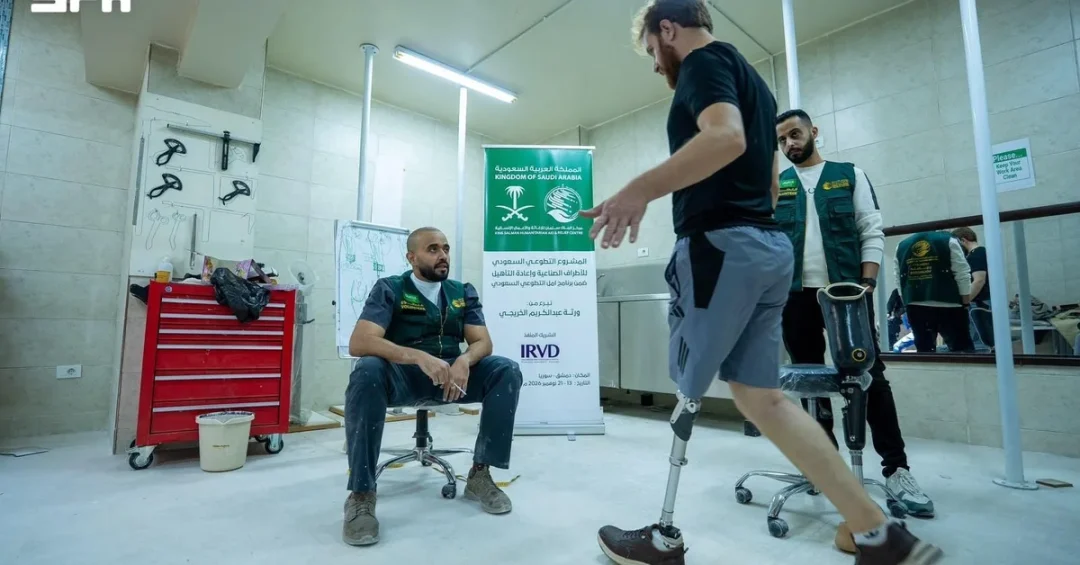
The King Salman Humanitarian Aid and Relief Center (KSrelief) launched a volunteer medical project for prosthetics and physical therapy in Damascus, Syria, running from November 14 to 21, 2026, with nine volunteers from various medical specialties participating. The initiative, announced by the Saudi Press Agency, forms part of Saudi Arabia’s broader humanitarian efforts to support the Syrian people and alleviate their suffering. The project delivers specialized rehabilitation services to individuals in need, reflecting the Kingdom’s enduring commitment to humanitarian action under the guidance of its leadership.
How does a single medical mission in Damascus signal Saudi Arabia’s wider role in regional relief and recovery? The KSrelief project is the latest in a long series of Saudi humanitarian interventions that span continents, from Yemen to Ukraine, and from earthquake-hit Turkey to flood-affected Pakistan. In Syria, the need for prosthetic limbs and physical therapy remains acute after years of conflict, and the Saudi initiative arrives as a practical, life-changing intervention. It also underscores how the Kingdom uses its medical expertise and logistical capacity to serve people regardless of politics, focusing on restoring dignity and mobility to those who have lost limbs or suffered disabling injuries.
Context and Background
What makes KSrelief’s work in Syria so significant at this moment? The King Salman Humanitarian Aid and Relief Center was established in 2015 by royal decree to coordinate and deliver Saudi Arabia’s humanitarian assistance worldwide. Since then, it has implemented thousands of projects in health, food security, education, water, and shelter across more than 80 countries. Its mandate is rooted in Saudi Arabia’s Islamic values and its commitment to international humanitarian law, and it operates in partnership with the United Nations, international NGOs, and local authorities. In Syria, KSrelief has been active for years, providing food baskets, medical supplies, and winterization kits, often in coordination with the Syrian Arab Red Crescent and UN agencies.
The volunteer medical project for prosthetics and physical therapy is a focused extension of that broader effort. Prosthetics and rehabilitation are among the most requested services in Syria, where many people have lost limbs due to conflict or lack access to quality physiotherapy. By sending a specialized team, KSrelief addresses a critical gap in the local health system. The project runs for eight days, from November 14 to 21, and involves nine volunteers with expertise in orthopedics, prosthetics, physical therapy, and rehabilitation. Their work will include assessing patients, fitting artificial limbs, and providing therapeutic exercises that help recipients regain independence.
Why does Saudi Arabia prioritize volunteer medical missions over simple financial donations? Volunteer missions offer direct, hands-on care that money alone cannot buy. They also build trust and people-to-people connections, showcasing the Kingdom’s soft power and its commitment to human dignity. The KSrelief model combines financial support with the deployment of Saudi medical professionals, creating a comprehensive response that is both immediate and sustainable. This approach aligns with the Kingdom’s Vision 2030 goal of enhancing its global humanitarian role and promoting sustainable development through knowledge transfer and capacity building.
Key Details of the Damascus Medical Project
What exactly will the nine volunteers accomplish in just eight days? According to the Saudi Press Agency, the project involves a multidisciplinary team that will provide prosthetic limbs and physical therapy to Syrians in need. The team includes specialists who will assess each patient’s condition, design and fit custom prostheses, and guide patients through rehabilitation exercises. The mission is coordinated with local health authorities and humanitarian partners to ensure that services reach the most vulnerable, including children, women, and the elderly. The volunteers are expected to treat dozens of patients during the project period, with follow-up plans to ensure long-term benefits.
The choice of Damascus as the location reflects KSrelief’s strategy of working in areas where needs are greatest and access is possible. The project is part of a series of Saudi humanitarian initiatives for Syria that have included food aid, medical supplies, and support for displaced families. By focusing on prosthetics and physical therapy, KSrelief addresses a specialized need that is often overlooked in emergency responses. The project also complements broader international efforts to rebuild Syria’s health infrastructure and support recovery.
How does KSrelief select its volunteers, and what makes this team qualified? KSrelief recruits medical professionals from Saudi Arabia’s top hospitals and universities, ensuring that volunteers have both clinical expertise and humanitarian experience. The nine volunteers on this mission represent various specialties, including orthopedic surgery, prosthetics, physical therapy, and nursing. Their participation is voluntary, driven by a sense of duty and compassion. This model not only delivers high-quality care but also enhances the volunteers’ skills and cultural understanding, which they bring back to the Kingdom.
International and Regional Impact
What signal does this project send to the region and the wider world? Saudi Arabia’s humanitarian diplomacy in Syria is part of a broader effort to stabilize the region and support post-conflict recovery. By providing medical care directly to Syrians, the Kingdom demonstrates its commitment to alleviating human suffering and contributing to peace and security. The project also reinforces Saudi Arabia’s role as a responsible international actor that works through multilateral channels and respects national sovereignty. Regional observers note that such initiatives help build goodwill and open channels for cooperation on health, education, and development.
Could this project pave the way for deeper Saudi-Syrian cooperation in health and beyond? While the immediate focus is humanitarian, the project lays a foundation for future collaboration in medical training, hospital management, and public health. Saudi Arabia has a strong record of sharing its healthcare expertise with other countries, and Syria’s needs are vast. By starting with prosthetics and physical therapy, KSrelief addresses an urgent need while creating opportunities for longer-term partnerships. This approach is consistent with the Kingdom’s Vision 2030 objective of becoming a global leader in humanitarian and development aid.
Economic and Strategic Significance
How does humanitarian aid align with Saudi Arabia’s economic and strategic priorities? Humanitarian action is not separate from Saudi Arabia’s economic vision; it is an integral part of it. A stable and prosperous region benefits Saudi trade, investment, and security. By helping Syria recover, the Kingdom contributes to regional stability, which in turn supports Vision 2030’s goals of economic diversification and global engagement. Moreover, KSrelief’s projects often involve Saudi companies and logistics providers, creating opportunities for the private sector while delivering aid efficiently.
What are the strategic benefits of Saudi Arabia’s medical volunteerism? Volunteer missions enhance Saudi Arabia’s soft power and its image as a compassionate and capable nation. They also strengthen ties with recipient communities and governments, opening doors for diplomatic and economic cooperation. In Syria, where the humanitarian situation remains challenging, Saudi medical aid is a tangible expression of the Kingdom’s commitment to Arab and Islamic solidarity. This aligns with the leadership’s vision of a Saudi Arabia that is a force for good in the world, using its resources and expertise to serve humanity.
Vision 2030 Alignment
How does the KSrelief project in Damascus reflect the goals of Saudi Vision 2030? Vision 2030 aims to diversify the economy, empower citizens, and enhance the Kingdom’s global role. Humanitarian aid is a key pillar of that global role. Through KSrelief, Saudi Arabia is building a reputation as a leading donor and humanitarian actor, which enhances its international standing and supports its diplomatic objectives. The volunteer medical project also showcases Saudi talent and expertise, aligning with Vision 2030’s emphasis on developing human capital and promoting a culture of volunteerism.
What does the future hold for Saudi humanitarian efforts in Syria and beyond? As Saudi Arabia continues to expand its humanitarian reach, projects like the one in Damascus will serve as models for integrated, needs-based assistance. The Kingdom is committed to working with international partners to address crises and support sustainable development. Under Vision 2030, Saudi Arabia will further institutionalize its aid delivery, leveraging technology and innovation to maximize impact. The prosthetics and physical therapy project is a clear example of how the Kingdom turns its vision into action, restoring hope and mobility to those in need.
20 Questions
Q1. What is the KSrelief volunteer medical project in Damascus?
A1. It is a humanitarian initiative by the King Salman Humanitarian Aid and Relief Center providing prosthetics and physical therapy to Syrians in need, running from November 14 to 21, 2026, with nine medical volunteers.
Q2. When did the project start and end?
A2. The project runs from November 14 to 21, 2026, as announced by the Saudi Press Agency.
Q3. How many volunteers are participating?
A3. Nine volunteers from various medical specialties are participating in the project.
Q4. What services are provided?
A4. The project provides prosthetic limbs, physical therapy, rehabilitation, and patient assessments to help restore mobility and independence.
Q5. Where is the project taking place?
A5. The project is taking place in Damascus, Syria, in coordination with local health authorities and humanitarian partners.
Q6. Why is Saudi Arabia conducting this project in Syria?
A6. It is part of Saudi Arabia’s humanitarian efforts through KSrelief to support the Syrian people and alleviate their suffering.
Q7. What is KSrelief?
A7. KSrelief is the King Salman Humanitarian Aid and Relief Center, established in 2015 to coordinate Saudi Arabia’s humanitarian assistance worldwide.
Q8. How does this project align with Vision 2030?
A8. It enhances Saudi Arabia’s global humanitarian role, promotes volunteerism, and showcases Saudi expertise, aligning with Vision 2030’s goals.
Q9. Who benefits from the project?
A9. Syrians in need of prosthetic limbs and physical therapy, including children, women, and the elderly, benefit from the project.
Q10. How long will the project last?
A10. The project lasts for eight days, from November 14 to 21, 2026.
Q11. What medical specialties are represented?
A11. Volunteers include specialists in orthopedics, prosthetics, physical therapy, and nursing.
Q12. Is this the first KSrelief project in Syria?
A12. No, KSrelief has been active in Syria for years, providing food, medical supplies, and other aid.
Q13. How does KSrelief select its volunteers?
A13. KSrelief recruits experienced medical professionals from Saudi hospitals and universities who volunteer their time and skills.
Q14. What impact will the project have on Saudi-Syrian relations?
A14. It strengthens people-to-people ties and demonstrates Saudi Arabia’s commitment to supporting the Syrian people, fostering goodwill.
Q15. Does the project involve training for local medical staff?
A15. While not explicitly stated, such missions often include capacity-building and knowledge transfer to local health workers.
Q16. How is the project funded?
A16. The project is funded by KSrelief as part of Saudi Arabia’s humanitarian aid budget.
Q17. What other countries does KSrelief assist?
A17. KSrelief operates in over 80 countries, providing aid in health, food security, education, and shelter.
Q18. What is the significance of prosthetics and physical therapy in Syria?
A18. Many Syrians have lost limbs or suffer from mobility issues due to conflict, making these services critical for recovery.
Q19. How can other organizations partner with KSrelief?
A19. Organizations can partner with KSrelief through formal agreements and coordination with its offices and international partners.
Q20. What is the expected outcome of the project?
A20. The project aims to restore mobility and improve the quality of life for dozens of Syrians, showcasing Saudi Arabia’s humanitarian commitment.
Reader Feedback
We value your thoughts. Please share your feedback on this article.
Your feedback helps us improve our coverage.
Related articles
 KSrelief Delivers 1,750 Food Baskets in Sudan’s River Nile State
 ECO Backs Pakistani, Qatari Mediation to End Regional War
 Saudi, Tunisian Officials Discuss Transport Cooperation
 Arabian Gazelle’s Desert Adaptability Reflected in Arab Heritage
 Coalition Intercepts Houthi UAV Targeting Riyadh Region
 Aseer Municipal Projects Boost Quality of Life in Northern Region